Zone 2 cardio is steady, easy exercise at a pace where you can still talk in full sentences. For most people that is roughly 60–70% of maximum heart rate. It builds your aerobic base, it is easy to recover from, and it is one of the simplest ways to reach the 150–300 minutes of moderate activity a week that the World Health Organization recommends for adults (WHO physical activity guidelines, 2020).
It is useful, but it is not magic. A 2025 review found that zone 2 is not the best intensity for improving mitochondria or fitness in the general population, and that harder efforts matter too (Storoschuk et al., Sports Medicine, 2025). The best plan uses zone 2 as the base and adds a little hard work on top. That is the plan at the end of this guide.
What is zone 2 cardio?
Training zones split exercise intensity into five bands, most often by percentage of maximum heart rate:
| Zone | % of max heart rate | How it feels |
|---|---|---|
| Zone 1 | 50–60% | Very easy. Recovery walk |
| Zone 2 | 60–70% | Easy and steady. You can hold a conversation |
| Zone 3 | 70–80% | Moderate. Talking in short phrases |
| Zone 4 | 80–90% | Hard. A few words at a time |
| Zone 5 | 90–100% | All-out. No talking |
Physiologists define zone 2 more precisely as the intensity just below your first lactate threshold. That is the point where lactate starts to build in the blood faster than at rest. Below it, your body can keep going for a long time while burning a higher share of fat for fuel.
How to find your zone 2 heart rate
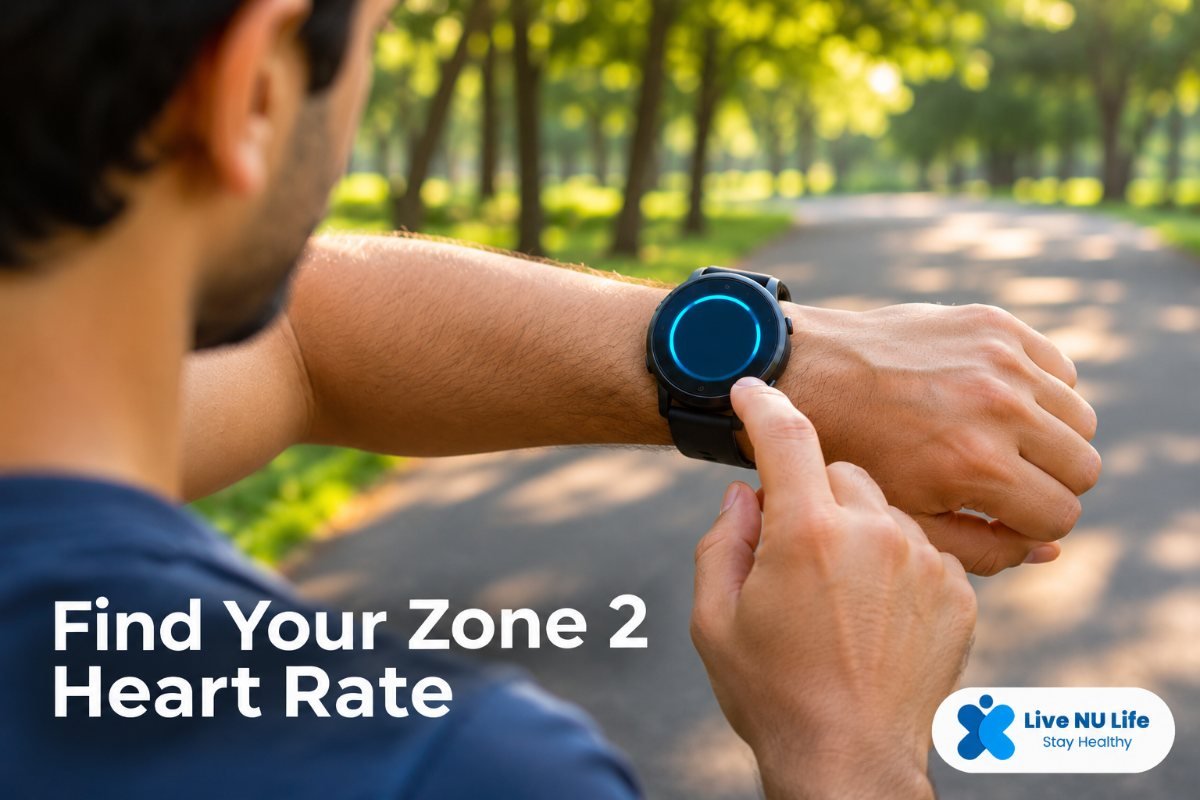
Method 1: The age formula (quick, rough)
- Estimate max heart rate: 220 − your age.
- Multiply by 0.60 and 0.70.
| Age | Estimated max HR | Zone 2 range (bpm) |
|---|---|---|
| 25 | 195 | 117–137 |
| 30 | 190 | 114–133 |
| 35 | 185 | 111–130 |
| 40 | 180 | 108–126 |
| 45 | 175 | 105–123 |
| 50 | 170 | 102–119 |
| 55 | 165 | 99–116 |
| 60 | 160 | 96–112 |
The 220 − age formula is an average. Your real maximum can be well above or below it, so treat this range as a starting point.
Method 2: The talk test (free and surprisingly accurate)
If you can speak comfortably in full sentences but would not want to sing, you are in zone 2. A study of 15 adults found that the point where talking stays comfortable lined up closely with the lactate threshold (Journal of Sports Sciences, 2011). If you have to break sentences to breathe, slow down.
Method 3: A lab or field test
A lactate test or a cardiopulmonary exercise test gives the most accurate zone 2. It costs money and most people don’t need it.
If you take beta-blockers or other heart-rate-lowering medicine, heart-rate formulas will not work for you. Use the talk test and ask your doctor what intensity is safe.
Zone 2 cardio examples
- Brisk walking, especially on an incline treadmill or a hilly route
- Easy cycling, indoors or outdoors
- Slow jogging, if you can keep your breathing calm (many beginners need to walk-jog)
- Rowing or the cross-trainer at a steady pace
- Swimming at an easy, continuous pace
In winter, when air quality in many Indian cities drops, an indoor bike or treadmill makes it easier to stay consistent.
Benefits of zone 2 training
- Builds an aerobic base. Regular easy cardio improves heart and lung fitness for beginners and makes daily life and harder sessions feel easier.
- Easy to recover from. You can do it several times a week without the fatigue of intervals, which matters if you also lift.
- Counts toward weekly activity targets. Zone 2 is moderate-intensity activity, the kind health guidelines ask for.
- Accessible. No equipment or skill needed, and it suits people coming back from a break or carrying extra weight.
What the hype gets wrong
Popular advice treats zone 2 as the “best” intensity for metabolic health and longevity. The 2025 Sports Medicine review found that this idea leans heavily on studies of elite endurance athletes who train many hours a week. For people with limited time, higher-intensity work improves mitochondrial capacity and fitness at least as well. Zone 2 is a good base, not the whole program.
Zone 2 for people who lift weights
If strength is your main goal, zone 2 fits in well:
- Choose low-impact options. Cycling and incline walking leave your legs fresher for squats and deadlifts than long runs do.
- Separate it from heavy leg days where you can, or do it after lifting rather than before.
- Keep it truly easy. Zone 2 that drifts into zone 3 every session adds fatigue without much extra benefit.
A 4-week zone 2 plan
This plan assumes you are healthy and already somewhat active. Do the zone 2 sessions on non-consecutive days if you also lift.
| Week | Zone 2 sessions | One harder session |
|---|---|---|
| 1 | 3 × 25 min | None. Learn your zone 2 pace |
| 2 | 3 × 30 min | Optional: 4 × 1 min fast, 2 min easy |
| 3 | 3 × 35 min | 5 × 1 min fast, 2 min easy |
| 4 | 2 × 45 min + 1 × 30 min | 5 × 2 min hard, 2 min easy |
By week 4 you will be doing about 120 minutes of zone 2 plus one short interval session. Add a warm-up and cool-down to the harder session, and stop if you feel chest pain, dizziness or unusual breathlessness.
How much zone 2 cardio per week?
For general health, aim for 150–300 minutes a week of moderate activity, which zone 2 covers, plus strength training twice a week. If you have less time, keep two or three zone 2 sessions and add one harder session rather than trying to reach the upper number with easy work alone.
Frequently asked questions
Is walking zone 2 cardio?
Brisk walking is zone 2 for many beginners and older adults. Fitter people may need an incline or a faster pace to raise their heart rate into the zone.
Can I do zone 2 cardio every day?
Yes, it is gentle enough for most people to do daily. Still keep one or two easier days if you are also lifting hard.
Does zone 2 burn more fat?
It burns a higher share of fat during the session, but total calories burned matter more for fat loss. Zone 2 helps by being easy to do often.
How long should a zone 2 session be?
Most plans use 30–60 minutes. Shorter sessions still count, especially when you are starting out.
Do I need a heart rate monitor?
No. The talk test works well. A chest strap is more accurate than most wrist devices if you want numbers.
For more ways to stay active, see 7,000 vs 10,000 steps a day and our article on exercise for weight loss and maintenance.
Sources
- Storoschuk KL, et al. Much Ado About Zone 2: A Narrative Review Assessing the Efficacy of Zone 2 Training for Improving Mitochondrial Capacity and Cardiorespiratory Fitness in the General Population. Sports Med. 2025;55(7):1611–1624. doi:10.1007/s40279-025-02261-y
- The Talk Test and its relationship with the ventilatory and lactate thresholds. J Sports Sci. 2011. PubMed 21774751.
- World Health Organization. WHO guidelines on physical activity and sedentary behaviour. 2020.
Check with your doctor before starting a new exercise program if you have a heart condition or other health concerns. See our medical disclaimer.