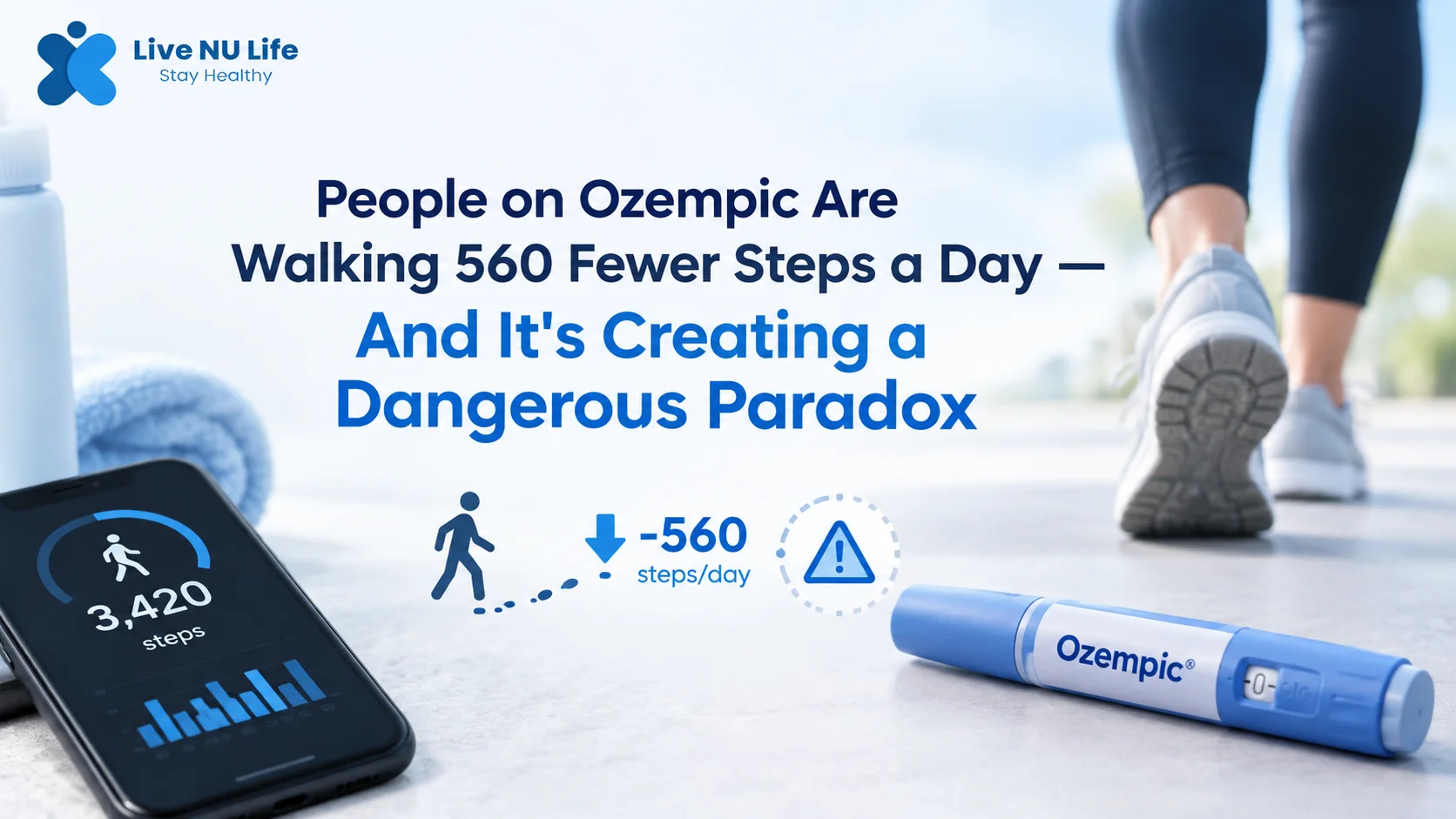
KEY TAKEAWAY: Research presented at ENDO 2026 and covered through August 2026 — analysing Fitbit data from 753 adults — found that people starting GLP-1 weight-loss medications (Ozempic, Wegovy, Mounjaro) reduced their daily step count by 560 steps and MVPA by 6 minutes per day despite successful weight loss. Because GLP-1 medications also reduce muscle mass (25–40% of total weight lost), this activity reduction significantly worsens the muscle-loss problem.
The Weight Loss That Creates a New Problem
Research presented at ENDO 2026 — the Endocrine Society’s annual meeting in Chicago, June 14, 2026 — and covered extensively through August 2026, has documented a finding that should be central to every GLP-1 medication management programme: people who start GLP-1 medications become measurably less physically active, documented by real-world Fitbit wearable data from 753 adults in the NIH’s All of Us Research Program.
Led by Dr Sajana Maharjan of HSHS St. John’s Hospital, the team analysed wearable activity data linked to electronic health records from adults with obesity who had been prescribed semaglutide, tirzepatide, liraglutide, or dulaglutide.
📖 Also read: Only One Exercise Helps Older Adults Lose Fat Without Losing Muscle — Our Earlier Coverage — The muscle preservation challenge that GLP-1 activity reduction worsens — and the exercise solution that works right now.
The Data: What 753 People’s Fitbits Showed
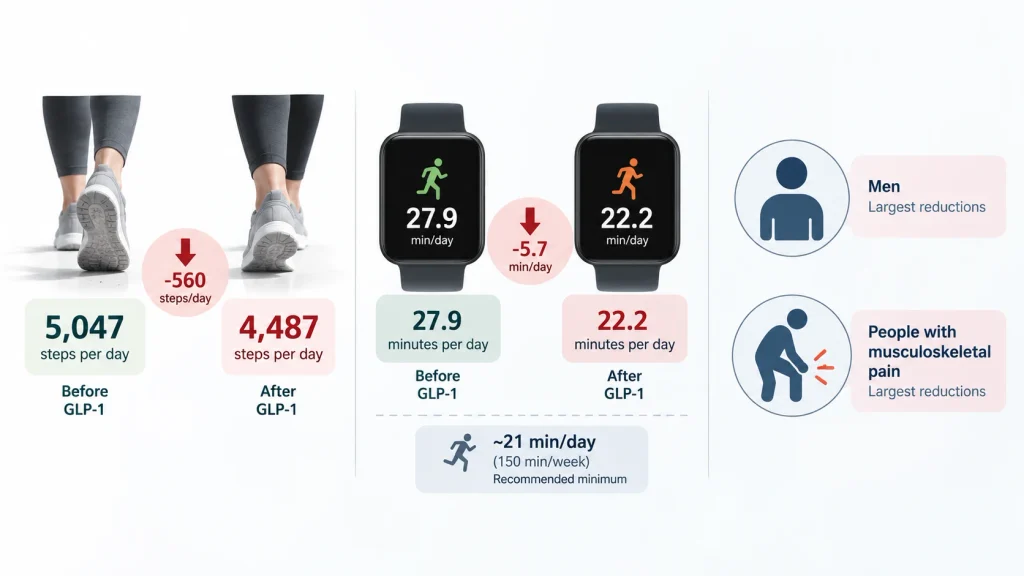
Daily step count: Mean daily steps decreased from 5,047 to 4,487 after starting GLP-1 medication — a reduction of 560 steps per day.
MVPA: Daily moderate-to-vigorous physical activity declined from 27.9 to 22.2 minutes — a reduction of 5.7 minutes per day. Public health guidelines recommend at minimum 150 minutes MVPA per week (~21 min/day). GLP-1 users are moving further below this threshold.
Who declined most: Largest reductions in men and in people with musculoskeletal pain.
“While many assume that weight loss leads naturally to increased physical activity, our study suggests otherwise,” said Dr Maharjan. “GLP-1 receptor agonists reduce both fat and lean muscle mass, and the decline in physical activity raises concerns about preserving strength and long-term health.”
Why This Creates a Dangerous Paradox
The activity reduction compounds a problem that already exists with GLP-1 medications: 25–40% of total weight lost is lean mass rather than fat. For a person losing 20kg on Ozempic, 5–8kg may be muscle. This muscle loss:
• Reduces resting metabolic rate — increasing weight regain likelihood when medication is stopped.
• Reduces functional strength and mobility — potentially explaining why activity is declining.
• Creates sarcopenic obesity risk — high fat, low muscle, with worse metabolic outcomes than either alone.
• Impairs immune function — muscle is the primary glutamine reservoir for immune cells.
Now add reduced daily activity — the primary intervention that preserves muscle during weight loss. GLP-1 users who reduce their activity are removing the very intervention that would make their weight loss metabolically durable.
Why GLP-1 Users Become Less Active
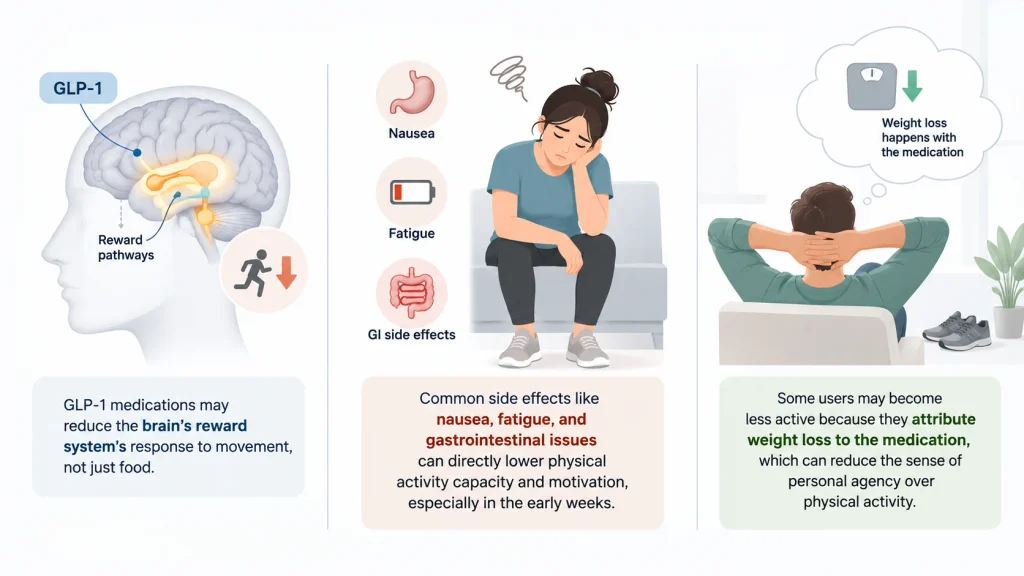
Brain reward system effects. GLP-1 receptors are present in the brain’s reward pathways. There is emerging evidence that GLP-1 medications may also reduce the rewarding quality of movement, not just food.
Fatigue as a side effect. Nausea, fatigue, and gastrointestinal side effects directly reduce physical activity capacity and motivation, particularly in early weeks of treatment.
Success complacency. Some patients may reduce activity because they attribute weight loss to the medication — reducing the sense of personal agency over physical activity outcomes.
What Should Change in GLP-1 Clinical Management
• Before starting: initiate resistance training — at least 2 sessions per week from day one of GLP-1 therapy.
• Step count target: explicitly target 7,000+ daily steps to compensate for documented activity decline.
• Protein intake: 1.6–2.0g/kg of body weight daily. GLP-1-mediated appetite suppression may cause inadvertent protein underreporting.
• Monitor body composition, not just weight: waist circumference, grip strength, and DEXA where accessible.
For the complete exercise prescription counteracting GLP-1-mediated muscle loss, see our HIIT article and our protein guidelines article. For the dietary GLP-1 activation approach, see our Boost GLP-1 Naturally guide.
The Takeaway
The ENDO 2026 Fitbit analysis of 753 GLP-1 users — 560 fewer daily steps, 6 fewer minutes of MVPA — documents a dangerous consequence of weight-loss medication that compounds 25–40% muscle loss. Every GLP-1 prescribing clinician and every person on these medications should treat resistance training as a required co-intervention. See our protein guidelines article and our Functional Nutrition guide.
About the Author
Tanveer Ahmed Khan is a K11 School of Fitness Sciences-certified personal trainer and nutrition coach with 12+ years of strength training experience. Coaching: info@livenulife.com | Instagram: @fitwithtanveer | livenulife.com
Scientific References
1. Maharjan, S., et al. (2026). Physical Activity Changes in Adults Taking GLP-1 Receptor Agonists. Presented at ENDO 2026, Endocrine Society Annual Meeting, Chicago, June 14, 2026.
2. ScienceDaily / Endocrine Society. (June 14, 2026). People taking GLP-1 weight loss drugs like Ozempic started moving less.
3. Gizmodo. (June 2026). Ozempic Users Are Skimping Out on Exercise, Study Finds.
4. Healthline. (June 13, 2026). Ozempic, Wegovy: Why People Using GLP-1s Are Less Likely to Exercise.
5. MedicalDaily. (June 17, 2026). GLP-1 Users Walk 560 Fewer Steps Per Day, Fitbit Study at ENDO 2026 Finds.