By Tanveer Ahmed Khan | K11-Certified Trainer & Dietitian-Nutritionist | REPS India Registered | July 2026 | 12 min read
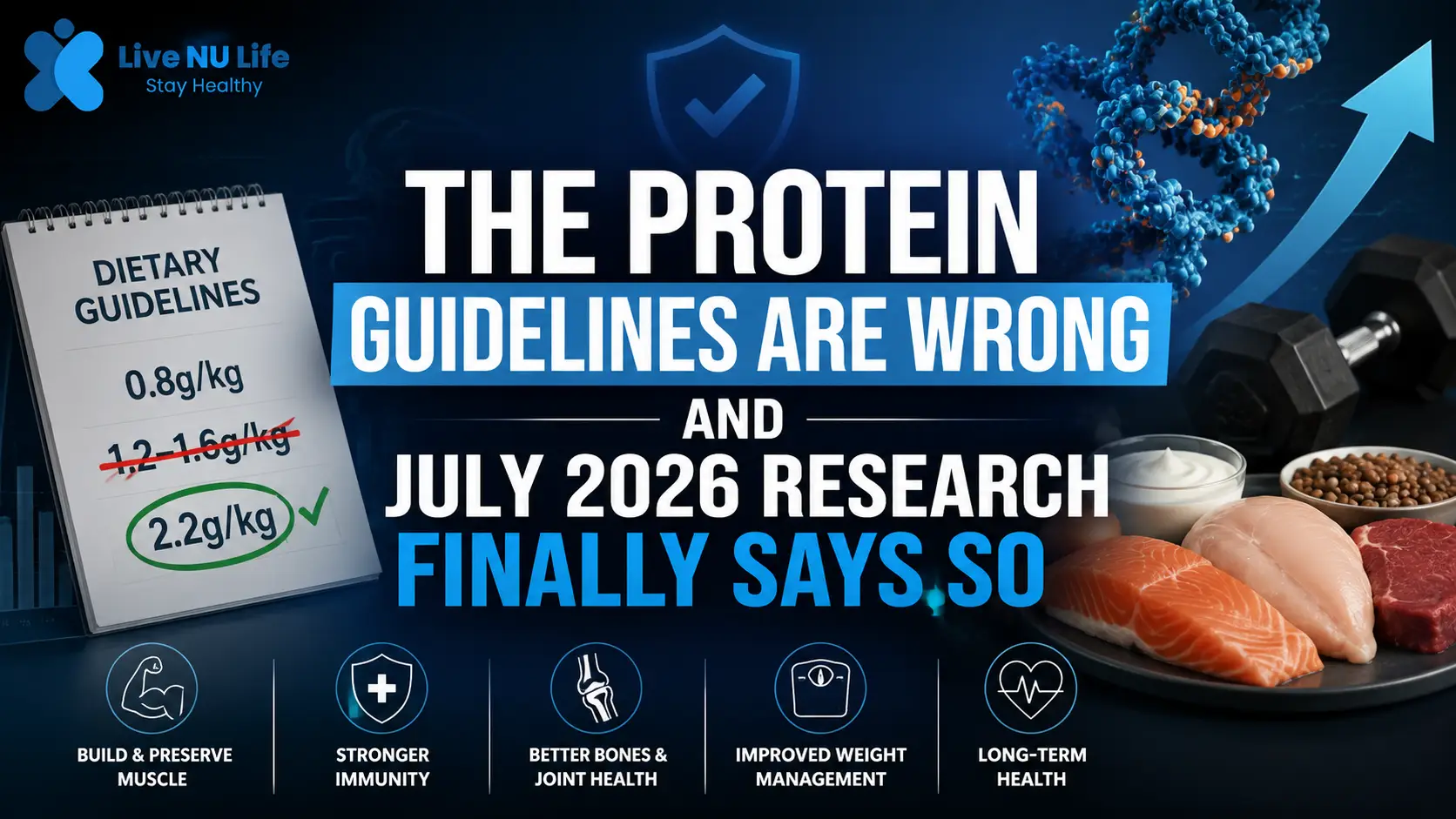
KEY TAKEAWAY: A Perspective published in The Journal of Nutrition (July 24, 2026) reviewed the new 2025–2030 US Dietary Guidelines and found that the updated protein recommendation of 1.2–1.6g per kilogram of body weight per day is still far too low for optimal health. The case for doubling current protein targets — combining intake with resistance training — has never been stronger. Here is what you actually need.
The Protein Guidelines Have Been Wrong for Decades
The current recommended daily allowance (RDA) for protein in most countries has been 0.8 grams per kilogram of body weight for decades. For a 70-kilogram adult, that is 56 grams of protein per day. It sounds reasonable until you understand what the RDA was actually designed to measure.
The RDA for protein — like all nutritional RDAs — was established to prevent deficiency in healthy sedentary individuals. It is the minimum required to avoid malnutrition, not the optimal amount to support muscle preservation, metabolic health, immune function, bone density, and healthy ageing. This critical distinction has been lost in the translation of science into public health messaging for decades.
In July 2026, two major research developments arrived simultaneously to force the conversation forward in ways that will likely reshape dietary guidance for years to come.
📖 Also read: Why High-Protein Snacks Keep You Full Longer — The satiety science behind protein — GLP-1, PYY, and CCK responses — that explains why hitting adequate protein targets transforms appetite control.
The July 24 Journal of Nutrition Perspective
On July 24, 2026 — coinciding with the opening of the NUTRITION 2026 conference in National Harbor, Maryland — The Journal of Nutrition published a Perspective article from the American Society for Nutrition reviewing the protein recommendations in the new 2025–2030 US Dietary Guidelines for Americans.
The updated Dietary Guidelines had already broken from the historical 0.8g/kg RDA, recommending 1.2 to 1.6 grams per kilogram of body weight per day — a meaningful step forward. The July 2026 Perspective examined whether this new, higher range is sufficient.
The researchers compared the 2025–2030 guidelines against the existing research on protein intake, muscle health, bone health, metabolic function, and healthy ageing. Their conclusion: the new 1.2 to 1.6g/kg range represents an improvement over the old 0.8g/kg minimum but still falls short of what the evidence supports for optimal health — particularly for active adults and older individuals.
A companion analysis published in Frontiers in Nutrition in June 2026 — and prominently featured at NUTRITION 2026 — went further. Researcher Chris Macdonald of Lucy Cavendish College, University of Cambridge, argued that protein intake of up to 1 gram per pound of body weight (approximately 2.2g per kilogram) is supported by existing evidence for individuals combining adequate protein with resistance training, and delivers the widest range of health benefits including faster muscle recovery, better weight management and fat loss, and reduced fracture risk.
What Happens When You Under-Eat Protein
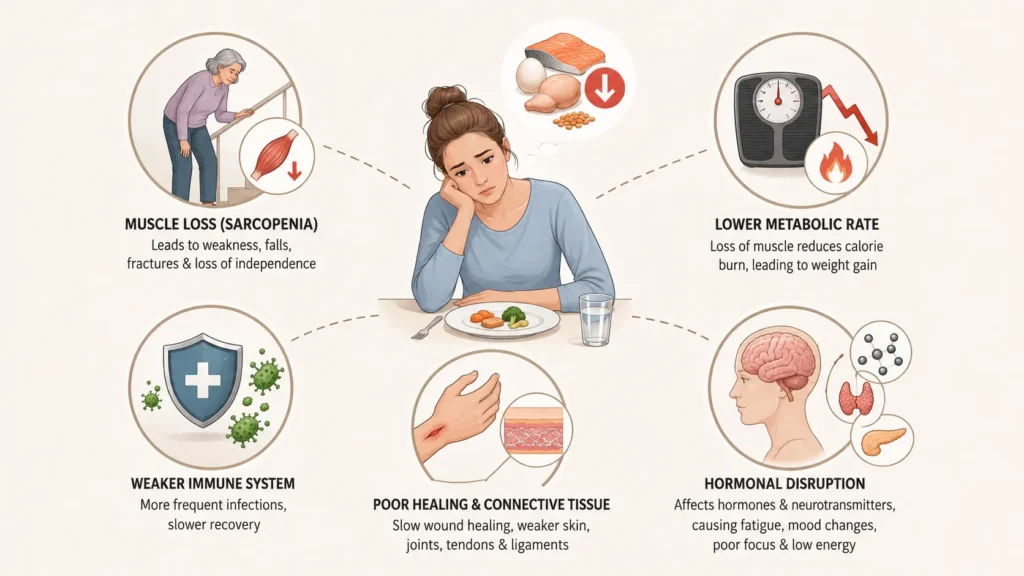
After 12 years of conducting detailed dietary assessments, I can tell you that protein insufficiency is the single most common nutritional deficit I find in otherwise health-conscious clients — particularly women, vegetarians, and anyone over 45. And its consequences are significant and often misattributed.
Sarcopenia — the silent epidemic. Muscle mass begins declining from around age 35 at a rate of approximately 0.5–1% per year without intervention. By 60, many people have lost 20–30% of their peak muscle mass. This loss is not primarily a consequence of ageing itself — it is a consequence of insufficient protein intake combined with declining physical activity. Sarcopenia raises the risk of falls, fractures, metabolic disease, hospitalisation dependency, and mortality more than almost any other single health factor in older adults.
Metabolic rate decline. Muscle is the metabolically active tissue that burns the majority of resting calories. When protein intake is insufficient to maintain muscle mass, resting metabolic rate declines — the biological mechanism behind the “middle-age weight gain” that most people attribute to ageing but which is substantially driven by diet-mediated muscle loss.
Immune impairment. Antibodies, immune signalling proteins, and the neutrophils and lymphocytes that constitute the immune response are all made from protein. Protein insufficiency directly impairs immune function. I see this clinically in clients who get sick frequently, heal slowly, and recover poorly from exercise — often without realising their protein intake is the root cause.
Poor wound healing and connective tissue quality. Collagen is the structural protein of skin, tendons, ligaments, cartilage, and bone. Insufficient dietary protein means insufficient amino acid supply for collagen synthesis, producing poor wound healing, skin that ages rapidly, and joints that tolerate loading poorly.
Hormonal disruption. Many key hormones are proteins or require protein-derived precursors for synthesis — insulin, thyroid hormones, growth hormone, and most neurotransmitters. Sub-optimal protein intake contributes to hormonal dysregulation patterns that manifest as fatigue, mood instability, poor concentration, and metabolic sluggishness.
The Critical Nuance: Protein Plus Exercise — Not Protein Alone
The July 2026 Journal of Physiology perspective — by Højfeldt, Morgan, and Soendenbroe — added an important counterpoint that I want to address directly, because it has been misread in some popular health media.
The paper argued that increasing protein intake without increased physical activity is unlikely to improve muscle health on its own. This is scientifically accurate — and it is a nuance, not a contradiction. Protein provides the building materials for muscle. Resistance training provides the stimulus that tells the body to use those building materials. You need both.
“Eating more protein without challenging your muscles may still have benefits,” said Kristin Kirkpatrick, MS, RDN, commenting on the July 2026 research, “but combining adequate protein with regular resistance training and overall physical activity is where you really maximise the return. Any longevity plan that leaves out exercise is missing one of its most critical pieces.”
This is exactly what I have been prescribing in practice for 12 years: a protein-exercise pairing that addresses both the building material and the building signal simultaneously. For the evidence on how resistance training dramatically amplifies the return on protein investment, see our USC Longevity Diet article which found the longevity diet’s amino acid composition worked in concert with exercise to reduce frailty.
📖 Also read: Best Time to Eat High-Protein Snacks for Energy and Weight Loss — The chrono-nutrition science of when to place protein throughout the day for maximum metabolic and muscle benefit.
What the Research Actually Recommends: My Clinical Translation
Synthesising the July 2026 ASN Perspective, the Frontiers in Nutrition analysis, the Dietary Guidelines update, and 12 years of applying this science in practice, here is my protein framework:
Sedentary adults (minimal exercise): 1.2–1.4g per kilogram of body weight per day. This is the lower bound of the new Dietary Guidelines range and the minimum I would prescribe for basic preservation of muscle mass and metabolic function in a completely inactive individual.
Moderately active adults (3+ sessions per week): 1.6–2.0g per kilogram of body weight per day. For a 65kg woman doing three gym sessions weekly, this means 104–130g of protein daily. This is above the Dietary Guidelines range but consistent with the Frontiers in Nutrition analysis and with the exercise-physiology consensus.
Active adults and anyone in a calorie deficit: 2.0–2.2g per kilogram of body weight per day. When calories are restricted, protein intake must increase to prevent muscle loss from calorie restriction itself — the most common mistake in weight-loss programmes.
Adults over 55: 1.6–2.0g per kilogram regardless of activity level. Anabolic resistance — the reduced muscle-building response to protein in older adults — means higher absolute protein intake is required to produce the same muscle-preserving effect. This is the most compelling argument for higher protein in older populations.
The Best Protein Sources for the Indian Context
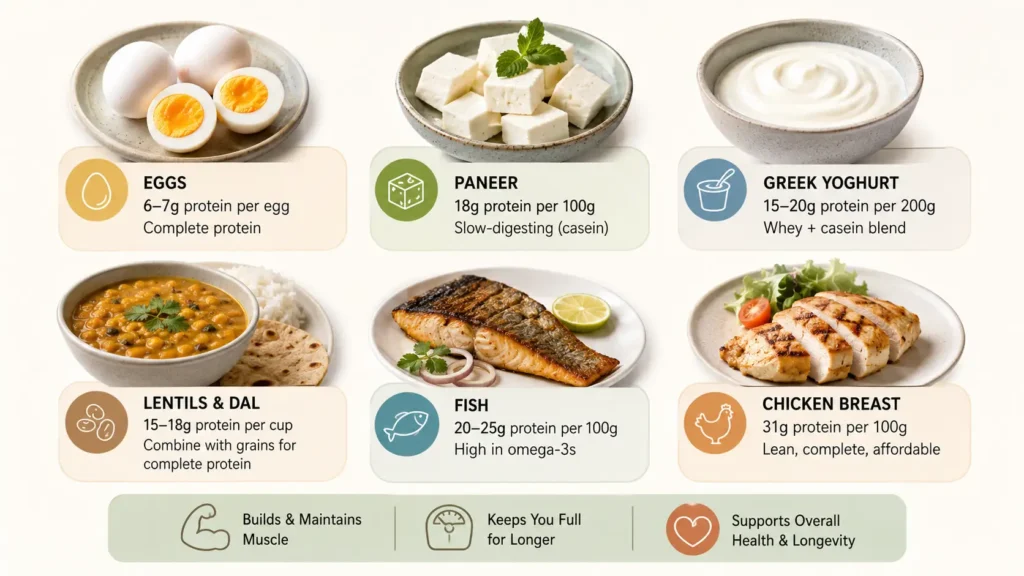
• Eggs: 6–7g complete protein per egg, highest biological value of any food protein. 3 whole eggs = 18–21g protein with complete essential amino acid profile including all branched-chain amino acids.
• Paneer (cottage cheese): 18g protein per 100g. Casein-based protein — slow-digesting, excellent for muscle maintenance overnight. Include at dinner for overnight muscle preservation.
• Greek yoghurt (plain, full-fat): 15–20g protein per 200g serving. Whey + casein blend. Excellent GLP-1-stimulating properties alongside high protein delivery.
• Lentils and dal (combined with whole grain roti or rice): 15–18g protein per cup cooked. Not complete alone — combining legumes with grains provides all essential amino acids. The cornerstone of plant-based protein in Indian cooking.
• Fish (mackerel, rohu, katla, sardines): 20–25g protein per 100g. Complete amino acid profile, highest omega-3 content of any protein source. Directly aligned with the USC longevity diet research.
• Chicken breast: 31g per 100g cooked. Lean, complete, affordable. Best combined with a carbohydrate and fat source for optimal satiety and nutrient absorption.
For specific high-protein snack ideas that fit within a 150-calorie limit, see our 5 High-Protein Snacks Under 150 Calories guide.
The Vegetarian and Vegan Protein Challenge
A significant proportion of the Indian population follows vegetarian or vegan diets, and protein adequacy is a genuine and pressing challenge. Plant proteins are lower in leucine — the primary anabolic amino acid that triggers muscle protein synthesis — and many are incomplete, requiring combination to provide all essential amino acids.
My approach for vegetarian clients: plan protein around three complete or complementary protein sources at every meal. Breakfast: paneer or Greek yoghurt plus nuts. Lunch: dal plus whole grain roti (complementary proteins). Dinner: tofu or tempeh with lentils and a grain. Supplementing with a high-quality pea or whey protein powder to bridge the gap is both practical and evidence-supported.
For the broader nutritional framework within which protein optimisation works, see our Functional Nutrition: Eat for Optimal Health guide.
The Takeaway
The July 2026 Journal of Nutrition Perspective and the concurrent NUTRITION 2026 research confirm what exercise physiologists and sports nutritionists have known for years: official protein guidelines have been set at survival levels, not optimal health levels. The new 2025–2030 Dietary Guidelines move in the right direction with 1.2–1.6g/kg, but the full body of evidence supports higher targets, particularly for active adults and those over 55. Most importantly — protein only builds and preserves muscle when paired with the exercise stimulus that tells the body to use it. The combination of adequate protein and regular resistance training is the most evidence-supported longevity strategy available at no cost and without side effects.
About the Author
Tanveer Ahmed Khan is a K11 School of Fitness Sciences-certified personal trainer and REPS India-registered dietitian-nutritionist with over 12 years of experience helping busy professionals achieve elite, sustainable health. Coaching: info@livenulife.com | Instagram: @fitwithtanveer | livenulife.com
Scientific References
1. American Society for Nutrition. (July 24, 2026). New Perspective in The Journal of Nutrition Reviews Protein Recommendations in the 2025-2030 Dietary Guidelines. nutrition.org
2. Macdonald, C. (2026). Beyond the bare minimum: the case for revised physical activity guidelines and protein intake recommendations that maximise healthspan. Frontiers in Nutrition, 13. doi: 10.3389/fnut.2026.1853124
3. Højfeldt, G., Morgan, P.T., Soendenbroe, C. (2026). Increasing protein intake without increased physical activity is unlikely to improve muscle health. J Physiol, 604: 3704–3708. doi: 10.1113/JP290972
4. Medical News Today. (July 26, 2026). Are we eating enough protein to age well? Why experts think no.
5. ScienceDaily / Cambridge. (June 22, 2026). Scientists say most people need more protein than current guidelines suggest.