By Tanveer Ahmed Khan | K11-Certified Trainer & Dietitian-Nutritionist | REPS India Registered | livenulife.com | 14 min read
THE CORE INSIGHT: Every time you learn something new — a skill, a fact, a language, a movement — your brain physically changes its structure. Neurons grow new branches, synaptic connections strengthen or weaken, and your brain literally rewires itself at the molecular level. This process — called neuroplasticity — is not a metaphor. It is measurable, it is lifelong, and it is directly shaped by what you eat, how you sleep, how you move, and how you manage stress. Understanding it changes how you learn.
Your Brain Is Not Fixed — It Is a Living Construction Site
One of the most liberating discoveries in modern neuroscience — and one that has not yet fully reached the way most people think about intelligence, ability, and ageing — is that the brain is never finished. It is not hardwired at birth, fixed by adolescence, or in irreversible decline from your twenties onward. It is a dynamic, constantly reorganising biological structure that physically changes every time you have a new experience, practise a skill, or absorb a new piece of information.
The scientific name for this capacity is neuroplasticity — the brain’s ability to reorganise its own structure by forming new neural connections throughout life. When I began my career in fitness and nutrition 12 years ago, this concept was just emerging into mainstream scientific awareness. By 2026, it is one of the best-documented phenomena in neuroscience, with thousands of studies confirming that the brain changes in response to experience, that these changes are measurable with modern neuroimaging, and that lifestyle factors — including sleep, exercise, nutrition, and stress management — profoundly influence how well the brain can make and retain those changes.
Understanding what actually happens in your brain when you learn something new is not an academic exercise. It has direct, practical consequences for how you approach learning at any age, and it connects more deeply than most people realise to the nutritional and lifestyle principles I have spent my career teaching.
The Neuron: Where Learning Begins
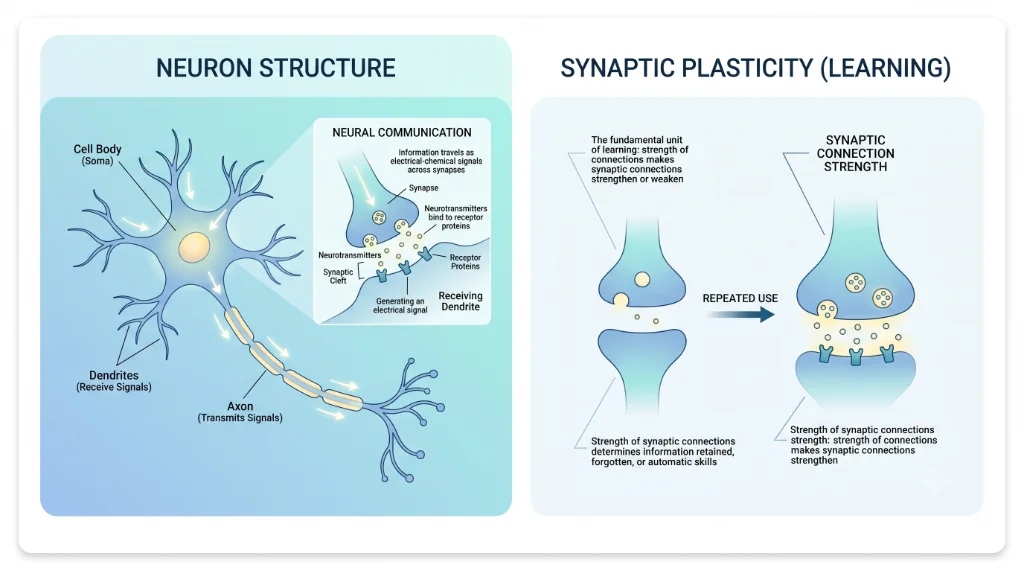
The brain contains approximately 86 billion neurons — specialised nerve cells designed to receive, process, and transmit information. Each neuron has three main components relevant to learning: the cell body (soma), which houses the nucleus and metabolic machinery; dendrites, the branching tree-like extensions that receive incoming signals from other neurons; and the axon, the long cable-like projection that transmits signals outward to the next neuron in a circuit.
Neurons communicate through a tiny gap called a synapse. When a signal travels down an axon, it triggers the release of neurotransmitters — chemical messengers — into the synaptic cleft. These neurotransmitters bind to receptor proteins on the receiving neuron’s dendrites, generating an electrical signal that either excites or inhibits the receiving neuron’s activity.
This is the fundamental unit of learning: information travels as electrical-chemical signals across neural synapses, and the strength of those synaptic connections — how readily one neuron activates another — determines what information is retained, what is forgotten, and how quickly skills become automatic. The critical question is: what makes synaptic connections strengthen or weaken? The answer is the core of learning biology.
Hebbian Plasticity: Neurons That Fire Together Wire Together
In 1949, Canadian psychologist Donald Hebb proposed what became the foundational principle of learning neuroscience: neurons that fire together, wire together. When two neurons are repeatedly activated at the same time — when their signals are temporally correlated — the synaptic connection between them strengthens. When neurons fire independently, or when one fires consistently without the other, the connection weakens and can eventually be eliminated.
This principle — known as Hebbian plasticity or activity-dependent synaptic modification — is the molecular basis of every skill you have ever learned. When you first try to ride a bicycle, neural circuits for balance, visual processing, motor coordination, and spatial awareness are all activated chaotically and inefficiently. With practice, the circuits that are co-activated consistently — those producing the movements that work — have their synaptic connections strengthened. Those that are rarely co-activated together have theirs weakened. The result is a progressively more efficient, more interconnected neural circuit for cycling. The brain has learned.
📖 Also read: Mindfulness for Stress Relief: Complete Beginner’s Guide — Mindfulness practise literally changes brain structure — thickening the prefrontal cortex and hippocampus, the regions most critical for learning and memory consolidation.
Long-Term Potentiation: The Molecular Mechanism of Memory
The specific cellular process that makes Hebbian plasticity real at the molecular level is called long-term potentiation (LTP) — and it is the most studied mechanism in learning and memory research.
LTP occurs at glutamatergic synapses — synapses that use glutamate as their neurotransmitter. Glutamate activates two types of receptors on the receiving neuron: AMPA receptors and NMDA receptors. This distinction is critical to understanding LTP:
AMPA receptors: Open in response to glutamate alone, allowing sodium ions to flow into the cell, generating the normal synaptic signal. These are the standard workhorses of synaptic transmission.
NMDA receptors: These are the molecular learning detectors. They require both glutamate from the sending neuron AND sufficient electrical activity in the receiving neuron to open simultaneously. This simultaneous requirement is what makes them coincidence detectors — they only open when two neurons are firing at the same time. When they open, calcium floods into the cell.
This calcium influx is the trigger for LTP. Calcium activates a cascade of signalling molecules — particularly CaMKII (calcium/calmodulin-dependent protein kinase II) — that produce two effects. In the short term, they cause more AMPA receptors to be inserted into the synapse, making the connection immediately stronger and more responsive. Over hours and days, they activate gene expression in the cell’s nucleus, producing new proteins that structurally change the synapse, grow new dendritic spines, and make the potentiation permanent.
Long-term potentiation is the molecular machinery that converts a fleeting moment of attention and practice into a lasting change in brain structure. It is the cellular mechanism of memory consolidation.
The Hippocampus: The Brain’s Learning Gateway
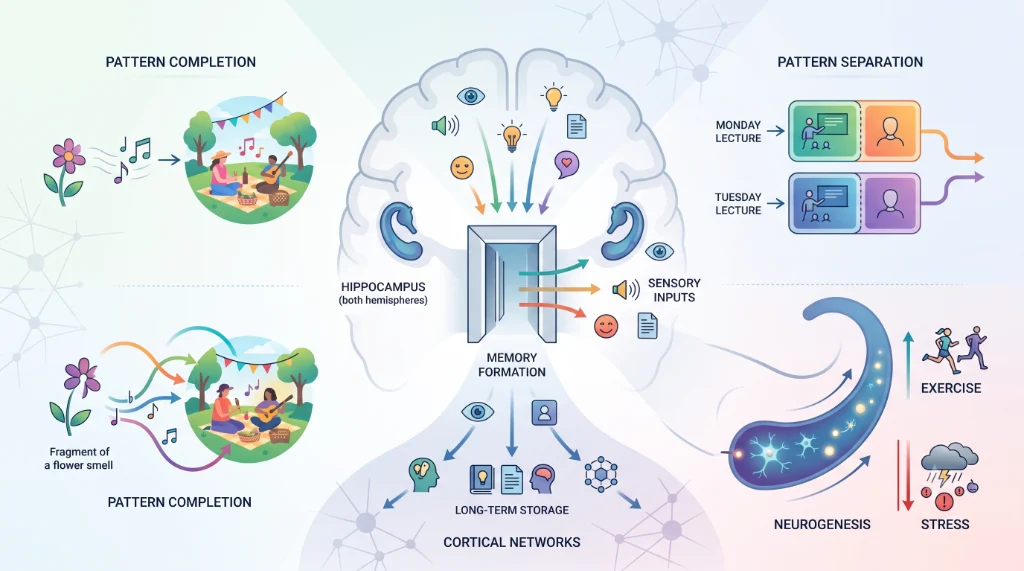
Not all brain regions contribute equally to learning new information. The hippocampus — a curved, seahorse-shaped structure deep in the medial temporal lobe, present in both hemispheres — is the critical gateway through which new declarative memories (facts, events, concepts) must pass before being stored long-term in cortical networks.
The hippocampus has several properties that make it the brain’s primary learning centre:
Pattern completion. The hippocampus can reconstruct a complete memory from a partial cue. When you smell a particular food and suddenly remember an entire meal from years ago, your hippocampus is completing the pattern from a partial input — retrieving the entire associated memory from a fragment of sensory information.
Pattern separation. Simultaneously, the hippocampus separates similar memories so they do not blur together. The ability to remember that Monday’s lecture was about physiology while Tuesday’s was about biochemistry — distinguishing memories that share similar contexts — depends on hippocampal pattern separation.
Neurogenesis. The hippocampus is one of only two brain regions in the adult human brain where neurogenesis — the birth of new neurons — continues throughout life. The dentate gyrus of the hippocampus generates new neurons daily. These new neurons are particularly important for the formation of new memories, especially in separating memories of similar events. The production of new neurons is directly accelerated by exercise and directly impaired by chronic stress — a mechanistic explanation for why physical activity improves learning and why chronic stress impairs it.
When you learn something new, the hippocampus binds together the separate elements of that experience — the sights, sounds, context, emotions, conceptual content — into a unified memory trace. This binding process requires the hippocampus to be functional, alert, and not overwhelmed by stress hormones. It is the reason why emotional, contextually rich, personally meaningful experiences are remembered far better than dry, emotionally neutral facts presented out of context.
Myelination: The Speed Upgrade of Skill Learning
For procedural learning — the acquisition of physical skills, habits, and automatic behaviours — a fundamentally different mechanism operates alongside synaptic strengthening: myelination.
Myelin is a fatty sheath produced by specialised brain cells called oligodendrocytes. It wraps around the axons of neurons in layers, creating a biological insulation that dramatically speeds up the transmission of electrical signals — from approximately 1 metre per second in unmyelinated axons to up to 100 metres per second in heavily myelinated ones. This is a 100-fold increase in transmission speed, with a proportional increase in the precision and timing of neural circuit activation.
When you practise a physical skill repeatedly — a serve in tennis, a piano scale, a barbell squat — the axons of the neural circuits most frequently activated by that practice become more heavily myelinated. The circuit literally becomes faster and more precisely timed with repetition. This is why skilled movements feel effortless and automatic while novice movements feel slow, effortful, and uncoordinated — the skilled person’s brain is running the same circuit at 100 times the transmission speed, with 100 times the precision.
The implication for skill acquisition: Myelination is driven by the number of precisely timed repetitions, not by the duration of practice sessions. Short, frequent, focused practice sessions produce more myelination than long, infrequent, fatigued ones. A 20-minute daily practice session produces better skill development than a single 3-hour session per week — because tired, inaccurate repetitions drive myelination of the wrong circuits.
This is directly relevant to the exercise science we cover throughout our 2026 series. Regular physical activity — including the once-weekly HIIT we covered and the daily walking protocol — not only supports cardiovascular and metabolic health but also supports oligodendrocyte function and white matter integrity, maintaining the myelin that keeps all neural circuits, not just motor ones, operating at peak speed. See our 30-Day Steps Challenge for the daily movement framework that supports brain health alongside metabolic benefits.
The Role of Dopamine: Why Novelty and Reward Drive Learning
Not all new information is learned equally well. The brain has a sophisticated mechanism for prioritising which experiences are worth encoding strongly and which can be safely discarded. The primary signal for this prioritisation is dopamine.
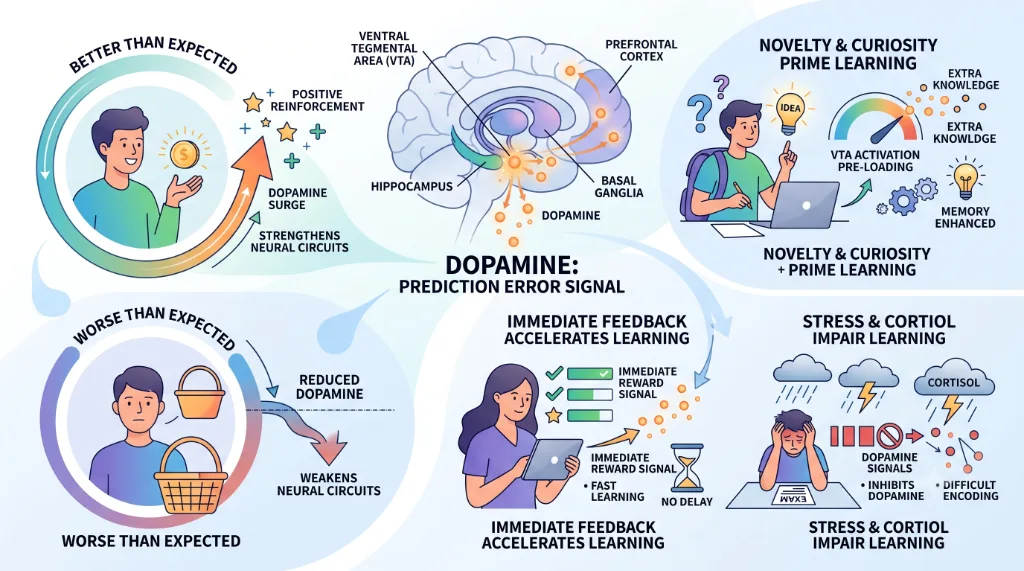
Dopamine is a neurotransmitter released by neurons in the ventral tegmental area (VTA) and substantia nigra — brain regions that project to the hippocampus, prefrontal cortex, and basal ganglia. Contrary to popular belief, dopamine is not simply the “pleasure chemical.” Its primary learning-related function is as a prediction error signal.
When something happens that is better than expected — a correct answer, a successful execution of a new skill, an unexpected reward — dopamine neurons fire strongly, releasing dopamine throughout learning circuits. This dopamine signal essentially tells the brain: “That was better than predicted. Strengthen the neural circuits that led to that outcome.” It is the molecular mechanism of reinforcement learning.
When something happens that is worse than expected, dopamine neurons reduce their firing below baseline — a negative prediction error signal that tells the brain: “That was worse than predicted. Weaken the circuits that led to that outcome.”
The dopamine-learning connection has profound practical implications:
Curiosity and novelty prime learning. Research shows that when people are curious about something, the VTA is activated before they receive the answer — pre-loading dopamine into learning circuits and improving the encoding of not just the sought information but also incidentally encountered information. Engineering curiosity before a learning session improves retention of the content.
Immediate feedback accelerates learning. Dopamine is most effective as a learning signal when it arrives immediately after a correct response. Delayed feedback (getting test results days after the exam) produces far less dopamine-mediated circuit strengthening than immediate feedback. This is why video games and certain learning apps are effective learning tools — they provide immediate, graded feedback that continuously triggers dopamine-mediated memory consolidation.
Stress-related cortisol impairs dopamine signalling. Cortisol — the primary stress hormone — directly inhibits dopamine release and dopamine receptor sensitivity in the hippocampus and prefrontal cortex. This is the neurochemical explanation for why learning under anxiety is so difficult: the stress response is actively suppressing the dopamine signals that drive memory consolidation. This is why examination anxiety causes students to blank on material they know well when they are relaxed.
📖 Also read: Why Chronic Stress Is Hard to Detect in Early Stages — The insidious way that elevated cortisol impairs hippocampal neurogenesis and dopamine signalling — the brain-level damage of undetected chronic stress explained.
Consolidation: From Short-Term Experience to Long-Term Memory
The process of learning does not end when the experience ends. The neural changes initiated by learning — the LTP, the synaptic protein synthesis, the structural changes to dendritic spines — continue for hours and days after the initial experience. This process is called memory consolidation, and it has two distinct phases that are of direct practical importance.
Synaptic consolidation (minutes to hours): Immediately after learning, the initial molecular changes at the synapse — AMPA receptor insertion, CaMKII activation — are fragile and easily disrupted. Anything that interferes with the brain’s biochemical environment in the hours after learning can prevent permanent memory formation. This is why studying something and then engaging in intense emotional activity, alcohol consumption, or severe sleep deprivation prevents the memory from consolidating properly.
Systems consolidation (days to years): Over longer time periods, memories originally dependent on the hippocampus are gradually transferred to long-term storage in the neocortex — the outer layers of the brain where most of our long-term knowledge lives. This transfer happens primarily during sleep, particularly during slow-wave sleep when the hippocampus replays the day’s experiences, and during REM sleep when the neocortex integrates new information with existing knowledge structures.
Sleep: The Non-Negotiable Learning Tool
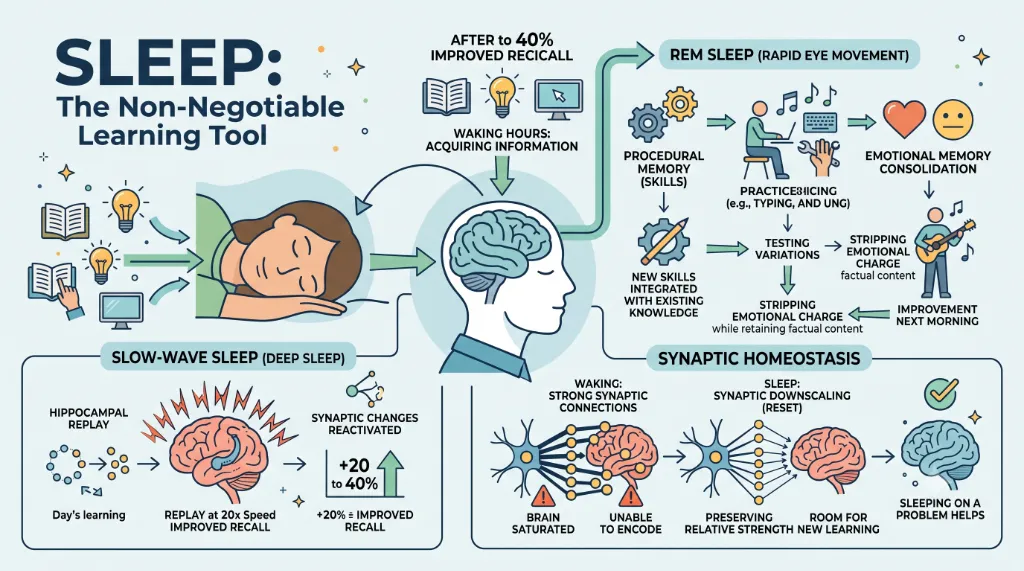
The relationship between sleep and learning is not merely about being alert enough to pay attention the next day. Sleep is when the brain actively processes, consolidates, and integrates the information acquired during waking hours — and the cellular mechanisms are now well-characterised.
Slow-wave sleep (deep sleep) and hippocampal replay: During slow-wave sleep (SWS), the hippocampus replays the neural firing patterns of the day’s learning events — at approximately 20 times the speed at which they originally occurred. This replay process, called sharp-wave ripple activity, re-activates the synaptic changes made during learning and triggers further protein synthesis and structural consolidation. Studies consistently show that a nap containing SWS after learning improves subsequent recall by 20 to 40% compared with equivalent awake rest.
REM sleep and procedural memory: REM (rapid eye movement) sleep — the stage in which dreams occur — is particularly important for procedural memory (skills) and emotional memory consolidation. During REM sleep, the brain integrates newly learned skills with existing knowledge, tests variations on newly learned material, and strips the emotional charge from difficult memories while retaining the factual content. Research shows that a night of REM sleep after motor skill practice produces further improvement in that skill the following morning — beyond what was achieved during practice itself.
Sleep and synaptic homeostasis: During waking hours, the net effect of learning and experience is a strengthening of synaptic connections throughout the brain. If this continued unchecked, the brain would quickly become saturated — unable to encode new information because every synapse was already maximally strengthened. Sleep is when the brain resets synaptic strengths globally downward (synaptic downscaling), preserving the relative strength differences between synapses that encode specific memories while making room for new learning the next day. This is why sleeping on a problem genuinely helps — and why a good night’s sleep after learning is not optional but essential for the learning to be retained.
For the complete sleep optimisation framework — including the nutritional and behavioural practices that maximise slow-wave sleep and REM duration — see our Sleep Hygiene Hacks guide and our Natural Sleep Remedies guide. And our August 2026 sleep and weight gain Columbia study article documents the metabolic consequences of even 80 minutes less sleep per night — metabolic consequences that also impair the brain chemistry required for effective learning.
The Prefrontal Cortex: Where Learning Meets Understanding
While the hippocampus is essential for forming new memories, the prefrontal cortex (PFC) — the outermost region of the frontal lobe, just behind the forehead — is where understanding, meaning-making, and strategic learning occur. The PFC is the most recently evolved part of the human brain and the most distinctively human in its function.
The PFC handles working memory — the ability to hold information in mind while actively manipulating it. When you are trying to understand how a new concept connects to what you already know, your PFC is doing that work. When you are deciding which aspects of new information are most important to remember, your PFC is making those judgements. When you are deliberately applying a new skill in a novel context, your PFC is directing the performance.
This is why deeper processing — actually thinking about new information, connecting it to existing knowledge, generating examples, asking questions — produces far stronger memories than passive re-reading. The PFC’s involvement in working memory and meaning-making drives stronger hippocampal encoding. The more the PFC processes new information, the more robustly the hippocampus encodes it.
It is also why distraction during learning is so devastating. The prefrontal cortex’s working memory capacity is finite and fragile — easily overwhelmed by competing stimuli. A smartphone notification during a study session does not merely pause the learning; it resets the PFC’s working memory, requiring re-establishment of the context and connections that had been built up. Multiple studies find that task-switching during learning reduces retention by 20 to 40%.
📖 Also read: Why Scrolling Your Phone at Night Is Ruining Your Sleep — The same prefrontal cortex that processes learning during the day is also responsible for regulating the emotional arousal that keeps you scrolling at night — the brain-level cost of evening screen time.
Exercise: The Most Powerful Brain-Change Tool Available Without a Prescription
Of all the lifestyle factors that influence neuroplasticity and learning, aerobic exercise has the most robust evidence base — and the mechanisms are more specific and well-characterised than most people know.
BDNF: The brain’s growth hormone. Brain-derived neurotrophic factor (BDNF) is the most important molecular mediator of neuroplasticity. It promotes the growth and branching of dendrites, supports the survival of existing neurons, accelerates hippocampal neurogenesis, and directly enhances LTP — the molecular mechanism of memory formation. BDNF is often called “Miracle-Gro for the brain” in popular science writing, and the analogy is not far off. Single bouts of aerobic exercise — 20 to 30 minutes at moderate to vigorous intensity — produce significant acute increases in blood BDNF levels that persist for 1 to 2 hours post-exercise. Regular aerobic exercise produces sustained elevation of brain BDNF levels and measurable increases in hippocampal volume.
Norepinephrine and dopamine priming. Exercise also acutely elevates norepinephrine and dopamine in the brain — the neurotransmitters most directly associated with attention, focus, motivation, and the dopamine-mediated learning signal described earlier. This is why a 20-minute walk or run before a learning session produces measurable improvements in subsequent learning retention — the exercise has biochemically primed the brain’s attention and memory systems.
Angiogenesis: Growing new blood vessels. Regular aerobic exercise promotes angiogenesis in the brain — the growth of new capillaries that increase blood flow and oxygen delivery to neural tissue. The brain has an enormous metabolic demand (20% of total oxygen consumption from 2% of body mass), and enhanced cerebral blood flow directly supports the energy-intensive processes of memory consolidation and structural synaptic change.
Inflammation reduction. Chronic systemic inflammation — driven by sedentary lifestyle, ultra-processed food consumption, chronic stress, and sleep deprivation — impairs BDNF synthesis, reduces hippocampal neurogenesis, and impairs LTP. Regular exercise reduces pro-inflammatory cytokines and increases anti-inflammatory molecules that directly support neuroplasticity. The same lifestyle interventions that protect metabolic health are protecting brain plasticity through the same anti-inflammatory mechanisms.
Nutrition and the Learning Brain: What You Eat Changes How Well You Learn
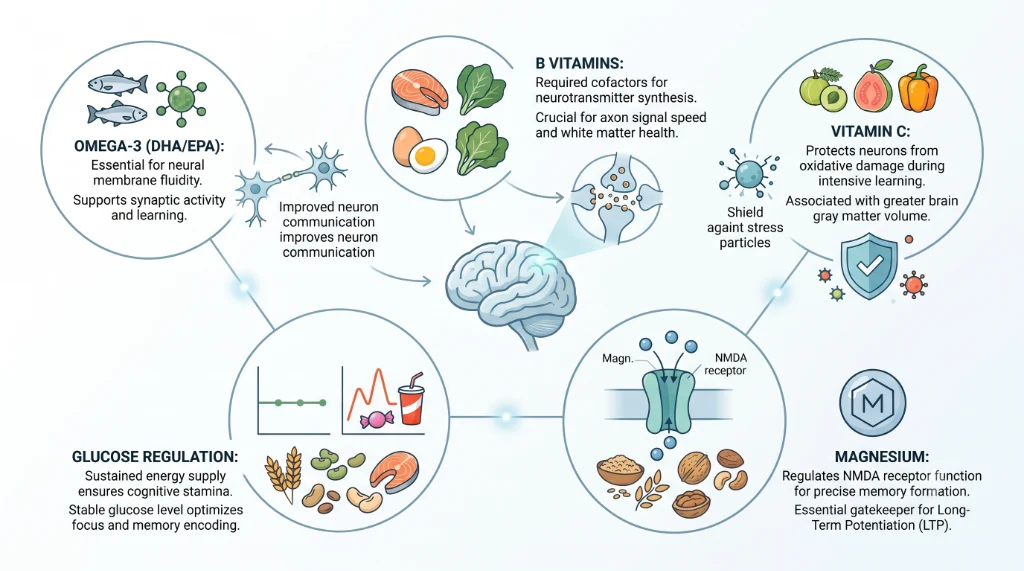
In 12 years of nutritional coaching, one of the most profound insights I have seen clients internalise is that the brain is a metabolic organ — as dependent on nutritional quality as the heart, liver, or skeletal muscle. The specific nutrients required for learning and neuroplasticity are well-characterised.
Omega-3 fatty acids (DHA and EPA): DHA (docosahexaenoic acid) is the most abundant fatty acid in the brain — constituting approximately 40% of the fatty acids in neural cell membranes. It is essential for the fluidity of neural membranes, which determines how readily neurotransmitter receptors (including NMDA receptors critical for LTP) move and cluster in response to synaptic activity. DHA also directly supports BDNF synthesis and hippocampal neurogenesis. Brain DHA levels are determined entirely by dietary intake from fatty fish, algae, or supplementation — the body cannot synthesise adequate DHA from plant-based omega-3 precursors. Low DHA status is independently associated with reduced hippocampal volume and poorer memory function.
B vitamins — especially B12, B6, and folate: The synthesis of every major neurotransmitter involved in learning — dopamine, serotonin, acetylcholine, GABA — requires B vitamins as cofactors. Vitamin B12 is essential for the myelin synthesis that maintains axonal signal speed, and as our August 2026 Cornell/UCSF research documented, B12 insufficiency (even within “normal” blood ranges) is associated with measurable white matter damage and slower cognitive processing. Folate and B6 are required for the methylation reactions that regulate gene expression in neurons — including the genes activated during LTP and memory consolidation.
Vitamin C and the brain: As our July 2026 Hirosaki/PLOS One coverage documented, higher plasma vitamin C levels are directly associated with greater brain gray matter volume and stronger neural connectivity — particularly in regions involved in memory and cognition. Vitamin C is required for the synthesis of norepinephrine (from dopamine) and is the most concentrated antioxidant in neural tissue, protecting neurons from the oxidative damage that occurs during the intense metabolic activity of learning. The richest dietary sources in the Indian context: amla (Indian gooseberry — the single richest food source of vitamin C globally), guava, bell peppers, broccoli. See our Vitamin C and Brain Health article.
Magnesium and NMDA receptor function: Magnesium has a specific and fascinating relationship with learning at the molecular level: it blocks NMDA receptors at rest (preventing spurious calcium influx), but is displaced when the membrane is sufficiently depolarised during learning. This magnesium block is what makes NMDA receptors into coincidence detectors — the molecular mechanism of LTP. Inadequate magnesium impairs this gating function and reduces the precision of LTP induction. As we covered in our August 2026 Magnesium Deficiency article, magnesium deficiency affects an estimated 70% of Indian adults — meaning most people’s NMDA receptors are operating with impaired gating function, directly compromising the molecular machinery of memory formation.
Glucose regulation and cognitive stamina: The brain is the body’s most glucose-dependent organ, consuming approximately 20% of all glucose at rest despite comprising only 2% of body mass. Blood glucose fluctuations — the spikes and crashes produced by high-glycaemic meals — produce corresponding fluctuations in cognitive performance, particularly working memory and attention. A pre-learning meal built around complex carbohydrates (whole grains, legumes), protein, and healthy fats produces a stable, sustained glucose supply to the brain. A high-sugar meal produces a sharp initial glucose peak followed by a crash that impairs the prefrontal cortex function required for deep processing and memory encoding.
📖 Also read: Vitamin C and Your Brain — The July 2026 Research — The PLOS One study linking plasma vitamin C levels to brain gray matter volume and neural connectivity — the complete vitamin C and cognition evidence base.
Stress, Cortisol, and the Blocked Learning Brain
Of all the factors that impair learning and neuroplasticity, chronic stress is the most significant and the most underestimated. Cortisol — the body’s primary stress hormone, produced by the adrenal glands in response to psychological and physiological stress — has specific and well-documented effects on the neural structures most critical for learning.
Hippocampal damage from chronic cortisol. The hippocampus is uniquely rich in cortisol (glucocorticoid) receptors. In acute stress, cortisol actually enhances memory formation — which is why emotionally significant, stressful experiences are typically remembered vividly. But chronic elevation of cortisol produces the opposite effect: it reduces hippocampal neurogenesis, causes atrophy of hippocampal dendrites, suppresses LTP induction, and can eventually cause measurable reduction in hippocampal volume. People with a history of chronic stress or PTSD consistently show smaller hippocampal volumes and impaired declarative memory. This is not metaphorical — it is structural brain damage from prolonged cortisol exposure.
Prefrontal cortex impairment. Cortisol also impairs the prefrontal cortex — the region responsible for working memory, attention, and the strategic processing that drives deep learning. Even acute psychological stress (the kind produced by performance anxiety, interpersonal conflict, or time pressure) measurably reduces working memory capacity and shifts decision-making from reflective to reactive. The prefrontal cortex is effectively taken offline by the stress response, because in the evolutionary context of the acute stress response, reflective planning is less immediately valuable than reactive survival behaviour.
The amygdala takes over. When cortisol is chronically elevated, the amygdala — the brain’s threat-detection and emotional response centre — becomes hyperactive and gains disproportionate influence over behaviour and attention. The amygdala directs attention toward potential threats and away from cognitively demanding learning tasks. This is why chronically stressed people find it difficult to concentrate, find their minds returning repeatedly to worries during study or work, and find it harder to retain new information.
For the complete protocol for identifying and addressing chronic stress before it impairs cognitive function, see our Stress Management Solutions guide and our guide on why chronic stress is hard to detect in its early stages. And for the adaptogenic support that specifically reduces cortisol and its hippocampal consequences, see our Ashwagandha Benefits guide.
The Spacing Effect: How to Maximise Learning Efficiency
One of the most robustly replicated findings in learning science — and one of the most consistently ignored in practice — is the spacing effect: distributing practice across multiple sessions separated by time gaps produces dramatically better long-term retention than massing the same total practice time into a single session.
The neurobiological explanation is directly connected to the mechanisms described above. When you re-encounter information after a delay — particularly just as you are beginning to forget it — several things happen simultaneously:
• The hippocampus must reconstruct the memory from partial cues, which strengthens the retrieval pathways and makes the memory more resistant to future forgetting.
• Re-encoding on the second exposure is processed more deeply by the PFC because it is no longer completely familiar — requiring more meaning-making, which drives stronger hippocampal encoding.
• Each retrieval and re-encoding strengthens the synaptic connections underlying the memory through LTP, and multiple rounds of LTP at the same synapse drive more permanent structural changes than a single intense LTP episode.
The practical implication is counter-intuitive but scientifically unambiguous: studying 30 minutes per day for 7 days produces dramatically better retention than studying 210 minutes in one marathon session, even though the total time is identical. The same principle applies to physical skill acquisition, language learning, and the learning of any complex conceptual content.
Interleaving: Why Mixing Subjects Feels Harder but Works Better
A related counter-intuitive finding from learning science is the interleaving effect: practising multiple skills or subjects in interleaved fashion (alternating between them within a session) produces better long-term retention and transfer than blocked practice (completing all of one before moving to the next), even though interleaving feels more difficult and produces worse performance during the practice session.
The neurological mechanism is similar to the spacing effect: interleaving forces the brain to distinguish between similar but different concepts or movements, driving the pattern separation function of the hippocampus. This discrimination between similar items strengthens the specificity of each memory trace, making retrieval more precise and more reliable.
For my clients learning new movement patterns, dietary skills, or health concepts: resist the temptation to completely master one thing before moving to the next. Interleave your practice. The session will feel harder. The learning will be better.
Neuroplasticity Across the Lifespan: It Is Never Too Late
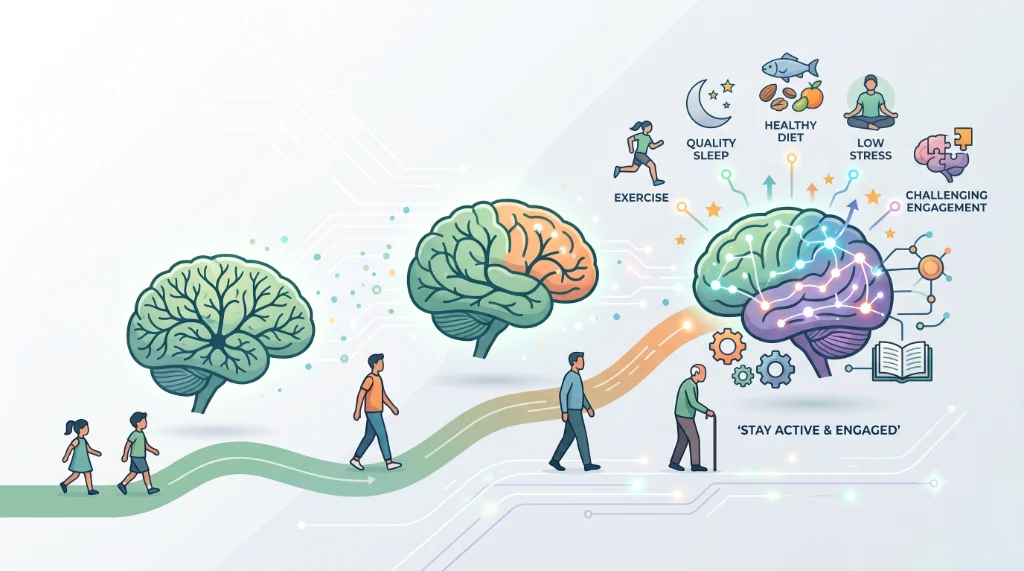
One of the most clinically important messages I take from the neuroplasticity literature is its implications for ageing. The cultural narrative of cognitive decline — that the brain inevitably deteriorates from the thirties onward, that old dogs cannot learn new tricks, that intelligence is fixed — is contradicted by the neuroscience at almost every level.
While certain aspects of neural processing do slow with age — processing speed, working memory capacity, and the density of hippocampal neurogenesis — the fundamental mechanisms of learning remain intact throughout life. LTP occurs in the ageing brain. Myelination continues. Synaptic structural changes in response to experience persist into advanced age. The brain’s capacity to learn remains, even if some of the conditions supporting optimal learning (sleep quality, hormonal environment, metabolic health) become harder to maintain.
What matters is not age but lifestyle. The studies consistently showing maintained or improved cognitive function in older adults share a common set of lifestyle factors: regular aerobic and resistance exercise; high-quality sleep; nutritionally dense diets rich in omega-3 fatty acids, B vitamins, polyphenols, and adequate protein; low chronic stress; and continued cognitive engagement with challenging new material. These are modifiable variables. The biology of neuroplasticity is available to you at any age.
For the complete longevity-oriented lifestyle framework that preserves neuroplasticity alongside metabolic health, see our Science-Based Longevity Protocols guide and our Best Longevity Supplements Evidence-Based Guide.
The Practical Protocol: How to Learn Better Starting Tonight
Based on the neuroscience above and 12 years of applying it in clinical and coaching contexts, here is the integrated protocol I recommend for maximising learning at any age:
Before learning — prime the brain:
• Exercise first: 20–30 minutes of aerobic activity (brisk walk, cycling, swimming) before a learning session elevates BDNF, dopamine, and norepinephrine for 1–2 hours, creating optimal neurochemical conditions for LTP.
• Generate curiosity: spend 5 minutes reading questions about the topic before studying it. The curiosity state activates the VTA and pre-loads dopamine into learning circuits.
• Eat a brain-supportive meal 1–2 hours before: complex carbohydrates (whole grains, oats) + protein (eggs, legumes, fish) + healthy fat (nuts, olive oil). Avoid high-sugar meals that produce glucose spikes and crashes during the learning session.
During learning — deep processing:
• Eliminate distractions completely. No phone visible, no notifications. Even the presence of a phone face-down on a desk measurably reduces working memory capacity — put it in another room.
• Practise active recall rather than passive re-reading: after reading each section, close the book and write or speak everything you remember. The retrieval effort dramatically strengthens encoding.
• Use spaced intervals: work in 25–45 minute focused blocks with 10-minute breaks, allowing memory consolidation processes to begin between blocks.
• Interleave subjects or skills rather than blocking them sequentially.
After learning — protect consolidation:
• Do not do high-stress emotional activities immediately after learning. The fragile synaptic consolidation window (30–120 minutes post-learning) is easily disrupted by strong emotion or cortisol elevation.
• Sleep the same night. The hippocampal replay during that night’s slow-wave sleep is the most critical consolidation event. Protecting sleep quality after learning is as important as the learning itself.
• Schedule a review at increasing intervals: 24 hours, 3 days, 1 week, 1 month. Each retrieval at just the right moment of beginning-to-forget maximises the spacing effect.
The Takeaway: Your Brain Changes Every Time You Learn
Every piece of new information you encounter, every skill you practise, every concept you connect to existing knowledge physically changes your brain — strengthening synaptic connections through long-term potentiation, growing new dendritic branches, myelinating well-used neural circuits, and in the hippocampus, potentially generating entirely new neurons. This is not metaphor. It is the cellular architecture of intelligence, continuously remodelled by experience throughout your entire life. The quality of that remodelling — how durably information is encoded, how efficiently skills are acquired, how resilient cognitive function remains across ageing — depends profoundly on the lifestyle variables that are the core of our mission at Live NU Life: quality sleep, nutritional adequacy, regular exercise, stress management, and the continuous challenge of new learning. For the complete nutritional framework that supports the brain’s structural requirements for lifelong plasticity, see our Functional Nutrition guide, our Superfoods for Breakfast guide, and our Wellbeing Mastery guide.
About the Author
Tanveer Ahmed Khan is a K11 School of Fitness Sciences-certified personal trainer and REPS India-registered dietitian-nutritionist with over 12 years of experience. Coaching: info@livenulife.com | Instagram: @fitwithtanveer | livenulife.com
Scientific References
1. Bliss, T.V.P., Lømo, T. (1973). Long-lasting potentiation of synaptic transmission in the dentate area of the anaesthetised rabbit following stimulation of the perforant path. Journal of Physiology, 232(2): 331–356. — Original LTP discovery paper.
2. Hebb, D.O. (1949). The Organisation of Behaviour: A Neuropsychological Theory. Wiley. — Foundational Hebbian plasticity framework.
3. Eriksson, P.S., et al. (1998). Neurogenesis in the adult human hippocampus. Nature Medicine, 4(11): 1313–1317. — Adult hippocampal neurogenesis confirmation.
4. Cotman, C.W., Berchtold, N.C. (2002). Exercise: a behavioral intervention to enhance brain health and plasticity. Trends in Neurosciences, 25(6): 295–301. — Exercise-BDNF-neuroplasticity relationship.
5. Camnasio, S., et al. (2026). Plasma vitamin C levels and brain structural connectivity: the OSHI cohort. PLOS One. — Our July 2026 vitamin C brain coverage.
6. Stickgold, R., Walker, M.P. (2013). Sleep-dependent memory triage: evolving generalisation through selective processing. Nature Neuroscience, 16(2): 139–145. — REM sleep and memory generalisation.
7. Roediger, H.L., Karpicke, J.D. (2006). Test-enhanced learning: taking memory tests improves long-term retention. Psychological Science, 17(3): 249–255. — Active recall superiority over re-reading.
8. McEwen, B.S. (2007). Physiology and neurobiology of stress and adaptation: central role of the brain. Physiological Reviews, 87(3): 873–904. — Cortisol and hippocampal damage.
9. Morris, A.M., Bhatt, D.L. (2026). Vitamin B12 deficiency, mitochondrial DNA integrity, and brain white matter health. The Journal of Nutrition / GeroScience. — Our August 2026 B12 brain coverage.
10. Taylor, A.N., et al. (2026). Vitamin D supplement intake is associated with better cognition in persons with sleep disturbance and mild cognitive impairment. Sleep Medicine, 146: 108960. — Emory August 2026 cognitive study.