Night phone scrolling often begins with a simple plan to check one message, yet many people around the globe find themselves lying in bed, thumb moving endlessly, while minutes quietly turn into an hour.
This late-night screen habit causes sleep disruption and phone problems because the brain stays alert, and the blue light’s sleep impact delays the body’s natural signal to feel sleepy. Over time, late-night screen habits slowly shift sleep timing, making mornings harder and reducing deep rest needed for focus, mood, and daily energy. Let’s understand what’s really happening now.
The Hidden Sleep Damage of Late-Night Phone Use
Phone effects on sleep often start slowly, so many people do not notice the problem until they feel tired every morning. Late-night scrolling affects sleep through light exposure, mental excitement, and daily habits that slowly become routine. When this pattern repeats, it leads to circadian rhythm disruption and melatonin suppression, which makes falling asleep harder. Occasional phone use is normal, but regular late-night use slowly changes digital sleep habits and reduces sleep quality over time.
How Screen Light Confuses Your Body Clock
Blue light from phone screens tells the brain that it is still daytime, causing melatonin suppression from screens and delaying sleep timing. Even a few minutes of blue light circadian rhythm exposure before bed can shift the body clock.
- Sleep starts later than planned
- Sleep becomes lighter and easier to disturb
- Morning tiredness increases even after enough hours in bed
The “Dopamine Scroll Loop” That Keeps You Awake
Late-night scrolling works like a small slot machine; each swipe creates hope that the next post will be interesting, showing the dopamine scrolling effect. This habit strengthens phone addiction and sleep problems because the brain stays alert instead of relaxing.
- Mind remains active and keeps searching for new content
- Harder to stop scrolling even when sleepy
- The brain takes longer to calm down after putting the phone away
Emotional Stimulation and Stress Content Before Bed
Watching news, arguments, or comparison-heavy social media can create stress content sleep quality, raising alertness instead of calmness. For example, someone who reads upsetting news notifications before bed may lie awake thinking about the issue, leading to social media anxiety, sleep problems and next-day fatigue.
Signs Your Nighttime Phone Habit Is Affecting Your Sleep
Signs of phone affecting sleep often appear slowly, so many people ignore them. Late-night scrolling feels harmless, yet the body misses the deep rest needed for repair. When these small changes repeat daily, morning energy, mood, and focus begin to drop.
Morning Brain Fog and Delayed Wake-Up Energy
- Feeling tired even after sleeping seven to eight hours regularly.
- Alarm snooze repeats because the body still feels heavy.
- Early work or study tasks take longer since concentration builds slowly.
- Coffee or tea is needed immediately to feel alert each morning before normal routine starts daily lately.
Difficulty Falling Asleep Without the Phone
Many people now need the phone beside the pillow to relax; sleep feels incomplete. For example, someone plans to check messages for five minutes but keeps scrolling short videos, pushing bedtime thirty minutes later and delaying natural sleep signals. This habit is daily noticed by them.
Increased Night-Time Anxiety or Overthinking
- News, work chats, or emotional posts keep the mind active.
- Even after the phone is locked, unfinished thoughts continue running.
- This leads to a faster heartbeat, shallow breathing, and sudden worry before sleep.
- Sleep breaks easily during the night without a clear reason, the next day, and discomfort increases noticeably sometimes.
How Night Scrolling Impacts Sleep Quality?
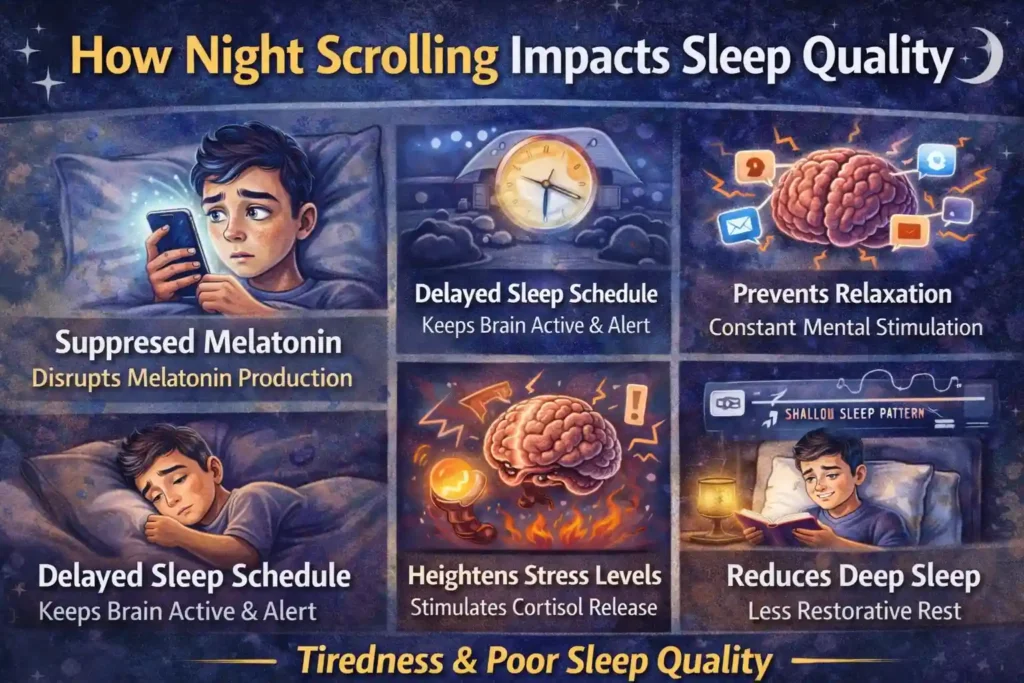
Nighttime habits can have a big effect on how well someone sleeps. Simple activities like scrolling on the phone or reading a book affect the brain very differently. Comparing screen vs reading sleep helps understand why some bedtime routines make it easier to fall asleep while others keep the mind active.
Activity Before Bed | Brain State | Likely Sleep Outcome |
Social media scrolling | Highly stimulated | Delayed sleep onset |
Watching intense videos | Alert/stress response | Lighter sleep |
Reading a paper book | Relaxed | Faster sleep onset |
Stretching/journaling | Calm | Improved sleep quality |
Choosing calming activities like reading or journaling helps the brain slow down and signals the body that it is time to sleep. In contrast, using phones or watching thrilling content keeps the mind alert, making it harder to fall asleep quickly. Observing these bedtime habits comparison can guide better nightly routines for deeper, more restful sleep.
Practical Fixes That Actually Work
Many people struggle with how to stop scrolling at night. Bedtime phone habits can quietly steal sleep, even when you feel tired. Instead of strict rules, small, realistic changes can help the body and mind ease into rest. These simple habits make reducing screen time before sleep feel natural and doable.
The 30-Minute Digital Wind-Down Rule
Stop using stimulating apps at least 30 minutes before bed. Begin a calming routine instead.
- Step 1: Set a reminder 30 minutes before sleep to put the phone down.
- Step 2: Choose a relaxing activity like light reading or gentle music.
- Step 3: Avoid social media, games, or chats that make the mind active.
- Step 4: Stick to this routine for a few days to make it a habit.
Move the Charger Away From the Bed
Keeping the phone out of reach reduces automatic checking during the night. It encourages using the phone only when necessary.
Mini tip: Use an alarm clock instead of relying on the phone to wake up.
Use Screen Settings That Reduce Stimulation
Adjusting your phone can make it less tempting at night. Useful settings include:
- Night mode or blue light filter
- Grayscale mode to remove colourful rewards
- Turn off non-essential notifications
Replace the Scroll With a “Buffer Activity”
A short calming activity signals the brain that sleep time is near. Instead of scrolling, try a few minutes of something gentle. Examples include reading a few pages, stretching lightly, or journaling thoughts. These simple swaps reduce screen time before sleep without feeling like a restriction.
A Simple Night Routine Framework Anyone Can Follow
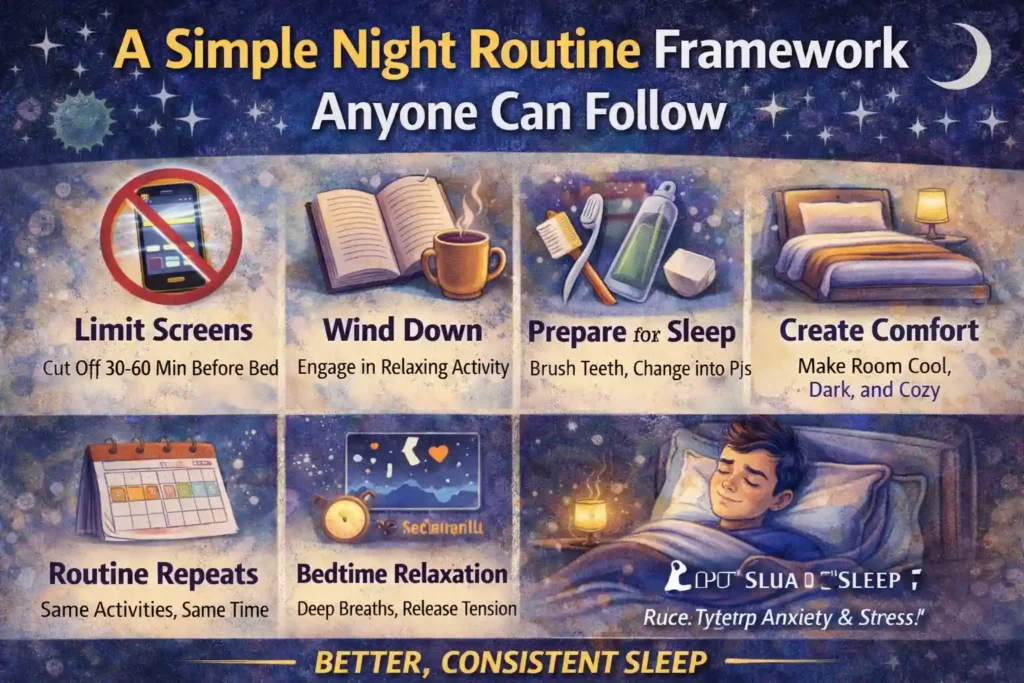
A healthy bedtime routine can make falling asleep easier and improve overall sleep quality. Following a simple sleep hygiene routine helps the body relax naturally before bed. This framework is easy to remember and can be applied every night without stress.
Step 1 – Reduce Stimulation
Start by dimming the lights to signal your body that it is time to wind down. Silence phone notifications and avoid screens that keep the mind alert. Creating a calm environment prepares both mind and body for rest.
Step 2 – Transition Activity
Spend 10–15 minutes on a quiet activity like reading, gentle stretching, or deep breathing. These small actions help the body shift from busy daytime energy to a relaxed state. Keeping this step consistent every night reinforces the routine.
Step 3 – Consistent Sleep Timing
Go to bed at the same time each night to stabilise the body’s internal clock. A fixed bedtime helps make waking up easier and improves sleep quality. Over time, the body naturally starts feeling sleepy around this set time.
When Sleep Problems May Need Professional Attention
Chronic insomnia help is important when sleepless nights start affecting daily life. Everyone experiences occasional trouble falling asleep, and that is usually normal. But when poor sleep continues for weeks, it can harm health and mood. Seeking professional advice early can prevent long-term problems and improve overall rest.
Signs to consider a sleep disorder consultation:
- Trouble falling asleep or staying asleep for more than three weeks.
- Feeling tired or drowsy during the day despite enough time in bed.
- Frequent waking during the night without a clear reason.
- Relying on sleep aids regularly but still feeling unrested.
Key Takeaway: Small Night Habits Decide Next-Day Energy
Small night habits can greatly improve sleep quality and help you feel energised the next day. Making tiny changes, like setting a fixed bedtime or deciding to stop late-night scrolling, can show real results quickly. Focusing on one simple habit tonight is easier than trying to overhaul everything at once.
Even minor adjustments, like dimming lights or keeping your phone away, can improve sleep habits today and boost morning energy. The key is consistency—small steps every night add up over time. Start with one change tonight, and the next day will already feel different.
Read More: Shoulder Tendonitis
Frequently Asked Questions About Nighttime Phone Use and Sleep
Does scrolling at night always ruin my sleep?
Occasional scrolling might not harm sleep much, but frequent use can delay falling asleep and lower sleep quality. Bright screens and constant notifications can keep the brain alert, making it harder to relax. Being aware of this screen sleep can help people decide when to put the phone aside.
How long before bed should I stop using my phone?
A simple rule is to stop using the phone 20–30 minutes before bed. Even brief activities like dimming the screen or reading a book help the brain shift toward sleep mode. Following a bedtime phone curfew supports better sleep hygiene and smoother nights.
Can night mode or grayscale really help me sleep?
Using night mode or grayscale can reduce bright light and make apps less stimulating. They work like lowering the volume on your brain, so scrolling doesn’t feel as exciting. These settings may offer a night mode sleep benefit, but they don’t replace a full bedtime routine.
What if I can’t resist checking my phone at night?
Small steps often work better than strict rules. Moving the charger away, setting a reminder, or keeping a short activity nearby can slowly reduce phone addiction at bedtime. Even tiny habits, like putting the phone face down, can help stop late-night scrolling.
Are there any apps that can help me sleep better?
Some sleep tracker apps and bedtime routine apps gently guide users to reduce screen time. Calming audio, guided routines, or reminders can support better rest, but they’re tools, not solutions. People can try what fits their style to improve sleep without pressure.
References
Chang, A.-M., Aeschbach, D., Duffy, J. F., & Czeisler, C. A. (2015). Evening use of light-emitting eReaders negatively affects sleep, circadian timing, and next-morning alertness. Proceedings of the National Academy of Sciences, 112(4), 1232–1237.
Chellappa, S. L., Viola, A. U., Schmidt, C., Bachmann, D. R., Proussier, J., Gabel, V., Chesham, A., Schmidt-Trucksäss, A., & Cajochen, C. (2013). Acute exposure to evening blue-enriched light impacts on human sleep. Journal of Sleep Research, 22(5), 573–580.
Czeisler, C. A., & Gooley, J. J. (2007). Sleep and circadian rhythms in humans. Cold Spring Harbour Symposia on Quantitative Biology, 72, 579–597.
Exelmans, L., & Van den Bulck, J. (2016). Bedtime mobile phone use and sleep in adults. Social Science & Medicine, 148, 93–101.
Hölbl, M., & Mikuš, M. (2021). The effects of smartphone use on sleep quality and mental health: A systematic review. Computers in Human Behavior, 116, 106647.
Twenge, J. M., & Campbell, W. K. (2018). Associations between screen time and lower psychological well-being among children and adolescents: Evidence from a population-based study. Preventive Medicine Reports, 12, 271–283.
Wood, A. M., Joseph, S., Lloyd, J., & Atkins, S. (2009). Gratitude influences sleep through the mechanism of pre-sleep cognitions. Journal of Psychosomatic Research, 66(1), 43–48.