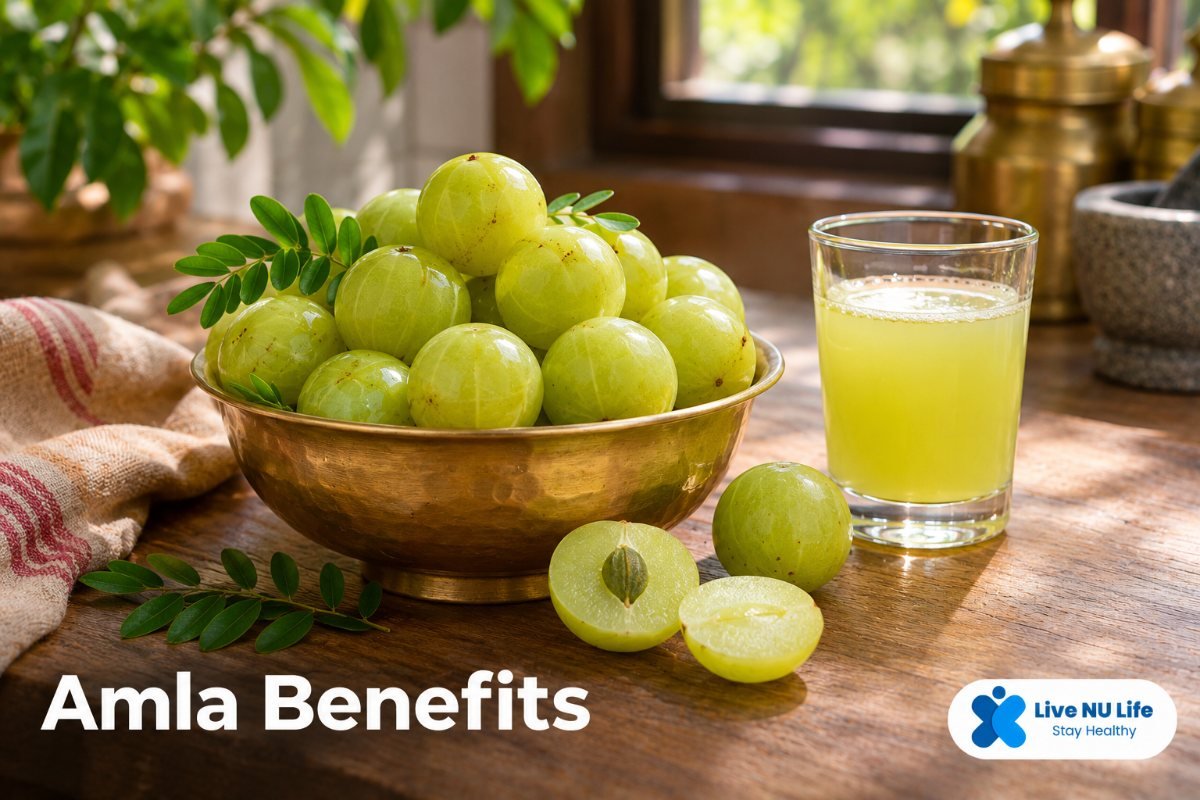
Amla (Indian gooseberry) is worth eating mainly because it is one of the richest food sources of vitamin C and polyphenol antioxidants. It also has early clinical evidence for lowering cholesterol and triglycerides. Most other claims you will read, for hair growth, weight loss or “detox”, rest on tradition or lab studies rather than human trials.
This guide separates what has been tested in people from what has not. It also covers how much to eat, the best forms to buy in winter, and who should check with a doctor first.
What is amla?
Amla is the fruit of Phyllanthus emblica (also called Emblica officinalis), a tree native to India. The fruit is pale green, about the size of a large marble, and very sour and astringent. In Ayurveda it is one of the three fruits in triphala and the base of chyawanprash.
In North India, fresh amla comes into markets from around October and stays through winter. That is the best time to buy it fresh, eat it raw and make pickles or murabba for the rest of the year.
Amla nutrition: how much vitamin C is really in it?
Numbers online range from 400 to 900 mg of vitamin C per 100 g. The honest answer is that it varies with the variety, how ripe the fruit is and how it is stored or processed.
One lab study measured about 400 mg of vitamin C per 100 g of frozen amla and about 370 mg per 100 g of dried fruit (Scartezzini et al., 2006). Even at the lower figure, one medium amla supplies more vitamin C than most adults need in a day.
The same study found that vitamin C accounted for roughly 45–70% of the antioxidant activity in amla extracts. The rest comes from polyphenols such as tannins, which also give amla its astringent taste.
| Form of amla | What to expect |
|---|---|
| Fresh fruit | Highest vitamin C, plus fibre. Very sour |
| Dried amla / supari | Keeps a good share of vitamin C. Often salted |
| Amla powder | Convenient; quality varies by brand |
| Amla juice | Vitamin C without the fibre. Check for added sugar |
| Murabba and candy | Heavy sugar syrup; treat as a sweet, not a health food |
Amla benefits backed by human studies
1. May lower cholesterol and triglycerides
This is the best-tested benefit. In a 12-week, double-blind trial, 98 adults with high cholesterol took either 500 mg of amla extract or a placebo twice a day. The amla group had significantly lower total cholesterol, LDL cholesterol and triglycerides than the placebo group. Their atherogenic index of plasma, a marker of heart risk, fell by 39% (Upadya et al., 2019).
Two caveats: this used a standardised extract, not fresh fruit, and it was one trial. It is promising, not a replacement for medicine your doctor has prescribed.
2. Possible help with blood sugar (early evidence)
The same trial also saw signs of lower blood sugar, but the authors said this needs a larger study to confirm. Smaller studies point the same way. If you take medicine for diabetes, talk to your doctor before taking amla extract daily, because the two together could lower blood sugar more than expected.
3. Supports normal immune function through vitamin C
Vitamin C helps immune cells work normally, and amla is an easy way to cover your daily need from food. That is different from saying amla prevents colds or infections, which has not been shown in trials of amla itself.
Benefits with weaker evidence
- Hair: Amla oil and amla powder are traditional hair remedies, and it is widely used in hair products. Human trials on hair growth are lacking, so treat claims of “stopping hair fall” with caution.
- Skin: Vitamin C is needed to make collagen. Eating amla supports this like any vitamin C source, but there is no strong evidence that amla specifically slows skin ageing.
- Digestion: Amla is traditionally used for acidity and indigestion, and it is part of triphala. Evidence in people is limited.
- Weight loss: No good human evidence. Amla is low in calories, but it is not a fat burner.
How to eat amla every day
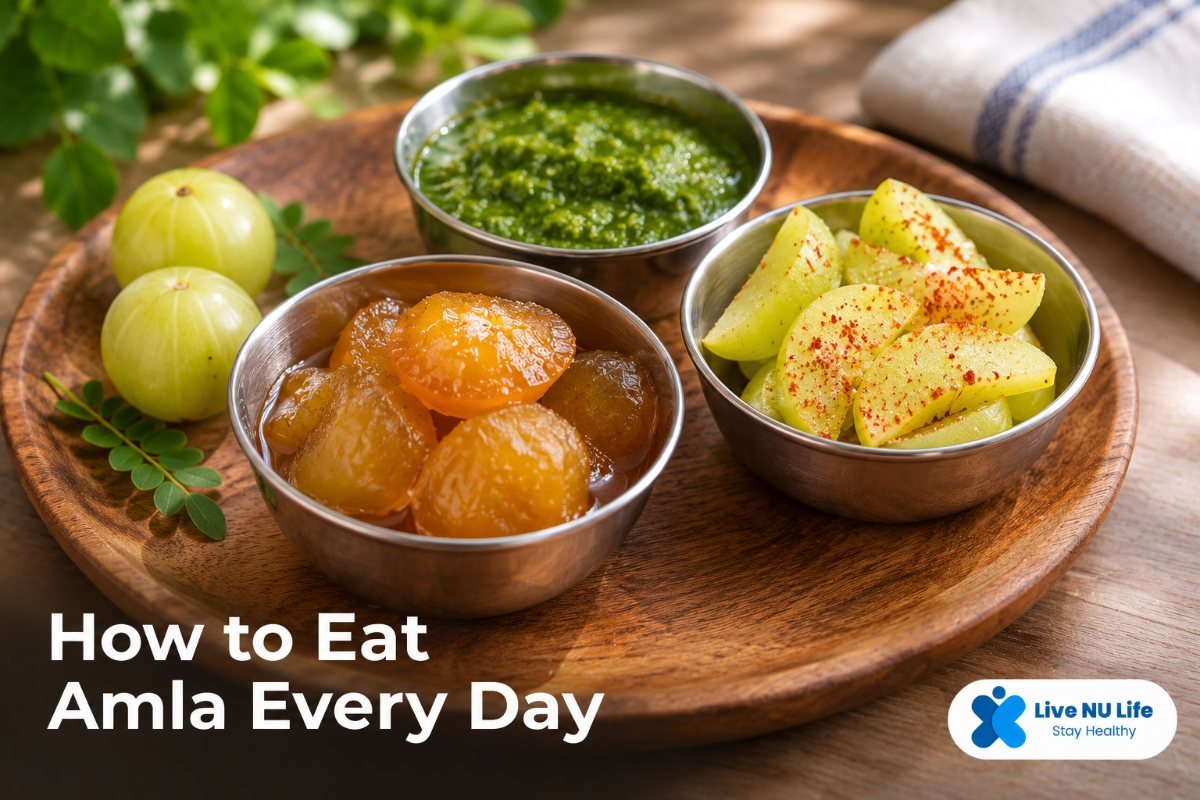
- Raw: Cut one fresh amla into pieces and eat with a pinch of salt or black salt. This keeps the most vitamin C, because heat breaks vitamin C down.
- In chutney: Blend amla with coriander, mint, green chilli and a little ginger. No cooking needed.
- As juice: 20–30 ml of fresh amla juice mixed into a glass of water. Drink it with food if it bothers your stomach.
- As powder: About 1 teaspoon in water, buttermilk or a smoothie.
- Dried amla: A handy winter-to-summer option. Watch the salt.
Murabba, candy and sweetened juices count as sweets. One piece of murabba can carry several teaspoons of sugar.
How much amla is enough?
There is no official dose for fresh fruit. As a food, one to two fresh amla a day is a practical amount that covers your vitamin C need with room to spare. The cholesterol trial above used 500 mg of extract twice a day for 12 weeks. If you take an extract, follow the label and don’t stack several amla products at once.
Side effects and who should be careful
Amla is a food and is safe for most people in normal amounts. Be careful in these cases:
- You take diabetes medicine: amla may add to the blood-sugar-lowering effect.
- You take blood thinners or have surgery coming up: ask your doctor, as some research suggests amla may affect platelets.
- You have acid reflux or a sensitive stomach: the sourness can cause discomfort on an empty stomach. Take it with food.
- You have had kidney stones: very high vitamin C intake from concentrated products can raise oxalate. Stick to food amounts and ask your doctor.
- You are pregnant or breastfeeding: food amounts are fine for most people, but check before taking extracts.
The bottom line
Amla is a cheap, seasonal way to get a large dose of vitamin C and antioxidants. Its strongest human evidence is for cholesterol and triglycerides, from an extract trial. Eat one fresh amla a day through winter. Skip the sugar-heavy forms, and talk to your doctor before using extracts alongside medicine.
For other herbs that support immunity, read our guide to the best Ayurvedic herbs for the immune system. To see how vitamin C affects the brain, read vitamin C and brain health.
Frequently asked questions
Can I eat amla every day?
Yes. One or two fresh amla a day is a normal food amount for most adults. Take it with food if it causes acidity.
Is amla juice as good as eating the fruit?
Juice keeps most of the vitamin C but loses the fibre. Fresh juice without added sugar is a fine option; packaged juices vary a lot.
When is the best time to eat amla?
There is no proven best time. Many people take it in the morning. If it upsets your stomach, have it with a meal instead of on an empty stomach.
Is amla good for diabetics?
Early studies suggest it may help lower blood sugar, but the evidence is not strong yet. If you take diabetes medicine, ask your doctor first and monitor your sugar.
What is amla called in English?
Amla is called Indian gooseberry in English. Its botanical name is Phyllanthus emblica.
Sources
- Scartezzini P, et al. Vitamin C content and antioxidant activity of the fruit and of the Ayurvedic preparation of Emblica officinalis Gaertn. J Ethnopharmacol. 2006;104:113–118.
- Upadya H, et al. A randomized, double blind, placebo controlled, multicenter clinical trial to assess the efficacy and safety of Emblica officinalis extract in patients with dyslipidemia. BMC Complement Altern Med. 2019;19(1). doi:10.1186/s12906-019-2430-y
This article is for general information and is not medical advice. See our medical disclaimer.