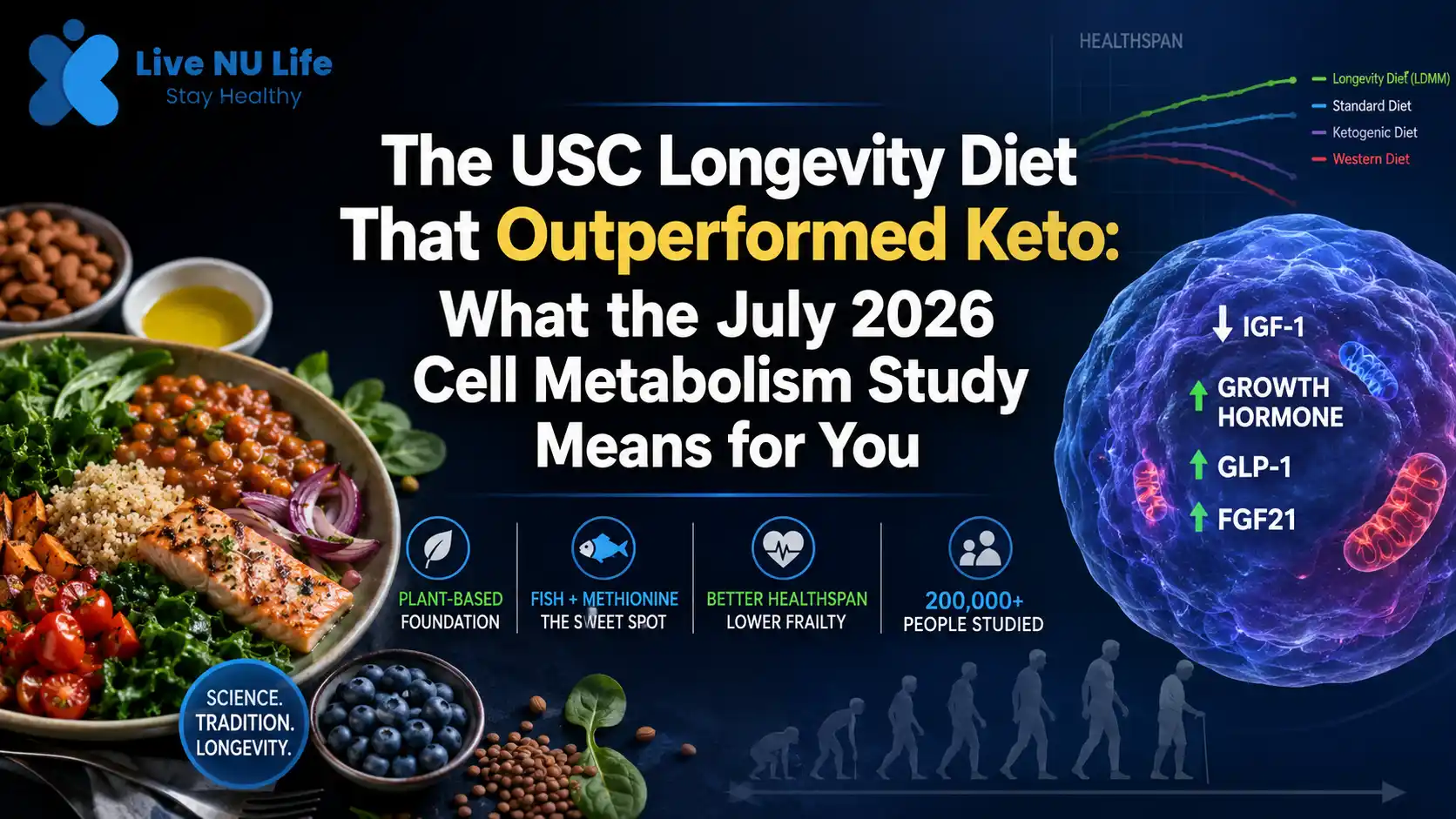
KEY TAKEAWAY: A landmark USC study published in Cell Metabolism (July 2026) tested four diets — standard, Western, ketogenic, and a modified Mediterranean longevity diet — in older mice and 200,000+ humans. The longevity diet, largely plant-based and fish-supplemented with strategic methionine, outperformed all others for healthspan, fat loss, frailty reduction, and cardiometabolic markers. The keto and Western diets increased frailty and fat mass.
The Diet Wars Have a New Contender — And It Is Ancient
Every few years, a dietary approach generates enough scientific momentum to force the conversation forward. Keto had its moment. Carnivore is having one now. And in July 2026, the research community — led by one of the most rigorous longevity scientists working today — has delivered findings that systematically evaluate these competing dietary philosophies against each other, in the same study, at the same time.
Professor Valter Longo of the USC Leonard Davis School of Gerontology — author of The Longevity Diet and one of the world’s most cited scientists in ageing research — published a major study in Cell Metabolism in late June 2026, reported widely through July. Working with colleagues at the University of Toronto and Harvard University, Longo and his team tested four distinct dietary approaches and analysed their effects on healthspan, frailty, fat mass, and cardiometabolic markers in both animal models and human population data.
The results were unambiguous, and for those who have been following keto and high-protein dietary trends, potentially surprising.
Read Also- Perfect Ayurvedic Morning Routine for Energy
The Four Diets That Were Tested
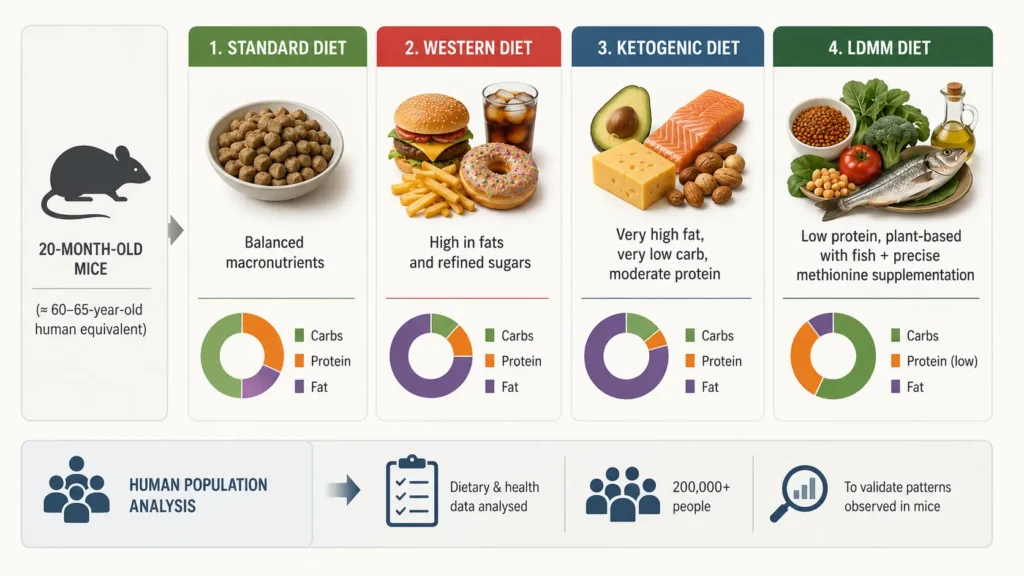
The research team fed groups of 20-month-old mice — an age equivalent to approximately a 60 to 65-year-old person — one of four dietary protocols:
• Standard diet: the control, representing typical laboratory mouse chow with balanced macronutrients.
• Western diet: high in fats and refined sugars, mimicking the ultra-processed dietary pattern common across North America and increasingly in urban India and Asia.
• Low-carbohydrate ketogenic diet: very high fat, very low carbohydrate, moderate protein — currently one of the most popular dietary frameworks globally.
• Low-protein, methionine-supplemented longevity diet (LDMM): largely plant-based with fish, low in total protein, but supplemented with a small, precise amount of the essential amino acid methionine. Modelled on the traditional diets of long-lived populations in southern Italy and Okinawa.
The researchers also analysed existing health and dietary data from more than 200,000 people to test whether the patterns observed in mice held in human populations.
Read Also- 5 High-Protein Snacks Under 150 Calories
What the Results Showed
The Western and ketogenic diets performed worst. Both the Western diet and — crucially — the ketogenic diet increased fat mass and frailty compared to the standard control diet. The Western diet additionally increased cholesterol. The ketogenic diet increased insulin resistance. Neither delivered the longevity outcomes their proponents claim.
The longevity diet performed best across every metric. Mice receiving the LDMM showed a longer healthspan (the portion of life spent in good health, as distinct from total lifespan), reduced fat mass, lower frailty scores, and improved cardiometabolic markers including better insulin sensitivity and cholesterol profiles.
The methionine finding is the most novel. The Goldilocks discovery in this research is the role of methionine — an essential amino acid found primarily in eggs, meat, and dairy. Too little methionine in the longevity diet caused frailty. Too much methionine abolished the longevity benefits of the otherwise plant-based diet. The precise amount — enough to supplement what plants provide, not enough to replicate a high-animal-protein diet — was the sweet spot.
“We expected different diets to produce different outcomes, but what really impressed us was how modulating just a single amino acid, methionine, in the longevity diet could produce such dramatic metabolic changes,” said Maura Fanti, first author of the study. “It points to the idea that amino acid composition, not just overall protein quantity, may be the target of strategic metabolic interventions.”
The hormonal mechanism was identified. The LDMM reduced insulin-like growth factor 1 (IGF-1) — a hormone associated with accelerated ageing when chronically elevated — while increasing growth hormone, GLP-1, and fibroblast growth factor 21 (FGF21). FGF21 is a metabolic hormone with increasingly documented roles in fat oxidation, insulin sensitivity, and longevity — and its elevation by the LDMM helps explain the fat loss and metabolic improvements observed.
Human data confirmed the pattern. Analysis of more than 200,000 people showed that lower animal protein intake was associated with lower rates of obesity and type 2 diabetes — consistent with the mouse findings and adding substantial weight to their translational relevance.
Read Also- Lower Back Pain Workout: Exercises and Stretches to Lower Back Pain and Improve Spine Support
Why Keto Failed the Longevity Test
I want to address the ketogenic diet findings directly, because this is a topic where I receive strong questions from clients who have read extensively about keto’s claimed benefits.
The ketogenic diet undeniably produces rapid short-term weight loss, and there is legitimate evidence for its use in specific clinical contexts — epilepsy management, certain metabolic conditions, and short-term glycaemic control in type 2 diabetes. I do not dispute this.
What the USC July 2026 study suggests is that, at least in the context of ageing biology, the very-high-fat, very-low-carbohydrate ketogenic structure may have significant metabolic costs that offset its short-term benefits:
Increased insulin resistance. The ketogenic mice showed greater insulin resistance than control animals — a finding consistent with some human trials showing that long-term keto can impair the body’s acute glucose-disposal response. While insulin sensitivity appears to improve initially on keto (due to very low carbohydrate intake), some research suggests long-term adaptations may reduce peripheral insulin sensitivity at the tissue level.
Frailty increase. The frailty outcomes in ketogenic mice were significantly worse than in standard-diet or longevity-diet mice. Frailty in ageing is associated with loss of muscle mass, physical function, immune resilience, and ultimately mortality. A diet that increases frailty risk — regardless of its short-term weight loss or energy benefits — cannot be recommended as a long-term health strategy for most people.
The amino acid picture matters more than fat intake. The USC study’s central finding is that the specific amino acid composition of dietary protein — not total fat or carbohydrate content — is the most important dietary variable for longevity outcomes. This reframes the entire macronutrient debate: the question is not how much fat to eat, but what amino acid profile your protein sources are delivering and in what quantity.
The Longevity Diet in Practice: What It Actually Looks Like
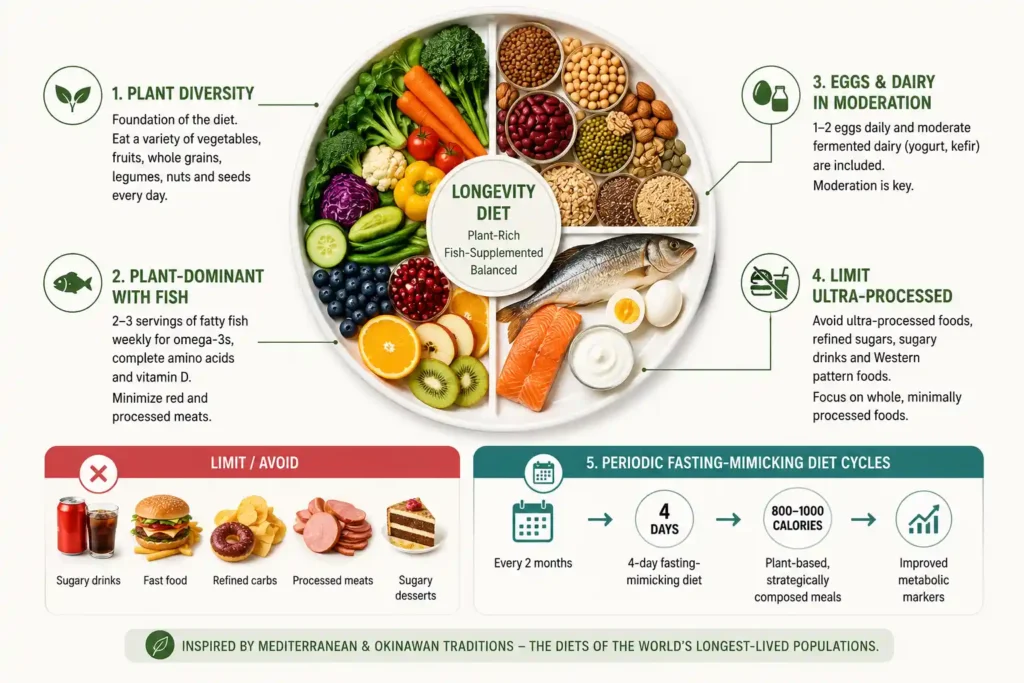
Professor Longo’s conclusion from the combined mouse and human data: the best health outcomes are achieved by following a diet that is largely vegan or vegetarian, supplemented with fish, and containing just enough methionine and other essential amino acids from those fish and occasional small amounts of other animal products.
This is, essentially, a traditional Mediterranean or Okinawan dietary pattern — the diets of two of the world’s longest-lived populations. In practical terms for an Indian context:
Foundation: plant diversity. The majority of daily calorie intake from vegetables, legumes, whole grains, fruits, nuts, and seeds. Lentils, chickpeas, kidney beans, and all dal varieties are particularly well-suited — they provide protein, fibre, iron, and zinc, and their amino acid profile is naturally lower in methionine compared to animal proteins.
Protein: plant-dominant with fish. Reduce reliance on red meat, processed meat, and high-animal-protein patterns. Add 2 to 3 servings of fatty fish weekly (mackerel, sardines, salmon, or local options like rohu or katla) for omega-3s, complete amino acids including a moderate methionine contribution, and vitamin D. This fish component is what distinguishes the longevity diet from a purely vegan approach and provides the essential amino acid sufficiency that prevented frailty in the research.
Eggs and dairy in moderation. The study does not require elimination of eggs and dairy — both contain methionine and other essential amino acids. The key is moderation rather than making them the primary protein sources. One to two eggs daily and moderate fermented dairy (yoghurt, kefir) are compatible with the longevity diet framework.
Drastically reduce ultra-processed and Western pattern foods. The Western diet was the worst performer in the July 2026 study on nearly every metric. Ultra-processed foods, refined sugars, and high-fat processed products actively drive the frailty and metabolic dysfunction outcomes the longevity diet is trying to prevent.
Consider periodic fasting-mimicking diet cycles. The USC study also tested bimonthly cycles of a 4-day fasting-mimicking diet (approximately 800 to 1,000 calories of strategically composed plant-based food) and found improved metabolic markers. Longo’s fasting-mimicking diet protocol is increasingly used clinically and is compatible with the broader longevity diet framework.
How I Apply This in Practice
The July 2026 USC findings reinforce a dietary philosophy I have been applying with clients for years, refined through both nutritional science and the practical realities of busy professional lives. Here is how I translate the research into daily habits:
• 90% of protein from plant sources (dal, legumes, nuts, seeds, tofu, tempeh), with 10% from fish and eggs. This naturally delivers lower methionine than a meat-heavy diet while providing complete essential amino acid coverage.
• Fatty fish twice per week minimum — particularly sardines and mackerel, which are affordable, widely available, and among the richest sources of omega-3s and vitamin D.
• Vegetable diversity as a daily practice — minimum 5 different vegetables daily, rotating seasonally. This builds the microbiome diversity the longevity diet depends upon.
• Whole grain carbohydrates — brown rice, whole wheat, oats, and millets (ragi, jowar, bajra) — which naturally complement legumes to provide complete amino acid profiles without requiring animal products.
• Zero ultra-processed food in the daily diet. Treats are occasional and food-quality, not routine. This is the most impactful single change for most clients.
The Takeaway
The USC July 2026 Cell Metabolism study settles an important question: not all diets are equal for longevity, and some of the most popular — particularly the ketogenic diet in long-term ageing contexts — may be actively counterproductive compared to the plant-forward, fish-supplemented pattern that the world’s longest-lived populations have eaten for centuries.
The finding that methionine — a single amino acid — can be the critical variable between frailty and vitality in an otherwise identical dietary pattern is a genuine scientific discovery. It suggests that the future of personalised nutrition will focus increasingly on specific amino acid profiles rather than broad macronutrient ratios. For now, the practical implication is straightforward: eat less animal protein overall, but keep fish and occasional eggs and dairy to ensure just enough essential amino acid coverage to prevent frailty. Eat more plants. Avoid ultra-processed foods entirely. This is not a new message — but the USC research gives it greater scientific precision than it has ever had before.
Scientific References
1. Fanti, M. et al. (2026). Methionine-supplemented longevity diet increases growth hormone, GLP-1, and FGF21; reduces frailty; and promotes healthspan. Cell Metabolism. doi: 10.1016/j.cmet.2026.05.015
2. ScienceDaily / USC. (July 9, 2026). Scientists found a longevity diet that helped mice eat more and lose fat. sciencedaily.com
3. News Medical. (June 23, 2026). USC study links modified Mediterranean diet to longer lifespan. news-medical.net
4. Sci.News. (2026). Modified Mediterranean Diet Extends Healthy Lifespan in Mice. sci.news
5. NewsNation. (July 12, 2026). Low-protein longevity diet helped mice live healthier, leaner lives. newsnationnow.com