By Tanveer Ahmed Khan | K11-Certified Trainer & Dietitian-Nutritionist | REPS India Registered | July 2026 | 12 min read
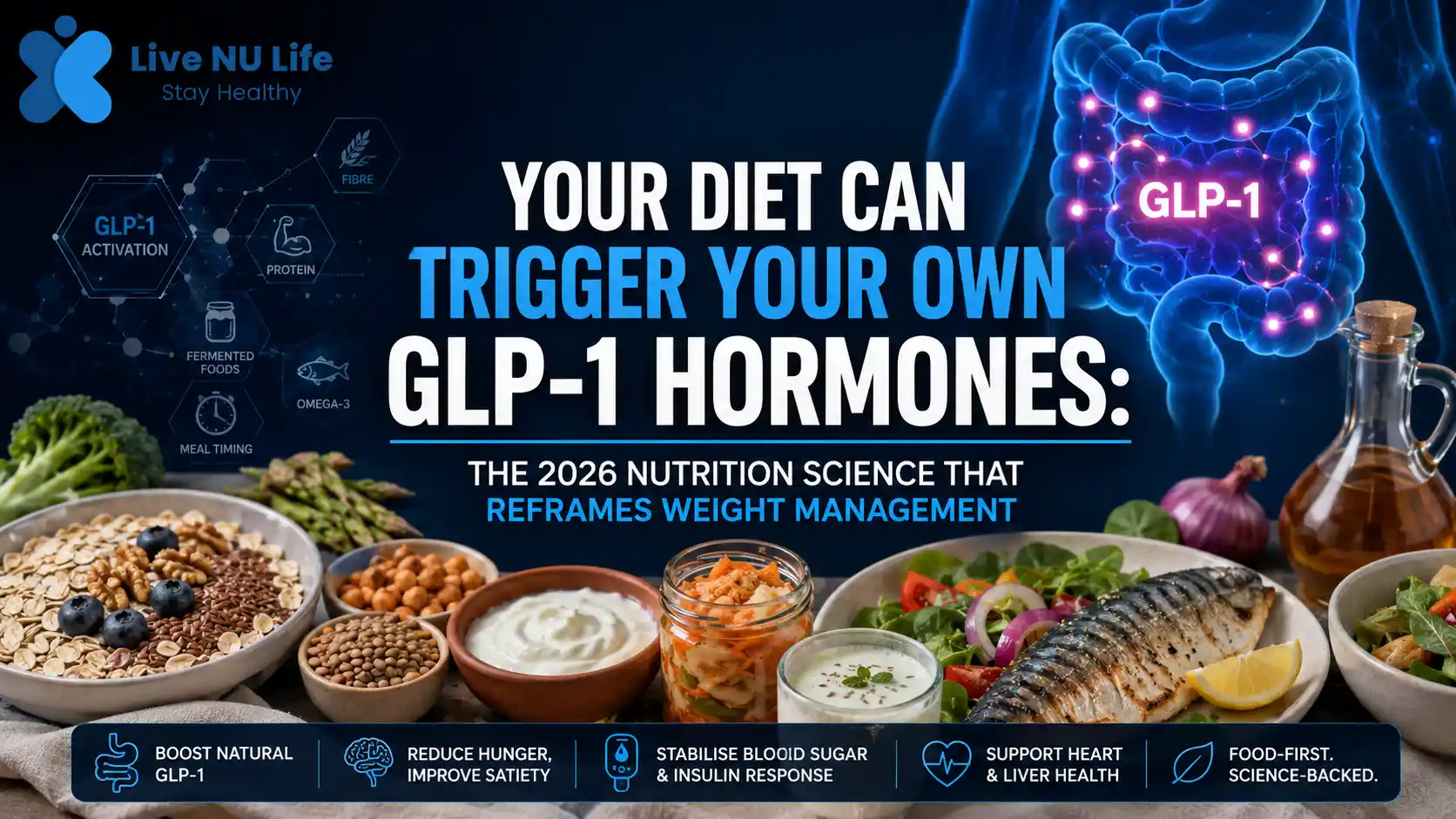
KEY TAKEAWAY: GLP-1 medications like Ozempic are reshaping medicine in 2026 — but the same hormone can be powerfully stimulated through food. High-fibre diets, specific protein sources, certain vegetables, fermented foods, and strategic meal timing all boost natural GLP-1 production. Here is the evidence-based nutritional strategy to activate your own GLP-1 system — without a prescription.
The Most Talked-About Hormone in Medicine — And How Food Activates It
If you have been paying attention to health news in 2026, you know that GLP-1 agonist medications — semaglutide (Ozempic, Wegovy), tirzepatide (Mounjaro, Zepbound) — are the most significant pharmaceutical development in metabolic medicine in a generation. They regulate appetite, slow gastric emptying, reduce blood sugar, protect the heart, and produce weight loss that was previously achievable only through surgery.
What receives far less attention — and what the nutritional science of July 2026 is beginning to crystallise — is that the same hormone these drugs mimic is produced naturally by your gut, stimulated by specific foods and eating patterns, and actionable through dietary change alone.
GLP-1 (glucagon-like peptide-1) is produced by L-cells — specialised enteroendocrine cells lining the intestinal wall, particularly concentrated in the ileum and colon. Every meal you eat produces some GLP-1. The question — and the opportunity — is how to produce significantly more through intentional nutritional choices.
As a dietitian-nutritionist who has been working with clients on sustainable metabolic health for 12 years, this is the conversation I find most exciting in 2026: not prescribing pharmaceutical GLP-1 agonists, but teaching clients how to nutritionally activate their own GLP-1 system more powerfully. The results, when implemented consistently, are striking.
Read More- Functional Nutrition: Eat for Optimal Health
What GLP-1 Actually Does in the Body
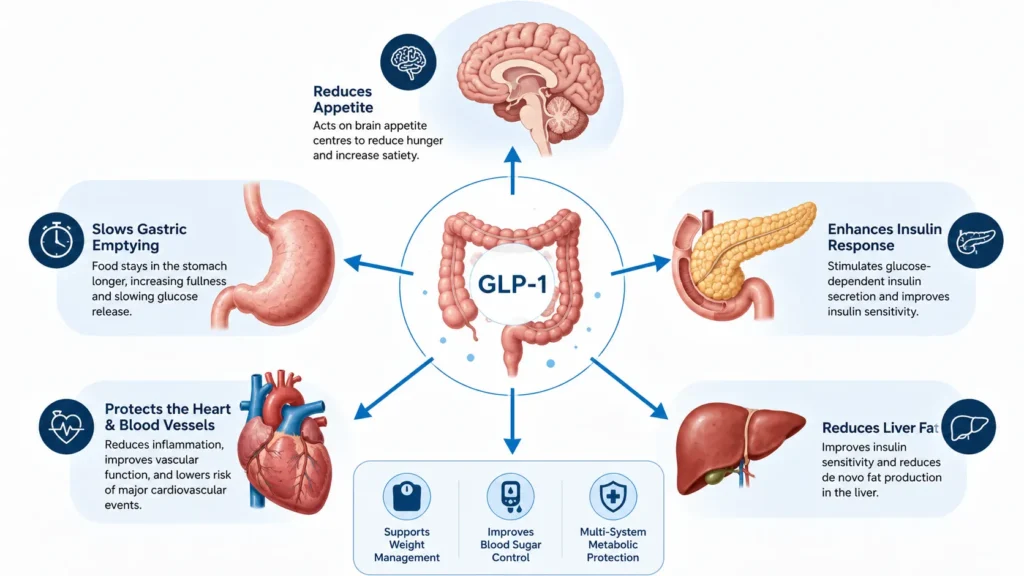
Before discussing how to stimulate GLP-1 through nutrition, it is worth understanding precisely what this hormone does — because its effects extend far beyond the weight loss headlines.
Appetite regulation. GLP-1 acts on the hypothalamus — the brain’s appetite control centre — to reduce hunger signals. It also activates the vagus nerve’s satiety pathways. The net effect is that meals feel more satisfying, hunger returns more slowly, and the neurological drive to overeat is reduced.
Read also- Vitamin C and Your Brain: The 2026 Research That Changes How We Think About This Essential Nutrient
Gastric emptying delay. GLP-1 slows the rate at which the stomach empties into the small intestine. This produces two beneficial effects: prolonged satiety (you stay full longer) and a slower, more gradual glucose release into the bloodstream, which reduces post-meal blood sugar spikes and the subsequent insulin surge.
Insulin sensitisation. GLP-1 enhances the pancreatic beta cell response to blood glucose — stimulating insulin release in a glucose-dependent manner. This means it only promotes insulin secretion when blood sugar is elevated (unlike some diabetes medications that can cause hypoglycaemia regardless of blood sugar level). It also directly improves insulin sensitivity in peripheral tissues.
Cardiovascular protection. GLP-1 receptors are present in the heart and blood vessels. Activation reduces inflammation in endothelial cells, improves vascular function, and has been shown to reduce major cardiovascular events. This is why the NUTRITION 2026 conference this July is specifically examining GLP-1 as a multi-system health intervention.
Hepatic fat reduction. GLP-1 reduces fat accumulation in the liver by improving insulin sensitivity and reducing de novo lipogenesis (the liver’s conversion of excess glucose into fat). This is particularly relevant to the rapidly rising rates of non-alcoholic fatty liver disease in India’s urban population.
The Nutritional Triggers: How Food Activates GLP-1
The L-cells that produce GLP-1 do not fire uniformly in response to all foods. They respond selectively to specific dietary signals, and the degree of GLP-1 response varies enormously depending on meal composition, timing, and preparation.
1. Dietary Fibre — The Most Powerful GLP-1 Trigger
As I discussed in my June 2026 article on fibermaxxing, dietary fibre is fermented by gut bacteria into short-chain fatty acids (SCFAs) — particularly butyrate and propionate. These SCFAs directly stimulate L-cells to produce GLP-1. The more diverse and substantial the fibre intake, the stronger and more sustained the GLP-1 response.
This is one of the most remarkable connections in 2026 nutritional science: the same dietary pattern that feeds the gut microbiome (diverse, high-fibre, plant-forward) also stimulates natural GLP-1 production in the colon — which is why Datassential research found in 2026 that fibre-rich diets naturally trigger “the same appetite-suppressing hormone targeted by weight-loss medications.”
Best fibre sources for GLP-1 stimulation:
• Legumes (lentils, chickpeas, kidney beans, mung beans) — both soluble fibre and resistant starch, maximally effective for SCFA production.
• Oats (especially beta-glucan) — specifically stimulates GLP-1 release and is one of the most studied foods for post-meal satiety.
• Green bananas and cooked-and-cooled rice or potatoes — retrograded resistant starch that resists digestion in the small intestine and reaches the colon for fermentation.
• Vegetables high in inulin-type fructans: garlic, onions, leeks, asparagus, Jerusalem artichokes — directly prebiotic and GLP-1-stimulating.
2. Protein Quality and Timing
Protein is a direct GLP-1 secretagogue — certain amino acids, particularly leucine, arginine, and glutamine, directly stimulate L-cell GLP-1 release independent of fibre. This is one reason high-protein meals produce greater satiety than high-carbohydrate meals of equal caloric content.
The quality of the protein source matters. Research consistently shows that whey protein produces a stronger acute GLP-1 response than casein or plant proteins, likely due to its leucine content and rapid absorption profile. Eggs and fish also produce robust GLP-1 responses. This is consistent with the USC longevity diet research showing fish as the optimal animal protein source for metabolic health.
Practical application: placing a substantial protein serving (30+ grams) at the beginning of a meal — before carbohydrates — amplifies the GLP-1 response and significantly reduces the post-meal blood sugar spike. I teach clients a “protein first, carbs second” meal structure that takes 30 seconds to implement and measurably improves post-meal glucose control.
3. Vinegar and Fermented Foods
Acetic acid — the active compound in vinegar — has been shown in multiple studies to stimulate GLP-1 release and improve insulin sensitivity. One tablespoon of apple cider vinegar in water before a carbohydrate-rich meal can reduce the post-meal blood sugar response by 20 to 35% in research settings.
Fermented foods add another dimension: they contain both probiotic bacteria and organic acids that support L-cell function and gut microbiome diversity simultaneously. In the Indian dietary context, naturally fermented foods — properly fermented idli and dosa batter, traditional kanji, fermented pickles without vinegar, buttermilk (chaas) — are GLP-1-supportive foods that fit naturally into existing eating patterns.
4. Omega-3 Fatty Acids
Fish oil and dietary omega-3s have been shown to upregulate GLP-1 receptor expression in target tissues, making the GLP-1 signal more effective even at the same hormone concentration. This creates a synergistic relationship: a diet rich in omega-3s from fatty fish, flaxseeds, and walnuts not only produces some GLP-1 stimulation but makes the GLP-1 that is produced more bioactive.
This mechanism partially explains why the traditional Mediterranean and Okinawan diets — which are naturally high in omega-3s from fish and certain plant sources — produce such favourable metabolic outcomes in the populations that eat them.
5. Strategic Meal Timing
The circadian rhythm governs not just energy metabolism but also GLP-1 secretion patterns. Research in chronobiology has established that GLP-1 response to the same meal is significantly higher in the morning than in the evening — sometimes by 30 to 50%.
This is one of the most powerful and underutilised tools in metabolic nutrition. Front-loading caloric intake earlier in the day — eating a larger breakfast and lunch, and a lighter dinner — takes advantage of peak GLP-1 secretion capacity and improves post-meal glucose control, satiety, and fat oxidation throughout the day.
In practice, I restructure clients’ eating patterns away from the common Indian pattern of a light breakfast, moderate lunch, and large late dinner — toward a larger, protein-and-fibre-rich breakfast, substantial lunch, and smaller early dinner. This single structural change, without altering total calories, measurably improves metabolic markers within 8 to 12 weeks.
The GLP-1 Nutritional Day: What It Looks Like in Practice
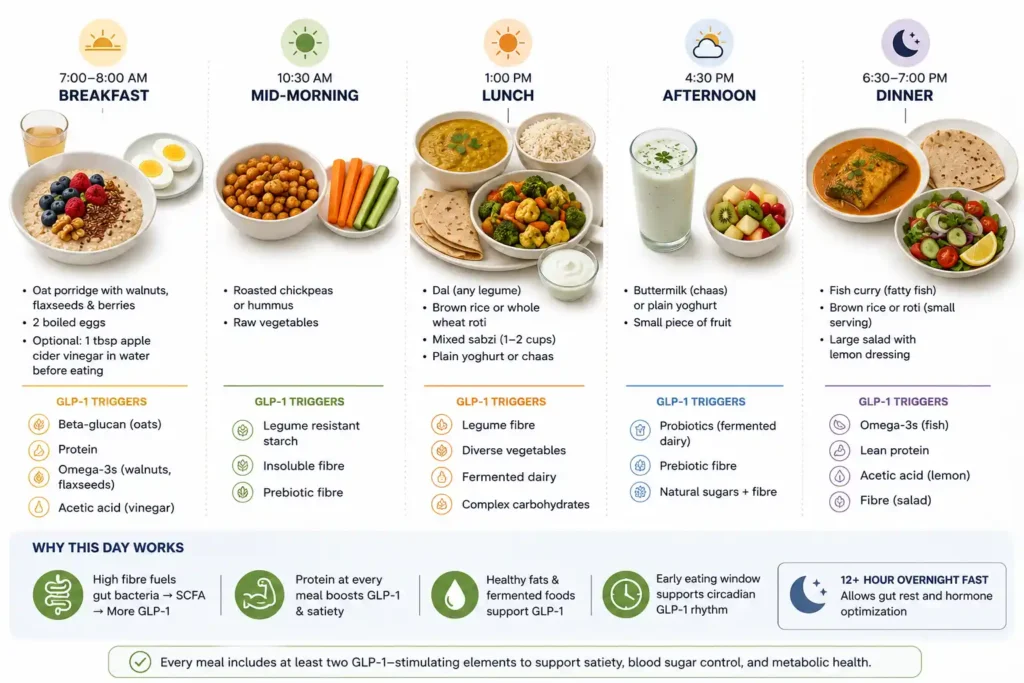
Here is a full day of eating designed to maximally stimulate natural GLP-1 production through food, based on the research and 12 years of clinical application:
• Breakfast (7:00–8:00am): Oat porridge with oat beta-glucan content intact (not instant oats), topped with walnuts, flaxseeds, and berries. 2 boiled eggs on the side. Optional: 1 tablespoon apple cider vinegar in warm water before eating. This delivers beta-glucan, protein, omega-3s, and acetic acid — four distinct GLP-1 triggers simultaneously.
• Mid-morning (10:30am): 1 small bowl of roasted chickpeas or hummus with raw vegetables. Legume-based resistant starch + insoluble fibre reaching the colon for SCFA and GLP-1 production.
• Lunch (1:00pm): Dal (any legume) with brown rice or whole wheat roti, 1–2 cups of mixed sabzi, and a side of plain yoghurt or chaas. This is the GLP-1 anchor meal of the day — legume fibre, diverse vegetables, fermented dairy, complex carbohydrates.
• Afternoon (4:30pm): Buttermilk (chaas), or plain yoghurt with a small piece of fruit. Fermented + prebiotic.
• Dinner (6:30–7:00pm): Fish curry (mackerel, sardine, or local fatty fish) with a small serving of brown rice or roti, and a large salad with lemon dressing. Omega-3s + lean protein + acetic acid from lemon + fibre. Light enough to allow a 12+ hour overnight fast.
This meal structure is not a rigid prescription — it is a framework that can be adapted to family eating patterns, budget, and regional food culture. The principle it embodies is consistent: every meal builds in at least two distinct GLP-1-stimulating elements.
Who Benefits Most From Natural GLP-1 Optimisation
In my practice, the clients who benefit most dramatically from a GLP-1-optimised nutritional approach are those with:
• Persistent hunger despite eating — the most common complaint in my practice, almost always associated with fibre-poor, protein-insufficient, and ultra-processed food-dominant diets.
• Post-meal blood sugar crashes and the afternoon fog that follows — directly driven by impaired GLP-1 response to meals.
• Weight that returns after restriction — the yo-yo pattern is frequently a signal that the underlying hormonal appetite regulation (including GLP-1) is not being addressed.
• Type 2 diabetes or pre-diabetes — natural GLP-1 optimisation can meaningfully complement pharmaceutical management and, in pre-diabetic cases, may be sufficient to prevent progression.
• Non-alcoholic fatty liver disease — GLP-1’s hepatoprotective effects make dietary GLP-1 optimisation directly relevant to the fastest-growing liver disease in India.
Read Also- Best Ayurvedic Herbs to Naturally Boost the Immune System
The Takeaway
The GLP-1 revolution in medicine is real and significant. But the fundamental biology it exploits — a gut hormone that regulates appetite, blood sugar, metabolic rate, and cardiovascular health — has always been available to us through food. The medications amplify a signal. The nutritional strategies in this article teach your gut to produce that signal more powerfully on its own.
In July 2026, with the NUTRITION 2026 conference examining GLP-1 as one of the year’s defining health themes, and with growing research on fibre, protein quality, fermented foods, omega-3s, and meal timing all converging on the same hormonal mechanism, the evidence for a food-first GLP-1 approach has never been stronger.
You may not need a prescription. You may need a better breakfast.
Scientific References
1. American Society for Nutrition. (2026). Program announced for NUTRITION 2026, July 25–28. nutrition.org
2. Kerry Health and Nutrition Institute. (2026). Five Key Health and Nutrition Trends for 2026 — GLP-1 section. khni.kerry.com
3. Forum Health. (2026). Fibermaxxing: Why Fiber Is the Biggest Nutrition Trend of 2026 — GLP-1 connection. forumhealth.com
4. U.S. News & World Report. (January 2026). Top Health and Nutrition Trends for 2026 — GLP-1 and Food as Medicine. health.usnews.com
5. Fanti, M. et al. (2026). Methionine-supplemented longevity diet increases GLP-1 and FGF21. Cell Metabolism. doi: 10.1016/j.cmet.2026.05.015