By Tanveer Ahmed Khan | K11-Certified Trainer & Dietitian-Nutritionist | REPS India Registered | August 2026 | 12 min read
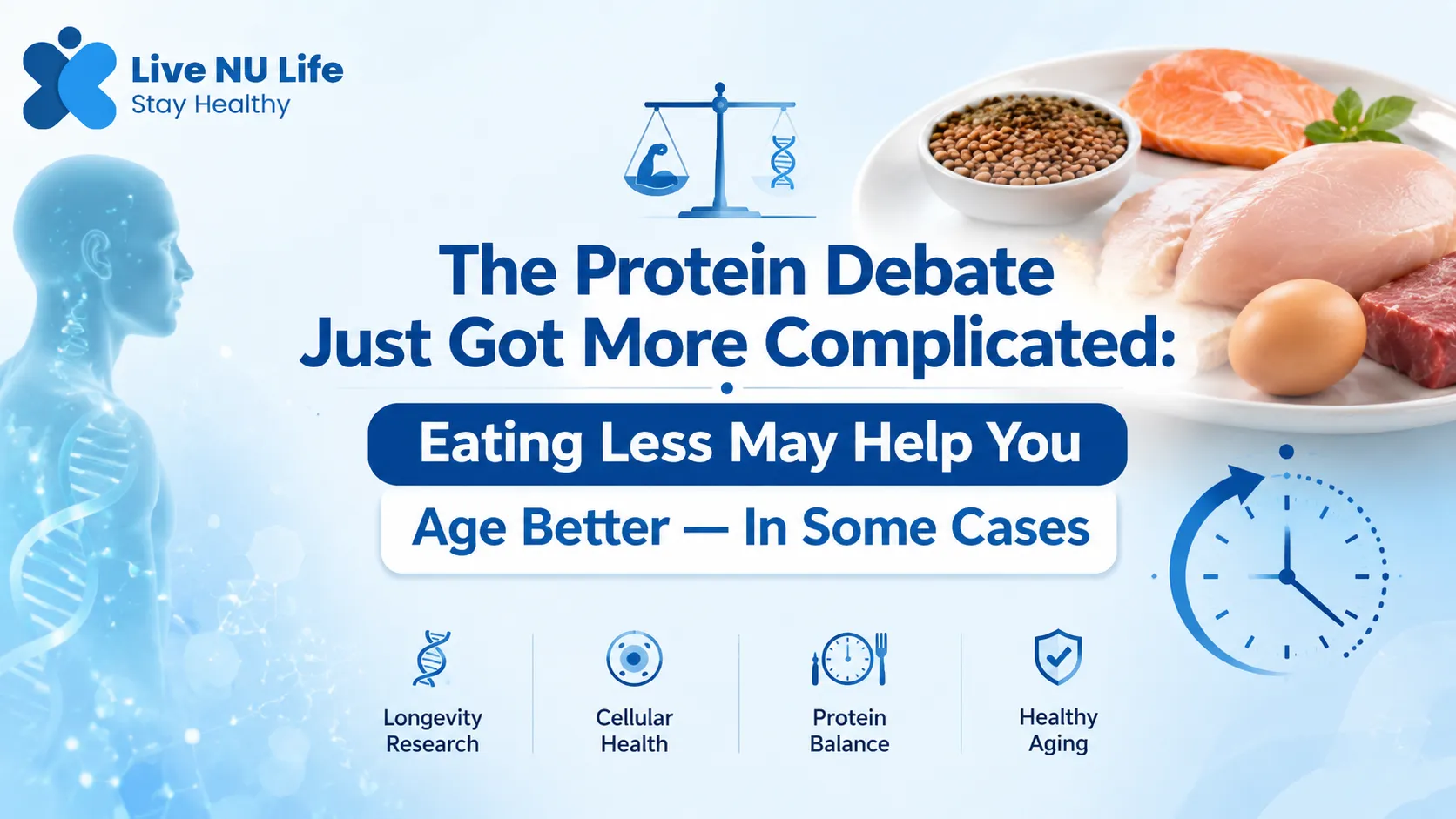
KEY TAKEAWAY: A sweeping review of more than 350 studies, published in Cell Press Blue on July 31, 2026 and widely covered through August, found that protein restriction — and specifically reducing three amino acids (methionine, isoleucine, valine) — activates biological pathways linked to longer life and healthier ageing in animals and preliminary human studies. But this finding directly conflicts with the July 2026 dietary guidelines research we covered this month. Here is the complete, nuanced picture — and what it actually means for how much protein you should eat.
The Headline That Needs Context
If you have been following health news in August 2026, you may have seen headlines announcing “Eating Less Protein Could Slow Aging” — coverage of a comprehensive review published in Cell Press Blue on July 31, 2026, by Bailey A. Knopf and Dudley W. Lamming of the University of Wisconsin-Madison. TIME Magazine covered it. Medical News Today covered it. ScienceDaily covered it.
You may also have seen — from our July 2026 series — that the new 2025–2030 US Dietary Guidelines have finally raised the recommended protein intake to 1.2–1.6g per kilogram of body weight per day, up from the decades-long 0.8g/kg minimum that nutritional scientists have long argued is too low.
These two findings appear to directly contradict each other. They do not — but understanding why requires engaging with the science at a level that most media coverage has not provided. This is one of the most important nutritional science conversations of August 2026, and I want to give it the complete, nuanced treatment it deserves.
📖 Also read: The Protein Guidelines Are Wrong — And July 2026 Research Says So — The concurrent July 2026 Journal of Nutrition Perspective on protein requirements — the essential companion to understanding why the protein restriction research requires careful contextualisation.
What the 350-Study Review Actually Found
The Knopf-Lamming review, published in Cell Press Blue, analysed more than 350 papers on protein restriction and ageing across multiple species — yeast, fruit flies, roundworms, mice, rats, and preliminary human research. Their conclusions:
In animal models, protein restriction consistently extends lifespan and improves healthspan. Mice, rats, flies, and fish that ate less protein consistently lived longer and healthier. This pattern is remarkably consistent across species and experimental designs — one of the most replicated findings in longevity biology.
The mechanism is not simply “eating less.” Protein restriction activates several specific anti-ageing biological pathways. These include elevation of fibroblast growth factor 21 (FGF21), which increases energy expenditure, improves blood sugar control, and reduces inflammation; reduced signalling through mTOR (the mechanistic target of rapamycin), which shifts cells from growth and proliferation toward repair and maintenance; and activation of autophagy — the cellular cleaning process that removes damaged proteins and organelles.
Three specific amino acids drive most of the effect. The review identifies methionine, isoleucine, and valine as the primary amino acids whose restriction recapitulates most of the longevity benefits of overall protein restriction. Reducing these three amino acids specifically — not all protein — appears to be the key molecular trigger. This is a significant refinement: the benefit may not require reducing total protein, but specifically reducing methionine-rich animal proteins and branched-chain amino acid-rich sources.
Some small human studies show promising but preliminary results. In some human trials, protein-restricted diets over several weeks produced weight and fat mass reduction and improvements in fasting glucose and metabolic markers. But the human evidence base remains far smaller and less conclusive than the animal evidence.
Why This Does NOT Mean Everyone Should Eat Less Protein
This is where I need to be emphatic, because the media coverage of this research has been misleadingly one-sided in its recommendations.
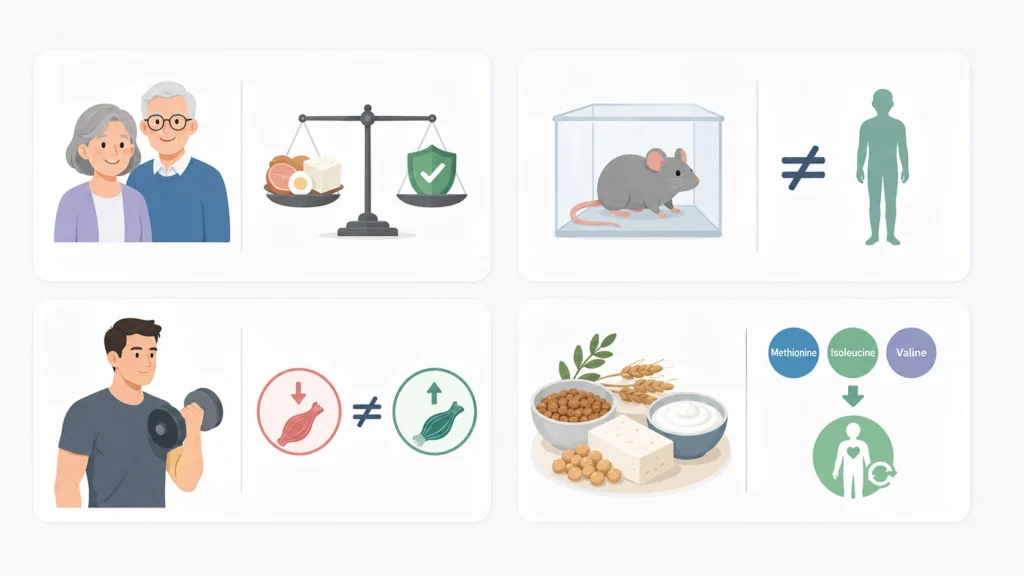
The review explicitly acknowledges the age exception. Adults over 65 can have protein insufficiency, be at risk of frailty, and experience sarcopenia — muscle loss. The review itself states that protein restriction “may be contraindicated” for older adults. This is not a footnote; it is a central qualification. The protein-restriction-for-longevity evidence applies primarily to younger and middle-aged adults, not to the elderly population where the frailty and sarcopenia risks from low protein are highest and most clinically serious.
The animal-to-human translation problem. Laboratory animals live in controlled environments, eat standardised diets, do not exercise in ways comparable to humans, and do not have comparable social, occupational, or metabolic complexity. The remarkable lifespan extensions seen in calorie-restricted or protein-restricted laboratory mice do not translate proportionally to humans. Human lifespan is determined by vastly more variables than macronutrient ratios alone.
The exercise interaction is critical and largely missing from the review. The review does not fully account for the interaction between protein restriction and exercise. In physically active individuals — particularly those doing resistance training — adequate protein intake is not merely beneficial for aesthetics. It is essential for maintaining the muscle mass that protects metabolic health, bone density, immune function, and functional independence in ageing. Reducing protein intake in a person who exercises regularly produces muscle loss — precisely the outcome that accelerates the ageing the review is trying to prevent.
The amino acid specificity matters enormously. If the key mechanism is reducing methionine, isoleucine, and valine rather than overall protein, the practical recommendation is different from simply “eat less protein.” It points toward plant-dominant protein patterns — which are naturally lower in these specific amino acids — rather than blanket protein restriction. A person eating 1.6g/kg of protein primarily from legumes, whole grains, and dairy (lower in methionine and branched-chain amino acids than red meat) may be achieving the benefit without reducing total protein.
📖 Also read: The USC Longevity Diet That Outperformed Keto — July 2026 — The USC Cell Metabolism study that found a low-protein, methionine-supplemented longevity diet extended healthspan — the research that this August 2026 review directly connects to.
The USC Longevity Diet Connection
The Cell Press Blue review arrives as a companion to research we covered in our July 2026 series: the USC Cell Metabolism study by Professor Valter Longo finding that a low-protein, methionine-supplemented diet outperformed both Western and ketogenic diets for healthspan, fat loss, and frailty reduction. Our USC Longevity Diet article covered the methionine-specific mechanism in detail — the finding that too little methionine caused frailty but too much abolished longevity benefits. The August 2026 Cell Press Blue review provides the broader mechanistic context for this USC finding, synthesising 350 studies to explain why methionine and isoleucine restriction specifically activates FGF21 and the mTOR longevity pathways.
Together, these two bodies of research point toward the same dietary conclusion: a largely plant-based, fish-supplemented dietary pattern that is naturally moderate in methionine and branched-chain amino acids — consistent with the traditional Mediterranean and Okinawan dietary patterns — may deliver the longevity amino acid benefits without requiring explicit protein restriction.
Reconciling the Two Findings: My Clinical Synthesis
In 12 years of practice, I have encountered this type of apparent contradiction repeatedly — two bodies of research that seem to pull in opposite directions, each reported breathlessly as having settled the question. The synthesis is almost always more nuanced than either headline.
Here is how I reconcile the protein restriction longevity data with the protein adequacy guidelines:
For sedentary adults under 55 — moderate protein, plant-forward. The protein restriction longevity evidence is most applicable here. For a sedentary person in their 30s or 40s who is not doing resistance training, 1.2–1.4g/kg of protein from predominantly plant sources (legumes, whole grains, nuts, seeds) with some fish and eggs is likely to activate longevity pathways while meeting nutritional needs.
For active adults doing regular resistance training — adequate protein is non-negotiable. The muscle synthesis requirement of exercise demands adequate leucine and branched-chain amino acid delivery. The protein restriction longevity data was collected in sedentary or minimally active animals and people. In exercising individuals, dropping protein below 1.6g/kg produces muscle loss that is itself pro-ageing. Active adults should not reduce protein based on this review.
For adults over 55 — protein adequacy takes priority. Sarcopenia risk means that protein restriction is contraindicated. Adults over 55 should target 1.6–2.0g/kg, with resistance training to amplify the anabolic response to protein. The longevity benefit of adequate muscle mass in older adults far outweighs any potential benefit from amino acid restriction.
For everyone — shift the protein source toward plant-dominant patterns. This is the actionable synthesis that resolves the apparent contradiction. Reducing reliance on red meat and processed meat (which are highest in methionine and branched-chain amino acids) while increasing legumes, whole grains, dairy, fish, and eggs delivers adequate protein for muscle maintenance while naturally moderating the specific amino acids associated with accelerated ageing. This is the protein strategy that the USC longevity diet, the Cell Press Blue review, and the 2025–2030 dietary guidelines all point toward from different directions.
For the specific protein timing protocol that maximises muscle synthesis from whatever protein level you are consuming, see our Best Time to Eat High-Protein Snacks guide and our guide on why high-protein snacks keep you full longer.
The FGF21 Connection: Why Protein Restriction and Fasting Overlap
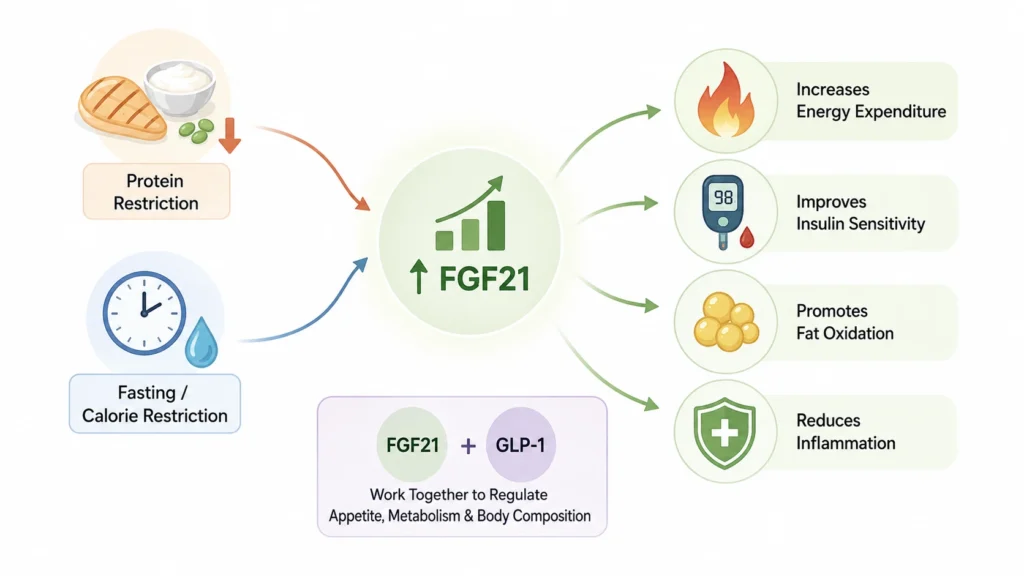
One of the most interesting mechanistic threads in the Cell Press Blue review is the role of FGF21 — fibroblast growth factor 21. FGF21 rises in response to both calorie restriction (fasting) and protein restriction, and it mediates many of the metabolic benefits attributed to both practices. FGF21 increases energy expenditure, improves insulin sensitivity, promotes fat oxidation, and reduces inflammation. As we covered in our July 2026 USC Longevity Diet article, the LDMM diet specifically elevated FGF21 as a key mechanism of its superior metabolic outcomes — and as we covered in our work on GLP-1 natural stimulation, FGF21 and GLP-1 work in complementary ways to regulate appetite, metabolism, and body composition. The protein restriction review adds another dimension: protein quality and amino acid composition, not just fasting duration, is a potent FGF21 stimulus.
The Takeaway
The Cell Press Blue 350-study review on protein restriction and longevity is a significant synthesis of ageing biology — but it is being misread as a recommendation for everyone to eat less protein immediately. The nuanced reality: protein restriction activates longevity pathways in animals and some preliminary human data, primarily by reducing methionine, isoleucine, and valine; the benefit is most applicable to sedentary adults in midlife; it is contraindicated in adults over 55, active individuals, and anyone at risk of sarcopenia; and the practical implementation is plant-forward protein sourcing rather than blanket restriction. For the complete protein protocol that navigates these nuances based on your age, activity level, and health goals, see our protein guidelines article and our Science-Based Longevity Protocols guide.
About the Author
Tanveer Ahmed Khan is a K11 School of Fitness Sciences-certified personal trainer and REPS India-registered dietitian-nutritionist with over 12 years of experience. Coaching: info@livenulife.com | Instagram: @fitwithtanveer | livenulife.com
Scientific References
1. Knopf, B.A., Lamming, D.W. (2026). The hallmarks of protein and amino acid restriction in aging and longevity. Cell Press Blue. DOI: 10.1016/j.cpblue.2026.100079
2. ScienceDaily / Cell Press. (August 2, 2026). Eating less protein could slow aging, major review finds.
3. TIME Magazine. (August 3, 2026). Eating Less Protein May Help You Age Better and Live Longer, Research Says.
4. Medical News Today. (August 4, 2026). Longevity and protein: Restricting 3 amino acids may help extend life.
5. Neuroscience News. (2026). Protein Restriction Improves Metabolism and Longevity. Based on Knopf & Lamming, Cell Press Blue.