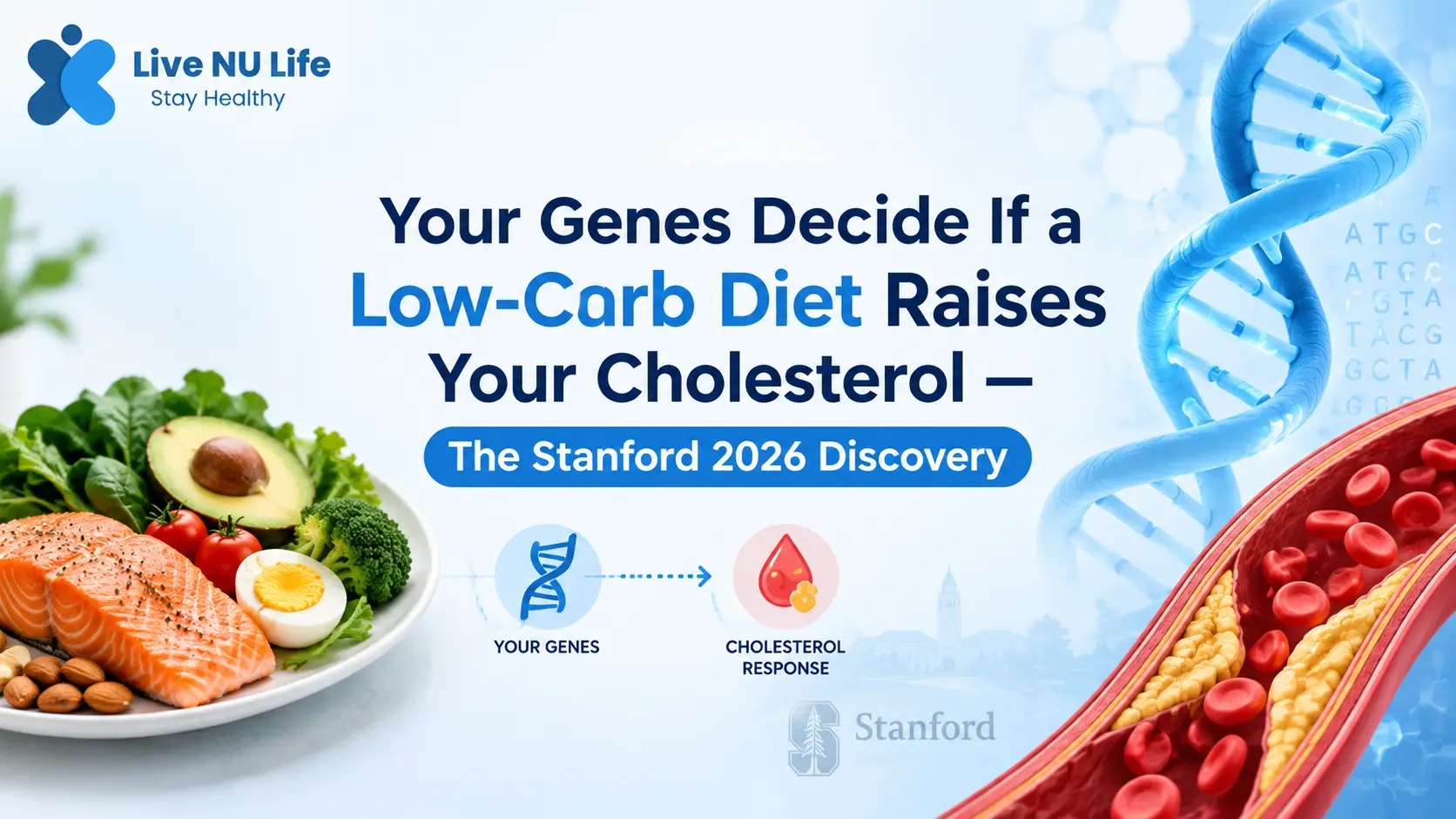
KEY TAKEAWAY: Research by Alexa Barad, PhD, RDN from Stanford University School of Medicine — presented at NUTRITION 2026 and covered August 25, 2026 — found that a polygenic score combining thousands of genetic variants predicts whether a low-carbohydrate diet raises LDL cholesterol. Those with the highest genetic risk showed the largest LDL increases on low-carb diets. The same relationship did not appear on low-fat diets. This fundamentally changes the diet debate and makes the case for precision nutrition.
The Keto Cholesterol Mystery — Finally Solved
In 12 years of working with clients on dietary interventions, few questions create more confusion than what happens to LDL cholesterol on a low-carbohydrate diet. Some clients’ LDL falls dramatically. Others follow identical protocols and their LDL rises by 50 to 100 mg/dL in weeks. The Stanford NUTRITION 2026 research now explains why: it depends substantially on your genes.
📖 Also read: The USC Longevity Diet That Outperformed Keto — July 2026 — The Cell Metabolism study showing the ketogenic diet increased frailty and insulin resistance — now understood through the Stanford genetics lens.
The Study: 431 People, Two Diets, One Year, Genomic Innovation
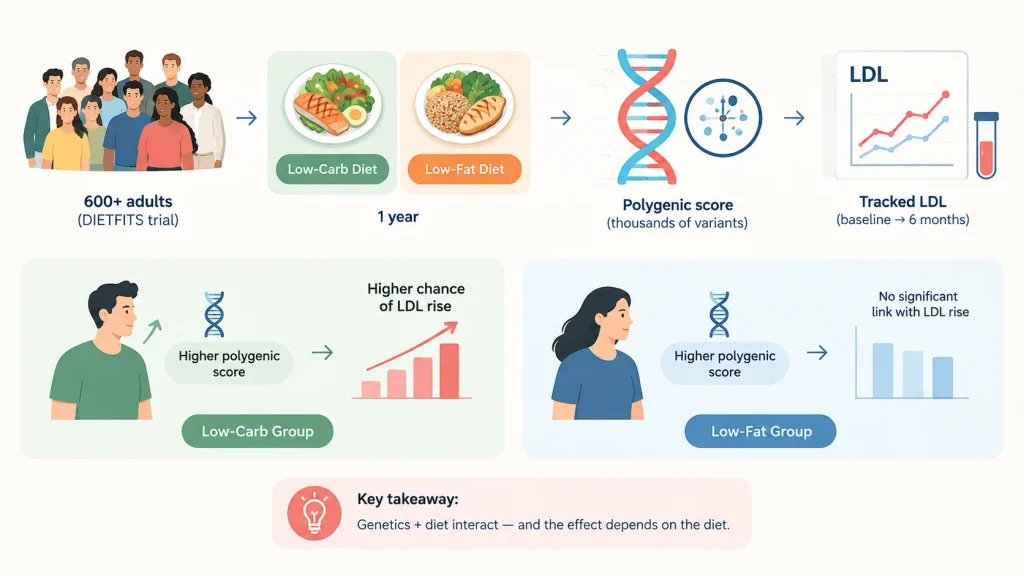
The Stanford analysis drew on DIETFITS — a randomised controlled trial in which 600+ adults followed either a healthy low-carbohydrate or healthy low-fat diet for one year. Alexa Barad and colleagues focused on 431 participants with genetic data, tracking LDL changes from baseline to six months.
The methodological innovation: instead of examining single genetic variants, the researchers created a polygenic score — combining thousands of variants across the genome into a single estimate of overall genetic tendency toward higher or lower LDL cholesterol.
What they found: Among low-carb participants, those with higher polygenic scores (greater genetic predisposition to elevated LDL) were significantly more likely to see LDL rise — and the magnitude was proportional to their polygenic score. The same relationship did not appear in the low-fat group, because dietary saturated fat (the trigger for genetic LDL sensitivity) was restricted in that arm.
Why This Matters: The Gene-Diet Interaction
“These findings highlight that there is real heterogeneity in how people respond to diet. Dietary conversations can sometimes become overly simplified,” said Barad. The genetic variants in the polygenic score primarily affect LDL receptor expression and function, apolipoprotein B production, cholesterol synthesis regulation, and intestinal cholesterol absorption — determining how efficiently LDL is cleared from blood.
This connects directly to our July 2026 USC Longevity Diet coverage — the keto diet increasing cardiovascular markers in the Cell Metabolism study now has a genetic mechanism: those adverse effects are concentrated in people with high polygenic LDL sensitivity.
Who Is Most at Risk for LDL Elevation on Low-Carb Diets?
Family history: First-degree relatives with significantly elevated LDL or early cardiovascular disease suggest inherited variants that impair LDL clearance.
Elevated baseline LDL: LDL above 130 mg/dL before starting a high-fat protocol — monitor closely within 6–8 weeks.
APOE4 genotype: The APOE4 allele is associated with heightened LDL sensitivity to saturated fat — available through direct-to-consumer genetic tests.
My Coaching Protocol for Low-Carb Diets and Cholesterol
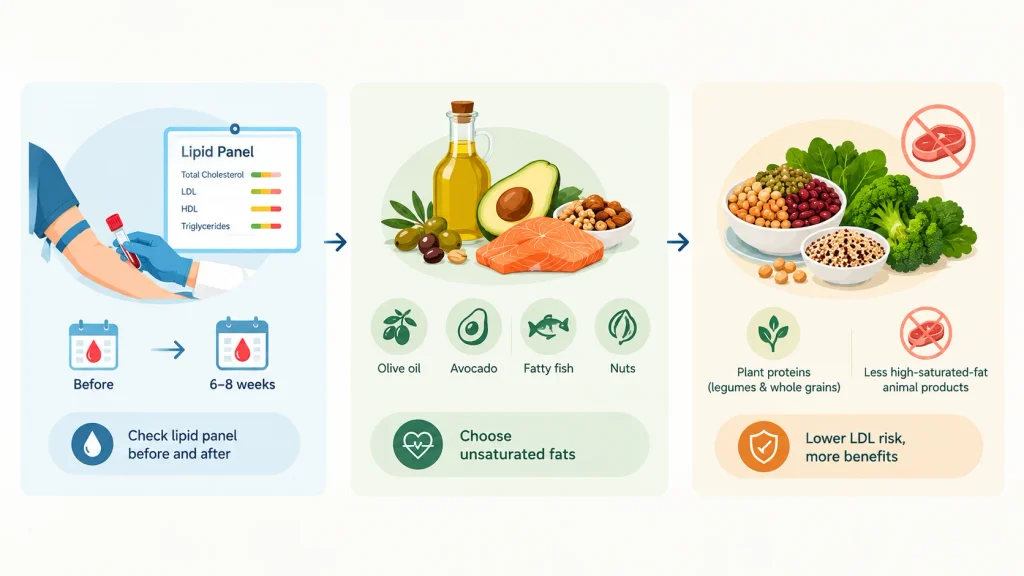
Baseline lipid panel before starting. Full lipid panel before and 6–8 weeks after beginning any significant low-carbohydrate dietary change.
Favour unsaturated fats. Mediterranean-style low-carb — olive oil, avocado, fatty fish, nuts — provides metabolic benefits of carbohydrate reduction without the saturated fat that triggers genetic LDL sensitivity.
Consider plant-forward low-carb for high-risk individuals. The USC longevity diet framework — plant proteins from legumes and whole grains rather than high-saturated-fat animal products — captures benefits without LDL risk.
The Takeaway
The Stanford NUTRITION 2026 polygenic score research establishes that genetic predisposition substantially determines whether a low-carb diet raises LDL. High-risk individuals show the largest LDL increases when consuming more saturated fat on low-carb. Practical response: establish baseline LDL, monitor after 6–8 weeks, prefer unsaturated fat sources. See our Personalised Nutrition guide and our Science-Based Longevity Protocols.
About the Author
Tanveer Ahmed Khan is a K11 School of Fitness Sciences-certified personal trainer and nutrition coach with 12+ years of strength training experience. Coaching: info@livenulife.com | Instagram: @fitwithtanveer | livenulife.com
Scientific References
1. Barad, A., et al. (2026). Polygenic score for LDL modifies diet-induced LDL changes. NUTRITION 2026, American Society for Nutrition, July 25–28, 2026.
2. ScienceDaily / ASN. (August 25, 2026). Your genes may decide whether a low-carb diet sends cholesterol soaring.
3. EurekAlert / ASN. (July 27, 2026). Is your diet driving up your cholesterol? That may depend on your genes.
4. Newsweek. (August 25, 2026). A Low-Carb Diet Could Raise Cholesterol. The Reason May Surprise You.
5. Yahoo Health. (July 31, 2026). Your Low-Carb Diet Might Be Raising Your Cholesterol.