By Tanveer Ahmed Khan | K11-Certified Trainer & Dietitian-Nutritionist | REPS India Registered | August 2026 | 12 min read
KEY TAKEAWAY: August 2026 research on intravenous high-dose vitamin C (IVC) has vindicated a long-dismissed hypothesis: while oral vitamin C supplements cannot reach concentrations sufficient to fight cancer, intravenous administration reaches 100x higher blood concentrations that behave as a pro-oxidant selectively toxic to cancer cells. A randomised phase 2 trial found IV vitamin C combined with chemotherapy doubled survival in metastatic pancreatic cancer. Here is the complete science — and what it means for dietary vitamin C.
The Story of Linus Pauling and the Pill That Failed
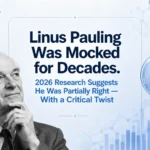
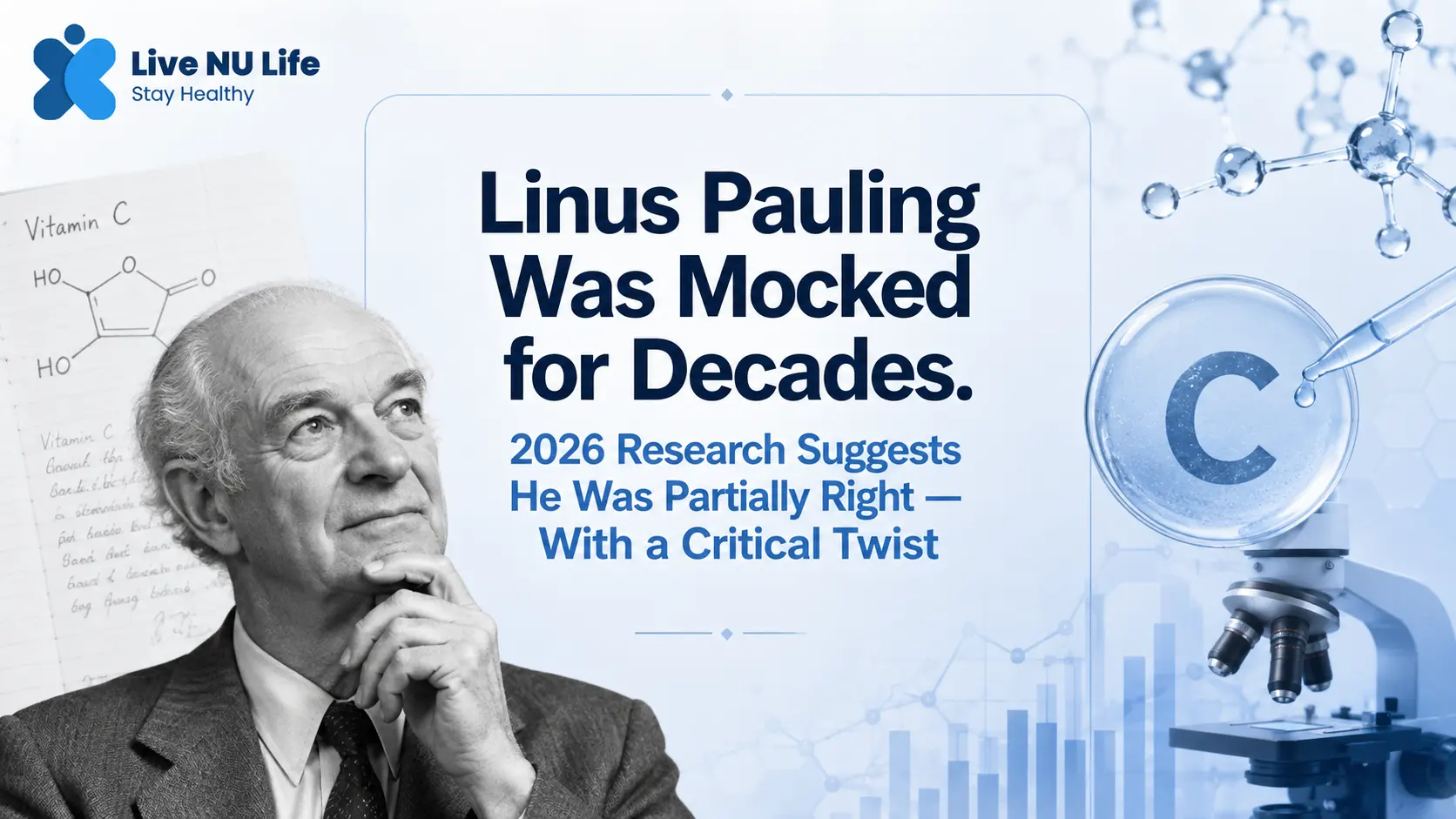
Linus Pauling won two Nobel Prizes — the only person in history to do so individually. In the 1970s, he became convinced that high-dose vitamin C could prevent and treat cancer. He published books, made public claims, and generated enormous controversy in the scientific community.
The controlled trials that followed appeared to settle the question definitively: vitamin C pills had no meaningful anti-cancer effect. Pauling was dismissed. The scientific community moved on.
ScienceDaily reported in August 2026 that researchers now understand what went wrong with those early trials — and why the dismissal was premature. Pauling was testing vitamin C pills. The mechanism he was hypothesising requires concentrations of vitamin C in the blood that oral supplementation can never achieve.
The distinction between oral and intravenous vitamin C is not merely a delivery route preference. It is a fundamental pharmacokinetic difference that changes what vitamin C actually does in the body — and the 2026 research landscape has finally provided the controlled trial evidence to support what integrative oncologists have been observing clinically for decades.
📖 Also read: Vitamin C and Your Brain — The July 2026 Research — The PLOS One study showing vitamin C blood levels directly correlate with brain gray matter volume — the dietary vitamin C story that contextualises the IV research.
The Fundamental Difference: Oral vs. Intravenous
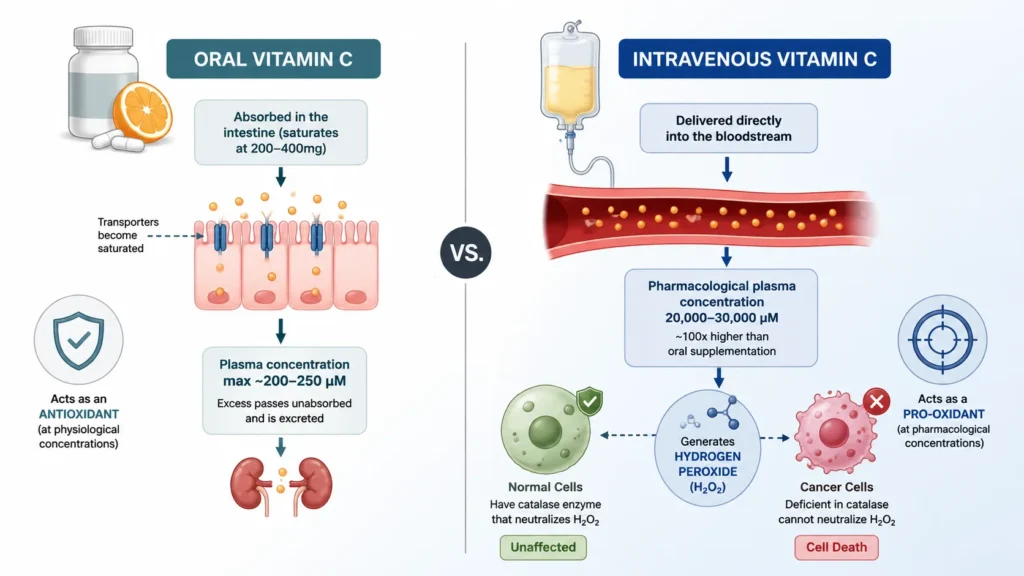
When vitamin C is taken orally, the body tightly regulates how much is absorbed. The intestinal transporters that move vitamin C from the gut into the bloodstream become saturated at doses of approximately 200–400mg. Above this level, additional oral vitamin C simply passes through the gut unabsorbed and is excreted. No matter how many grams of oral vitamin C a person takes, maximum plasma concentrations top out at approximately 200–250 micromolar (µM) — a physiological limit that cannot be exceeded through oral dosing.
Intravenous vitamin C bypasses this absorptive ceiling entirely. By delivering vitamin C directly into the bloodstream, plasma concentrations of 20,000–30,000 µM — 100 times higher than oral supplementation can achieve — become pharmacologically attainable.
At these extreme concentrations, vitamin C’s chemistry changes fundamentally. Rather than acting as an antioxidant (donating electrons to neutralise reactive oxygen species), pharmacological vitamin C acts as a pro-oxidant. It generates hydrogen peroxide in the extracellular fluid surrounding cells — a chemical reaction that normal cells can neutralise through their catalase enzyme systems, but cancer cells cannot, because cancer cells are characteristically deficient in catalase.
The selective toxicity is the key mechanism: IV vitamin C produces hydrogen peroxide that kills cancer cells while leaving normal cells relatively unharmed. This is not the mechanism of a dietary supplement — it is the mechanism of a pharmacological intervention that happens to use a natural molecule.
The 2026 Trial Evidence
The most clinically significant 2026 data on IV vitamin C comes from a randomised, phase 2 clinical trial at the University of Iowa, led by Joe Cullen MD, professor of surgery and radiation oncology. The trial tested IV vitamin C combined with standard gemcitabine-nab paclitaxel chemotherapy in patients with late-stage metastatic pancreatic cancer.
Metastatic pancreatic cancer context: Pancreatic cancer is among the most lethal of all cancers. Median survival with standard treatment is approximately 8 months. Five-year survival rates are below 3%. It is among the cancers most urgently in need of improved treatment approaches.
What the trial found: Adding IV vitamin C to chemotherapy doubled overall survival in these patients — from 8 months to 16 months. The results were strong enough that the trial was stopped early because the benefit was unambiguous.
“This is a deadly disease with very poor outcomes for patients,” said Cullen. “When we started the trial, we thought it would be a success if we got to 12 months survival, but we doubled overall survival to 16 months. The results were so strong in showing the benefit of this therapy for patient survival that we were able to stop the trial early.”
This is not the only evidence. Prior randomised trials have found IV vitamin C combined with first-line chemotherapy in advanced ovarian cancer prolonged time to disease progression. Preliminary data in glioblastoma and other cancers has shown promising signals. The mechanism is consistent and the pattern across cancer types is suggestive.
Where the 2026 Research Stands — Clinical Context
I want to be direct about the current state of evidence and what it means clinically, because this is a topic where both dismissal and overclaiming are dangerous.
IV vitamin C is not a proven cancer cure. The pancreatic cancer trial and other evidence establish proof of concept and clinically meaningful benefit in specific settings — not across all cancers, not as a standalone therapy, and not without further investigation. Phase 3 trials with larger populations and longer follow-up are needed before IV vitamin C can be considered standard of care in oncology.
IV vitamin C is distinct from oral supplements. Any supplement marketed as “vitamin C for cancer” based on this research is making a claim that the pharmacokinetic evidence does not support. Oral vitamin C cannot reach the plasma concentrations that produce the pro-oxidant anti-cancer mechanism. This distinction must be communicated clearly to anyone interpreting this research.
Integrative oncology application: an emerging area. High-dose IV vitamin C is increasingly being offered in integrative oncology settings alongside conventional treatment. The safety profile is generally good — the most common adverse events are transient nausea and fatigue in less than 1% of cases. For patients with certain conditions (G6PD deficiency, iron overload, renal impairment) it is contraindicated. For patients with cancer, any discussion of IV vitamin C should happen with their oncology team.
What This Means for Dietary Vitamin C — The Critical Distinction
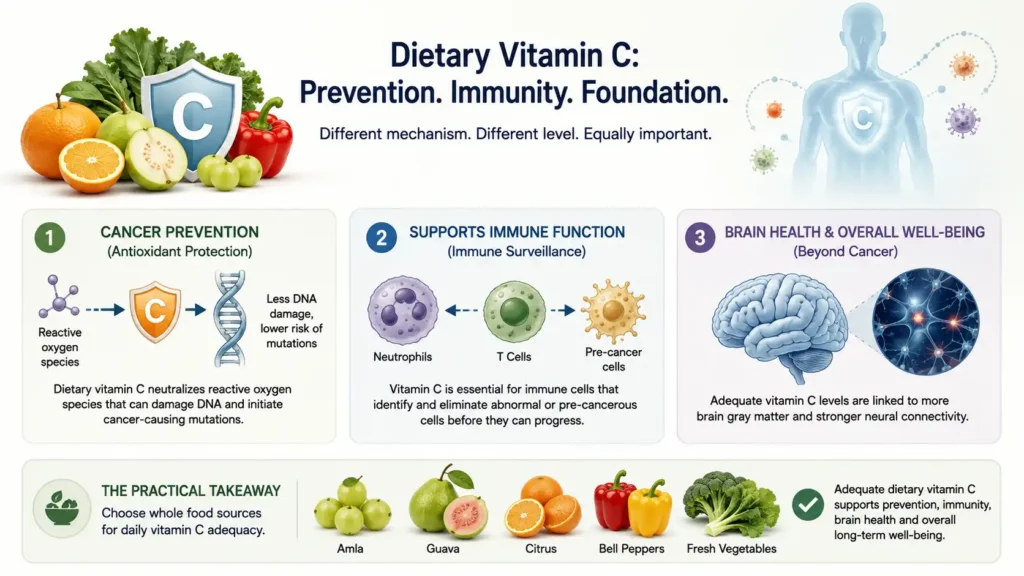
The IV vitamin C anti-cancer research operates at a completely different pharmacological level from dietary vitamin C. But this does not mean dietary vitamin C is irrelevant to cancer biology. The mechanisms differ, and both matter.
Dietary vitamin C and cancer prevention: There is a separate, well-established body of evidence — distinct from the IV pro-oxidant mechanism — showing that dietary vitamin C is associated with reduced cancer risk in epidemiological research. The mechanism here is the conventional antioxidant function: dietary vitamin C reduces DNA damage from reactive oxygen species that can initiate carcinogenic mutations. This is a prevention mechanism, not a treatment mechanism, and it operates at physiological (not pharmacological) concentrations.
Vitamin C and the immune system: Vitamin C is required for the proper function of multiple immune cell types, including neutrophils and T cells — the cells that provide immune surveillance against cancer cells. Adequate dietary vitamin C status supports the immune system’s baseline capacity to identify and eliminate pre-cancerous cells before they progress. This is another prevention mechanism distinct from the IV pro-oxidant effect.
The practical implication for dietary vitamin C: Ensuring adequate dietary vitamin C from whole food sources — amla, guava, citrus, bell peppers, fresh vegetables — is supported by the prevention evidence. As we covered in our July 2026 Vitamin C and Brain Health article, lower vitamin C blood levels are directly associated with reduced brain gray matter and weaker neural connectivity. The case for dietary vitamin C adequacy is independent of and complementary to the IV vitamin C cancer treatment research.
The Nutraceutical vs. Pharmaceutical Distinction
The IV vitamin C story is one of the most instructive examples of what I call the nutraceutical-pharmaceutical spectrum — the reality that the same molecule can function as a dietary nutrient at physiological concentrations and as a pharmacological agent at concentrations achievable only through medical administration.
This distinction matters enormously for how we interpret and communicate nutritional research. The evidence for IV vitamin C doubling pancreatic cancer survival is not evidence that taking 10,000mg of oral vitamin C supplements daily will treat cancer. The evidence for dietary vitamin C maintaining brain structure and immune function is not evidence that IV vitamin C is simply a more efficient supplement.
They are different biological entities despite sharing a chemical identity. Understanding this distinction protects people from both therapeutic nihilism (dismissing IV vitamin C because “supplements don’t work”) and therapeutic magical thinking (believing oral megadosing replicates IV pharmacology).
For the evidence-based supplement decisions that navigate this spectrum accurately — identifying which nutrients require supplementation to correct deficiency and which require pharmacological administration for therapeutic effect — see our Best Longevity Supplements Evidence-Based Guide.
The Takeaway
The 2026 research on intravenous high-dose vitamin C vindicates a mechanism that was dismissed for decades because early trials tested the wrong delivery route. Oral vitamin C cannot achieve the plasma concentrations that produce pro-oxidant anti-cancer effects in tumour cells; IV vitamin C can, and does. A phase 2 RCT found IV vitamin C combined with chemotherapy doubled survival in metastatic pancreatic cancer. This is clinically significant evidence, though not yet at the level required for standard-of-care status. For dietary vitamin C — available through amla, guava, bell peppers, and citrus — the evidence supports adequacy for brain health, immune function, and cancer prevention through antioxidant mechanisms entirely separate from IV pharmacology. Both are important. Neither replaces the other.
About the Author
Tanveer Ahmed Khan is a K11 School of Fitness Sciences-certified personal trainer and REPS India-registered dietitian-nutritionist with over 12 years of experience. Coaching: info@livenulife.com | Instagram: @fitwithtanveer | livenulife.com
Scientific References
1. Cullen, J.J., Allen, B.G., et al. (2024/2026). High-dose IV vitamin C combined with chemotherapy doubles overall survival in advanced metastatic pancreatic cancer. Redox Biology. University of Iowa randomised phase 2 trial.
2. ScienceDaily. (August 7, 2026). Linus Pauling was widely mocked for claiming vitamin C could fight cancer. Researchers now know intravenous vitamin C reaches vastly higher concentrations and can behave differently.
3. Böttger, F., Vallés-Martí, A., Cahn, L., Jimenez, C.R. (2021). High-dose intravenous vitamin C: a promising multi-targeting agent in cancer treatment. Journal of Experimental & Clinical Cancer Research.
4. University of Iowa Carver College of Medicine. (November 2024). High-dose IV vitamin C plus chemotherapy doubles survival in advanced pancreatic cancer.
5. ScienceDaily / UCSF. (July 1, 2026). Vitamin C and brain health — plasma levels associated with brain structural networks.