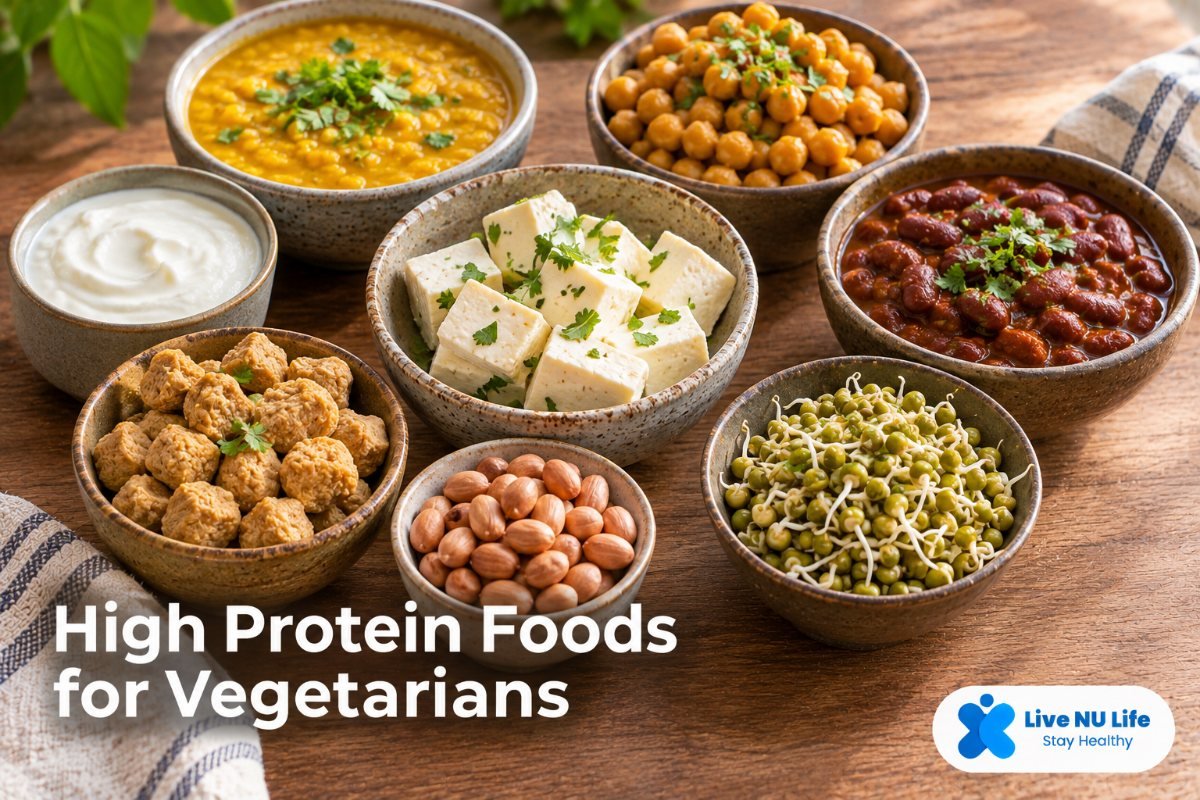
The highest-protein vegetarian foods in India are soya chunks (about 52 g per 100 g dry), seeds such as pumpkin and hemp (about 30 g), peanuts (about 26 g), dals and beans (about 21–25 g raw), and paneer (about 18–20 g). Most Indian vegetarians can meet their protein needs by eating two or three of these at every meal, not just at lunch.
One thing most lists get wrong: dal and rajma lose about two-thirds of their protein per 100 g once cooked, because they soak up water. A katori of cooked dal gives roughly 7–9 g of protein, not 24 g. The table below shows both numbers so you can plan with real portions.
How much protein do vegetarians need?
The Indian Council of Medical Research (ICMR-NIN) sets the recommended intake for healthy adults at 0.83 g of protein per kg of body weight per day (ICMR-NIN, 2020). For a 55 kg woman that is about 46 g a day, and for a 65 kg man about 54 g.
That figure is the minimum for most healthy adults. If you lift weights, are trying to lose fat while keeping muscle, or are older, you will usually benefit from more. We explain the newer targets in our guide to the 2026 protein guidelines.
25 high protein vegetarian foods ranked
Ranked by protein per 100 g as bought (dry or raw). Values are from USDA FoodData Central unless noted, and brands vary, so check your pack label.
| # | Food | Protein per 100 g (raw/dry) | Protein per 100 g (cooked) | Typical serving | Protein per serving |
|---|---|---|---|---|---|
| 1 | Soya chunks (dry) | 52 g (pack label) | about 15–18 g | 30 g dry | about 15 g |
| 2 | Soybeans (whole) | 36.5 g | 16.6 g | 1 katori cooked (150 g) | about 25 g |
| 3 | Hemp seeds (hulled) | 31.6 g | – | 2 tbsp (20 g) | about 6 g |
| 4 | Pumpkin seeds (dried) | 30.2 g | – | 2 tbsp (20 g) | about 6 g |
| 5 | Peanuts | 25.8 g | – | a handful (30 g) | about 8 g |
| 6 | Urad dal (black gram) | 25.2 g | 7.5 g | 1 katori cooked (150 g) | about 11 g |
| 7 | Masoor dal (lentils) | 24.6 g | 9.0 g | 1 katori cooked (150 g) | about 13 g |
| 8 | Moong (mung beans) | 23.9 g | 7.0 g | 1 katori cooked (150 g) | about 10 g |
| 9 | Rajma (kidney beans) | 23.6 g | 8.7 g | 1 katori cooked (150 g) | about 13 g |
| 10 | Besan (gram flour) | 22.4 g | – | 30 g (one cheela) | about 7 g |
| 11 | Toor dal (pigeon peas) | 21.7 g | 6.8 g | 1 katori cooked (150 g) | about 10 g |
| 12 | Almonds | 21.2 g | – | 15 almonds (20 g) | about 4 g |
| 13 | Sunflower seeds | 20.8 g | – | 2 tbsp (20 g) | about 4 g |
| 14 | Kabuli chana (chickpeas) | 20.5 g | 8.9 g | 1 katori cooked (150 g) | about 13 g |
| 15 | Paneer | 18–20 g | – | 100 g | 18–20 g |
| 16 | Flaxseed | 18.3 g | – | 1 tbsp (10 g) | about 2 g |
| 17 | Cashews | 18.2 g | – | 15 cashews (25 g) | about 4.5 g |
| 18 | Chia seeds | 16.5 g | – | 1 tbsp (12 g) | about 2 g |
| 19 | Tofu | 8–17 g (soft to firm) | – | 100 g | 8–17 g |
| 20 | Oats (dry) | 13–17 g | – | 40 g dry | about 5–7 g |
| 21 | Quinoa (dry) | 14.1 g | 4.4 g | 1 katori cooked (150 g) | about 7 g |
| 22 | Whole-wheat atta | 13.2 g | – | 1 roti (about 30 g atta) | about 4 g |
| 23 | Edamame | – | 11.9 g | 1 katori (100 g) | about 12 g |
| 24 | Hung curd / Greek yogurt | about 10 g | – | 150 g | about 15 g |
| 25 | Milk | 3.2–3.4 g per 100 ml | – | 1 glass (250 ml) | about 8 g |
Soya chunk values are from the Nutrela pack label; USDA lists textured soy protein at 51.1 g per 100 g. Paneer is from the Amul label; see our full paneer protein per 100g breakdown. Cooked dal values assume plain boiled dal without added fat. The cooked soya chunk figure depends on how much water the chunks absorb.
Why raw vs cooked numbers matter
Most charts online give dal protein per 100 g dry. You never eat 100 g of dry dal in one sitting. When masoor dal is cooked, 100 g of dry lentils becomes roughly 250–300 g of cooked dal, so the protein per 100 g of what is on your plate drops to about 9 g.
This is why a typical Indian vegetarian thali can look “protein rich” on paper and still deliver only 15–20 g at a meal. To fix it, add a second protein source rather than more of the same dal.
The best vegetarian protein per calorie
If you are trying to lose fat, protein per 100 calories matters more than protein per 100 g. Nuts and seeds are high in protein, but they are higher still in fat.
| Food | Protein per 100 kcal (approx.) |
|---|---|
| Low-fat Greek yogurt | 17 g |
| Soya chunks (dry) | 15 g |
| High-protein paneer | 15 g |
| Firm tofu | 11–12 g |
| Cooked lentils | 8 g |
| Regular malai paneer | 6 g |
| Peanuts | 4.5 g |
| Almonds | 3.7 g |
The takeaway: soya chunks, low-fat dairy and tofu are the most efficient protein sources for vegetarians. Treat nuts and seeds as useful extras, not as your main protein.
Complete protein for vegetarians: do you need to combine?
Soy and dairy contain all the essential amino acids in useful amounts. Most dals are lower in methionine, and cereals such as wheat and rice are lower in lysine. Eaten together, they complement each other. That is why dal-chawal, rajma-rice and khichdi work so well.
You do not have to combine them in the same meal. Eating a mix of dals, grains, dairy and soy across the day is enough for most people.
A sample high-protein vegetarian day (about 95 g)
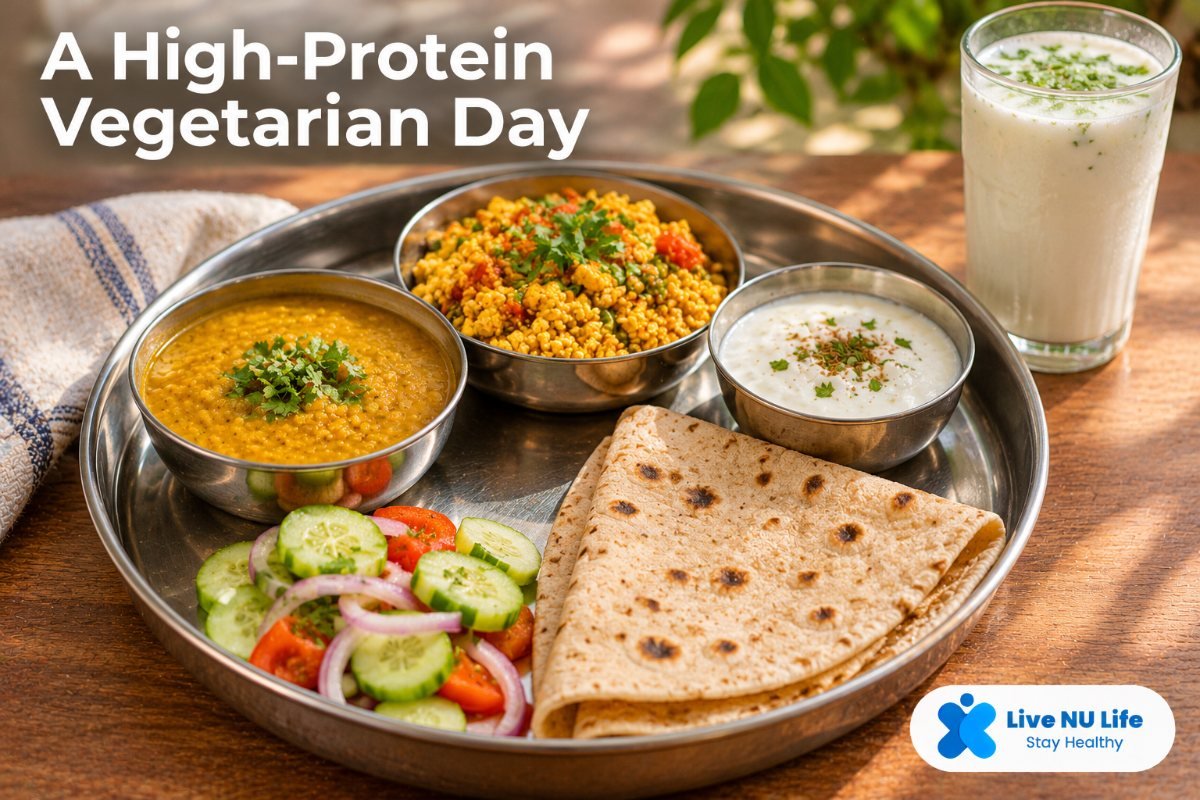
This plan suits an active adult of about 65–75 kg. Adjust portions to your needs.
| Meal | Food | Protein (approx.) |
|---|---|---|
| Breakfast | 2 besan cheelas (60 g besan) with 150 g hung curd | 28 g |
| Mid-morning | 1 glass milk (250 ml) | 8 g |
| Lunch | 1 katori rajma (150 g cooked), 2 rotis, salad | 21 g |
| Evening | 30 g roasted peanuts | 8 g |
| Dinner | Soya chunk curry (30 g dry), 1 katori moong dal, 1 roti | 30 g |
| Total | about 95 g |
You can drop the milk and peanuts on lighter days and still reach about 79 g. For snack ideas, see our list of high-protein snacks under 150 calories and why high-protein snacks keep you full longer.
Easy ways to add protein to an Indian vegetarian diet
- Upgrade breakfast. Poha and upma are low in protein. Add peanuts and a bowl of curd, or switch to besan or moong dal cheela.
- Make dal thicker. A watery dal stretches 30 g of dry lentils across a big bowl. Use more dal per person.
- Add soya chunks or tofu to sabzi. A small handful of soya chunks in a mixed vegetable curry adds about 15 g of protein. See soya chunks protein per 100g for dry vs cooked values.
- Keep hung curd ready. It works as a dip, raita base or sweet snack with fruit.
- Use sprouts. Sprouted moong chaat is quick and easy to prepare in batches.
- Consider a protein powder if you struggle to reach your target from food. Whey (from milk) or soy protein isolate are the most studied options.
Mistakes to avoid
- Counting dry-weight protein for cooked food. This overestimates your intake by two to three times.
- Relying on nuts for protein. Two handfuls of almonds add about 8 g of protein but over 230 kcal.
- Eating protein only at lunch. Spread it across three or four meals.
- Ignoring labels. “Protein” breads, bars and namkeens often add only a few grams per serving.
Frequently asked questions
Which vegetarian food has the most protein?
Dry soya chunks have the most, at about 52 g per 100 g. Among whole foods, soybeans, hemp seeds and pumpkin seeds follow at about 30–37 g per 100 g.
Which dal has the most protein?
Raw urad, masoor and moong dal all have about 24–25 g per 100 g. Cooked, masoor dal keeps slightly more per 100 g than moong or toor.
Is paneer or soya chunks better for protein?
Soya chunks give more protein for far fewer calories. Paneer is a good source too, but regular paneer is high in fat. Using both gives you variety.
Can vegetarians build muscle?
Yes. Muscle growth depends on enough total protein, enough calories and progressive strength training. Many strong lifters are vegetarian.
How can a vegetarian get 100 g of protein a day?
Combine soya chunks, dairy, dals and a protein powder across four or five meals. The sample day above reaches about 95 g with whole foods alone.
Sources
- ICMR-National Institute of Nutrition. Nutrient Requirements for Indians: Recommended Dietary Allowances and Estimated Average Requirements. 2020.
- USDA FoodData Central (SR Legacy). Values for legumes, nuts, seeds, grains, tofu, yogurt and milk.
- Amul Malai Paneer and Nutrela Soya Chunks product labels.
This article is for general information and is not medical advice. If you have kidney disease or another medical condition, ask your doctor about your protein target. See our medical disclaimer.