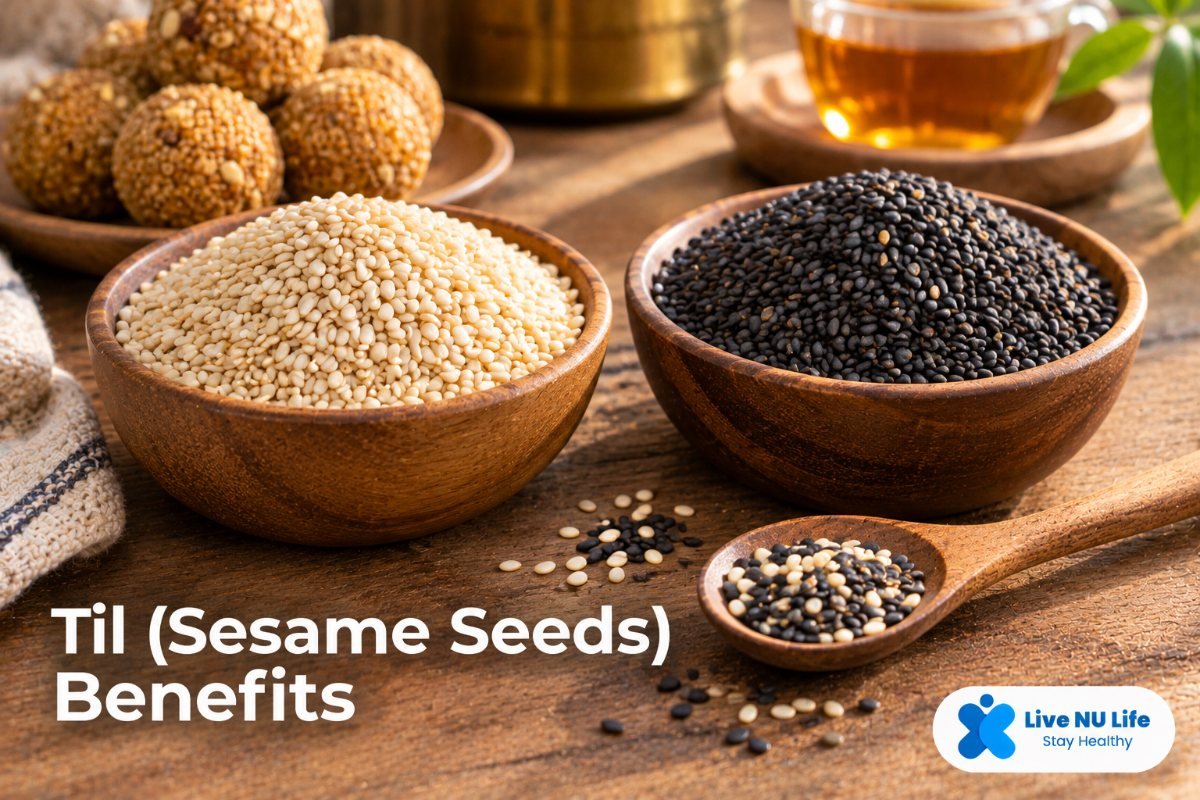
Sesame seeds (til) are rich in calcium, iron, magnesium, healthy fats and fibre, and small trials suggest they may help lower blood pressure. One tablespoon of whole sesame seeds gives about 88 mg of calcium and 1.3 mg of iron. The catch is that most of that calcium sits in the outer hull, so hulled white sesame has far less.
In India, til is a winter food. It goes into til-gud laddoos, gajak and chikki, and it is shared on Makar Sankranti in January. Here is what those seeds actually give you, and how to eat them without overdoing the calories or the jaggery.
Sesame seeds nutrition
Whole, dried sesame seeds, per USDA FoodData Central (ID 170150) via MyFoodData:
| Nutrient | Per 100 g | Per tablespoon (9 g) |
|---|---|---|
| Energy | 573 kcal | 52 kcal |
| Protein | 17.7 g | 1.6 g |
| Fat | 49.7 g | 4.5 g |
| Fibre | 11.8 g | 1.1 g |
| Calcium | 975 mg | 88 mg |
| Iron | 14.6 mg | 1.3 mg |
| Magnesium | 351 mg | 32 mg |
| Zinc | 7.8 mg | 0.7 mg |
Most of the fat in sesame is unsaturated, and the seeds contain lignans such as sesamin, plant compounds that researchers study for heart health.
Whole vs hulled sesame: the calcium difference
This is the detail most articles miss. Hulled (decorticated) sesame kernels, the bright white seeds sold in most packets, contain about 60 mg of calcium per 100 g (USDA FoodData Central, SR 12201). Whole seeds contain about 975 mg. That is roughly 16 times more.
Part of the calcium in the hull is bound to oxalate, so your body won’t absorb all of it. Even so, whole seeds are the better choice if calcium is your reason for eating til.
How to tell: whole white sesame looks slightly off-white or creamy and a little dull. Hulled sesame is bright white and glossy. Black sesame is almost always sold whole.
Black vs white sesame seeds
| Black til | White til | |
|---|---|---|
| Usually sold | Whole (with hull) | Often hulled |
| Calcium | High, because the hull is kept | High if whole; low if hulled |
| Taste | Stronger, slightly bitter | Milder, nuttier when toasted |
| Common uses | Til laddoo, chutney, Ayurvedic preparations | Gajak, chikki, garnish, tahini |
The main nutritional difference comes from whether the hull is there, not from the colour.
Sesame seed benefits: what the research shows
May help lower blood pressure
A systematic review of seven clinical trials found that sesame and sesame products lowered systolic and/or diastolic blood pressure in five trials of people with high blood pressure (Crit Rev Food Sci Nutr, 2018). The reviewers rated the evidence as limited, with a high risk of bias, so treat this as promising rather than proven.
May improve cholesterol
The same review included two trials in people with high cholesterol, and both reported an improved lipid profile. Two trials is a small base, so sesame is a sensible addition to a heart-friendly diet, not a treatment.
Supports bones as part of your diet
Whole sesame adds calcium, magnesium, zinc and copper, all nutrients your bones need. For people who don’t drink much milk, whole til is a useful extra source, though not a full replacement.
Plant protein and fibre
Two tablespoons add about 3 g of protein and 2 g of fibre. That’s useful, but sesame is mainly a fat source, so don’t count on it for protein.
Why til is eaten in winter
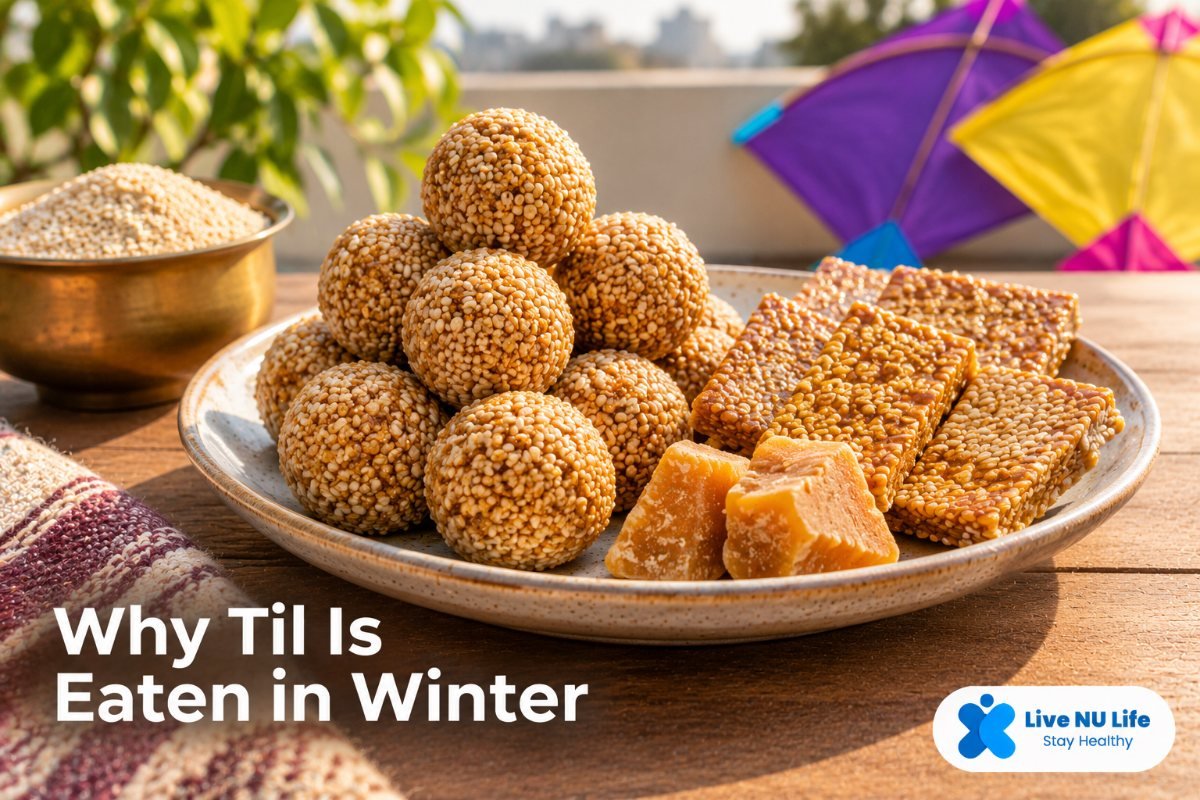
In Indian food tradition and Ayurveda, til and gud (jaggery) are considered warming foods for the cold months. Til-gud laddoos on Makar Sankranti also carry a social meaning: sharing them comes with the wish “til-gul ghya, god god bola” in Maharashtra, roughly “take this sweet and speak sweetly”.
Nutritionally, a til-gud laddoo combines whole sesame’s minerals and healthy fats with jaggery’s sugar. Jaggery is still sugar, so one or two small laddoos a day is plenty, and people with diabetes should count them as a sweet. For more on jaggery, see our upcoming post on whether gur is healthier than sugar.
How much sesame should you eat a day?
One to two tablespoons (9–18 g) a day is a practical amount. That gives about 90–175 mg of calcium from whole seeds for 50–105 kcal. Because sesame is so calorie-dense, larger amounts add up quickly if you are trying to lose weight.
How to eat more til
- Toast it. Dry-roast for 2–3 minutes until fragrant. It tastes nuttier and is easier to sprinkle on food.
- Grind it. Whole seeds can pass through undigested. Grinding them into chutney, podi or tahini may help you absorb more.
- Til chutney or podi with roasted chana and red chilli, eaten with idli, dosa or rice
- Sprinkle on salads, dal, stir-fried vegetables or curd rice
- Til laddoo or chikki as an occasional winter sweet
- Til oil (gingelly oil) for cooking. It has the fats but not the calcium or fibre of the seeds.
Who should be careful
- Sesame allergy: sesame is a common and potentially serious food allergen. Since 2023, US law has listed it as a major allergen on food labels. Anyone with a known allergy must avoid it completely.
- People with diabetes: til itself is fine, but til-gud sweets, gajak and chikki are high in sugar. Count them carefully.
- People trying to lose weight: portion size matters because of the calories.
- People with kidney stones: sesame hulls contain oxalate. If your doctor has told you to limit oxalate, ask about sesame.
For more winter foods from Ayurveda, read how to balance vata dosha naturally and our Ayurvedic morning routine for energy. For another winter superfood, see amla benefits.
Frequently asked questions
Which is better, black or white sesame?
Black sesame is usually sold whole, so it keeps more calcium. Whole white sesame is just as good. Hulled white sesame has much less calcium.
Can I eat sesame seeds every day?
Yes. One to two tablespoons a day is a sensible amount for most people.
Are sesame seeds good for women?
Whole sesame adds calcium and iron, two nutrients many Indian women don’t get enough of. It helps as part of a varied diet but doesn’t replace medical treatment for anaemia or low bone density.
Is it safe to eat sesame seeds during pregnancy?
In normal food amounts, sesame is generally considered safe in pregnancy. Ask your doctor if you have any concerns or an allergy.
What is sesame called in Hindi?
Sesame is called til in Hindi.
Sources
- USDA FoodData Central. Seeds, sesame seeds, whole, dried (SR 170150); Seeds, sesame seed kernels, dried (decorticated) (SR 12201).
- The effect of dietary intake of sesame (Sesamum indicum L.) derivatives related to the lipid profile and blood pressure: a systematic review. Crit Rev Food Sci Nutr. 2018;58(1):116–125.
This article is for general information and is not medical advice. See our medical disclaimer.