By Tanveer Ahmed Khan | K11-Certified Trainer & Dietitian-Nutritionist | REPS India Registered | August 2026 | 12 min read
KEY TAKEAWAY: The gut-brain axis has been the subject of growing research for a decade. In 2026, the evidence reached a new threshold of clinical relevance: specific gut bacteria are directly linked to anxiety, depression, stress resilience, cognitive function, and sleep quality. The foods that feed those bacteria — and the processed foods that destroy them — are now among the most evidence-supported interventions available for mental and emotional health. Here is the complete 2026 framework.
The Second Brain That Runs Your First One
In over 12 years of practice as a trainer and nutritionist, nothing has shifted my clinical approach more fundamentally than the emerging science of the gut-brain axis. When I began my career, the connection between what a person ate and how they felt emotionally was considered, at best, a wellness platitude. By 2026, it is one of the most rapidly advancing areas in biomedical science — and the implications for how we address anxiety, depression, cognitive decline, and stress are profound.
The gut is home to approximately 100 trillion microorganisms — bacteria, fungi, viruses, and archaea — that collectively produce neurotransmitters, regulate the immune system, metabolise hormones, and communicate bidirectionally with the brain through the vagus nerve, the immune system, the endocrine system, and the enteric nervous system (the gut’s own independent neural network, containing more neurons than the spinal cord).
This communication system — the gut-brain axis — is not one-directional. The brain influences gut function (anxiety causes digestive symptoms) and the gut influences brain function (gut dysbiosis produces anxiety, depression, and cognitive impairment). In 2026, the evidence for the gut-to-brain direction of this axis has reached a level of mechanistic precision that should change how every clinician approaches mental health treatment.
📖 Also read: Gut Health Revolution: How Your Microbiome Controls Health — Our foundational guide to the gut microbiome — what it is, why it matters, and how modern life is destroying it — the essential companion to this article on the gut-brain connection.
The Specific Bacteria That Regulate Your Mood
The 2026 research landscape has moved beyond the general concept of “gut health is good for mental health” into specific bacterial species with specific mechanistic roles in emotional regulation. This specificity is what makes the science clinically actionable.
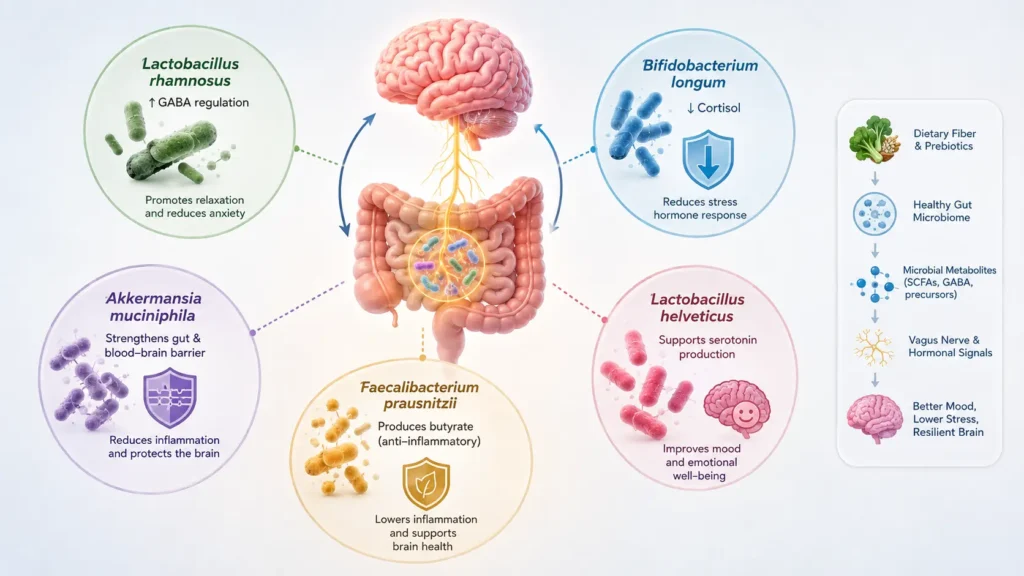
Lactobacillus rhamnosus and GABA regulation. GABA (gamma-aminobutyric acid) is the brain’s primary inhibitory neurotransmitter — it produces calm, reduces anxiety, and prevents the hyperexcitability that characterises anxiety disorders. Research by John Cryan and Ted Dinan at University College Cork found that L. rhamnosus, when administered to mice, increased GABA receptor expression in multiple brain regions and dramatically reduced anxiety and depression behaviours — and this effect was absent in vagotomised mice (those with their vagus nerve severed), confirming that the communication pathway is the vagus nerve. Human trials have since shown probiotic interventions containing L. rhamnosus producing modest but consistent reductions in anxiety measures.
Bifidobacterium longum and cortisol. The stress hormone cortisol is produced by the adrenal glands in response to psychological and physiological stress. Chronic elevated cortisol drives anxiety, depression, impaired memory, accelerated brain ageing, and sleep disruption. Bifidobacterium longum has been specifically shown to reduce cortisol secretion in response to acute stress in human trials — one of the most direct demonstrations that gut bacteria can modulate the body’s hormonal stress response. For the complete picture of cortisol and chronic stress, see our guide on why chronic stress is hard to detect early.
Akkermansia muciniphila and the blood-brain barrier. Akkermansia is the gut bacterium most associated with maintaining intestinal barrier integrity. But its role in the gut-brain axis extends further: Akkermansia populations are consistently lower in patients with depression, anxiety, and schizophrenia across multiple independent studies. One proposed mechanism: Akkermansia’s maintenance of intestinal barrier integrity reduces the translocation of bacterial lipopolysaccharides (LPS) — inflammatory compounds — from the gut into systemic circulation and across the blood-brain barrier. Neuroinflammation, driven partly by gut-derived LPS, is increasingly recognised as a central mechanism in depression and cognitive decline.
Faecalibacterium prausnitzii and anti-inflammation. F. prausnitzii is one of the most abundant bacteria in a healthy gut microbiome and produces significant amounts of butyrate — the short-chain fatty acid that is the primary energy source for colonocytes (gut lining cells) and that directly inhibits inflammatory signalling pathways including NF-kB. Lower F. prausnitzii populations are consistently found in depression, Crohn’s disease, ulcerative colitis, and anxiety disorders. The anti-inflammatory butyrate this species produces serves as a direct link between gut health and neuroinflammation.
Lactobacillus helveticus and serotonin. Approximately 90% of the body’s serotonin is produced in the gut — not the brain. Enterochromaffin cells lining the intestinal wall produce serotonin in response to microbial metabolites, particularly SCFAs produced by fermentation of dietary fibre. L. helveticus specifically produces precursors and cofactors that support serotonin synthesis. Combined with the tryptophan pathway (the amino acid precursor to serotonin), microbial serotonin production directly influences both gut motility and — through the vagus nerve — brain serotonin signalling.
What 2026 Research Has Added: The Precision and the Urgency
The 2026 research landscape has added two dimensions that elevate the gut-brain axis from interesting science to urgent clinical priority.
Dimension 1: The specific dietary compounds that build vs. destroy the mental health microbiome. The July 2026 Cambridge study of 39 sweeteners against 25 gut bacteria (our July 2026 sweeteners and gut bacteria article) documented with unprecedented specificity which compounds destroy Lactobacillus species and Akkermansia muciniphila — the very bacteria most associated with anxiety reduction and blood-brain barrier integrity. Sucralose specifically suppresses Lactobacillus and promotes pathogenic bacteria. This connects a common food additive to measurable disruption of the specific microbial populations that regulate emotional health.
Dimension 2: The gut-brain axis and dementia risk. Our August 2026 coverage of the vitamin B12 and brain health research and the fish oil supplement failure has collectively established that the most powerful brain health interventions in 2026 are dietary pattern-level changes rather than single supplements. The gut microbiome is the mechanism that converts dietary patterns into brain health outcomes — the microbiome produces the neurotrophic factors, reduces the neuroinflammation, and maintains the blood-brain barrier integrity that determines cognitive ageing trajectories.
The Dietary Patterns That Build Mental Health Bacteria
After 12 years of working with clients who present with anxiety, chronic stress, sleep difficulties, and mood instability, I have found that the gut-first approach to mental health support — while never a substitute for psychological or psychiatric treatment where indicated — is often the most underutilised tool available. Here is the dietary framework I apply:
Foundation: diverse fibre from 30+ plant foods per week. The single most important dietary variable for gut microbiome diversity — and therefore for the diversity of mood-regulating bacteria — is the variety of plant foods consumed weekly. Different bacteria ferment different fibre types. A diet of five vegetable varieties produces a different (and less diverse) microbiome than one with twenty varieties. I use the Fibermaxxing guide framework to help clients track and expand plant diversity systematically.
Fermented foods daily. Fermented foods — plain yoghurt, kefir, idli and dosa batter that has genuinely fermented, kanji (fermented rice water), fermented pickles without vinegar — deliver live beneficial bacteria alongside prebiotic compounds that help them establish in the gut. Research by Christopher Gardner at Stanford found that a diet rich in fermented foods increased microbial diversity and reduced 19 inflammatory proteins — including some associated with depression and anxiety — over ten weeks. See our Top 15 Probiotic Foods guide for the complete fermented food landscape.
Polyphenol-rich foods targeting specific bacteria. Polyphenols — plant compounds in berries, dark chocolate, coffee, tea, olive oil, spices, and colourful vegetables — are prebiotic for Akkermansia muciniphila and Bifidobacterium species specifically. They are also anti-inflammatory through their direct NF-kB inhibitory effects and their stimulation of F. prausnitzii populations. The June 2026 tea research and coffee-liver research both demonstrate the systemic anti-inflammatory effects of polyphenol-rich beverages — mechanisms that extend directly to the gut-brain axis.
Omega-3 fatty acids for vagal tone. Vagal tone — the strength and regularity of the vagus nerve’s function as a gut-brain communication channel — is directly supported by omega-3 fatty acids. EPA and DHA from fatty fish increase vagal tone, reduce neuroinflammation, and support the integrity of the enteric nervous system. While our August 2026 coverage of the fish oil brain trial failure documented that DHA supplements don’t prevent Alzheimer’s in elderly at-risk adults, the evidence for dietary omega-3s from fatty fish in maintaining vagal tone and gut-brain communication in the general population remains strong.
Elimination of gut-disruptive ultra-processed foods. This is the other side of the dietary intervention: removing the foods that actively disrupt the bacteria associated with emotional regulation. As our June 2026 UPF brain article documented, ultra-processed foods impair attention and cognitive function directly. Their gut-mediated mechanism — HFCS disrupting fructose-glucose gut-brain signalling, emulsifiers disrupting the intestinal mucus layer, artificial sweeteners suppressing Lactobacillus — adds neurological harm through the microbiome pathway on top of the direct neurological harm documented in the Monash University UPF attention study.
The Sleep Connection: Gut Bacteria Regulate Your Sleep
One of the most clinically significant 2026 insights in gut-brain axis research is the bidirectional relationship between the gut microbiome and sleep quality. Our August 2026 Columbia University sleep research documented that losing just 80 minutes of nightly sleep causes meaningful weight gain and metabolic disruption. The gut microbiome provides the mechanistic link between poor diet, poor sleep, and the cascade of metabolic consequences.
Specific gut bacteria — particularly Lactobacillus species — produce GABA, which directly promotes sleep onset. Others produce tryptophan precursors that support melatonin synthesis. Akkermansia supports the integrity of the gut barrier that prevents inflammatory molecules from reaching the brain and disrupting sleep architecture. Conversely, poor sleep reduces microbial diversity within 48 hours of sleep disruption — creating a self-reinforcing cycle where poor sleep damages the microbiome, the damaged microbiome further impairs sleep, and both dimensions of disruption amplify the metabolic consequences documented in the Columbia study. See our Sleep Hygiene guide and our Natural Sleep Remedies guide for the nutritional sleep optimisation protocols that address this cycle.
The Stress-Gut Cycle: What to Do When Stress Destroys Your Microbiome
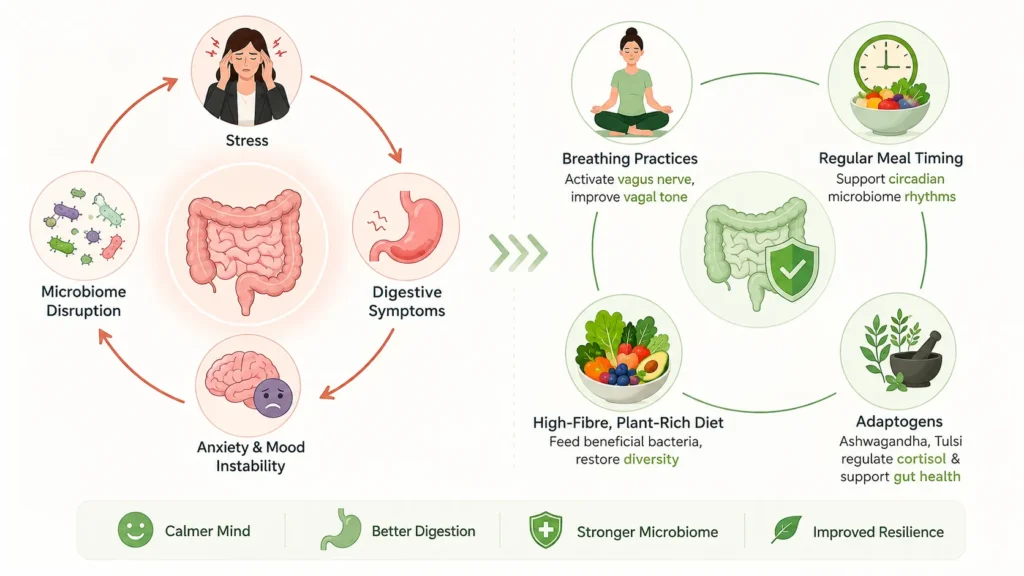
In clinical practice, one of the most common presentations I encounter is the stress-gut cycle: a period of intense professional or personal stress that produces digestive symptoms (bloating, altered bowel habits, nausea), which further amplifies anxiety and mood instability, which worsens the stress response, which further disrupts the microbiome.
The acute stress-gut disruption mechanism is well-characterised: cortisol increases intestinal permeability (loosening tight junctions in the gut wall), reduces populations of beneficial Lactobacillus and Bifidobacterium, increases pathogenic bacteria, and reduces microbial diversity — all within hours to days of acute stress onset. For the many people experiencing chronic work stress, this means their microbiome is being continuously degraded, continuously degrading their mood resilience, and continuously making the stress worse.
The interventional framework I use combines four elements that work across both the stress and the gut axis simultaneously: structured breathing practices (activating the vagus nerve directly, improving vagal tone), regular meal timing (supporting circadian microbiome rhythms), high-fibre diverse plant foods (feeding the diversity-depleted microbiome), and adaptogenic herbs like ashwagandha and tulsi that have documented effects on both cortisol regulation and gut microbiome diversity. Our Ashwagandha Benefits guide and Tulsi: Holy Basil for Modern Wellness cover the adaptogenic plant evidence base in full. And our Mindfulness for Stress Relief guide covers the evidence-based practices that directly improve vagal tone.
My Gut-Brain Nutrition Protocol: The 8 Daily Practices
Based on 12 years of applying gut-brain axis nutritional science to clients presenting with anxiety, chronic stress, poor sleep, and mood instability — and integrating the best 2026 research — here are the eight daily dietary practices that produce the most consistent gut-brain improvements:
• 1. Breakfast built around fermented protein and complex carbohydrate: Greek yoghurt with mixed nuts, seeds, and berries — delivering L. rhamnosus and Bifidobacterium from fermented dairy, prebiotics from nuts and seeds, and polyphenols from berries.
• 2. Minimum five vegetable varieties daily, targeting diverse fibre types: cruciferous (broccoli, cabbage, cauliflower), leafy greens, alliums (garlic, onion, leeks), root vegetables, and nightshades (tomato, capsicum) each provide distinct prebiotic substrates.
• 3. Legumes at least once daily: dal, rajma, chana, or lentils provide the most gut-fermentable fibre of any food category — the fuel for butyrate-producing F. prausnitzii and other anaerobic bacteria that produce the most anti-inflammatory microbial metabolites.
• 4. Freshly brewed tea twice daily: green or black tea polyphenols are specifically prebiotic for Akkermansia and Bifidobacterium, and reduce neuroinflammatory proteins.
• 5. One serving of fatty fish twice per week: omega-3 EPA and DHA support vagal tone, reduce neuroinflammation, and provide the complete amino acid profile (including tryptophan) for serotonin synthesis.
• 6. Eliminate artificial sweeteners from daily diet: particularly sucralose (Splenda), saccharin, and products containing these compounds — the most evidence-based single dietary change for protecting Lactobacillus populations.
• 7. Reduce ultra-processed food to below 10% of daily calories: the emulsifiers, preservatives, and artificial flavourings in UPFs disrupt the intestinal mucus layer that hosts Akkermansia and the gut-associated lymphoid tissue that interfaces between the microbiome and the brain immune axis.
• 8. End the eating day early: time-restricted eating with a 12+ hour overnight fast allows the migrating motor complex — the gut’s cleaning wave — to cycle fully, redistributing bacteria optimally and reducing the pathogen overgrowth that occurs with continuous feeding. Consistent with the Columbia 2026 sleep and weight research, aligning the feeding window with daylight hours optimises both metabolic and microbiome circadian rhythms.
The Takeaway
The gut-brain axis in 2026 is no longer emerging science — it is established clinical reality. Specific gut bacteria regulate GABA production, cortisol response, serotonin synthesis, vagal tone, blood-brain barrier integrity, and neuroinflammation. The foods that feed those bacteria — diverse plant fibres, fermented foods, polyphenols, and omega-3 fatty acids — are among the most evidence-supported mental health interventions available without a prescription. The foods that destroy them — ultra-processed products, artificial sweeteners, emulsifiers, and alcohol — produce measurable disruption of the specific microbial populations that keep the nervous system regulated. For the foundational framework of gut microbiome health, see our Gut Health Revolution guide and our Personalised Nutrition Based on Your Gut Bacteria guide. For the specific bacterial diversity protocol, see our Fibermaxxing guide and our Top 15 Probiotic Foods guide.
About the Author
Tanveer Ahmed Khan is a K11 School of Fitness Sciences-certified personal trainer and REPS India-registered dietitian-nutritionist with over 12 years of experience. Coaching: info@livenulife.com | Instagram: @fitwithtanveer | livenulife.com
Scientific References
1. Cryan, J.F., Dinan, T.G. et al. (2019–2026). Lactobacillus rhamnosus, vagus nerve signalling, and GABA receptor expression: multiple studies from University College Cork.
2. Gardner, C.D. et al. (2021). High-fermented-foods diet increases microbiome diversity and reduces inflammatory proteins: Stanford randomized trial. Cell, 184(16).
3. ScienceDaily / Cambridge Molecular Systems Biology. (July 17, 2026). Scientists tested 39 sweeteners and found unexpected gut effects including Lactobacillus suppression.
4. Kerry Health and Nutrition Institute. (2026). Five Key Health and Nutrition Trends for 2026 — Gut-Brain Axis section.
5. Current Nutrition Reports. (July 2026). Hypomagnesemia and gut microbiome alterations as contributors to systemic nutritional deficiency — gut-brain axis context.