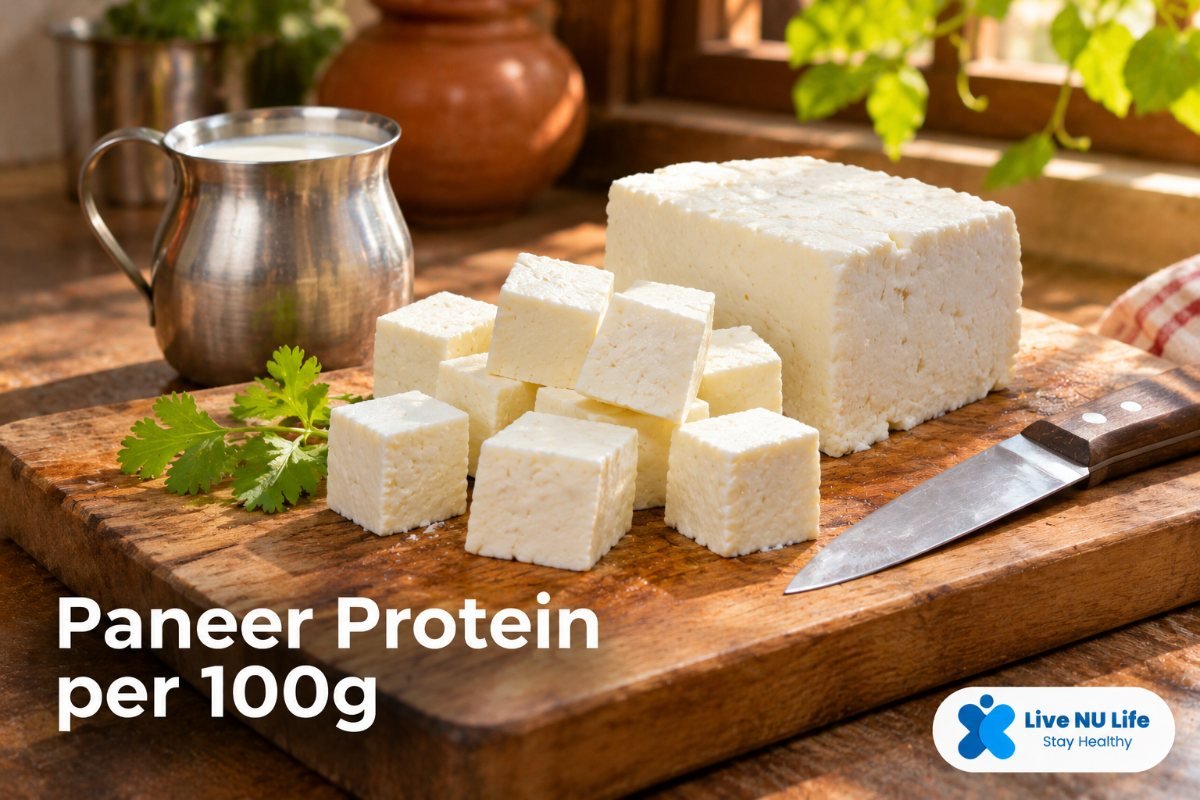
100 g of regular (full-fat) paneer contains about 18–20 g of protein. Amul Malai Paneer, for example, lists 20 g of protein, 25 g of fat and 323 kcal per 100 g (Amul). Newer high-protein paneers made with lower-fat milk give about 25 g of protein for roughly half the calories.
So paneer is a good protein source for vegetarians, but regular paneer is a high-fat food first. Here is how to get the most protein from it without overshooting your calories.
Paneer nutrition per 100 g
| Per 100 g | Regular malai paneer (Amul label) | High-protein paneer (Amul, listed values) |
|---|---|---|
| Protein | 20 g | 25 g |
| Energy | 323 kcal | 170 kcal |
| Fat | 25 g (15 g saturated) | 6 g |
| Carbohydrate | 4.5 g | 4 g |
| Calcium | 480 mg | not listed |
Values come from Amul’s product label for Malai Paneer and the listing for Amul High Protein Paneer on FatSecret India. Other brands and homemade paneer will differ. Check the label on the pack you buy.
Why homemade paneer varies: the protein per 100 g depends on how much fat the milk had and how much water is pressed out. Firm, well-pressed paneer has more protein per 100 g than soft, moist paneer. Paneer made from toned milk is leaner than paneer made from full-cream milk.
Protein per calorie: the number that matters
If you are trying to build muscle or lose fat, protein per calorie tells you more than protein per 100 g:
- Regular malai paneer: about 6 g protein per 100 kcal
- High-protein paneer: about 15 g protein per 100 kcal
That gap is why the high-protein version is worth seeking out if you eat paneer most days.
How much paneer for 20 g or 30 g of protein?
| Protein target | Regular malai paneer | High-protein paneer |
|---|---|---|
| 10 g | 50 g (≈160 kcal) | 40 g (≈70 kcal) |
| 20 g | 100 g (≈320 kcal) | 80 g (≈140 kcal) |
| 30 g | 150 g (≈485 kcal) | 120 g (≈205 kcal) |
A common restaurant serving of paneer curry can contain 100–150 g of paneer, plus the oil, cream and butter in the gravy. The protein is real, but so are the extra calories.
Paneer vs tofu, eggs and chicken
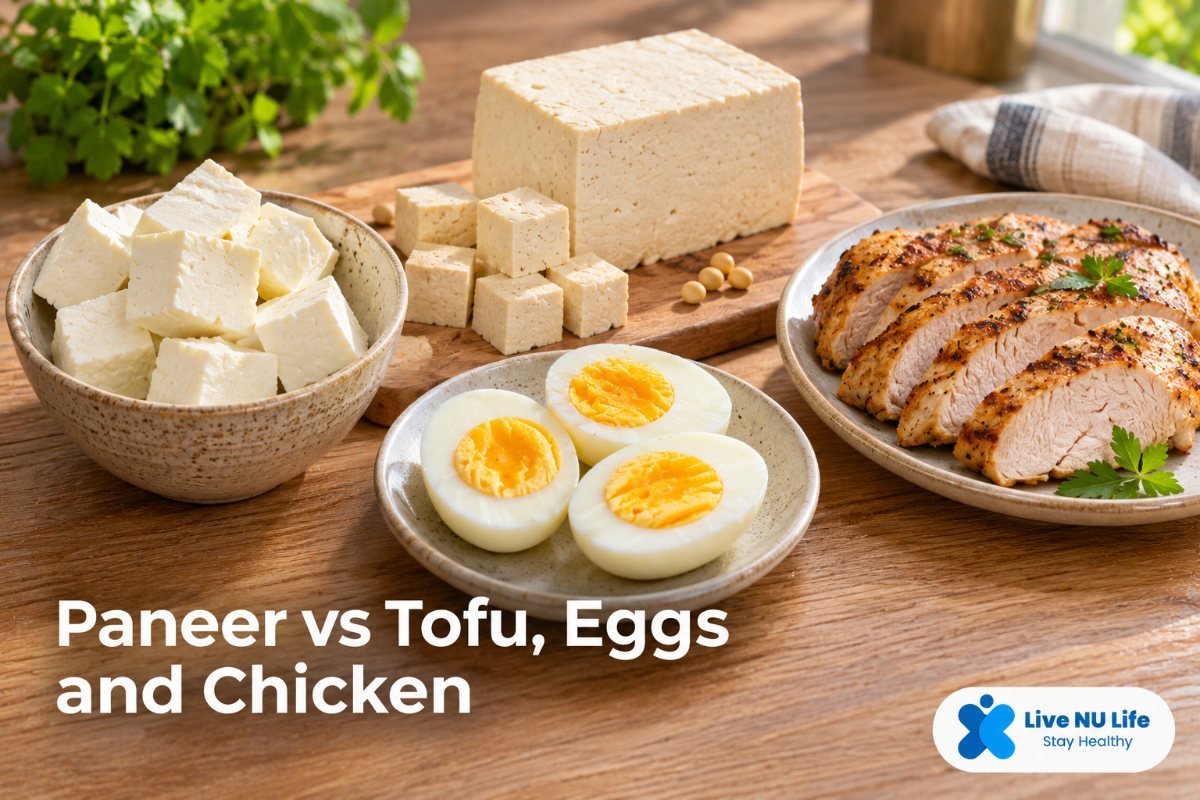
| Food (per 100 g, raw) | Protein |
|---|---|
| High-protein paneer | 25 g |
| Chicken breast | 23 g |
| Regular paneer | 18–20 g |
| Firm tofu | 17 g |
| Whole egg (about 2 eggs) | 12.6 g |
Chicken, tofu and egg values are from USDA FoodData Central, as listed by Nutrition Advance. Gram for gram, paneer holds its own. Its weakness is fat: regular paneer has several times more fat than chicken breast or tofu.
Is paneer a complete protein?
Yes. Paneer is made by curdling hot milk with lemon juice or vinegar. Most of what stays in the curd is casein, the main milk protein, which contains all the essential amino acids your body needs. Much of the whey protein runs off in the liquid, which is why “paneer water” still has some protein in it. Use it to knead dough or cook dal instead of throwing it away.
Casein digests slowly, so paneer keeps you full for longer. That makes it a good choice for a filling evening meal.
Does cooking paneer change its protein?
Cooking does not destroy the protein. What changes is the weight: grilled paneer loses water, so 100 g of grilled paneer has a bit more protein than 100 g of raw. Frying in oil adds fat and calories without adding protein. For the leanest result, grill, air-fry or add paneer to a dish near the end of cooking.
Is paneer good for weight loss?
It can be, if you control the portion. Paneer is filling because of its protein and slow-digesting casein. But 100 g of regular paneer has about as many calories as a full meal for some people. For fat loss:
- Choose high-protein or low-fat paneer.
- Keep portions to 50–100 g per meal.
- Pair paneer with vegetables rather than heavy, creamy gravies.
Who should limit paneer?
- People watching saturated fat because of high cholesterol: choose lower-fat paneer and moderate portions.
- People with milk protein allergy should avoid it. Paneer is lower in lactose than milk, but people who are very sensitive to lactose may still react.
- People with kidney disease who have been told to limit protein should follow their doctor’s or dietitian’s advice.
Easy high-protein paneer ideas
- Paneer bhurji with onions, tomatoes and capsicum, cooked in a teaspoon of oil
- Grilled paneer tikka with yoghurt marinade
- Paneer and vegetable wrap using a whole-wheat roti
- Besan chilla stuffed with grated paneer for a high-protein breakfast
For more vegetarian protein options, see our 2026 protein guidelines article and 5 high-protein snacks under 150 calories.
Frequently asked questions
How much protein is in 100 g of paneer?
About 18–20 g in regular full-fat paneer and about 25 g in high-protein paneer. Check the label, as brands vary.
How much protein is in 200 g of paneer?
About 36–40 g in regular paneer, with roughly 650 kcal, and about 50 g in high-protein paneer, with roughly 340 kcal.
Which has more protein, paneer or egg?
Paneer. 100 g of paneer has about 18–20 g of protein, while 100 g of egg (about two eggs) has about 12.6 g.
Is paneer protein or fat?
Both. Regular paneer has more fat (about 25 g) than protein (about 20 g) per 100 g. High-protein paneer flips this, with about 25 g of protein and 6 g of fat.
Can I eat paneer every day?
Yes, in sensible portions. If you eat it daily, choose a lower-fat paneer and keep the rest of your saturated fat intake in check.
Sources
- Amul. Amul Malai Paneer – nutrition information per 100 g.
- FatSecret India. Amul High Protein Paneer – nutrition per 100 g.
- USDA FoodData Central values for chicken breast, firm tofu and egg, via Nutrition Advance, “Protein content of common foods”.
This article is for general information and is not medical or dietary advice. See our medical disclaimer.