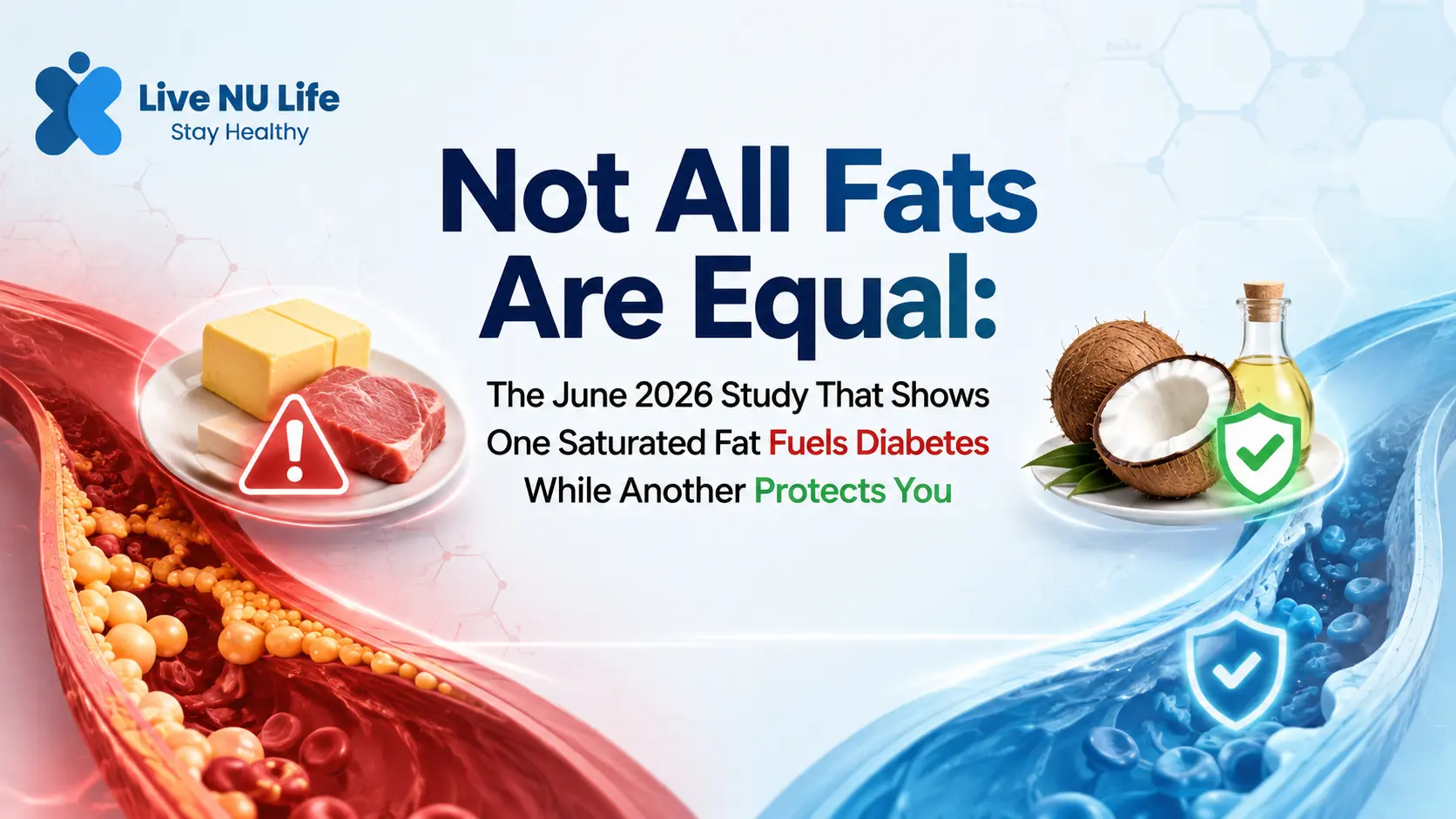
KEY TAKEAWAY: A study published in ScienceDaily on June 23, 2026, found that palmitic acid — the saturated fat dominant in palm oil, processed foods, meat, and dairy — promotes insulin resistance and type 2 diabetes by triggering inflammation and toxic fat buildup in cells. Oleic acid — the main fat in olive oil, avocado, and many nuts — actively protects insulin function and can counter some of palmitic acid’s damage. This research reframes the fat debate: it’s not about total fat, it’s about which fat.
The Fat Debate Needs a New Framework
In over 12 years of nutritional practice, few topics generate more confusion among my clients than dietary fat. The pendulum has swung dramatically: from “all fat is bad” (1980s–2000s), to “saturated fat is fine, carbs are the enemy” (the keto era), to the current position that “fat quality matters more than fat quantity.” The June 2026 research is the most specific and mechanistically clear evidence yet for that third position.
A study published in ScienceDaily on June 23, 2026 investigated two specific fatty acids — palmitic acid (a saturated fat) and oleic acid (a monounsaturated fat) — and their distinct effects on insulin function and the processes that lead to type 2 diabetes. The findings move the conversation far beyond broad categories like “saturated fat” and “unsaturated fat” into the molecular specificity of which fatty acids are doing what in the body.
📖 Also read: Fatty Liver: Causes, Symptoms, Treatment & Diet Guide — Palmitic acid is also the primary driver of hepatic fat accumulation in NAFLD — the liver health connection to this fat research explained in full.
The Two Fats: What They Are and Where They Come From
Palmitic acid (PA): A 16-carbon saturated fatty acid that is the most abundant saturated fat in the human body and in many foods. It is the dominant fat in palm oil — the most widely used vegetable oil in Indian processed food manufacturing. It is also present in significant amounts in full-fat dairy products, beef, lamb, pork, and processed meats. Palmitic acid is the saturated fat your cells are most likely to accumulate when they receive excess saturated fat from the diet.
Oleic acid (OA): An 18-carbon monounsaturated omega-9 fatty acid that is the primary fat in extra-virgin olive oil (approximately 70–80% of its fat content), avocado (approximately 60%), and high-oleic varieties of sunflower, almond, and cashew oils. It is also present in significant amounts in traditional Indian fats: groundnut (peanut) oil is approximately 45–50% oleic acid, and mustard oil contains approximately 30% oleic acid alongside its ALA (omega-3) content.
What the June 2026 Research Found
The study identified three distinct mechanisms through which palmitic acid promotes insulin resistance and diabetes:
Mechanism 1: Cellular inflammation. Palmitic acid triggers an inflammatory response within cells, particularly in muscle cells (myocytes) and liver cells (hepatocytes) — the two primary sites where insulin-stimulated glucose uptake occurs. This inflammation activates inflammatory kinases that directly phosphorylate and inhibit insulin receptor substrate-1 (IRS-1), disrupting the insulin signalling cascade that allows glucose to enter cells. The result is insulin resistance at the cellular level, even in the absence of obesity.
Mechanism 2: Toxic fat buildup. When palmitic acid accumulates within cells, it is converted into ceramide — a lipid molecule that is directly toxic to mitochondria, promotes cell death (apoptosis) in pancreatic beta cells (the insulin-producing cells), and further impairs insulin signalling. Ceramide accumulation is one of the central mechanisms linking dietary saturated fat to both insulin resistance and pancreatic beta cell failure — the two defining features of type 2 diabetes.
Mechanism 3: Cellular stress. Palmitic acid induces endoplasmic reticulum (ER) stress — a state where the cell’s protein-processing organelle is overwhelmed. ER stress in pancreatic beta cells reduces insulin production and secretion, while ER stress in muscle and liver cells amplifies insulin resistance. This triple-hit mechanism — inflammation, ceramide toxicity, and ER stress — makes palmitic acid uniquely diabetogenic among common dietary fats.
Oleic acid, by contrast, showed the following protective effects: it directed palmitic acid away from ceramide synthesis and toward the formation of neutral triglycerides (which are stored rather than cytotoxic); it reduced ER stress; it improved IRS-1 function; and in direct competition experiments, oleic acid countered some of palmitic acid’s harmful effects when both fats were present simultaneously.
The research conclusion was straightforward: consuming more oleic acid and less palmitic acid — a shift in fat quality rather than total fat quantity — protects metabolic health. This is consistent with the USC Longevity Diet research we covered in July 2026, which found that the largely plant-forward, fish-supplemented LDMM diet (which naturally has a high oleic-to-palmitic ratio through its olive-equivalent fat sources and lower animal fat content) outperformed all other dietary patterns on metabolic markers.
The Indian Fat Landscape: A Nuanced Picture
For Indian readers, this research requires careful contextualisation, because the fat landscape in India is more complex than a simple “use olive oil, avoid palm oil” message.
The palm oil problem in processed foods. Palm oil is the dominant vegetable oil in Indian commercial food manufacturing — it appears in biscuits, chips, instant noodles, commercial ghee substitutes, margarine, and frying oils in restaurant and street food contexts. Its dominance is a function of cost and heat stability. The palmitic acid research suggests this widespread use deserves serious scrutiny from a metabolic health perspective, particularly in populations with high rates of type 2 diabetes.
Traditional cooking oils — a more balanced picture. Traditional Indian cooking oils present a more nuanced picture. Mustard oil — the traditional cooking fat of northern and eastern India — has a relatively low palmitic acid content (approximately 3%) and contains beneficial erucic acid, ALA (omega-3), and oleic acid. Cold-pressed groundnut oil, used in western and southern India, has 45–50% oleic acid with moderate palmitic acid. Sesame oil has a balanced oleic/linoleic profile with low palmitic content. These traditional oils are significantly different from palm oil in their fatty acid composition, and the metabolic research supports their continued use over palm oil-based products.
Coconut oil and ghee: the saturated fat question. Coconut oil and ghee are high in saturated fat, but their saturated fatty acid composition differs from palmitic acid-dominant sources. Coconut oil is primarily lauric and myristic acid (12 and 14 carbon chain lengths, respectively) — shorter-chain saturated fats with different metabolic behaviour than the 16-carbon palmitic acid studied here. Ghee (clarified butter) contains butyric acid (4-carbon), which is actually the preferred fuel of colonocytes and has anti-inflammatory properties. The June 2026 research on palmitic acid does not directly implicate these traditional Indian fats, though moderation remains appropriate given their overall saturated fat content.
Ultra-processed foods — the real concern. The primary dietary source of palmitic acid for most urban Indians is not traditional cooking fats but ultra-processed packaged foods using palm oil as their primary fat source. See our Ultra-Processed Foods guide for the complete picture of how to identify and reduce these products.
The Oleic Acid Protocol: What to Add to Your Diet
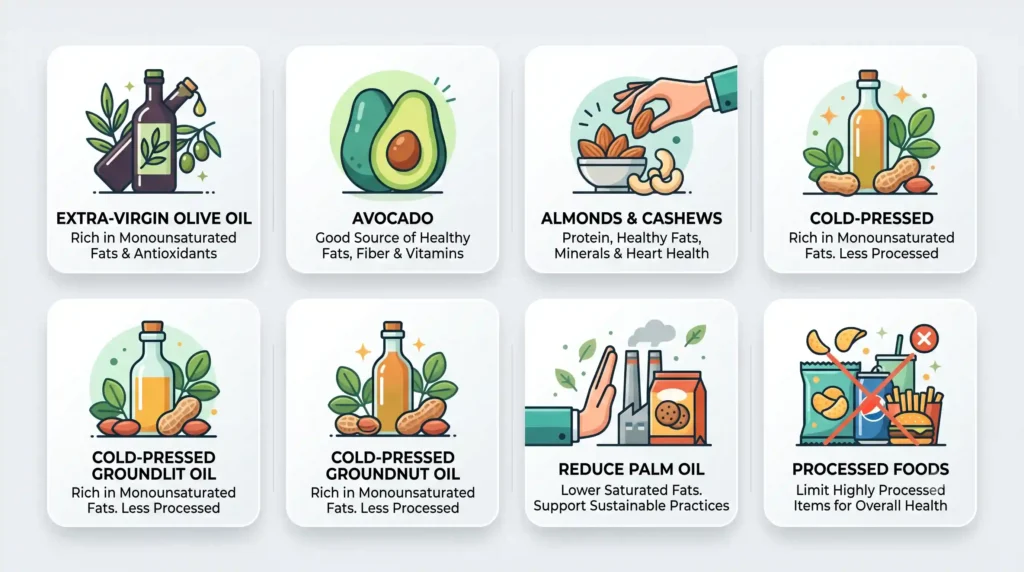
Based on the June 2026 research and the broader evidence base, here is how I advise clients on building dietary oleic acid intake:
Extra-virgin olive oil: the gold standard. Cold-pressed, unrefined, freshly produced olive oil is approximately 70–80% oleic acid. Use it as a finishing oil on salads, grilled vegetables, and soups. Its smoke point (approximately 190°C) is suitable for light sautéing but not for high-temperature Indian frying. For high-heat cooking, groundnut oil or ghee are more appropriate.
Avocado: whole food oleic acid. A medium avocado provides approximately 15–20g of oleic acid alongside fibre, potassium, folate, and vitamin K. Increasingly available in Indian urban markets. Half an avocado on whole grain toast or in a raita provides a meaningful oleic acid contribution alongside other nutritional benefits.
Nuts — especially almonds and cashews. Almonds are approximately 35% oleic acid; cashews approximately 28%; pistachios approximately 25%. A handful (30g) of mixed nuts daily provides meaningful oleic acid alongside protein, magnesium (covered in our August 2026 Magnesium article), zinc, and vitamin E.
Cold-pressed groundnut oil: the accessible Indian option. With 45–50% oleic acid, cold-pressed (kachi ghani) groundnut oil is one of the most accessible and affordable oleic acid-rich cooking fats in India. Use it for medium-heat cooking and as a base for Indian preparations where olive oil’s flavour is inappropriate.
Reduce palm oil exposure from processed foods. This is the other side of the intervention: actively reducing palmitic acid from its primary source in the modern Indian diet. Reading labels for palm oil (also listed as palmolein, vegetable oil shortening, or RBD palm oil) in packaged biscuits, chips, bread, and commercial snacks is the highest-leverage dietary change for many clients.
The Takeaway
The June 2026 research on palmitic acid and oleic acid delivers the most mechanistically precise explanation to date of why fat quality matters more than fat quantity. Palmitic acid — the saturated fat dominant in palm oil and processed foods — promotes insulin resistance through inflammation, ceramide toxicity, and cellular stress. Oleic acid — the monounsaturated fat in olive oil, avocado, and nuts — actively protects insulin function and can counter some of palmitic acid’s damage. For the comprehensive dietary pattern that optimises this fat balance alongside protein quality and gut microbiome health, see our Functional Nutrition guide and our Science-Based Longevity Protocols guide.
About the Author
Tanveer Ahmed Khan is a K11 School of Fitness Sciences-certified personal trainer and REPS India-registered dietitian-nutritionist with over 12 years of experience. Coaching: info@livenulife.com | Instagram: @fitwithtanveer | livenulife.com
Scientific References
1. ScienceDaily. (June 23, 2026). One common fat may fuel type 2 diabetes while another helps fight it. [Original research institution research report]
2. Lovejoy, J.C., et al. (2002). Effects of Diets Enriched in Saturated (Palmitic), Monounsaturated (Oleic), or trans (Elaidic) Fatty Acids on Insulin Sensitivity. Diabetes Care, 25(8). Prior foundational research.
3. Scientific literature (2026) on palmitate-induced ER stress, ceramide accumulation, and IRS-1 phosphorylation in the context of insulin resistance and type 2 diabetes.
4. USC Cell Metabolism study (Fanti et al., 2026) on longevity diet amino acid and fat composition — indirect confirmation of oleic acid-dominant plant-forward fat patterns for metabolic health.