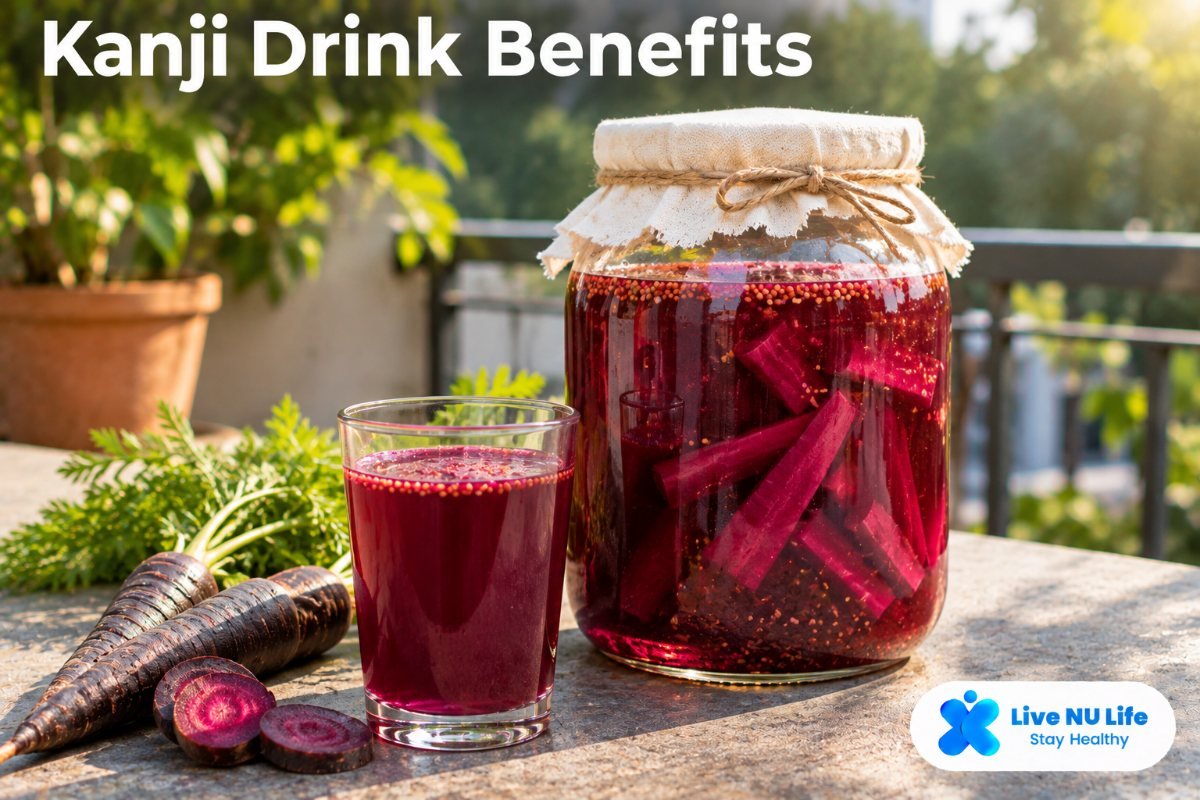
Kanji is a tangy, fermented North Indian drink made from black carrots, water, salt and crushed mustard seeds. As it ferments, lactic acid bacteria multiply, so well-made kanji contains live bacteria and antioxidants from the black carrots. It is a flavourful, low-calorie way to add a fermented food to your winter diet. Most health claims, though, come from lab studies and tradition rather than human trials.
Here is what kanji actually contains, a simple recipe, and how to make and drink it safely.
What is kanji?
Kanji is a traditional fermented drink from Punjab and North India, made in winter when deep purple black carrots are in season. It is often served around Holi. The carrots sit in salted water with ground mustard seeds (rai) for a few days, usually in the sun. Natural lactic acid bacteria turn some of the sugars into acid, which gives kanji its sour, pungent taste.
Not to be confused with: South Indian rice kanji (kanji/kanjee), which is a rice porridge or fermented rice water. That is a different food.
Kanji drink benefits: what the research shows
1. A source of live lactic acid bacteria
A 2021 lab study made black carrot kanji the traditional way, with no starter culture, and fermented it for five days (Sharma et al., 2021):
| Measure | Before fermentation | After fermentation |
|---|---|---|
| pH | 6.0 | 3.47 (more acidic) |
| Lactic acid bacteria | 3.96 log CFU/mL | Peak 8.33 log CFU/mL |
| Antioxidant activity (DPPH) | About 71% | About 80% |
| Vitamin C | 94 mg per 100 mL | 110 mg per 100 mL |
The authors described kanji as a “potential plant-based probiotic”. That is promising, but it was a lab study. No human trial has tested whether drinking kanji improves digestion or gut health.
2. Antioxidants from black carrots
Black carrots get their colour from anthocyanins, the same family of plant pigments found in jamun and purple cabbage. The study above found antioxidant activity and phenols rose during fermentation.
3. Low in calories
Kanji is mostly water. A glass is very low in calories and sugar, so it is a better choice than packaged juices or soft drinks.
4. May support digestion as part of a fermented-food habit
Fermented foods that are eaten without cooking, such as curd, kanji and some homemade pickles, add live microbes to your diet. Many people find they help digestion. The evidence for kanji itself is traditional and lab-based, not clinical.
Claims to treat with caution
“Detoxes the liver”, “cures IBS”, “burns fat” and “boosts immunity” appear on many websites with no human studies behind them. Enjoy kanji as a tasty fermented drink, not as a treatment.
How to make black carrot kanji (makes about 1.5 litres)

Ingredients
- 4–5 black carrots (about 500 g), peeled and cut into sticks
- 1 small beetroot, cut into sticks (optional, for colour if black carrots are pale)
- 1.5 litres water, boiled and cooled
- 1½ tbsp coarsely ground mustard seeds (rai)
- 1 tbsp salt (or half black salt, half regular)
- ½–1 tsp red chilli powder
Method
- Clean everything. Wash a large glass jar and spoon in hot water and dry them completely.
- Combine. Put the carrots, mustard, salt and chilli in the jar. Pour in the cooled water and stir with a clean, dry spoon.
- Cover. Tie a muslin cloth or loosely place the lid on top so gas can escape.
- Ferment for 3–5 days in a warm place or in the sun. Stir once a day with a clean spoon.
- Taste from day 3. It is ready when it tastes pleasantly sour and pungent.
- Refrigerate. Strain or leave the carrots in, and keep it in the fridge. Drink within about a week.
Beetroot kanji: use beetroot and regular carrots instead of black carrots. The method is the same.
Kanji safety: how to tell if it has gone wrong
Homemade fermentation is generally safe when the drink becomes properly sour, but throw it away if you see:
- Fuzzy mould (white, green, black or pink) on the surface or carrots
- A rotten, cheesy or putrid smell, rather than a sharp sour one
- A slimy texture
A thin white film called kahm yeast can appear on ferments. It is usually harmless but affects taste. When in doubt, throw it out.
How much kanji to drink
A small glass (100–200 mL) a day is a sensible amount. Start with less if you are new to fermented foods, because a sudden increase can cause gas or bloating.
Who should be careful
- People with high blood pressure, heart failure or kidney disease: kanji contains a fair amount of salt. Drink small portions or make a lower-salt batch.
- Pregnant women and people with weakened immunity: homemade, unpasteurised ferments carry a small risk if hygiene slips. Ask your doctor, and only drink kanji that has clearly soured and been refrigerated.
- Mustard allergy: mustard seeds are a known allergen.
- IBS or sensitive digestion: fermented and high-FODMAP foods can trigger symptoms in some people. Try a small amount first.
Other winter foods worth trying
Kanji pairs well with other seasonal foods. Read about amla benefits, til (sesame seeds), jaggery and how to balance vata dosha naturally in the cold months.
Frequently asked questions
When is the best time to drink kanji?
Most people drink it with or before a meal, often at lunch. There is no evidence that a particular time is better.
Can I drink kanji every day?
Yes, in small amounts, if you are healthy and not on a low-salt diet.
How long does kanji last?
About a week in the fridge. It keeps getting more sour over time.
Is kanji good for weight loss?
It is very low in calories and can replace sugary drinks, which helps. It does not burn fat on its own.
Is kanji a probiotic?
Well-made kanji contains live lactic acid bacteria, according to lab studies. Whether it gives the health effects of tested probiotic products has not been studied in people.
Sources
- Sharma C, Sahota PP, Kaur S. Physicochemical and microbiological evaluation of antioxidant-rich traditional black carrot beverage: Kanji. Bull Natl Res Cent. 2021;45:143. doi:10.1186/s42269-021-00594-y
This article is for general information and is not medical advice. See our medical disclaimer.