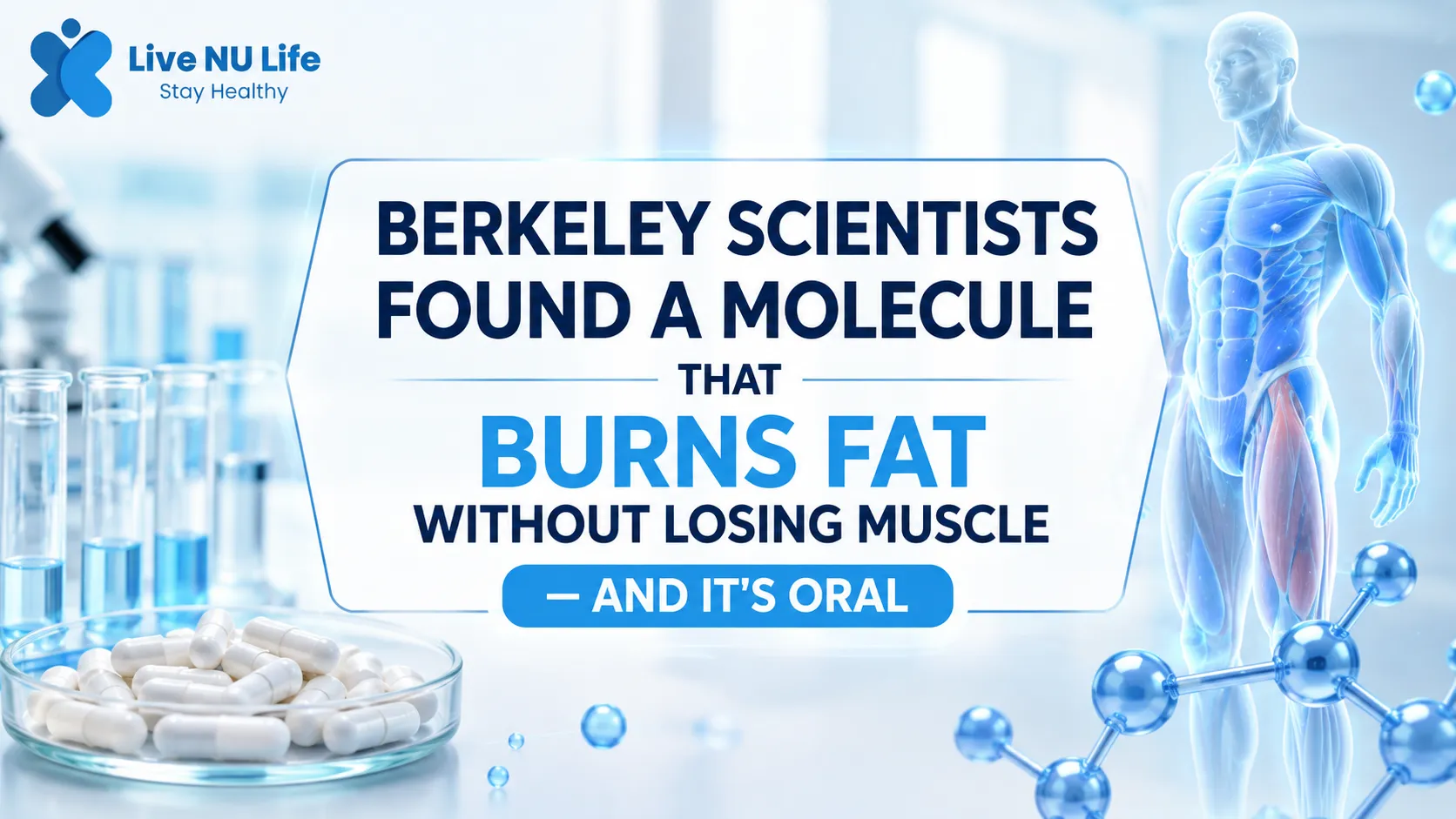
KEY TAKEAWAY: University of California Berkeley researchers published findings in Science Advances (August 23, 2026) on a novel oral small molecule compound that targets energy and lipid metabolism to treat obesity — burning fat without the muscle loss that plagues GLP-1 medications like Ozempic. In animal models, the compound produced significant fat mass reduction while preserving lean mass. Here is the complete science — and the critical caveats about what this means for you today.
The Muscle Loss Problem No One Is Talking About With Ozempic
The GLP-1 medication revolution — Ozempic, Wegovy, Mounjaro, Zepbound — is reshaping medicine in 2026. Millions of people are achieving weight loss that was previously unachievable without surgery. The medications work. The data is unambiguous.
But there is a consequence that receives far less media coverage than the weight loss numbers: people on GLP-1 medications are losing substantial muscle mass alongside fat. Multiple analyses published in 2026 confirm that 25 to 40% of weight lost on semaglutide is lean mass rather than fat — a proportion that concerns exercise physiologists and geriatricians deeply.
Why does this matter? Muscle is not simply an aesthetic concern. As we have documented in our August 2026 series — particularly our coverage of the Maturitas HIIT research
(HIIT for Older Adults article) and the August 22 exercise-weight maintenance analysis — skeletal muscle is the primary site of glucose disposal, the tissue that determines resting metabolic rate, the structure that prevents sarcopenia and frailty, and the reservoir of amino acids that the immune system draws upon during illness. Losing 25–40% of your weight as muscle while on Ozempic may be trading one metabolic problem for a deeper one.
Research published in Science Advances on August 23, 2026, led by Michael Karin and colleagues at the University of California Berkeley, reports on a novel oral small molecule compound that may address this limitation — a compound that targets fat metabolism specifically while preserving lean mass.
📖 Also read: Only One Exercise Helps Older Adults Lose Fat Without Losing Muscle — Our Earlier Coverage — The muscle preservation challenge that the Berkeley compound is designed to solve — and the exercise solution that works right now while pharmaceutical research continues.
What the Berkeley Compound Does and How
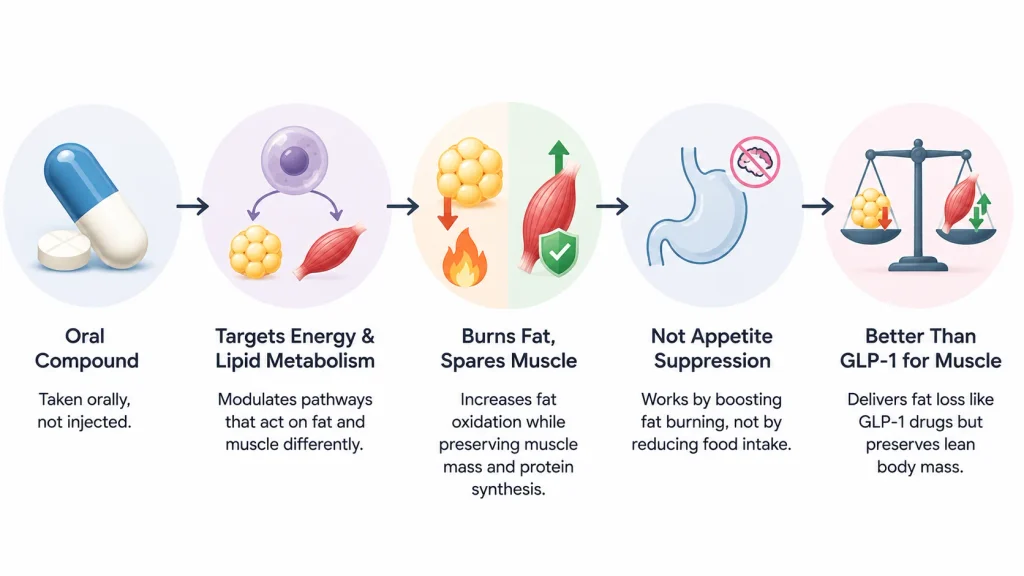
The mechanism: dual targeting of energy and lipid metabolism. The Berkeley compound is described as a “multi-functional oral small molecule targeting energy and lipid metabolism.” It appears to act on metabolic regulatory pathways that specifically promote fat oxidation (the burning of stored fat for energy) while signalling to muscle tissue to maintain protein synthesis and structural integrity. The specific molecular targets are not fully disclosed in the public coverage of the Science Advances paper, but the broad mechanism involves nutrient-sensing pathway modulation that differentially affects adipose (fat) and muscle tissue.
The animal model results. In the animal studies reported in Science Advances, the compound produced significant reductions in fat mass — comparable in direction to what GLP-1 medications achieve — while preserving lean body mass to a degree not seen with semaglutide-class medications. Treated animals showed maintained muscle mass and muscle protein synthesis markers even as fat depots were substantially reduced.
Oral bioavailability. The compound is taken orally — not injected, as Ozempic and Wegovy currently are (though oral semaglutide versions are in development). This is a practical advantage: oral medications have higher compliance than injectable medications for many patient populations, are generally perceived as less burdensome, and do not require injection training or cold-chain storage.
Comparison with GLP-1 mechanism. The GLP-1 medications achieve weight loss primarily by reducing food intake through appetite suppression — they make people feel full and suppress hunger so effectively that calorie intake drops dramatically. The Berkeley compound appears to operate through a different primary mechanism: not reducing food intake but directly enhancing the rate at which the body oxidises fat for fuel. This metabolic acceleration approach to fat loss — rather than appetite suppression — is mechanistically why it may spare muscle: the body is not in the same severe calorie-deficit stress state that drives muscle breakdown during dramatic appetite-suppression-mediated weight loss.
The Context: Why the Muscle-Sparing Problem Drives This Research
The appetite-suppression mechanism of GLP-1 medications creates a physiological scenario very similar to severe calorie restriction: the body’s energy intake drops dramatically and rapidly. Under such conditions, the body catabolises muscle protein alongside fat to meet energy and amino acid requirements — a well-documented consequence of rapid calorie restriction.
A Nature Reviews Endocrinology paper published in June 2026 (covered in our August 2026 exercise article) argued explicitly that exercise must be positioned as a “required co-therapy” alongside GLP-1 medications to preserve muscle — that the medications alone produce what that paper calls “low-quality weight loss” that undermines functional and metabolic benefit despite reducing total body weight.
The Berkeley compound, if it works in human trials as it does in animal models, could potentially produce what the exercise-GLP-1 combination attempts to achieve pharmacologically: significant fat reduction without the collateral muscle loss that threatens to undermine the metabolic health benefits of GLP-1-mediated weight loss.
The Critical Caveats: What This Is and Is Not
I want to be emphatic about what the Berkeley August 23, 2026 findings do and do not represent — because early-stage pharmaceutical research consistently generates enthusiasm that outpaces its clinical reality.
Animal models, not human trials. The Science Advances paper reports animal model data. The vast majority of compounds that show promising results in animal models fail in human clinical trials — either because they prove less effective, produce unexpected side effects, or have pharmacokinetic properties that are unfavourable in humans. Animal-to-human translation in metabolic obesity research has a particularly challenging track record.
Not available and not near approval. This compound is not in clinical trials for humans as of the August 2026 publication. It is not available in any pharmacy, supplement store, or wellness clinic. Anyone selling a product claiming to be this compound or to replicate its effects is making fraudulent claims.
The supplement market danger. Every time research like this is published, the supplement industry rapidly produces products claiming to “support fat metabolism while preserving muscle” using unrelated compounds. The Berkeley compound’s specific molecular mechanism has not been replicated by any commercially available supplement ingredient.
What You Can Do Right Now: The Non-Pharmaceutical Equivalents
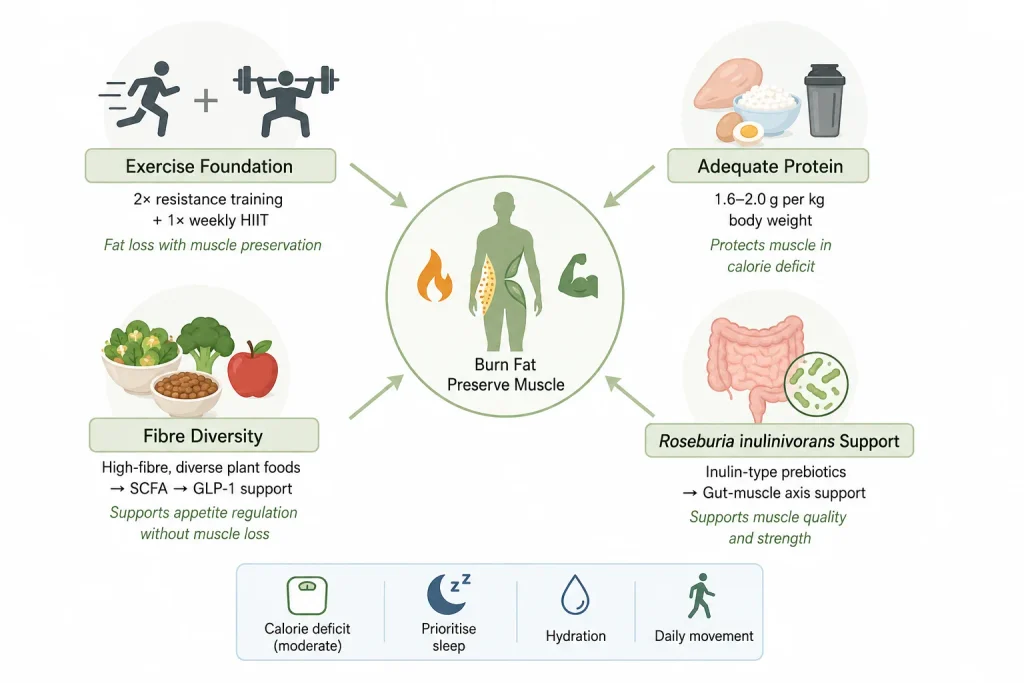
While the Berkeley compound remains in pre-clinical development, the metabolic goals it is designed to achieve — burning fat while preserving muscle — are achievable through established nutritional and exercise strategies that I have been implementing with clients for 12 years.
The exercise foundation: HIIT + resistance training. As our August 2026 coverage of both the Maturitas HIIT study and the August 22 exercise-weight-maintenance analysis documented, HIIT specifically produces fat reduction while preserving muscle — the same outcome the Berkeley compound is designed to achieve pharmacologically. Two sessions of resistance training plus one weekly HIIT session is the non-pharmaceutical fat-burning, muscle-sparing protocol supported by current evidence.
Adequate protein: the muscle protection prerequisite. When in a calorie deficit, the most powerful nutritional intervention for muscle preservation is adequate protein intake — 1.6 to 2.0g per kilogram of body weight. Leucine, the primary anabolic amino acid, directly signals muscle protein synthesis and prevents catabolism even during calorie restriction. As our July 2026 protein guidelines article documented, most adults are under-consuming protein for muscle preservation, particularly when actively trying to lose weight.
Fibre diversity for GLP-1 and fat metabolism support. Our July 2026 GLP-1 Natural Stimulation guide documented the complete dietary strategy for activating the body’s own GLP-1 system — the same system that Ozempic pharmacologically amplifies. High-fibre, diverse plant foods produce SCFA-mediated GLP-1 stimulation that supports appetite regulation without the muscle-loss consequence of pharmacological GLP-1 amplification.
Roseburia inulinivorans support: the gut-muscle connection. As we covered in Article 3 of this volume, the gut bacterium Roseburia inulinivorans supports muscle fibre type conversion and strength through dietary fibre — specifically inulin-type prebiotics. This gut-muscle axis represents a dietary strategy to support muscle quality independent of protein intake or exercise.
For the complete evidence-based approach to body composition optimisation that is available today — without waiting for pharmaceutical development — see our Science-Based Longevity Protocols guide and our Functional Nutrition guide.
The Takeaway
The UC Berkeley Science Advances publication of August 23, 2026 reports on a genuinely promising compound for fat-specific weight loss without muscle loss — addressing one of the most significant limitations of current GLP-1 medications. But it is animal model data from a pre-clinical compound that may be years from human clinical trials and much further from regulatory approval. The physiological goals it pursues — burning fat while preserving muscle — are achievable today through the exercise and nutritional strategies documented throughout our August 2026 series. For the exercise dimension: HIIT and resistance training preserve muscle while losing fat (our HIIT Older Adults article). For the nutritional dimension: adequate protein, diverse fibre, and gut bacteria support through prebiotic foods. See our Best Longevity Supplements guide for the supplementation framework that supports these goals.
About the Author
Tanveer Ahmed Khan is a K11 School of Fitness Sciences-certified personal trainer and nutrition coach with 12+ years of strength training experience. Coaching: info@livenulife.com | Instagram: @fitwithtanveer | livenulife.com
Scientific References
1. Lee, J.Y., Zhu, C., Boldridge, M.A., et al. (2026). A multi-functional oral small molecule targeting energy and lipid metabolism to treat obesity and related metabolic disorders. Science Advances, 12(34). DOI: 10.1126/sciadv.aed3119
2. ScienceDaily / UC Berkeley. (August 23, 2026). Experimental compound helps burn fat without muscle loss.
3. Nature Reviews Endocrinology. (June 30, 2026). Strengthening the metabolic alliance: exercise as an essential partner of obesity pharmacotherapy.
4. STAT News. (August 18, 2026). A pill that mimics exercise? Early results on drug designed to maintain both weight loss and muscle mass.
5. Prior GLP-1 muscle loss research — multiple 2026 analyses of body composition changes on semaglutide and tirzepatide.