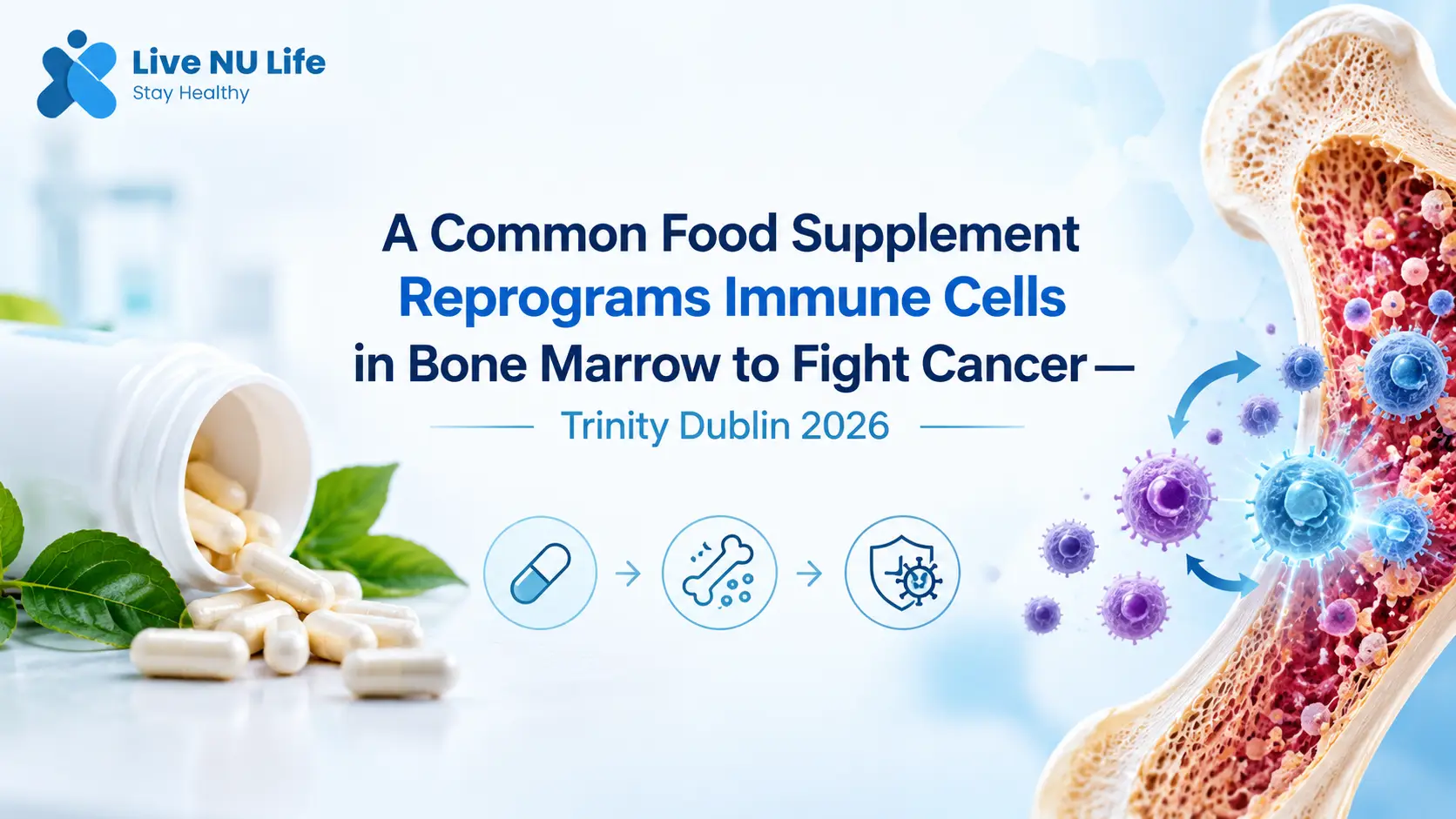
KEY TAKEAWAY: Researchers at Trinity College Dublin and UCD published findings in Cell Reports (August 22, 2026) showing that yeast beta-glucan — a food-grade supplement — reprograms early immune cells in the bone marrow to produce stronger, longer-lasting cancer-fighting responses against colorectal, skin, and breast cancer. In obese mice, it reversed immune dysfunction that persisted even after weight loss. This is the first demonstration that a dietary compound can induce trained immunity through bone marrow stem cell reprogramming.
The Immune System’s Most Powerful Secret — And a Dietary Key
Research published in Cell Reports on August 22, 2026, by scientists at Trinity College Dublin and University College Dublin — led by Professor Helen Roche, Professor Frederick Sheedy, and Dr Anna Ledwith — has identified something remarkable: a common dietary supplement can achieve trained immunity through bone marrow reprogramming. The supplement is yeast beta-glucan — a natural polysaccharide fibre from Saccharomyces cerevisiae (baker’s yeast), also found in oats and mushrooms. Not a new compound. What is entirely new: the mechanistic discovery that dietary supplementation reprograms the earliest-stage immune progenitor cells in the bone marrow.
📖 Also read: Gut Health Revolution: How Your Microbiome Controls Health — Beta-glucan is one of the most powerful prebiotic fibres — the gut-immune axis connection to the bone marrow immunity findings.
The Concept of Trained Immunity
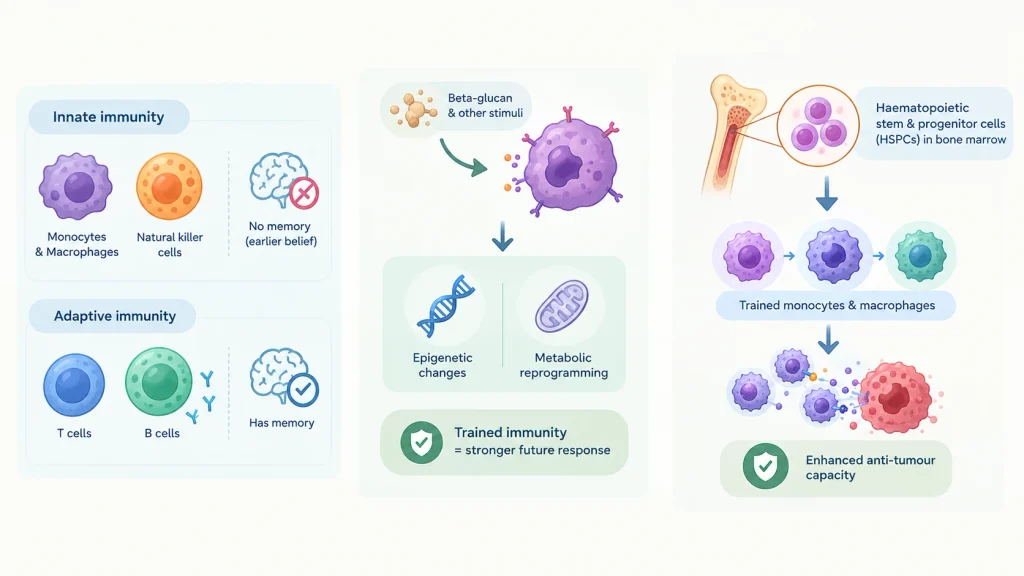
The classical view held that only the adaptive immune system (T cells and B cells) has memory. The innate immune system — monocytes, macrophages, natural killer cells — was assumed to have no memory. Research over the past decade overturned this. The innate immune system does have memory — called trained immunity — where specific stimuli (including beta-glucan) trigger epigenetic and metabolic reprogramming that makes cells more effective at future challenges, including cancer cells.
What the Trinity Dublin 2026 research shows is that this reprogramming can be initiated at the level of haematopoietic stem and progenitor cells (HSPCs) in the bone marrow — the cells that give rise to all innate immune cells. Training propagates forward into all monocytes and macrophages those stem cells produce, creating lasting enhanced anti-tumour capacity.
What the Research Found
Cancer challenge results: Mice fed yeast beta-glucan for 4–12 weeks, then challenged with colorectal cancer, skin cancer, and breast cancer cells, showed stronger immune responses across all three tumour types compared with unsupplemented controls.
Bone marrow reprogramming: “This is the first demonstration that dietary delivery of yeast beta-glucan is sufficient to induce trained immunity through reprogramming of bone marrow stem cells,” said Professor Roche. The training effect produces lasting immune enhancement because every immune cell the bone marrow subsequently generates carries the enhanced programming.
Reversing obesity-induced immune dysfunction: In obese mice (whose anti-tumour immunity is known to be impaired), yeast beta-glucan restored aspects of anti-tumour immune activity — and reversed immune memory defects that persisted even after the animals lost weight. This suggests bone marrow reprogramming produces lasting immune restoration independent of body weight.
Why This Is Immediately Relevant
Feature 1: Already food-grade and commercially available. The yeast beta-glucan used (WellmuneTM, Kerry Group) is an approved food ingredient with an extensive human safety record. “The yeast beta-glucan used is already food-grade and commercially available, facilitating rapid clinical trials,” said Professor Sheedy.
Feature 2: Consistent with existing human data. Beta-glucan supplements have been tested in human trials for immune function for decades. Multiple studies show enhanced innate immune cell activity. The mouse study provides mechanistic explanation for a pattern already documented in humans.
Beta-Glucan Food Sources
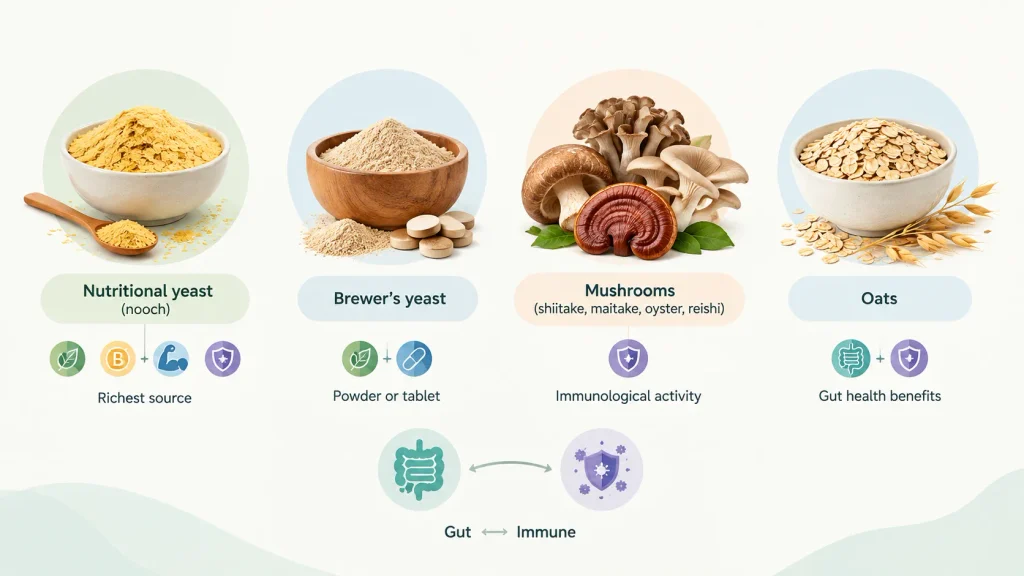
• Nutritional yeast (nooch): richest dietary source. 2 tablespoons provides meaningful beta-glucan alongside B vitamins, protein, and zinc.
• Brewer’s yeast: similar content to nutritional yeast. Available as powder or tablet.
• Mushrooms (shiitake, maitake, oyster, reishi): beta-glucan variants with immunological activity. Widely available in India.
• Oats: oat-specific beta-glucan with different immunological properties but overlapping gut health benefits.
For the gut-immune connection and prebiotic strategy supporting healthy immune function, see our Gut Health Revolution guide and our Ayurvedic Herbs and Immune Function guide.
The Takeaway
The Trinity College Dublin Cell Reports 2026 study — first dietary intervention proven to induce trained immunity through bone marrow stem cell reprogramming — is an extraordinary advance. A food-grade, commercially available yeast supplement produced stronger cancer-fighting immune responses against colorectal, breast, and skin cancer cells and reversed obesity-induced immune dysfunction. Clinical trials in humans are being planned. See our Best Longevity Supplements guide.
About the Author
Tanveer Ahmed Khan is a K11 School of Fitness Sciences-certified personal trainer and nutrition coach with 12+ years of strength training experience. Coaching: info@livenulife.com | Instagram: @fitwithtanveer | livenulife.com
Scientific References
1. Ledwith, A.E., et al. (2026). Yeast β-glucan supplementation supports immunometabolic anti-tumor responses. Cell Reports, 45(7): 117648. DOI: 10.1016/j.celrep.2026.117648
2. ScienceDaily / Trinity College Dublin. (August 22, 2026). This yeast supplement may boost cancer-fighting immunity.
3. EurekAlert / Trinity College Dublin. (July 9, 2026). Yeast dietary supplement may offer safe nutritional strategy to boost cancer immunity.
4. News-Medical.net. (July 9, 2026). Yeast food supplement helps immune cells fight cancer more effectively.
5. Cell Reports. Full paper. DOI: 10.1016/j.celrep.2026.117648