By Tanveer Ahmed Khan | K11-Certified Trainer & Dietitian-Nutritionist | REPS India Registered | July 2026 | 11 min read
KEY TAKEAWAY: A landmark study published in Molecular Systems Biology (July 17, 2026) tested 39 common sweeteners — including artificial, natural, and sugar alcohols — against 25 gut bacterial species. Many slowed or stopped the growth of beneficial bacteria, especially when combined with common medications. Here is what this means for your health and which sweeteners are safest.
The Sweetener Study That Changes Everything
Nearly every processed food you pick up today contains some form of sweetener. Around 75% of processed foods contain a commercially used sweetener — artificial, natural, or a sugar alcohol. Most people assume that if a sweetener has regulatory approval, it is broadly safe, including for the gut microbiome. A study published in Molecular Systems Biology on July 17, 2026, by researchers at the MRC Toxicology Unit, University of Cambridge, has fundamentally challenged that assumption.
The Cambridge team — led by Dr Sonja Blasche and Professor Kiran Patil — tested 39 common sweeteners against 25 different gut bacterial species in a controlled laboratory environment. The bacterial species included those that are helpful to the gut, those that are harmful, and those that are neutral. Each bacterial species was exposed to each sweetener, both alone and in combination with common substances including caffeine, flavourings, and medications.
The findings were striking and nuanced in equal measure — and directly relevant to the daily dietary choices of virtually everyone reading this article.
📖 Also read: Fibermaxxing in 2026: The Gut Health Trend Explained — Before worrying about which sweeteners to cut, understand which fibres actively rebuild the gut microbiome that sweeteners may be depleting.
What the Study Found: Sweetener by Sweetener
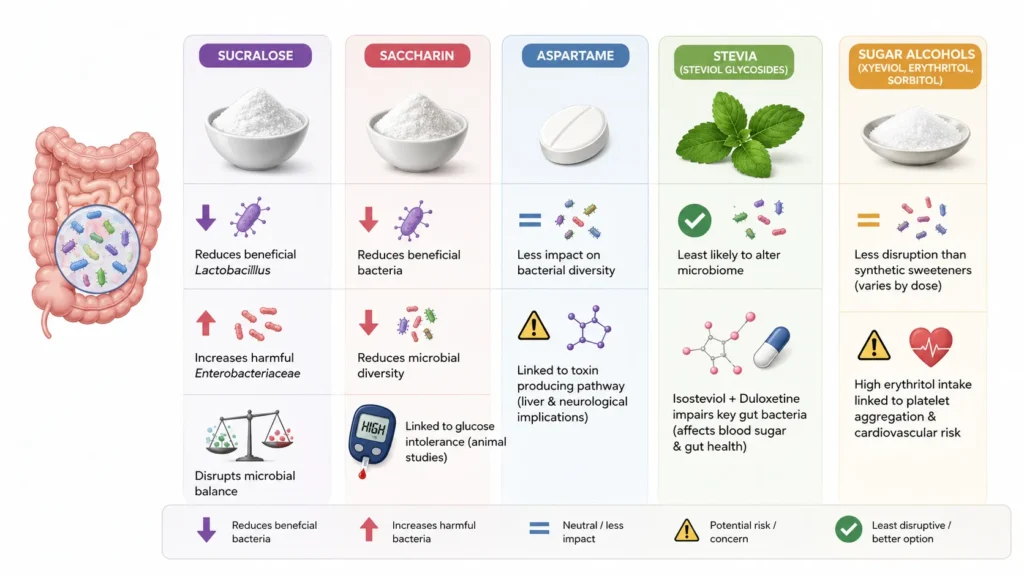
Sucralose (Splenda): One of the most widely used artificial sweeteners globally, sucralose significantly inhibited the growth of Lactobacillus species — among the most important beneficial gut bacteria for immune function, digestive health, and vaginal health. It also enriched pathogenic Enterobacteriaceae species, tipping the microbial balance toward bacteria associated with inflammation and gut permeability.
Saccharin: The oldest artificial sweetener showed some of the most concerning effects. At higher doses, saccharin reduced microbial diversity and was associated in prior animal research with glucose intolerance through microbiome alteration. The July 2026 study confirmed its suppressive effects on beneficial bacteria at concentrations within realistic dietary exposure ranges.
Aspartame: Results were more mixed. The study found that aspartame had less direct disruption of bacterial diversity than saccharin or sucralose in some bacterial strains — consistent with a parallel Cedars-Sinai investigation presented at ENDO 2026, which found aspartame users had similar bacterial richness to controls. However, specific predicted metabolic pathways in aspartame consumers included a toxin-producing pathway with hepatic and neurological implications — findings that warrant serious further investigation.
Stevia derivatives (steviol glycosides): The natural zero-calorie sweetener performed best across the panel. Stevia was least likely to alter microbiome composition significantly. However, the study introduced an important nuance: isosteviol — a stevia-derived compound used in the food and beverage industry — when combined with the antidepressant duloxetine, significantly impaired two important gut bacteria linked to regulating blood sugar and gut health. This is the first documented interaction between a sweetener and a medication producing direct gut microbiome harm at this level.
Sugar alcohols (xylitol, erythritol, sorbitol): Results varied. Xylitol and erythritol showed less disruption than synthetic sweeteners in some analyses. However, prior research has linked excessive erythritol consumption to platelet aggregation concerns — a cardiovascular risk factor — and the July 2026 study adds context about their dose-dependent effects on specific bacterial species.
The Medication-Sweetener Interaction: The Most Critical Finding
The most significant finding in the July 2026 Cambridge research is not about any single sweetener in isolation. It is about what happens when sweeteners are combined with common substances — particularly medications.
The isosteviol-duloxetine combination is the most dramatic example identified. Duloxetine is a widely prescribed antidepressant (Cymbalta) used by tens of millions of people globally for depression, anxiety, and pain conditions. When combined with isosteviol, the pairing significantly impaired Akkermansia muciniphila and Faecalibacterium prausnitzii — two of the most extensively studied beneficial gut bacteria, both critically linked to metabolic health, intestinal barrier integrity, and immune regulation.
This interaction represents a genuinely new frontier in nutrition science: not just how sweeteners affect bacteria alone, but how they behave in the complex real-world context of modern food and pharmaceutical consumption. As Dr Blasche noted: “We rarely take sweeteners by themselves — we take them with drinks, in snacks, or even in medication to mask bitterness.”
In my 12 years of practice, I have worked with hundreds of clients on antidepressants, anti-anxiety medications, blood pressure drugs, and diabetes medications. None of them — until this research — had any reason to consider that their diet soft drink or “natural” stevia-sweetened protein bar might be interacting with their medication at the level of the gut microbiome. This changes what we should be discussing in nutritional counselling sessions.
📖 Also read: Why Going Completely Sugar-Free May Backfire — June 2026 — The ENDO 2026 finding that complete sugar elimination disrupts gut bacteria — directly complementary to what the Cambridge sweetener study reveals about artificial alternatives.
Why the Gut Microbiome Is the Central Issue
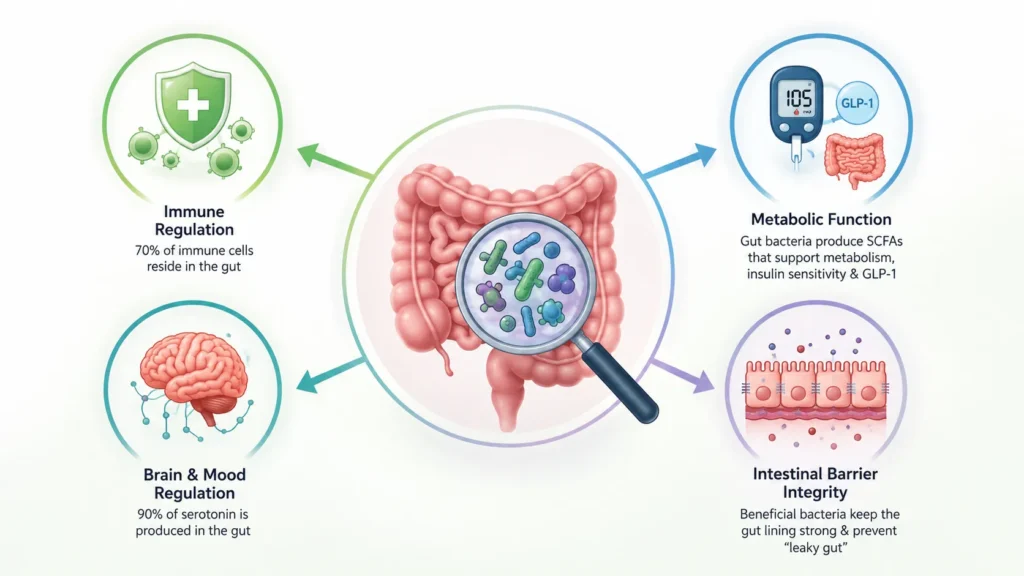
To understand why this sweetener research matters so much, you need to understand what the gut microbiome actually does. This is not abstract science — it is the regulatory system that determines much of your daily health experience.
Immune regulation: Approximately 70% of your immune system resides in the gut-associated lymphoid tissue (GALT). The composition of your microbiome directly determines whether your immune system is appropriately calibrated or chronically over-activated — a state linked to allergies, autoimmune conditions, and inflammatory diseases.
Metabolic function: Your gut bacteria produce short-chain fatty acids (SCFAs) — butyrate, propionate, and acetate — that regulate insulin sensitivity, support GLP-1 production (the appetite-satiety hormone also targeted by Ozempic), and maintain the integrity of the intestinal lining. When beneficial bacteria decline, SCFA production falls, and metabolic dysregulation follows.
Brain and mood regulation: Approximately 90% of your serotonin is produced in the gut. The vagus nerve carries bidirectional communication between the gut microbiome and the brain — influencing mood, anxiety, cognition, and stress response. Gut dysbiosis is now strongly associated with depression, anxiety, and cognitive decline.
Intestinal barrier integrity: Beneficial bacteria — particularly Akkermansia and Faecalibacterium — maintain the tight junction proteins that keep the intestinal lining intact. When these species are suppressed by sweeteners, the gut barrier becomes more permeable. Bacterial products, toxins, and inflammatory molecules begin leaking into systemic circulation — the mechanism underlying what researchers call “leaky gut.”
The Indian Context: Why This Research Is Particularly Relevant
In urban India, artificial sweetener consumption has risen dramatically over the past decade. The proliferation of “diet” beverages, “sugar-free” biscuits and sweets (marketed heavily to diabetic patients), and “protein” products sweetened with sucralose or acesulfame-K means that many health-conscious Indians who believe they are making better dietary choices may, in fact, be exposing their gut microbiome to consistent sweetener-driven disruption.
I regularly see clients who have switched from sugared chai to “sugar-free” chai, from regular biscuits to “diabetic friendly” biscuits, and from whole fruit to flavoured protein drinks sweetened with artificial compounds — believing they are being diligent about their health. The July 2026 Cambridge study suggests that at least some of these switches may be trading one problem for another, potentially a worse one for gut microbiome health.
For understanding what actual gut dysbiosis looks like and how to address it, see our guide: Microbiome Dysbiosis: Signs, Causes, Natural Solutions.
What to Actually Use: My Clinical Hierarchy
First choice: minimise sweeteners entirely. The cleanest approach to protecting gut bacteria is reducing the total sweetener load — artificial, natural, and sugar alcohol — from processed foods. This means cooking from whole ingredients more often, reducing reliance on sweetened packaged products, and retaining tolerance for less sweet food.
Second choice: stevia (whole-leaf or high-purity extract, not isosteviol derivatives). Among the commercially available sweeteners, stevia in its least processed form showed the gentlest effect on gut bacteria. Read labels carefully — look for “stevia leaf extract” or “steviol glycosides” on ingredient lists.
Third choice: small amounts of traditional whole-food sweeteners. Jaggery (gur), raw honey, and date paste in small quantities bring trace minerals, polyphenols, and prebiotic compounds alongside their sweetness — a different metabolic picture than isolated compounds. In moderate amounts, they are meaningfully different from artificial sweeteners for gut health outcomes.
Medication users — heightened caution: If you take antidepressants, antianxiety medications, or any chronic medication, the July 2026 research specifically flags you as potentially vulnerable to medication-sweetener interactions at the gut microbiome level. I recommend discussing this with your prescribing physician and, in the interim, defaulting to the cleanest whole-food sweetener options.
To rebuild gut bacteria actively while managing sweetener exposure, see our Top 15 Probiotic Foods for Digestive Health and our Gut Health Revolution guide.
The Takeaway
The July 2026 Cambridge study of 39 sweeteners against 25 gut bacterial species delivers a clear message: sweeteners are not metabolically inert, and the assumption that regulatory approval equals gut safety is no longer scientifically tenable. The interaction between sweeteners and common medications — particularly the isosteviol-duloxetine finding — opens a new chapter in nutritional medicine that will require clinicians, prescribers, and patients to consider food-drug interactions at the microbial level. For the complete picture of how gut microbiome diversity connects to personalised health outcomes, see our Personalised Nutrition Based on Your Gut Bacteria guide.
About the Author
Tanveer Ahmed Khan is a K11 School of Fitness Sciences-certified personal trainer and REPS India-registered dietitian-nutritionist with over 12 years of experience helping busy professionals achieve elite, sustainable health. Coaching: info@livenulife.com | Instagram: @fitwithtanveer | livenulife.com
Scientific References
1. Blasche, S. et al. (2026). Common xenobiotics modulate gut microbial responses to low-calorie sweeteners in vitro. Molecular Systems Biology. doi: 10.1038/s44320-026-00105-3
2. ScienceDaily / MRC Toxicology Unit, Cambridge. (July 17, 2026). Scientists tested 39 sweeteners and found unexpected gut effects. sciencedaily.com
3. Medical News Today. (July 24, 2026). Artificial sweeteners may disrupt gut bacteria especially combined with antidepressants.
4. News-Medical.net. (July 22, 2026). Study finds some sweeteners can slow the growth of gut bacteria. 5. Cedars-Sinai ENDO 2026 Research Alert. (2026). Artificial Sweeteners Significantly Alter the Small Bowel Microbiome