KEY TAKEAWAY: A study in Food Control covered by ScienceDaily August 28, 2026 — led by Cranfield University and University of Parma — found that 100% of 212 plant-based meat alternatives and plant-based beverages tested in UK stores contained at least one of 19 mycotoxins. Concentrations were below EU guideline limits. But ubiquity, co-occurrence, and cumulative exposure questions raise important considerations for heavy plant-based meat consumers.
The Plant-Based Food Revolution Meets a Food Safety Reality
The August 28, 2026 ScienceDaily coverage of a Food Control study by researchers from Cranfield University (UK) and University of Parma (Italy) reveals a pervasive food safety characteristic of plant-based meat alternatives that consumers need to understand. The research team purchased and analysed 212 plant-based products from UK supermarkets — vegan burgers, vegetarian chicken pieces, vegan sausages, oat milk, almond milk, and soy milk — testing for 19 different mycotoxins. The result: every single product contained at least one mycotoxin.
📖 Also read: Gut Health Revolution: How Your Microbiome Controls Health — Mycotoxins have documented effects on gut microbiome composition and intestinal barrier integrity — the gut health implications of cumulative mycotoxin exposure.
What Are Mycotoxins and Why Are They in Plant-Based Foods?
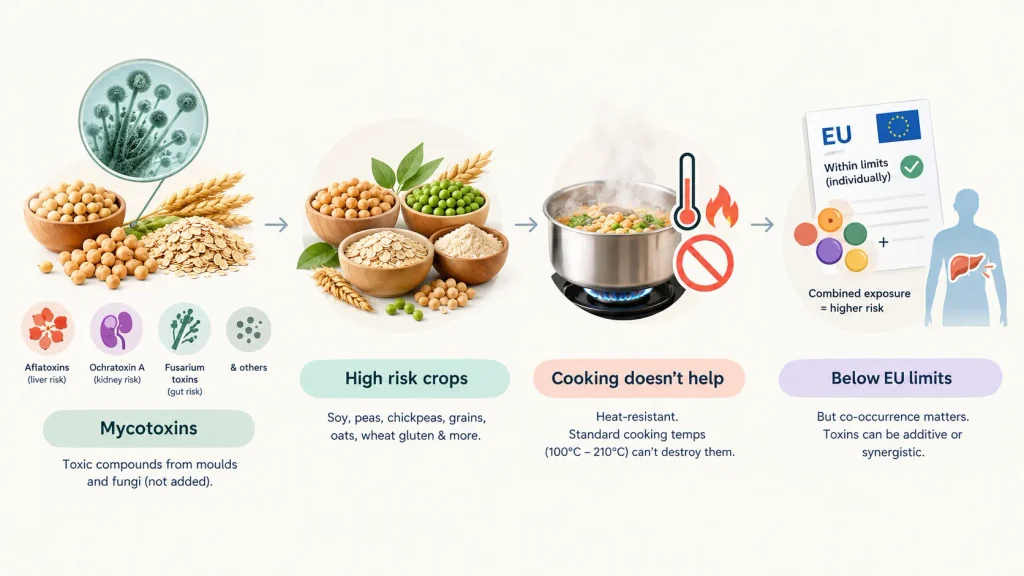
What mycotoxins are: Toxic chemical compounds produced by moulds and fungi — naturally occurring, not added by manufacturers. They include aflatoxins (potent liver carcinogens), ochratoxin A (nephrotoxic), fusarium toxins (gastrointestinal toxicity), and many others.
Why plant-based products are particularly vulnerable: Soy, peas, chickpeas, wheat gluten, oats, and grains used in plant-based alternatives are crops highly vulnerable to fungal contamination during cultivation, harvesting, and storage. When multiple contaminated ingredients are combined in a single product, mycotoxins pool — the co-occurrence problem.
Why cooking doesn’t help: “Mycotoxins are chemically stable and heat-resistant — standard cooking temperatures (100°C to 210°C) cannot destroy them,” the study authors note. You cannot cook your way out of mycotoxin contamination.
Below EU limits — but co-occurrence is the concern: Individual mycotoxin concentrations were generally below EU regulatory limits. But EU limits are set for individual mycotoxins, not cumulative co-occurrence. Some mycotoxins have additive or synergistic toxicity — combined exposure at individually “safe” levels may not be safe when interactions are considered.
What This Means for Regular Plant-Based Meat Consumers
Daily vs. occasional consumption profiles differ. EU regulatory limits assume average population exposure. Heavy plant-based meat consumers may be in a different exposure category.
Co-occurrence is not well-regulated. “Our aim is to advise policymakers and raise awareness among vulnerable consumers,” said study co-author Dr Chiara Dall’Asta — signalling the researchers believe current regulatory frameworks may be inadequate.
Liver and kidney health considerations. Aflatoxin B1 is among the most potent naturally occurring liver carcinogens. Ochratoxin A accumulates in the kidney. For people with pre-existing liver conditions, cumulative aflatoxin exposure from daily plant-based meat consumption deserves specific consideration. See our Fatty Liver guide.
Practical Risk Mitigation
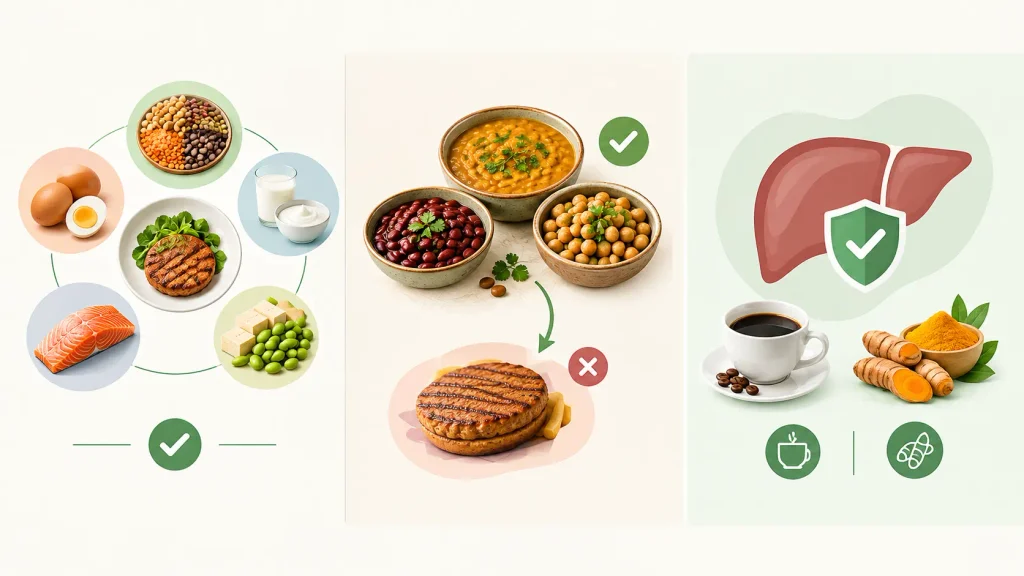
Diversify protein sources. Relying exclusively on plant-based meat alternatives as a protein source maximises co-occurrence risk. Diversify across whole legumes, eggs, dairy, fish, and plant-based alternatives.
Prefer minimally processed plant proteins. Whole legumes cooked from raw ingredients — dal, rajma, chana — involve less industrial ingredient blending and therefore lower mycotoxin co-occurrence risk than plant-based burgers.
Support liver health actively. If plant-based alternatives are a significant dietary component, support liver health through interventions we have covered: coffee consumption (our Coffee and Liver Health article), turmeric/curcumin.
The Takeaway
The Cranfield/University of Parma finding — mycotoxins in 100% of 212 plant-based meat alternatives — is a food safety data point calling for regulatory upgrading around co-occurrence risk, ingredient supply chain improvement, and consumer awareness about diversifying plant protein sources. Whole legumes remain the most nutritionally complete, least-processed, and likely lowest-mycotoxin-co-occurrence plant protein source in the Indian dietary context. See our Functional Nutrition guide.
About the Author
Tanveer Ahmed Khan is a K11 School of Fitness Sciences-certified personal trainer and nutrition coach with 12+ years of strength training experience. Coaching: info@livenulife.com | Instagram: @fitwithtanveer | livenulife.com
Scientific References
1. Torrijos, R., Mihalache, O.A., Patriarca, A., Medina, A., Dall’Asta, C. (2026). Mycotoxin contamination in plant-based beverages and meat alternatives. Food Control, 183: 111910.
2. ScienceDaily / Cranfield University. (August 28, 2026). Scientists tested 212 plant-based meat alternatives. Every one contained fungal toxins.
3. Phys.org / Cranfield. (May 5, 2026). Almost all plant-based meat alternatives contain mycotoxins.
4. SciTechDaily. (August 28, 2026). Almost All Plant-Based Meat Alternatives Contain Mycotoxins.
5. International Business Times. (August 2026). Are Plant-Based Meats Safe? Scientists Find Fungal Toxins in Every Product Tested.