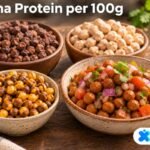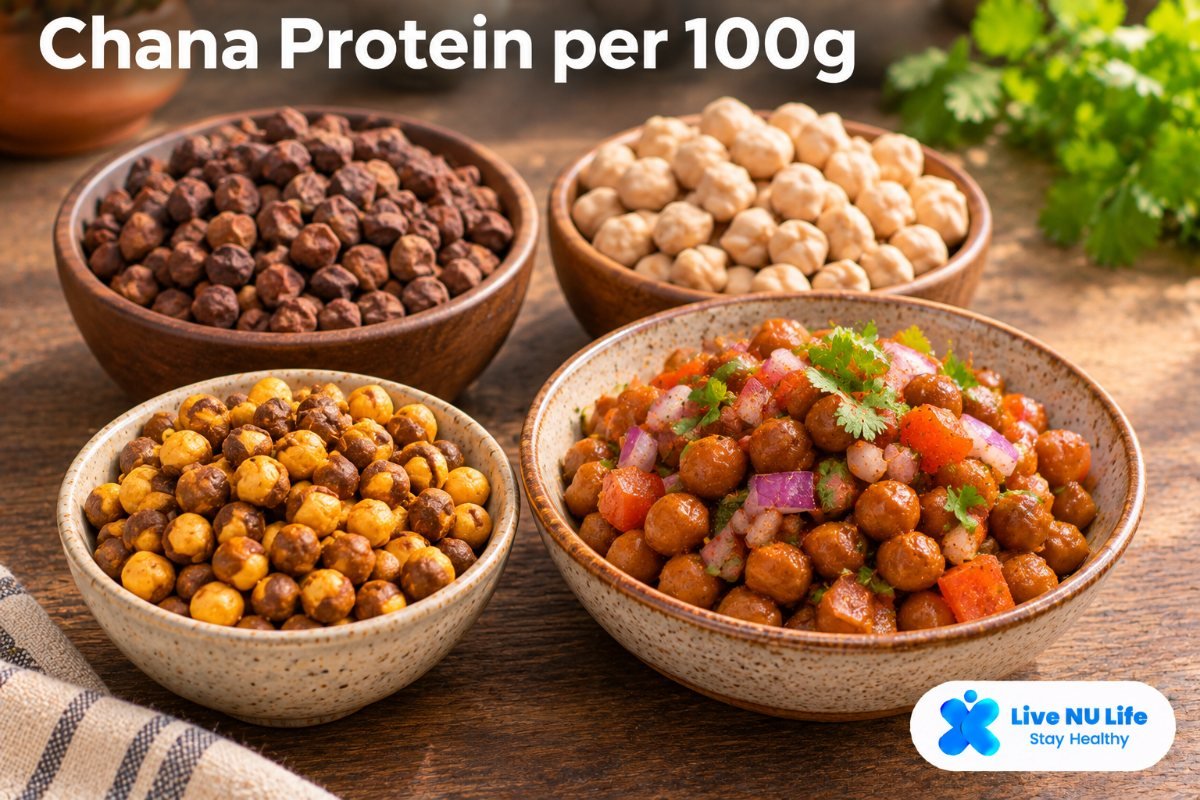
100 g of dry kala chana (black chickpeas) contains about 19 g of protein, kabuli chana about 20 g, and chana dal about 22 g. Once soaked and boiled, chana absorbs water, so 100 g of boiled chana has only about 9 g of protein. A typical katori of boiled chana (about 150 g) gives roughly 13 g.
Chana is one of the most useful vegetarian protein sources in India: cheap, filling and high in fibre. Here is how much protein each type really gives you.
Chana protein per 100g: all types compared
| Type (per 100 g) | Protein | Energy | Fibre | Fat | Source |
|---|---|---|---|---|---|
| Kala chana (Bengal gram, whole), dry | 18.8 g | 287 kcal | 25.2 g | 5.1 g | IFCT 2017 |
| Chana dal (Bengal gram, split), dry | 21.6 g | 329 kcal | 15.2 g | 5.3 g | IFCT 2017 |
| Kabuli chana (chickpeas), dry | 20.5 g | 378 kcal | 12.2 g | 6.0 g | USDA |
| Kabuli chana, boiled | 8.9 g | 164 kcal | 7.6 g | 2.6 g | USDA |
| Besan (gram flour) | 22.4 g | 387 kcal | 10.8 g | 6.7 g | USDA |
IFCT 2017 is the Indian Food Composition Tables from ICMR-NIN. It has no separate row for kabuli chana, so those values are from USDA FoodData Central. The two databases measure fibre and energy differently, so compare protein across rows rather than calories.
Why kala chana has more fibre: its thick, dark seed coat is mostly fibre. That is also why chana dal, which is split and skinned, has more protein per 100 g but less fibre.
Roasted, soaked and boiled chana: protein compared
| Form | Protein per 100 g (approx.) | Why |
|---|---|---|
| Dry (raw) kala chana | about 19 g | IFCT value |
| Roasted chana (bhuna chana) | about 19–22 g | Roasting removes a little water, so protein per 100 g stays the same or rises slightly |
| Soaked chana (overnight) | about 9–10 g | Soaking roughly doubles the weight with water |
| Boiled chana | about 8–9 g | Boiling adds even more water |
Soaked, roasted and boiled values are estimates based on water gain or loss. Check the pack label for roasted chana, as brands vary, and some add salt or oil.
The protein doesn’t disappear when you boil chana. 50 g of dry chana has the same protein after cooking. It is just spread across more weight.
Chana protein per serving
| Serving | Protein (approx.) |
|---|---|
| A handful of roasted chana (30 g) | 6 g |
| 50 g dry kala chana (cooked as chana masala for one) | 9–10 g |
| 1 katori boiled chana (150 g) | 13 g |
| 1 katori chana dal, cooked (from 30 g dry) | 6.5 g |
| 1 besan cheela (30 g besan) | 7 g |
| 2 tbsp sattu (about 20 g) | about 4 g |
Sattu is roasted chana flour, so its protein per 100 g is close to roasted chana. Check the label.
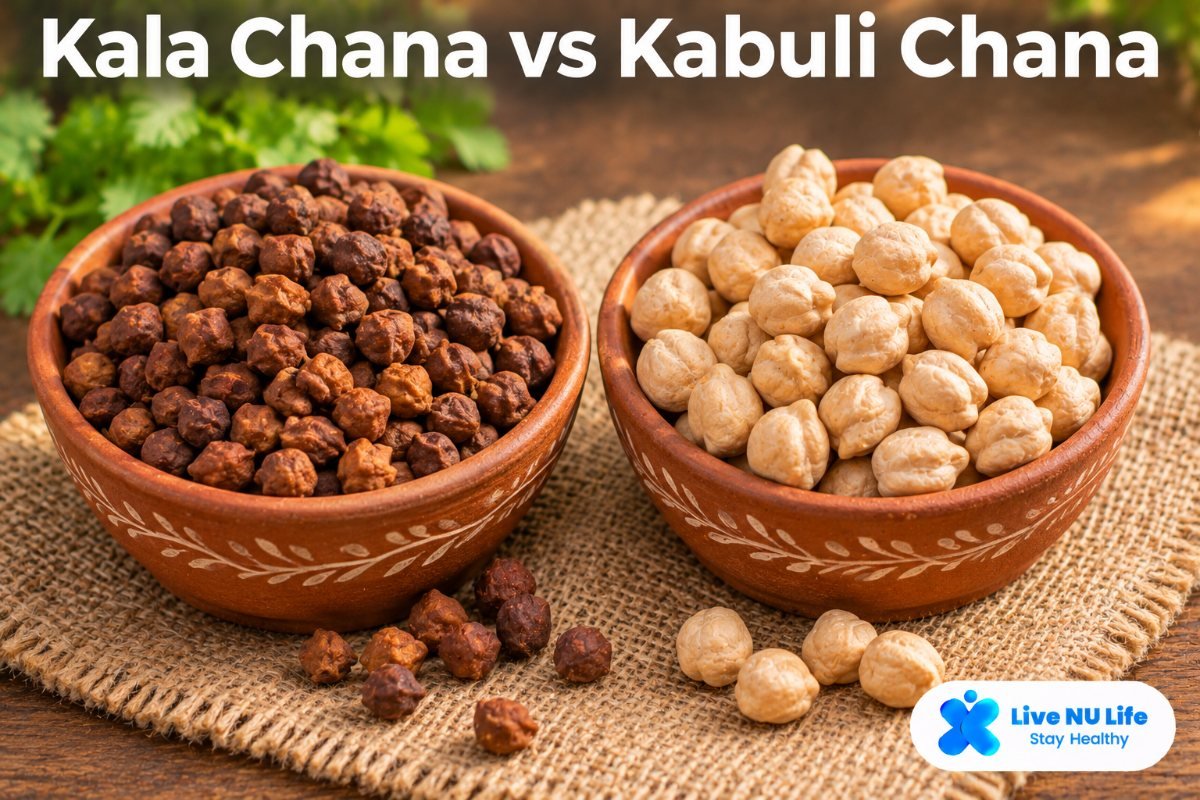
Kala chana vs kabuli chana: which is better?
| Kala chana | Kabuli chana | |
|---|---|---|
| Protein (dry) | About 19 g | About 20 g |
| Fibre | Higher, thanks to the dark seed coat | Lower |
| Taste and texture | Nutty, firmer | Creamy, softer |
| Common dishes | Sprouts, chaat, Navratri chana, sundal | Chole, salads, hummus |
The protein difference is small. Kala chana wins on fibre, which helps fullness and digestion. Choose whichever you will eat more often.
Is chana a complete protein?
Not quite. Chana and other dals are lower in the amino acid methionine, while wheat and rice are lower in lysine. Eaten across the day, they complement each other, which is why chole with roti or chana with rice works so well. You do not need to combine them in the same meal.
Benefits of chana beyond protein
- High in fibre, especially kala chana, which helps you stay full and supports regular digestion.
- Slower rise in blood sugar than refined grains, because of the fibre and protein. Useful for people managing diabetes, as part of a balanced meal.
- Cheap and easy to store, with a long shelf life when dry.
- Versatile: roasted as a snack, soaked as sprouts, cooked as curry, or ground as besan and sattu.
How to get more protein from chana
- Measure dry weight. It is the most accurate way to track protein.
- Pair chana with curd or paneer. A bowl of chole with raita adds several grams more.
- Snack on roasted chana instead of namkeen or biscuits. 30 g gives about 6 g of protein.
- Make besan cheela for breakfast instead of poha.
- Add soya chunks to chana curry for a big protein boost. See soya chunks protein per 100g.
For a full list of vegetarian protein options, see high protein foods for vegetarians and paneer protein per 100g. For snack ideas, read 5 high-protein snacks under 150 calories.
Side effects and who should be careful
- Gas and bloating: common if you are not used to legumes. Soak chana well, cook it thoroughly, and increase portions gradually.
- Kidney disease: if your doctor has limited your protein or potassium, ask how much chana fits.
- Salted roasted chana: check the sodium if you have high blood pressure.
Frequently asked questions
How much protein is in 100g of chana?
About 19 g in dry kala chana, about 20 g in dry kabuli chana, and about 9 g in boiled chana.
How much protein is in 50g of chana?
About 9–10 g in 50 g of dry chana, whichever way you cook it.
Does roasted chana have more protein than boiled chana?
Per 100 g, yes, because roasted chana contains far less water. Per gram of dry chana, the protein is the same.
Is roasted chana good for muscle gain?
It is a handy plant protein snack. For muscle gain, combine it with other protein sources, as 30 g gives only about 6 g of protein.
Is chana good for weight loss?
Its fibre and protein make it filling, which helps with portion control. Roasted chana is calorie-dense, so stick to a handful.
Sources
- Longvah T, et al. Indian Food Composition Tables 2017. ICMR-National Institute of Nutrition, Hyderabad. Bengal gram, whole (B002); Bengal gram, dal (B001).
- USDA FoodData Central (SR Legacy). Chickpeas, mature seeds, raw; chickpeas, boiled; chickpea flour (besan).
This article is for general information and is not medical advice. See our medical disclaimer.