By Tanveer Ahmed Khan | K11-Certified Trainer & Dietitian-Nutritionist | REPS India Registered | August 2026 | 12 min read
KEY TAKEAWAY: A Purdue University study presented at NUTRITION 2026 (July 26, 2026) found that unsweetened sparkling water lowers mouth acidity significantly less than sugar-sweetened soda — and the effect is shorter-lived. The research supports sparkling water as a lower-risk alternative to soda for tooth enamel health. But flavoured sparkling water, citrus sparkling water, and sugar-sweetened sodas carry distinctly higher risks. Here is the complete guide to beverage choices and oral-systemic health — including the gut microbiome connection most people miss.
The Question Every Sparkling Water Fan Has Been Asking
As a trainer and nutritionist who works with busy urban professionals, I field this question at least twice a month: “Is sparkling water bad for my teeth?” The clients asking are usually people who have already switched from soft drinks to sparkling water as part of a healthier lifestyle — and they have been told by various sources that the carbonation makes sparkling water nearly as acidic and therefore nearly as damaging to tooth enamel as soda.
The science has been murky enough that I have previously given a cautious “probably not as bad as soda, but don’t overdo it” answer. A study presented by Wajiha Zulfiqar at NUTRITION 2026 — the American Society for Nutrition’s flagship annual meeting held July 25–28, 2026 in National Harbor, Maryland — has given us the most directly comparative data available, allowing a much cleaner answer.
The headline: unsweetened sparkling water is meaningfully better for teeth than sugar-sweetened soda. But the details matter, and several categories of sparkling beverages commonly lumped together with plain carbonated water carry significantly higher risk.
📖 Also read: Ultra-Processed Foods Are Stealing Your Focus — June 2026 — The same sugar-sweetened beverages the Purdue study identifies as most damaging to tooth enamel are documented in this research as accelerating cognitive decline — the oral and brain health risks overlap completely.
The Study Design and What It Measured
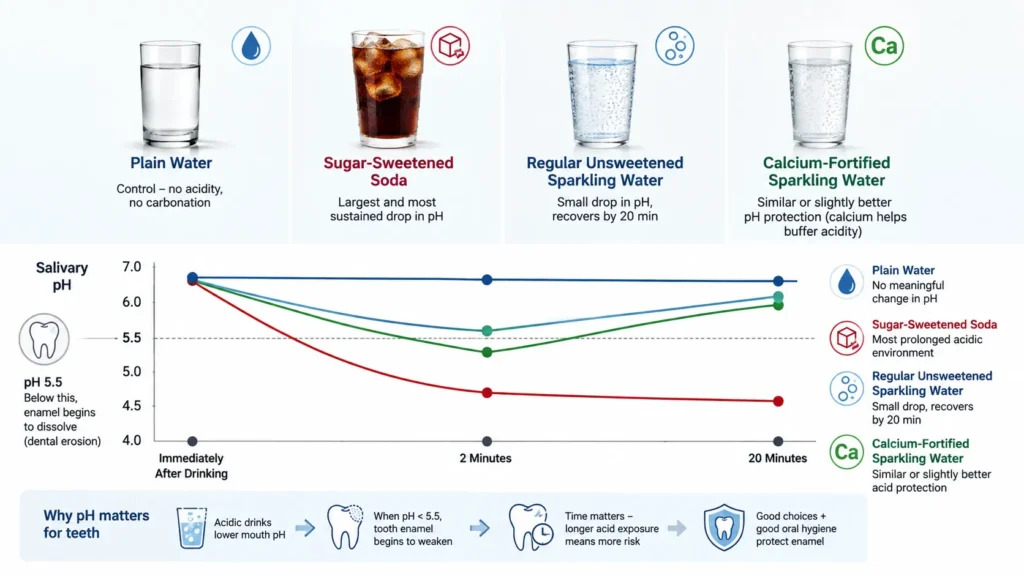
Zulfiqar’s Purdue University study, conducted with co-investigator Cordelia Running, enrolled 20 adults and tested four beverages:
• Plain water (the control — no acidity, no carbonation)
• Sugar-sweetened soda (representing the conventional comparison case)
• Regular unsweetened sparkling water (plain carbonated water, no flavours)
• Calcium-fortified sparkling water (carbonated water with added calcium — a newer beverage category)
The researchers measured salivary pH — the acidity inside the mouth — immediately after drinking each beverage, and at 2 minutes and 20 minutes post-consumption. The key threshold for dental concern is a pH of approximately 5.5: below this point, acids begin dissolving tooth enamel. This process of acid-mediated enamel dissolution is called dental erosion.
The findings:
• Plain water produced no meaningful change in salivary pH — the control baseline, as expected.
• Sugar-sweetened soda produced the largest and most sustained drop in salivary pH, falling significantly below water levels at both the 2-minute and 20-minute marks. Soda produced the most prolonged acidic oral environment of all beverages tested.
• Unsweetened sparkling water did lower salivary pH compared with plain water, but the drop was significantly smaller and shorter-lived than soda. At 20 minutes post-consumption, the difference between sparkling water and plain water had largely resolved.
• Calcium-fortified sparkling water performed similarly to or slightly better than regular sparkling water, consistent with calcium’s known role in buffering oral acidity.
“Many people are switching from soda to sparkling water, and our findings suggest that unsweetened sparkling water may be a lower-risk alternative to soda, when consumed in moderation and alongside good oral hygiene practices,” said Zulfiqar. “Our results suggest that replacing sugar-sweetened sodas with unsweetened sparkling water may help lower the risk of enamel erosion.”
Why Soda Damages Teeth So Much More — The Two-Pathway Mechanism
The Purdue NUTRITION 2026 data captures one dimension of soda’s dental risk: the drop in salivary pH from beverage acidity. But soda harms teeth through two separate mechanisms, and understanding both explains why the soda-to-sparkling water switch is a more significant improvement than the pH data alone suggests.
Pathway 1: Direct acid erosion. Soda contains carbonic acid (from carbonation), phosphoric acid (in cola-type sodas), and citric acid (in citrus-flavoured sodas). These acids directly lower salivary pH below 5.5, initiating enamel dissolution. This is what the Purdue study measured. Sparkling water contains only carbonic acid (a weaker acid than phosphoric or citric acids), which explains its smaller pH effect.
Pathway 2: Sugar-driven cavity bacteria. Sugar-sweetened sodas feed Streptococcus mutans and other cavity-causing oral bacteria that metabolise sugar and produce lactic acid as a byproduct. This lactic acid production continues for 20 to 40 minutes after sugar consumption, maintaining an acidic oral environment long after the beverage is consumed — and directly dissolves tooth enamel while also contributing to cavity formation. Unsweetened sparkling water contains no sugar and therefore does not feed these bacteria. This is a major advantage that goes beyond the pH measurements in the Purdue study.
These two mechanisms explain why the cumulative dental damage from habitual soda consumption over years is substantially more severe than what the immediate pH measurements suggest — and why switching from sugar-sweetened soda to unsweetened sparkling water is a genuinely significant protective step for dental health, not merely a marginal improvement.
The Flavoured Sparkling Water Problem
I want to specifically address the beverage category that the Purdue study did not directly test but that many people who think they are drinking “sparkling water” are actually consuming: flavoured sparkling water.
There is enormous heterogeneity within the “sparkling water” category. A plain, unflavoured, unsweetened sparkling water — the type tested in the NUTRITION 2026 study — is simply water with dissolved CO2. It is mildly acidic but contains no additional acids, sugars, or flavourings.
However, many commercially sold “sparkling waters” — particularly popular brands with fruit flavours — contain citric acid, malic acid, or other organic acids as flavouring agents. These acids are significantly stronger enamel-dissolving agents than carbonic acid alone. Research published by the American Dental Association found that many flavoured sparkling waters had pH values between 3.0 and 4.5 — within the range that dissolves enamel even more aggressively than some sodas.
For dental health purposes, the relevant distinction is not carbonated vs. still water. It is:
• Plain, unflavoured, unsweetened sparkling water: LOW risk — the type tested in the Purdue study.
• Calcium-fortified plain sparkling water: LOWEST risk — the added calcium buffers acidity slightly.
• Citrus-flavoured or acid-containing sparkling waters: MODERATE TO HIGH risk — additional organic acids make these closer to light soft drinks in erosive potential.
• Sugar-sweetened sparkling drinks (e.g., sodas, lemonades, sweetened mineral waters): HIGHEST risk — both acid erosion and sugar-driven bacteria activation.
The Oral Microbiome Dimension — What the Study Didn’t Capture
The Purdue NUTRITION 2026 study measured salivary pH — a useful but partial measure of oral health. There is a broader oral health story that connects to the systemic microbiome research that has been central to 2026 nutritional science.
Your mouth contains approximately 700 species of bacteria, collectively constituting the oral microbiome. Like the gut microbiome, the oral microbiome has enormous influence on health — not just oral health, but cardiovascular health (specific oral bacteria are found in arterial plaque), metabolic health, and inflammatory status throughout the body.
In our August 2026 coverage of the King’s College London beetroot and blood pressure research, we described how oral bacteria convert dietary nitrate to nitrite — the mechanism through which nitrate-rich vegetables lower blood pressure. This beneficial process depends on a healthy oral bacterial community. Sugar-sweetened sodas disrupt this community by feeding the bacteria that produce acid and displace the nitrate-reducing species. This is a mechanism by which daily soda consumption may impair blood pressure regulation — independent of its direct acid effects on enamel.
For the full picture of how the oral microbiome connects to the gut microbiome and systemic health, see our Gut Health Revolution guide and our Microbiome Dysbiosis guide. And for the 39-sweetener study from July 2026 that documented how artificial sweetener alternatives to soda affect gut bacteria, see our 39 Sweeteners Tested article.
The Broader Beverage Landscape: What I Recommend to My Clients
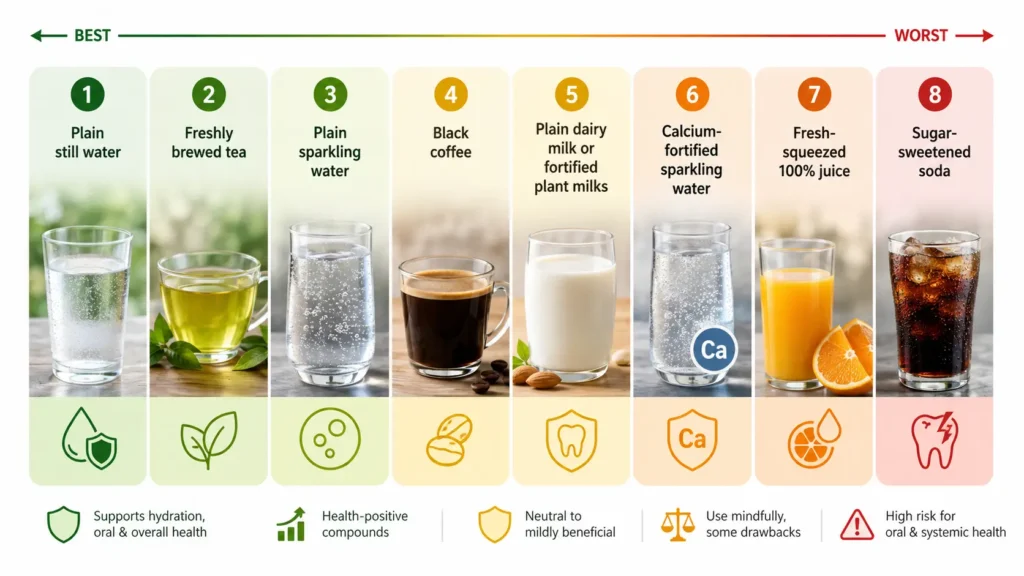
Based on the NUTRITION 2026 findings and the broader 2026 evidence base, here is my complete beverage hierarchy — from best to worst for systemic and oral health:
1. Plain still water: The baseline. No dental risk, no metabolic impact, complete neutrality. Most adults should be consuming 2 to 3 litres daily. Adequate hydration supports salivary flow — which is itself one of the most important oral pH buffering mechanisms.
2. Freshly brewed tea (green, black, or white — no sugar, no milk if possible): As we detailed in our June 2026 tea research article, brewed tea provides polyphenols with direct hepatoprotective, anti-inflammatory, and cardiovascular benefits confirmed in a 354,957-person study. Tea polyphenols also exhibit antibacterial properties against cavity-causing oral bacteria. Brewed tea at moderate consumption is arguably the most health-positive daily beverage choice available.
3. Plain, unflavoured, unsweetened sparkling water: Now confirmed by NUTRITION 2026 research to be a significantly lower-risk alternative to soda for dental health. An excellent choice for clients who find plain water insufficiently satisfying and have been using soda to meet their hydration preferences.
4. Black coffee (no added sugar or artificial sweeteners): As our August 2026 coffee-liver research demonstrated, 3 to 4 cups of plain coffee daily is associated with 47% lower liver cancer risk and 42% lower liver-related mortality. Its dental impact is primarily from mild tannin staining rather than enamel erosion, which is a cosmetic rather than structural concern.
5. Plain dairy milk or fortified plant-based milks: Milk is mildly alkaline, which means it actually raises salivary pH rather than lowering it — protective for enamel. Casein proteins in dairy milk also bind to enamel surfaces and provide some protective coating. For children, this makes milk particularly preferable to juice as a beverage.
6. Calcium-fortified sparkling water: The NUTRITION 2026 study suggests this performs slightly better than plain sparkling water due to the buffering effect of calcium. For clients who enjoy sparkling water, calcium-fortified varieties offer an additional marginal benefit.
7. Fresh-squeezed 100% juice — consumed quickly and minimally: Unlike commercial juice (which concentrates fructose and acids while removing fibre), freshly squeezed juice from whole fruit retains some nutritional value. But it remains acidic, fructose-rich, and fibre-poor. If consumed, drink quickly (do not sip slowly), follow with water, and do not brush teeth immediately afterward (brushing acid-softened enamel causes mechanical damage).
8. Sugar-sweetened soda — avoid or minimise significantly: The NUTRITION 2026 study confirms what decades of dental research has established: sugar-sweetened soda produces the most severe and sustained oral acidity of any common beverage. Combined with its gut microbiome-disrupting sweetener effects (documented in our 39 Sweeteners article), its fructose-driven hunger suppression failure (documented in our August 2026 fructose-glucose article), and its contribution to ultra-processed dietary patterns, soda represents the worst available beverage choice for systemic health.
Practical Tips for Dental Health Alongside Beverage Choices
Beyond beverage selection, the following practices significantly modify dental erosion risk:
• Never sip acidic beverages slowly. Slow sipping prolongs the time enamel is exposed to acid. Drink quickly or use a straw that bypasses the front teeth.
• Wait 30 minutes before brushing after consuming acidic beverages. Immediately brushing acid-softened enamel causes mechanical abrasion of already weakened enamel. Rinse with water or fluoride mouthwash instead.
• Chew sugarfree xylitol gum after meals and acidic beverages. Chewing stimulates saliva flow — the body’s natural acid-buffering mechanism. Xylitol has additional antibacterial properties against cavity-causing bacteria.
• Maintain adequate salivary flow through hydration. Dry mouth dramatically reduces the mouth’s natural acid-buffering capacity. Dehydration is one of the most common causes of elevated cavity risk.
For the connection between oral health, gut microbiome, and cardiovascular health that the NUTRITION 2026 data points toward, see our full Gut Health Revolution guide and our Top 15 Probiotic Foods guide.
The Takeaway
The NUTRITION 2026 Purdue University study provides the clearest comparative data available on beverage acidity and oral health: unsweetened sparkling water lowers mouth acidity significantly less than sugar-sweetened soda, and the effect is shorter-lived. For the millions of people who have switched from soda to sparkling water, this is scientifically welcome confirmation. But the distinction between plain unsweetened sparkling water and flavoured, acidified sparkling waters is critical — many commercial “sparkling water” products contain added organic acids that make them nearly as erosive as soda. Plain is better. And no beverage outperforms the combination of fresh brewed tea and adequate plain water for whole-body health outcomes confirmed by 2026 research. See our comprehensive freshly brewed tea and health research article for the full beverage health picture.
About the Author
Tanveer Ahmed Khan is a K11 School of Fitness Sciences-certified personal trainer and REPS India-registered dietitian-nutritionist with over 12 years of experience. Coaching: info@livenulife.com | Instagram: @fitwithtanveer | livenulife.com
Scientific References
1. Zulfiqar, W., Running, C. (2026). Effects of different beverages on salivary pH: implications for tooth enamel protection. Presented at NUTRITION 2026, American Society for Nutrition, National Harbor, Maryland, July 26, 2026.
2. Newswise / American Society for Nutrition. (July 26, 2026). Could Sparkling Water Be a Better Choice for Your Teeth?
3. EurekAlert / ASN. (July 26, 2026). Could sparkling water be a better choice for your teeth?
4. Newsweek. (2026). Scientists Reveal What Sparkling Water Really Does to Your Teeth.
5. ScienceDaily / ASN. (July 27, 2026). Scientists reveal what sparkling water really does to your teeth.