By Tanveer Ahmed Khan | K11-Certified Trainer & Dietitian-Nutritionist | REPS India Registered | July 2026 | 11 min read
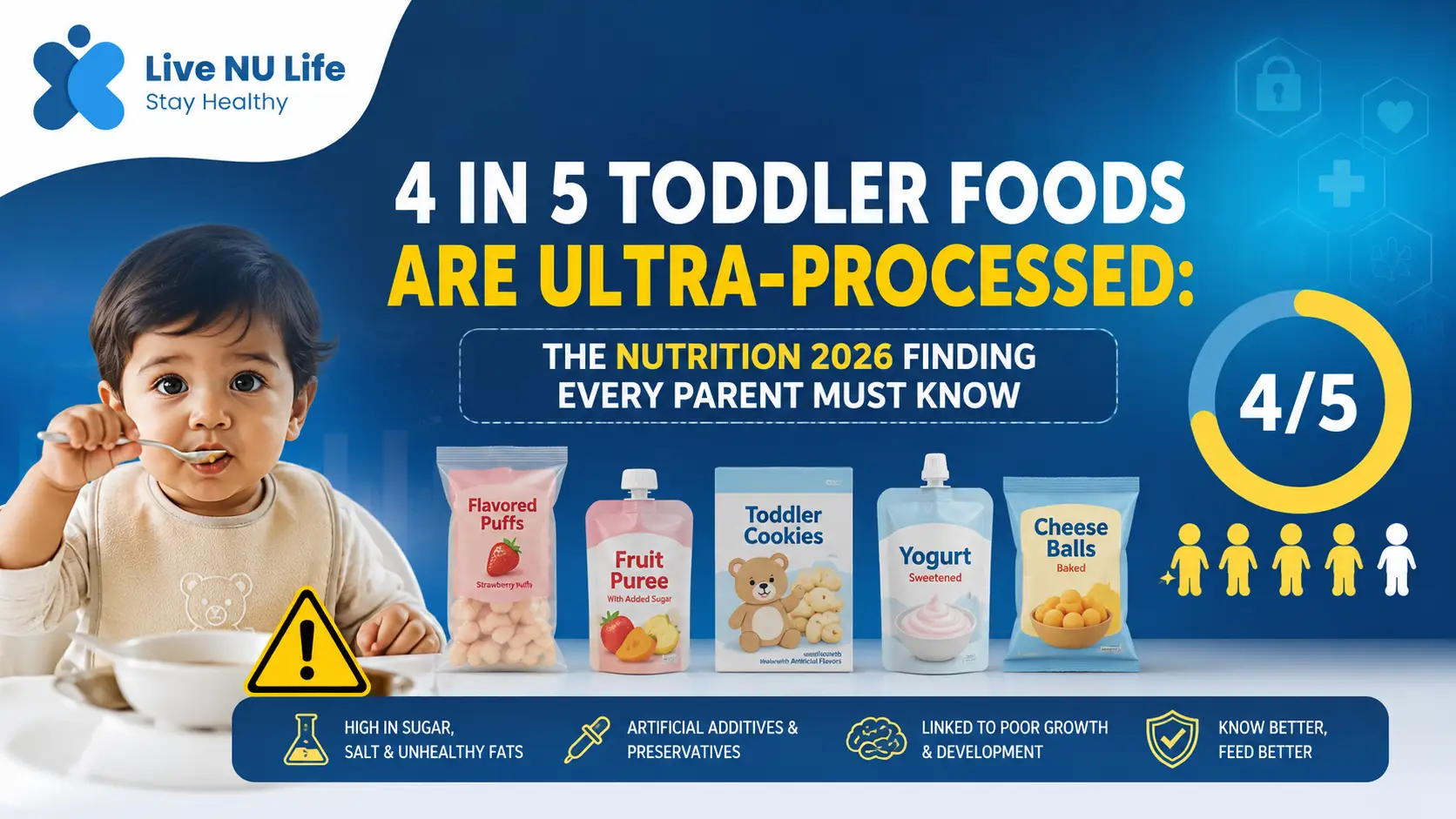
KEY TAKEAWAY: Research presented at NUTRITION 2026 (July 27, 2026) found that 81% of toddler foods sold in grocery stores are ultra-processed, and 49% fail at least one WHO nutrient standard for children ages 6–36 months. The foods children eat in these years wire their taste preferences and metabolic tendencies for life. Here is what parents need to know — and what to feed their children instead.
The Toddler Food Aisle Is Not What Parents Think It Is
Walk down the baby and toddler food aisle of any large supermarket, and the packaging is reassuring. Smiling babies. Images of fruit, vegetables, and whole grains. Words like “organic,” “natural,” “no added sugar,” and “nutritious.” Most parents reasonably assume that products specifically marketed and sold for children in this age group must meet some meaningful nutritional standard.
Research presented on July 27, 2026, at NUTRITION 2026 — the flagship annual meeting of the American Society for Nutrition, held in National Harbor, Maryland — systematically dismantles that assumption.
Researchers Erin Hudson and Marissa Burgermaster from the University of Texas at Austin conducted a comprehensive audit of baby and toddler food products across 21 grocery stores in Austin, Texas. They photographed and analysed 2,783 products marketed to children aged 6 to 36 months. The findings are among the most significant in children’s nutrition research this year.
📖 Also read: Ultra-Processed Foods Are Stealing Your Focus — June 2026 — The same NOVA classification system revealing the toddler food crisis also shows how UPF consumption erodes adult brain attention — the pattern begins in infancy.
The Data: What the Audit Found
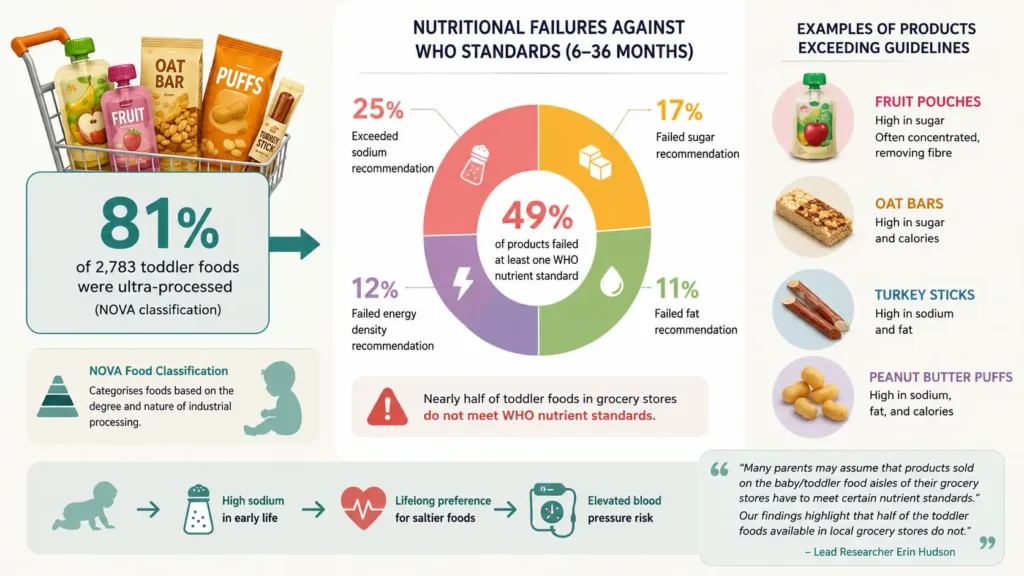
The headline number: 81% of the 2,783 products examined were classified as ultra-processed under the NOVA food classification system — the internationally recognised framework that categorises foods by the degree and nature of industrial processing they have undergone.
Beyond the NOVA classification, the nutritional analysis identified specific failures against WHO Nutrition and Promotion Profile Model standards for commercial foods intended for children aged 6 to 36 months:
• 25% of products exceeded the recommended sodium level — a particularly concerning finding given that high sodium intake in early life is associated with lifelong preference for saltier foods and elevated blood pressure risk.
• 17% failed the WHO-recommended nutrient content levels for sugar — with ultra-processed products significantly more likely to contain high amounts of sugar than less-processed alternatives.
• 12% failed the recommendation for energy density — containing more calories per gram than appropriate for the developmental stage.
• 11% failed for fat content — specifically the type and quantity of fats present relative to WHO recommendations.
Across all four failure categories combined, 49% of all products failed to meet at least one WHO nutrient standard. Nearly half.
Products exceeding guidelines included items many parents would consider relatively healthy: fruit pouches (high in sugar and often concentrated into a form that removes fibre), oat bars (high in sugar and calories), turkey sticks (high in sodium and fat), and peanut butter puffs (high in sodium, fat, and calories).
“Many parents may assume that products sold on the baby/toddler food aisles of their grocery stores have to meet certain nutrient standards,” said lead researcher Erin Hudson. “Our findings highlight that half of the toddler foods available in local grocery stores do not.”
Why This Matters for the Rest of a Child’s Life
The timing of this research — presented at NUTRITION 2026 alongside sessions on early-life nutrition’s lasting impacts — is not coincidental. The scientific understanding of why what toddlers eat matters so profoundly has advanced significantly in 2026.
Taste preference programming. The flavours and taste intensities children are exposed to in the first three years of life are among the most powerful determinants of long-term dietary patterns. Ultra-processed toddler foods are engineered to be hyperpalatable — high in sugar, sodium, and flavour-enhancing compounds — which calibrates the child’s taste expectations to processed food intensities. A child habituated to the sweetness of a commercial fruit pouch will find whole fruit comparatively bland and unappealing.
Gut microbiome establishment. The gut microbiome undergoes its most formative development in the first three years of life. The microbial community established in this window has long-term implications for immune function, metabolic health, mental health, and disease risk across the lifespan. Ultra-processed foods, as the July 2026 Cambridge sweetener study and extensive prior research demonstrates, disrupt beneficial gut bacteria while promoting pathogenic species. Establishing gut dysbiosis in infancy creates a microbiome architecture that is difficult to repair in adulthood.
Metabolic programming. Early-life exposure to high-sugar, high-sodium, high-calorie-density foods programmes metabolic set points — including appetite regulation, insulin sensitivity, and fat storage tendencies — that track into adulthood. Childhood obesity, type 2 diabetes, and cardiovascular disease risk are all measurably shaped by the quality of nutrition in the 6 to 36 month window.
Cognitive development. Rapid brain development continues through the toddler years, with critical periods for language acquisition, executive function development, and neural circuit establishment. Nutritional deficiencies — particularly of iron, zinc, omega-3 fatty acids, choline, and B vitamins — during this window have documented long-term cognitive consequences. Ultra-processed foods displace the nutrient-dense whole foods that support this development.
The Indian Context: A Different Set of Risks
The Texas-based audit speaks directly to the global ultra-processed food industry’s reach, but the Indian context has its own specific dimensions that parents should understand.
India’s baby and toddler food market is growing rapidly, driven by urbanisation, increasing maternal workforce participation, and aggressive marketing by multinational food companies. Products that have been reformulated or restricted in Western markets — where regulatory scrutiny is higher — are sometimes still sold in their original forms in Indian markets.
The traditional Indian approach to early weaning foods — ragi (finger millet) porridge, moong dal khichdi, mashed banana with a touch of ghee, soft-cooked vegetables — represents one of the most nutritionally complete early feeding frameworks anywhere in the world. It is being systematically displaced by commercial packaged products that offer convenience but deliver nutritional risk.
As a trainer and nutritionist who has worked with new mothers for over a decade, I see this transition firsthand. For specific guidance on building nutritional foundations through early childhood and the fourth trimester — including practical feeding strategies — our
comprehensive Healthy Habits for New Moms guide is specifically designed for this period of life.
📖 Also read: Personalised Nutrition Based on Your Gut Bacteria — Understanding how the microbiome establishes in early life — and why the toddler food quality finding connects to adult gut health.
What to Actually Feed Children 6–36 Months
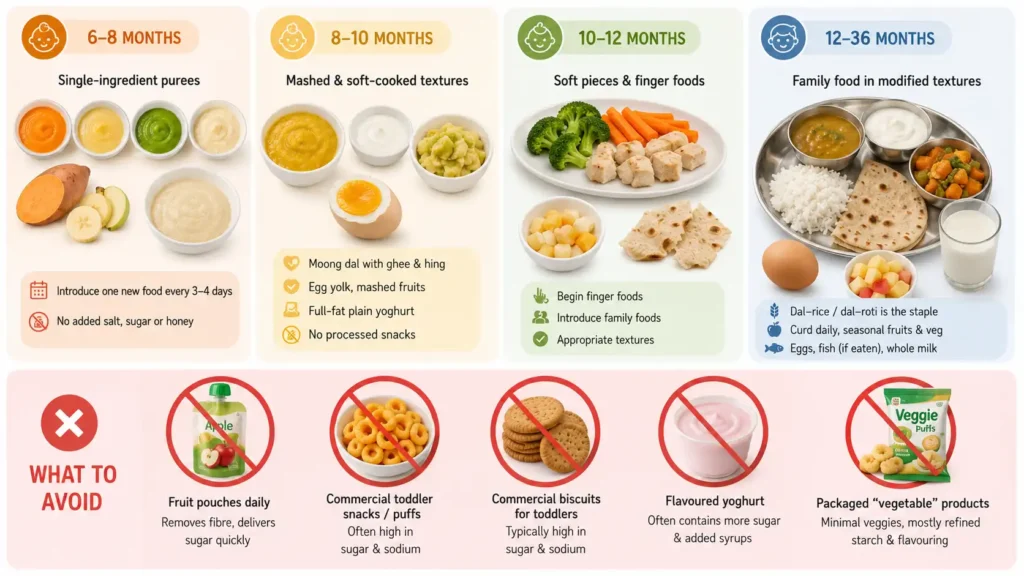
The research is clear on what ultra-processed toddler foods are doing. What it also makes clear, by contrast, is what whole, minimally processed foods in this age range look like. Here is the framework I share with the new mothers and parents I work with:
6–8 months: Single-ingredient purees — sweet potato, pumpkin, carrot, pea, banana, apple. Introduce one new food every 3–4 days to identify sensitivities. Avoid added salt, sugar, and honey entirely. Thin porridges made from ragi, rice, or oats (cooked and blended) are nutritionally excellent.
8–10 months: Mashed and soft-cooked textures. Moong dal with ghee and a pinch of hing (asafoetida — a digestive aid). Soft-cooked egg yolk (from 6 months, full egg from 8–9 months). Mashed banana, avocado, or cooked pear. Small amounts of full-fat plain yoghurt. No processed snack products.
10–12 months: Small soft pieces — the beginning of finger foods. Steamed broccoli florets, soft-cooked carrot sticks, small pieces of cooked chicken or fish, soft chapati torn into small pieces. Introduction of family foods in appropriate textures.
12–36 months (toddler years): Primarily family food in modified textures. Dal-rice or dal-roti as the dietary staple. Curd/yoghurt daily. Seasonal fruits and vegetables. Eggs regularly. Fish where the family eats it. Whole milk. The commercial products that the NUTRITION 2026 audit found failing WHO standards — fruit pouches, flavoured puffs, sweetened snack bars — should be exceptions, not staples.
What to avoid: Fruit pouches as a daily item (remove the fibre advantage of whole fruit, deliver sugar in a rapidly absorbed form), commercial biscuits marketed for toddlers (typically high in sodium and sugar), flavoured yoghurt products (often containing more sugar than plain yoghurt with significant added syrups or flavouring), and packaged “vegetable” products where the vegetable content is minimal and the rest is refined starch and flavouring.
The Policy Gap: Why Regulation Has Not Protected Children
The NUTRITION 2026 research lands at a particularly significant moment: the US Food and Drug Administration is currently considering new guidelines for front-of-package nutrition labels, healthy claims, and marketing of food products to children. The audit’s findings that 81% of products are ultra-processed and 49% fail WHO standards are directly relevant to that policy debate.
In India, the Food Safety and Standards Authority of India (FSSAI) has been developing regulations around processed food labelling and marketing to children — but enforcement and specificity, particularly for the 6 to 36 month age group, remain inadequate. The Texas audit should be read as a proxy for what a similar audit of Indian supermarket shelves would likely find.
The broader ultra-processed food picture — including why adults who eat UPFs show measurable cognitive decline and what to do about it — is covered in our June 2026 article: Ultra-Processed Foods Are Stealing Your Focus.
The Takeaway
The NUTRITION 2026 finding that 81% of toddler foods are ultra-processed and 49% fail WHO nutrient standards is not an abstract research finding. It is a direct challenge to the trust that parents place in packaging, marketing, and regulatory oversight when feeding their children during the most critical nutritional window of their lives. The traditional whole-food weaning approaches of Indian cuisine — ragi, moong dal, mashed seasonal fruit and vegetables, full-fat dairy — are not backward or inconvenient alternatives to commercial products. They are, by every nutritional measure, superior. The research confirms what grandmothers have known for generations: real food, made from scratch, is what growing children need.
About the Author
Tanveer Ahmed Khan is a K11 School of Fitness Sciences-certified personal trainer and REPS India-registered dietitian-nutritionist with over 12 years of experience helping busy professionals achieve elite, sustainable health. Coaching: info@livenulife.com | Instagram: @fitwithtanveer | livenulife.com
Scientific References
1. Hudson, E.A., Burgermaster, M. (2026). Audit of Ultra-Processed Toddler Foods in Texas Grocery Stores vs WHO NPPM Standards. Presented at NUTRITION 2026, National Harbor, MD, July 27, 2026.
2. ScienceDaily / University of Texas at Austin. (July 27, 2026). 4 in 5 toddler foods are ultra-processed. sciencedaily.com
3. EurekAlert / American Society for Nutrition. (July 26, 2026). 80% of toddler foods on grocery shelves are ultra-processed, audit reveals.
4. MedicalXpress. (July 27, 2026). 80% of toddler foods on grocery shelves are ultra-processed, audit reveals.
5. TechTimes. (July 27, 2026). Toddler Food Aisle Fails Parents: Half of Products Don’t Meet WHO Nutrition Standards.