By Tanveer Ahmed Khan, K11-Certified Fitness Trainer | REPS India Registered Dietitian-Nutritionist | 12+ Years Clinical & Coaching Experience
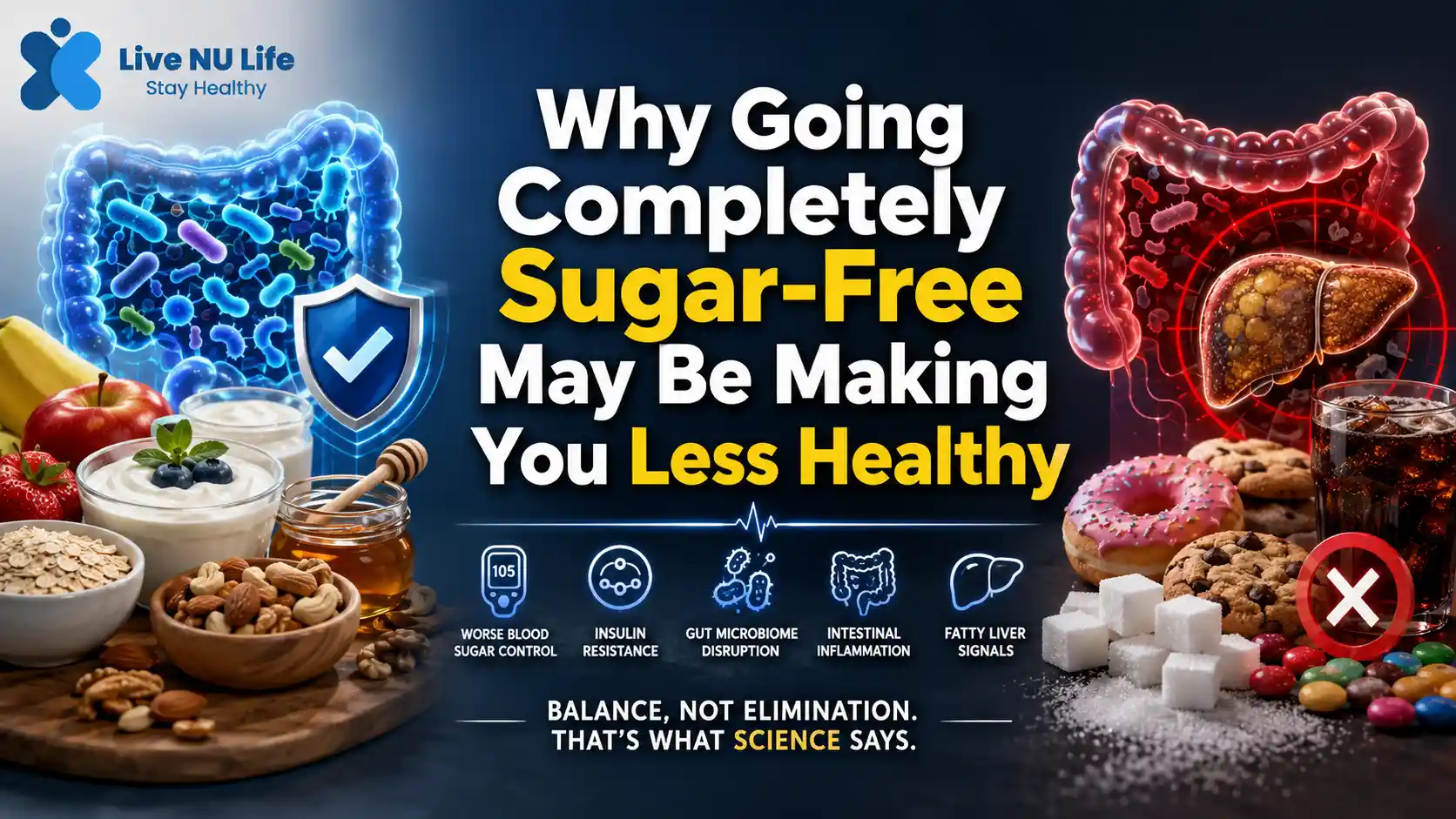
Key Takeaway: A study presented at ENDO 2026 — the Endocrine Society’s flagship annual meeting — found that eliminating sugar from a low-fat diet produced worse blood sugar control, insulin resistance, gut microbiome disruption, intestinal inflammation, and signs of fatty liver disease. Here is why extreme sugar elimination may backfire, and what the research tells us about a smarter approach.
The Study That Will Make You Rethink the Zero-Sugar Trend
Every January, millions of people resolve to cut out sugar entirely. “No sugar January” has become a cultural institution. The carnivore diet eliminates virtually all carbohydrates — and by extension, all sugar. Countless “clean eating” protocols advise eliminating sugar completely as the first and most important dietary change.
A study presented at ENDO 2026 — the annual meeting of the Endocrine Society, held in Chicago, Illinois, in June 2026 — challenges the assumptions behind this approach in a way that deserves serious attention.
Researchers at the Dasman Diabetes Institute in Kuwait City, led by Dr Rasheed Ahmad, Principal Scientist and Head of the Immunology and Microbiology Department, conducted a 16-week study examining what happens to gut health and metabolic function when sucrose — common table sugar — is completely removed from a low-fat diet.
The findings, covered extensively by ScienceDaily on June 14, 2026, were not what the zero-sugar community would predict.
Mice on the sucrose-free low-fat diet, compared to a control group eating a low-fat diet that included moderate sucrose:
- Developed worse blood sugar control
- Showed increased insulin resistance — the precursor to type 2 diabetes
- Experienced disruption of their gut microbiome composition
- Had increased inflammation in both the colon and liver
- Showed early signs of fatty liver disease
Critically — and this is the finding that makes this research so significant — both groups weighed the same. The metabolic harm observed in the sugar-free group was not a function of weight gain. It was a function of diet composition alone, specifically the complete absence of sucrose.
Dr Ahmad’s conclusion stated clearly: “Completely removing sucrose from a low-fat diet may unexpectedly disrupt gut health and promote inflammation and metabolic dysfunction, highlighting that balanced nutrition is more important than simply eliminating sugar.”
An Important Caveat Before We Go Further
I want to be clear about something before this article is misread as an endorsement of sugar consumption.
This study was conducted in mice, not humans. Animal studies are a necessary and valuable stage of scientific investigation, but their findings cannot be directly extrapolated to human physiology without additional research. The study has also not yet been published in a peer-reviewed journal — it was presented at a conference, which means it has not gone through the full peer review process.
However, conference presentations at major medical meetings like ENDO represent significant research. The findings are directionally consistent with a body of existing human research on gut microbiome behaviour and carbohydrate metabolism. And the mechanistic explanations for why complete sucrose elimination might disrupt gut health are scientifically plausible and well-supported by the existing literature.
So I am not saying this study proves that eliminating sugar is dangerous for humans. I am saying it is a meaningful scientific signal that extreme dietary elimination — in this case of all sucrose — may have unintended metabolic consequences, and that the popular assumption that “zero sugar is always better” deserves scrutiny.
As someone who has spent 12 years advising clients on sustainable nutrition, I can tell you that the zero-sugar extreme has been one of the most counterproductive dietary patterns I have encountered in practice.
The Gut-Liver Axis: Why Sucrose Elimination Disrupted the Liver
One of the most striking findings in the ENDO 2026 study was the appearance of fatty liver changes in the sucrose-free group. This seems paradoxical — isn’t sugar a driver of fatty liver disease? How does removing it cause liver problems?
The answer lies in the gut-liver axis — one of the most important and underappreciated pathways in metabolic health.
Your liver receives approximately 70% of its blood supply directly from the intestines via the portal vein. This means the liver is directly exposed to everything that the gut produces — including metabolic byproducts of bacterial fermentation and, critically, the consequences of gut microbiome disruption.
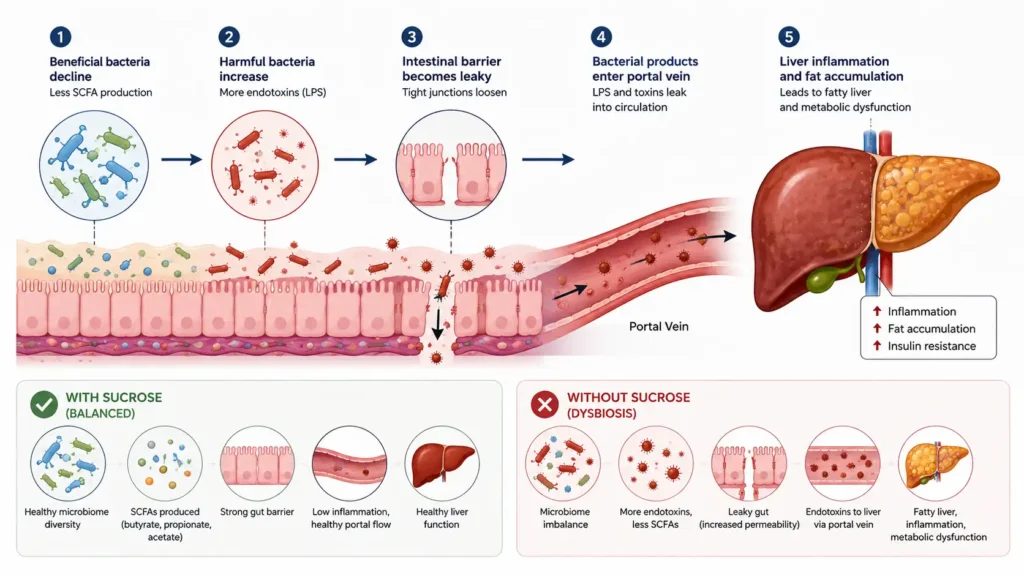
When the gut microbiome is thrown into imbalance — a state called dysbiosis — several damaging things happen simultaneously:
Beneficial bacteria that produce short-chain fatty acids decline. These bacteria ferment dietary carbohydrates (including small amounts of sucrose) into butyrate, propionate, and acetate. When their substrate disappears entirely, these populations contract, short-chain fatty acid production falls, and the intestinal barrier begins to lose integrity.
Harmful bacteria that produce endotoxins increase in relative abundance. In a balanced microbiome, these bacteria are kept in check. When the microbial ecosystem is disrupted, their proportional share increases.
Increased intestinal permeability allows bacterial products into systemic circulation. When the intestinal lining is compromised — which happens when butyrate-producing bacteria decline — the tight junctions between gut wall cells loosen. Bacterial lipopolysaccharides (LPS) and other pro-inflammatory molecules begin leaking into the portal circulation, travelling directly to the liver.
The liver responds to this bacterial product influx with inflammation. This is the pathway through which gut dysbiosis triggers liver inflammation, steatosis (fat accumulation), and, over time, the progression toward non-alcoholic fatty liver disease (NAFLD).
This is the gut-liver axis in action. Complete sucrose elimination disrupted the gut microbiome, which disrupted the intestinal barrier, which allowed inflammatory bacterial products to reach the liver, which produced the fatty liver changes observed in the study.
Why Elimination Diets Create the Problems They Claim to Solve
This is something I have spent years trying to explain to clients who arrive committed to zero-sugar, zero-carb, or other extreme elimination approaches.
Your gut microbiome evolved over hundreds of thousands of years on a diet that included carbohydrates — fruits, roots, tubers, honey, whole grains. The microbial communities that inhabit your gut are shaped by, and dependent upon, a diversity of substrates. Many beneficial bacterial species have specifically evolved to ferment carbohydrates, including natural sugars present in fruit, dairy, and vegetables.
When you eliminate all sources of sucrose and most other carbohydrates, you are not just removing “bad” foods. You are removing the fermentable substrate that feeds an entire ecosystem of beneficial microbial populations. The ecosystem collapses or reorganises in response — and the reorganisation does not always favour health.
I have seen this pattern repeatedly in my practice. Clients who adopt extremely low-carbohydrate or zero-sugar protocols for extended periods frequently report improvements in the first four to six weeks — driven primarily by weight loss, reduced water retention, and the metabolic benefits of lower blood glucose — followed by a plateau and, in many cases, a gradual return of the fatigue, brain fog, and digestive symptoms that often motivate extreme diets in the first place.
The ENDO 2026 study may be providing a mechanistic explanation for why this happens: long-term extreme carbohydrate or sugar elimination disrupts the gut microbiome in ways that erode metabolic health over time, potentially offsetting or reversing the initial benefits.
What the Research Actually Tells Us About Sugar and Health
The evidence on sugar and health is nuanced, and I want to lay it out accurately — because the popular conversation has swung between two equally inaccurate extremes. “Sugar is poison” and “all foods fit equally” are both wrong.
Added sugars in excess are genuinely harmful. The research on high fructose corn syrup, sugar-sweetened beverages, and ultra-processed food consumption is consistent and compelling. Excessive added sugar intake drives obesity, insulin resistance, non-alcoholic fatty liver disease, dental caries, and increased cardiovascular disease risk. This is not in dispute.
Natural sugars in whole food contexts behave differently. Fructose in a piece of fruit arrives with fibre, vitamins, minerals, and phytonutrients that slow absorption, support the microbiome, and provide nutritional context the body evolved to handle. Fructose in a soft drink arrives with nothing but water, artificial flavours, and a rapid glycaemic spike. Treating these as the same substance is a categorical error.
Complete sucrose elimination is not necessary to reduce sugar-related harm. The evidence for reducing added sugar intake from ultra-processed sources — soft drinks, confectionery, packaged baked goods, flavoured yoghurts — is excellent. The evidence for eliminating all sucrose, including from fruit, dairy, and minimally processed whole foods, is, at best, absent — and the ENDO 2026 findings suggest it may be actively counterproductive.
The dose, source, and dietary context of sugar all matter. A teaspoon of jaggery in a cup of chai, a piece of ripe mango, a serving of naturally sweetened yoghurt — these are fundamentally different from a 500ml bottle of cola or a packet of commercial biscuits. Treating them identically is both scientifically inaccurate and practically counterproductive.
The Blood Sugar Problem with Zero-Sugar Diets
The finding in the ENDO 2026 study that the sucrose-free group developed worse blood sugar control is particularly counter-intuitive and worth exploring.
How can eliminating sugar produce worse glucose regulation?
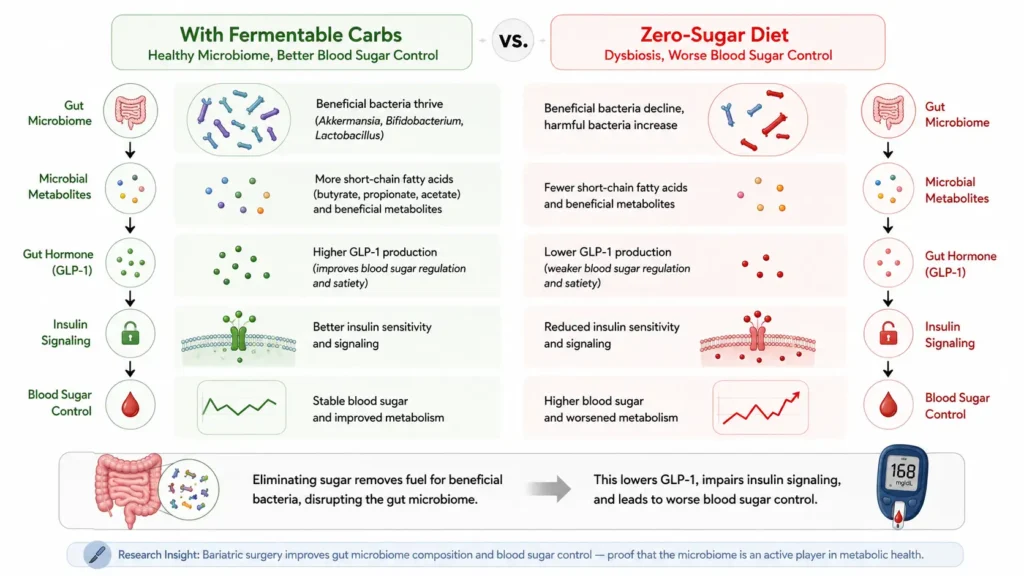
The answer again points to the gut microbiome. Certain bacterial species — particularly those from the Akkermansia, Bifidobacterium, and Lactobacillus families — produce metabolites that directly improve insulin sensitivity and support the function of GLP-1 (glucagon-like peptide-1), the gut hormone that regulates blood sugar and appetite.
When these species decline due to loss of fermentable carbohydrate substrate, their metabolic products — short-chain fatty acids and specific bile acid metabolites — also decline. GLP-1 production falls. Insulin signalling becomes less efficient. The result is the paradox the ENDO 2026 study captured: a diet designed to lower blood sugar actually worsened blood sugar control by disrupting the microbial ecosystem that regulates glucose metabolism.
This mechanism has been observed in other research contexts. Bariatric surgery patients who experience dramatic metabolic improvements — including resolution of type 2 diabetes — often show concurrent dramatic improvements in gut microbiome composition. The gut microbiome is not a passenger in metabolic health. It is an active participant.
My Clinical Approach: Smart Sugar Management, Not Elimination
After more than 12 years of working with clients across a wide range of metabolic profiles — including many with type 2 diabetes, insulin resistance, and weight management challenges — here is the approach I have found consistently effective:
Eliminate ultra-processed sugar sources first
The evidence for reducing intake of ultra-processed sugar sources is overwhelming and I apply it immediately: soft drinks (including diet), packaged confectionery, commercial baked goods, flavoured breakfast cereals, bottled juices, energy drinks. These products deliver sugar in forms and contexts the body handles poorly, with no nutritional benefit to offset the metabolic cost.
Keep whole food sugar sources
Fruit (2–3 servings daily), dairy (unsweetened or minimally sweetened), jaggery and honey in small amounts as cooking sweeteners, and naturally occurring sugars in vegetables and legumes — these remain in my clients’ diets. They provide fermentable substrates for the microbiome, essential micronutrients, and fibre that moderates their glycaemic impact.
Manage carbohydrate timing, not elimination
For clients with blood sugar management goals, I use carbohydrate timing rather than elimination: placing the majority of daily carbohydrate intake around physical activity, when muscles are most insulin-sensitive and glucose disposal is most efficient. A small bowl of rice with dinner, a banana before a workout, oats in the morning — strategically timed carbohydrates produce far better metabolic outcomes than the same foods eaten randomly or eliminated entirely.
Prioritise fibre and protein to naturally reduce sugar appetite
The most effective long-term strategy for reducing excessive sugar consumption is not willpower — it is biology. When meals are built around adequate protein (which promotes satiety via PYY and GLP-1 signalling) and substantial dietary fibre (which slows gastric emptying and produces satiety-inducing SCFAs), the craving for sugar is genuinely reduced at the neurobiological level. I have seen this transformation in dozens of clients: not a rigid avoidance of sugar, but a genuine reduction in its appeal.
Build the gut microbiome with fermented foods
Since the ENDO 2026 findings point to gut microbiome disruption as the mechanism of harm, actively rebuilding and maintaining microbial diversity is a direct countermeasure. I recommend at least one serving of a fermented food daily — plain yoghurt, kefir, naturally fermented pickle (without added vinegar), or idli/dosa batter that has genuinely fermented — alongside the dietary fibre diversity that feeds those microbial communities.
The Bigger Lesson: Balance Is Not a Compromise — It Is the Science
The ENDO 2026 study reinforces a principle that I have observed in 12 years of practice but that is systematically underrepresented in the wellness content most people consume: extreme dietary restriction is rarely the optimal strategy, even when the eliminated substance is genuinely harmful in excess.
This is not a culturally convenient conclusion. It does not generate the same social media engagement as “I went zero sugar and lost 10kg in a month.” It does not sell supplements or books as effectively as elimination frameworks do.
But it is what the emerging science is saying, and it is what I see consistently in practice: the healthiest clients in my experience are not the ones following the most restrictive diets. They are the ones who have built a deeply balanced, whole-food-based eating pattern that crowds out ultra-processed foods while retaining the diversity and nutritional completeness that the gut microbiome and metabolic system require to function at their best.
Complete sugar elimination is not the destination the zero-sugar trend claims it to be. For most people, it is a detour — and one that may, according to the best evidence of June 2026, create new metabolic problems while attempting to solve old ones.
Scientific References
- Ahmad, R. et al. (June 14, 2026). Sugar-free diets may disrupt gut microbiome. Presented at ENDO 2026, Endocrine Society Annual Meeting, Chicago, IL. https://www.endocrine.org/news-and-advocacy/news-room/2026/ahmad-press-release-endo-2026
- ScienceDaily. (June 14, 2026). Scientists found a surprising problem with sugar-free diets. Dasman Diabetes Institute. https://www.sciencedaily.com/releases/2026/06/260614011843.htm
- Medical News Today. (June 13, 2026). Sugar-free, low-fat diet tied to insulin resistance in mouse study. https://www.medicalnewstoday.com/articles/how-eliminating-sugar-may-alter-the-gut-microbiome-mouse-study
- Yahoo Health / Medical Daily. (June 2026). Going Completely Sugar-Free May Actually Be Making You Less Healthy. https://www.medicaldaily.com/sugar-free-diet-backfire-blood-sugar-gut-microbiome-liver-damage-endo-2026-475713
- MindBodyGreen. (June 2026). Hidden Cost Of A Sugar-Free Diet? This Study Points To Your Gut. https://www.mindbodygreen.com/articles/sugar-free-diet-may-disrupt-gut-microbiome-and-cause-metabolic-problems