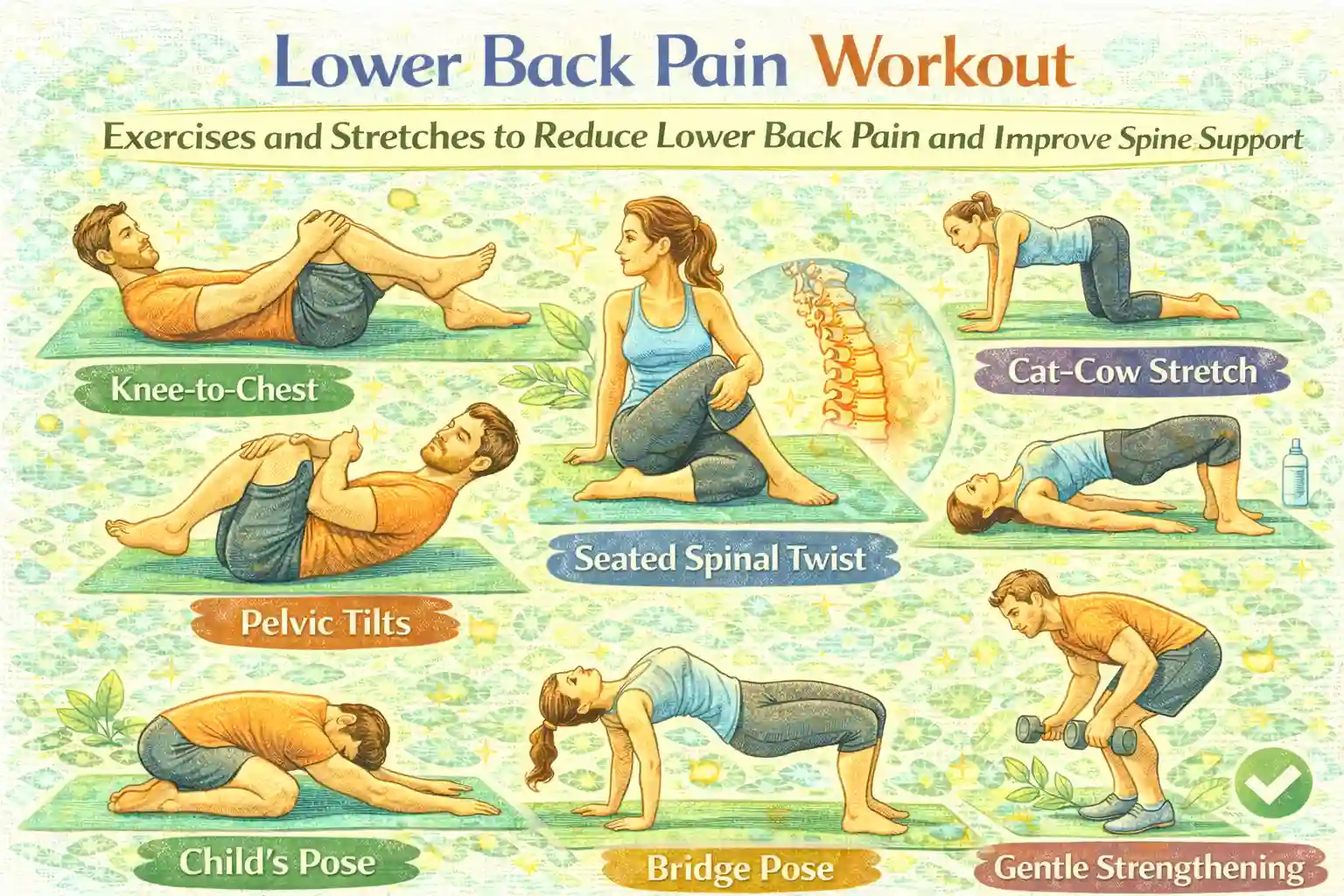
A lower back pain workout focuses on gentle mobility, controlled strengthening, and improving how the muscles around your spine work together. The most effective approach combines activation exercises like pelvic tilts and bridges with targeted stretches to lower back pain that restore flexibility in the hips and spine.
When performed consistently, a lower back pain workout helps reduce stiffness, improve spinal support, and teaches the body to move without overloading the lumbar region.
Why a Lower Back Pain Workout Works
The lower spine rarely becomes painful because of one weak muscle. Most of the time, the problem comes from a mismatch between tight hips, inactive glutes, and a core that is not stabilising the spine properly.
A structured lower back pain workout corrects this imbalance by activating the posterior chain — the group of muscles that includes the glutes, hamstrings, and spinal stabilisers. These muscles help distribute forces evenly so the spine does not absorb all the pressure.
Exercise also promotes spinal decompression and circulation around the discs and joints. Movement acts almost like lubrication for the spine, which is why gentle activity often reduces stiffness faster than prolonged rest.
Core Principles Behind a Lower Back Pain Workout
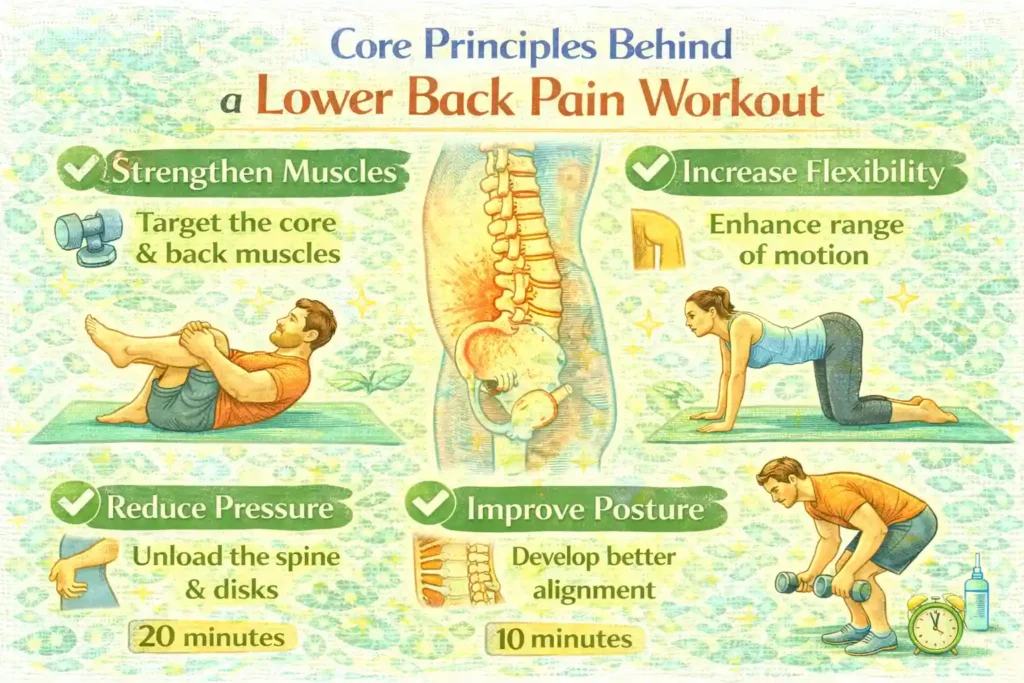
Before starting any routine, it helps to understand what your body actually needs.
Principle | Why It Matters |
Core stability | Keeps the spine supported during daily movements |
Hip mobility | Prevents the lower back from compensating for tight hips |
Posterior chain strength | Reduces pressure on lumbar joints |
Spinal decompression | Relieves compression created by sitting or poor posture |
A balanced lower back pain workout should include both strengthening exercises and stretches to relieve lower back pain and restore mobility and support.
Below are some stretches to lower back pain by natural and easy methods.
Pelvic Tilt: The Foundation of a Lower Back Pain Workout
Pelvic tilts activate deep abdominal muscles that stabilise the spine. Many physical therapy programs use this movement first because it teaches basic control of spinal positioning.
How to perform
- Lie on your back with knees bent and feet flat on the floor.
- Tighten your abdominal muscles gently.
- Press your lower back toward the floor and hold for about five seconds.
What you should feel
Your lower back should lightly “kiss” the floor. The movement is small and controlled. If your shoulders or neck start tensing up, relax them and focus on your core.
Why it helps
This movement teaches your core to stabilise the spine before larger movements occur. That stability becomes essential when bending, lifting, or walking.
Common mistake
Many people push too hard and lift their hips off the floor. The goal is subtle control, not force.
Pelvic tilts are one of the simplest ways to start a lower back pain workout safely.
Knee-to-Chest Stretch for Lumbar Relief
Among the most common stretches for lower back pain, the knee-to-chest stretch helps release tension around the lumbar spine and hips.
Steps
- Lie on your back with knees bent.
- Slowly bring one knee toward your chest.
- Hold the knee with both hands and keep the other foot on the floor.
What you should feel
A gentle stretch across the lower back and glutes.
Why it works
This stretch lengthens muscles that attach around the pelvis and spine, allowing the lumbar area to relax and decompress.
Common mistake
Pulling the knee aggressively toward the chest. The movement should feel relieving, not forced.
This stretch pairs naturally with a lower back pain workout because it reduces tightness before strengthening exercises.
Cat-Cow Stretch for Spinal Mobility
The cat-cow stretch improves spinal flexibility by guiding the spine through two opposite positions.
Steps
- Start on hands and knees.
- Round your back upward while dropping your head.
- Then slowly arch your back while lifting your chest forward.
What you should feel
A gentle wave-like motion moves through the spine.
Why it matters
Your spine must move smoothly while the core controls excessive motion. Cat-cow improves mobility so the spine can move freely without straining one area.
Common mistake
Moving too fast or collapsing the shoulders. This movement is often included early in a lower back pain workout to restore spinal mobility before strengthening.
Bridge Exercise: Strength for the Posterior Chain
The bridge exercise strengthens the glutes and hamstrings, which form a large part of the posterior chain.
Steps
- Lie on your back with knees bent.
- Tighten your glutes and core.
- Lift your hips until your body forms a straight line from knees to shoulders.
What you should feel
Your glutes should be doing most of the work while the lower back stays neutral.
Why it matters
Strong glutes reduce the load placed on the lumbar spine. This is why the bridge exercise is often described as the “antidote” to long hours of sitting. For desk workers, weak glutes often force the lower back to compensate during daily movements.
Common mistake
Arching the lower back excessively instead of squeezing the glutes. Because it targets the posterior chain, the bridge is one of the most effective exercises in a lower back pain workout routine.
Bird Dog: Stability Training for Everyday Movement
Bird dog is designed to teach the body how to stabilise the spine while the arms and legs move.
Steps
- Begin on hands and knees.
- Extend one arm forward and the opposite leg backwards.
- Keep your torso steady and avoid twisting.
What you should feel
A steady engagement through your core and glutes.
Why stability matters
Your spine rarely moves in isolation during daily life. When you reach for something or step forward, your limbs move while your core stabilises the body. Bird dog trains exactly that pattern.
Common mistake
Allowing the hips to rotate or dropping the stomach toward the floor. This exercise builds functional stability, making it a key part of a lower back pain workout.
You can improve lower back pain with this Traditional Chinese Fitness Techniques.
Child’s Pose for Spinal Decompression
Steps
- Kneel on the floor and sit back toward your heels.
- Extend your arms forward along the floor.
- Lower your chest toward the ground.
What you should feel
A stretch along the lower back and hips while the spine lengthens.
Why it helps
This position reduces pressure on spinal joints and allows the muscles around the lumbar area to relax.
Common mistake
Forcing the hips too far back if the stretch feels uncomfortable. Many people finish their lower back pain workout with this movement to release remaining tension.
Sample Daily Lower Back Pain Workout Routine
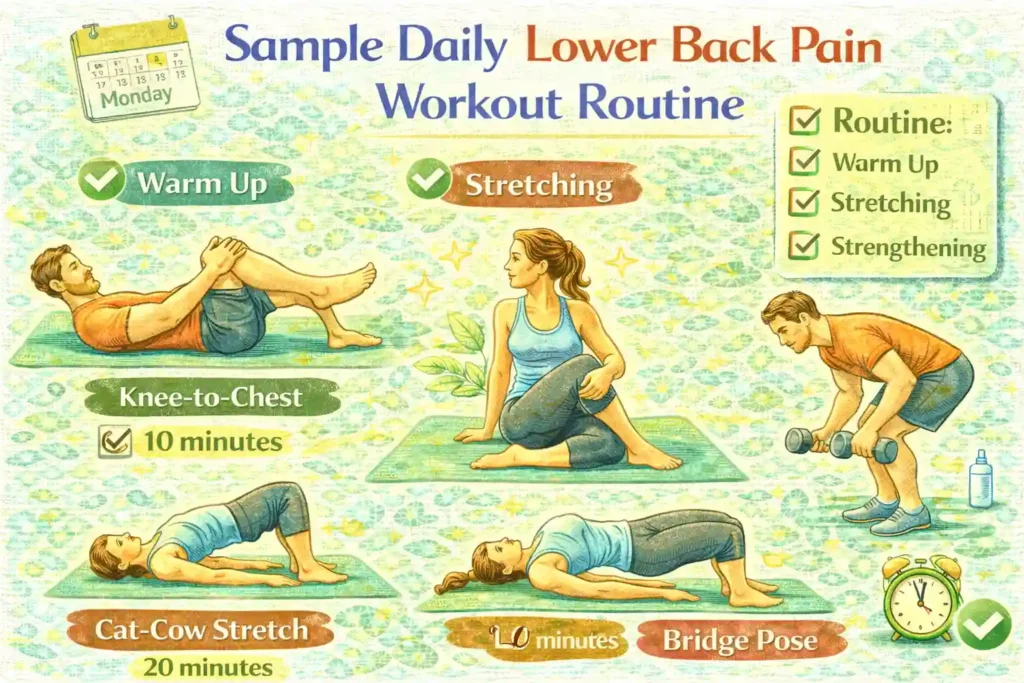
A simple routine can be completed in about 10–15 minutes.
Exercise | Repetitions |
Pelvic tilts | 10 reps |
Knee-to-chest stretch | 10 seconds each side |
Cat-cow stretch | 8 reps |
Bridge exercise | 10 reps |
Bird dog | 8 reps each side |
Child’s pose | 20–30 seconds |
This sequence combines strengthening and stretches for lower back pain to restore balance between mobility and stability.
Practising this lower back pain workout regularly helps your body adapt gradually without overloading the spine.
Important Safety Signals to Watch For
Exercise should feel controlled and relieving. Sharp pain is a signal that something is wrong. Stop immediately if you experience:
- Sudden sharp pain in the lower back
- A “lightning bolt” sensation travelling down your leg
- Numbness or tingling in the legs
- Significant worsening of pain after exercise
If these symptoms occur, seek medical guidance before continuing a lower back pain workout.
Habits That Support Your Lower Back Pain Workout
Exercise works best when daily habits also protect the spine Helpful habits include:
- Standing or walking every 30–60 minutes during desk work
- Maintaining a neutral posture when sitting
- Strengthening hips and glutes regularly
- Practising gentle stretches to relieve lower back pain after long sitting periods
These adjustments reduce the stress placed on the lumbar spine throughout the day.
A Practical Way to Maintain Long-Term Back Health
A lower back pain workout is not about intense exercise sessions. The goal is consistent movement that restores strength, mobility, and coordination around the spine.
When strengthening exercises are combined with stretches for lower back pain, the body gradually develops better support for the spine and improved movement patterns.
Over time, this balanced approach reduces stiffness, protects the lumbar region, and makes everyday activities more comfortable.
Read More: Health and Fitness
Frequently Asked Questions
Can I do a lower back pain workout every day?
Yes, a lower back pain workout can usually be performed daily if the movements are gentle and controlled. These exercises focus on mobility and stability rather than heavy training, so regular practice often helps reduce stiffness and maintain spinal support.
How long does it take to see results from stretches to lower back pain?
Many people begin to notice reduced stiffness within one to two weeks of consistent practice. However, strengthening the muscles that support the spine can take several weeks, especially if the pain developed from long-term inactivity or prolonged sitting.
Should I stretch or strengthen first for lower back pain?
Both are important, but starting with light mobility exercises or stretches to lower back pain can prepare the muscles and joints for strengthening movements. Once the spine feels more mobile, core and glute exercises help create long-term stability.
Is walking helpful along with a lower back pain workout?
Yes, walking is one of the safest low-impact activities for back health. It promotes circulation, supports spinal movement, and complements a lower back pain workout by keeping the muscles active without placing excessive pressure on the spine.
Can a lower back pain workout prevent future back problems?
Regular exercise can significantly reduce the risk of recurring back pain. When the core, hips, and posterior chain are strong and flexible, the spine receives better support during everyday movements like lifting, bending, or standing for long periods.