KEY TAKEAWAY: 2026 research on curcumin — the active polyphenol in turmeric — has advanced our understanding of how it may prevent and potentially treat colorectal cancer through multiple simultaneous mechanisms: epigenetic regulation, cancer cell apoptosis, anti-angiogenic effects, and gut microbiome modulation. Colorectal cancer rates are rising in India, particularly in younger adults. Here is what the current evidence supports — and what it does not.
The Ancient Spice and the Modern Cancer Crisis
Turmeric has been central to Indian cooking and Ayurvedic medicine for over 4,000 years. Its medicinal applications in traditional systems include anti-inflammatory use, digestive support, liver protection, and wound healing — a remarkably broad therapeutic profile for a single spice that is also a cooking staple.
In 2026, the scientific understanding of why turmeric exerts these effects has reached a level of mechanistic precision that traditional medicine could not have anticipated. Curcumin — the primary polyphenolic compound responsible for turmeric’s yellow colour and its biological activity — is one of the most extensively studied dietary compounds in cancer prevention research, with over 10,000 published studies examining its effects across multiple cancer types.
The most compelling and clinically relevant body of evidence concerns colorectal cancer — the cancer of the large intestine — where curcumin’s multiple mechanisms of action have converged in a way that is both scientifically exciting and immediately relevant to the Indian population. India’s colorectal cancer incidence has been rising steadily and is increasingly affecting younger adults — a demographic shift that parallels the ultra-processed food dietary transition we have been documenting throughout our 2026 series.
📖 Also read: Turmeric & Curcumin: The Complete Evidence-Based Guide — Our comprehensive guide to curcumin’s evidence base across multiple health conditions — the foundational companion to this focused cancer prevention coverage.
How Curcumin Acts Against Colorectal Cancer: The 2026 Mechanisms
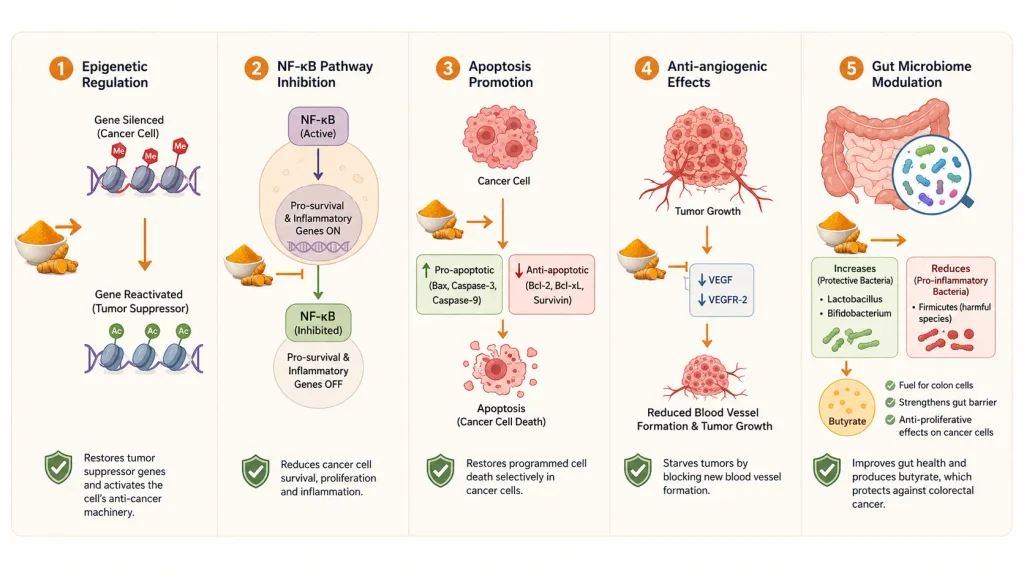
Mechanism 1: Epigenetic regulation. Curcumin has been shown to function as an epigenetic modifier — it affects how genes are expressed without changing the underlying DNA sequence. Specifically, curcumin inhibits DNA methyltransferases and histone deacetylases — enzymes that silence tumour suppressor genes in cancer cells. By restoring the expression of these silenced protective genes, curcumin effectively reactivates the cell’s own anti-cancer machinery. This epigenetic mechanism is particularly powerful because it addresses a fundamental way in which cancer cells evade normal growth controls.
Mechanism 2: NF-κB pathway inhibition. Nuclear factor kappa B (NF-κB) is one of the most important transcription factors in cancer biology — it regulates the expression of genes involved in cell survival, proliferation, invasion, and metastasis. Chronically activated NF-κB is a hallmark of most colorectal cancers and contributes to their resistance to apoptosis (programmed cell death). Curcumin inhibits NF-κB activation through multiple complementary mechanisms, reducing the expression of pro-survival and pro-inflammatory genes in cancer cells while leaving normal cells relatively unaffected.
Mechanism 3: Apoptosis promotion. Cancer cells are characterised by their ability to evade the normal programmed cell death (apoptosis) that eliminates damaged or mutated cells before they can proliferate. Curcumin restores apoptotic signalling in cancer cells by upregulating pro-apoptotic proteins (Bax, caspase-3, caspase-9) and downregulating anti-apoptotic proteins (Bcl-2, Bcl-xL, survivin). Multiple studies have shown curcumin-induced apoptosis in colorectal cancer cell lines — and importantly, this apoptosis appears selective for cancer cells over normal colonic epithelial cells.
Mechanism 4: Anti-angiogenic effects. Tumours require blood vessel growth (angiogenesis) to supply the nutrients and oxygen needed for their rapid proliferation. Without new blood vessel formation, tumours cannot grow beyond a few millimetres in size. Curcumin inhibits vascular endothelial growth factor (VEGF) and its receptor VEGFR-2 — the primary signalling axis for tumour angiogenesis. This anti-angiogenic mechanism effectively starves tumours of their blood supply by preventing the new vessel formation required for tumour growth and metastasis.
Mechanism 5: Gut microbiome modulation. This mechanism has emerged in 2026 as one of the most exciting dimensions of curcumin’s anti-cancer activity. Curcumin is a potent prebiotic that specifically increases populations of Lactobacillus and Bifidobacterium species while reducing populations of pro-inflammatory Firmicutes species associated with colorectal cancer risk. The gut bacteria that curcumin promotes produce higher levels of butyrate — the short-chain fatty acid that is the preferred energy source of colonocytes, maintains intestinal barrier integrity, and has direct anti-proliferative effects on colorectal cancer cells.
The Bioavailability Challenge — and How to Address It
Curcumin’s clinical application has long been limited by a fundamental pharmacokinetic problem: it is poorly absorbed from the digestive tract, rapidly metabolised, and quickly excreted. Most of the curcumin consumed in food and even in standard supplements never reaches systemic circulation at meaningful concentrations.
This bioavailability problem has spawned an entire research field and a competitive supplement industry. Here is what the 2026 evidence actually supports:
Black pepper (piperine) — the traditional solution. Piperine, the active compound in black pepper, inhibits the enzymes that metabolise curcumin and increases intestinal curcumin absorption by approximately 2,000%. The traditional Ayurvedic combination of turmeric and black pepper has a direct pharmacokinetic justification. In cooking and supplementation, always combine turmeric with black pepper. A pinch of black pepper in golden milk, dal, or a turmeric supplement increases curcumin bioavailability dramatically.
Fat-soluble context. Curcumin is fat-soluble — it requires dietary fat for intestinal absorption. Consuming turmeric with ghee, coconut oil, or a fat-containing meal increases absorption. The traditional Indian practice of cooking turmeric in oil before adding other ingredients is, again, pharmacokinetically justified.
Nanoparticle and liposomal formulations. Newer supplement formulations using nanoparticles, liposomes, phospholipid complexes (Meriva), or amphiphilic curcumin derivatives have demonstrated significantly higher blood concentrations in pharmacokinetic studies. For therapeutic applications targeting cancer prevention, these enhanced-bioavailability formulations may be necessary to achieve relevant blood concentrations.
What the Evidence Supports — and What It Does Not
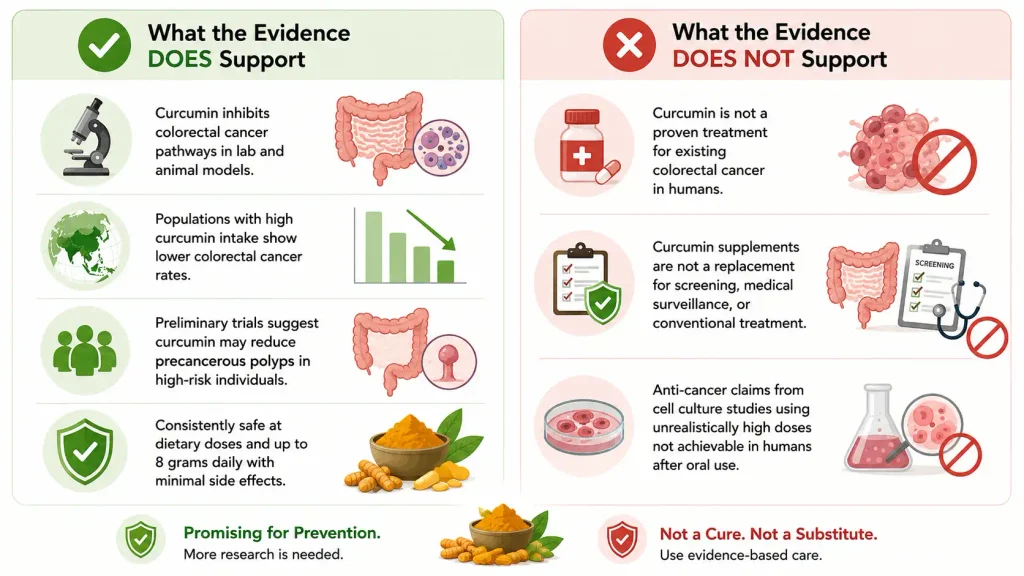
I want to be precise about what curcumin research in 2026 does and does not establish — because this is a topic where oversimplification is especially common.
What the evidence DOES support: Strong mechanistic evidence that curcumin inhibits colorectal cancer pathways in laboratory and animal models; observational data suggesting lower colorectal cancer rates in populations with high curcumin intake (including epidemiological studies in India and South Asia); some preliminary clinical trial data suggesting curcumin may reduce precancerous colorectal polyps in high-risk individuals; consistent evidence that curcumin is safe at dietary doses and even at supplement doses up to 8 grams daily with minimal adverse effects.
What the evidence does NOT support: Curcumin as a proven treatment for existing colorectal cancer in humans; curcumin supplementation as a replacement for colorectal cancer screening, medical surveillance, or conventional treatment; dramatic anti-cancer claims based on cell culture studies that used supraphysiological concentrations never achievable in humans after oral administration
My Coaching Protocol: Turmeric for Gut Health
• Daily dietary turmeric: 1 to 2 teaspoons of turmeric powder (providing approximately 60 to 100mg curcumin) in cooking, always with a pinch of black pepper and ideally in a fat-containing preparation (dal with ghee, vegetable curry with oil).
• Golden milk (haldi doodh): 1 teaspoon turmeric, a pinch of black pepper, a pinch of ginger, in warm whole milk with a small amount of ghee or coconut oil. The fat content of whole milk improves curcumin absorption; the traditional bedtime preparation exploits the anti-inflammatory benefits during the overnight fasting and recovery period.
• For higher-dose supplementation (in clients with family history of colorectal cancer, inflammatory bowel disease, or confirmed colorectal polyps): a clinically validated enhanced-bioavailability formulation such as BCM-95, Meriva (phytosome complex), or Curcuwin at doses of 500mg to 1,000mg daily, with physician guidance.
For the complete framework of anti-inflammatory dietary strategies that support gut cancer prevention through the microbiome — including the fibre diversity strategy, prebiotic foods, and fermented food recommendations — see our Gut Health Revolution guide and our Fibermaxxing guide.
The Takeaway
Curcumin’s anti-colorectal cancer mechanisms — epigenetic regulation, NF-κB inhibition, apoptosis induction, anti-angiogenesis, and gut microbiome modulation — represent one of the most mechanistically complete cases for a dietary compound against a specific cancer type in the nutritional science literature. The bioavailability challenge is real but addressable through traditional co-administration with black pepper and fat, or through enhanced-bioavailability supplement formulations. The evidence supports daily turmeric consumption as a gut health-supporting, anti-inflammatory, potentially cancer-preventive dietary practice — not as a replacement for medical care, but as a substantive nutritional intervention with strong mechanistic justification. For the complete guide to curcumin evidence, bioavailability strategies, and practical protocols, see our comprehensive Turmeric & Curcumin guide.
About the Author
Tanveer Ahmed Khan is a K11 School of Fitness Sciences-certified personal trainer and nutrition coach with 12+ years of strength training experience. Coaching: info@livenulife.com | Instagram: @fitwithtanveer | livenulife.com
Scientific References
1. 2026 research synthesis on curcumin and colorectal cancer mechanisms — multiple peer-reviewed sources in Frontiers in Pharmacology, Nutrients, and Cancer Prevention Research.
2. Aggarwal, B.B., et al. (2009, updated 2026). Curcumin: An Orally Bioavailable Blocker of TNF and Other Pro-inflammatory Biomarkers. British Journal of Pharmacology.
3. Our August 2026 Vol III gut-brain axis article — curcumin’s gut microbiome modulation as part of the mental health nutritional framework.
4. Our Princeton fiber-gut lining research (Article 4, this volume) — the mucus layer protection that curcumin’s microbiome-modulating effects complement.
5. Traditional medicine literature: Ayurvedic applications of haldi (turmeric) in digestive health — validated through modern mechanism research.