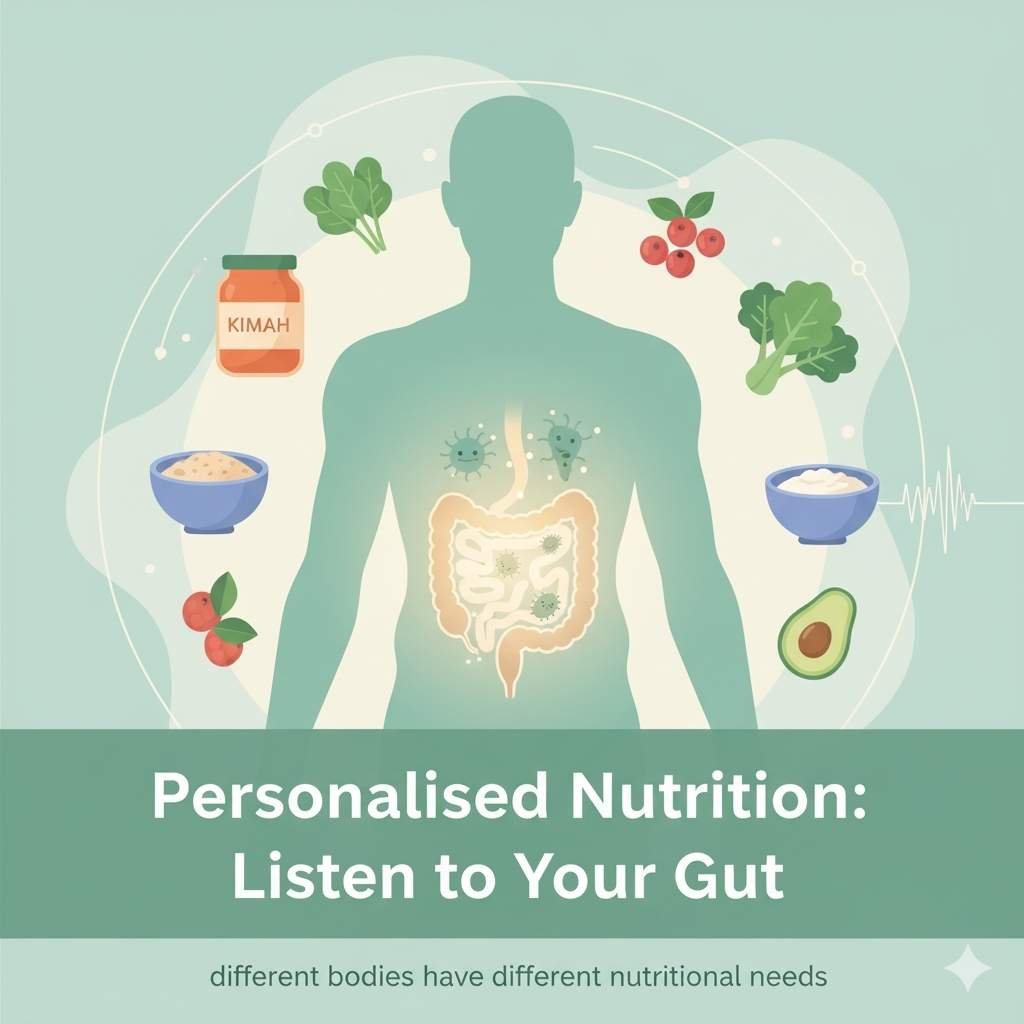
Your stomach talks more than you think. Every bite you take, your gut bacteria decide what to do with it. They are tiny workers inside, turning food into energy, mood chemicals, or sometimes trouble like bloating and skin dullness.
Personalised nutrition means listening to these workers first. Don’t eat only by trend. Eat by your gut type. Some people digest grains so easily, some feel heavy after it. Some need more fermented food (like curd or kimchi), some need fibre first before protein. It’s not one rule for all.
Start by observing how your body reacts after a meal. Write it down (yes, like a food diary). Then you begin to learn your pattern. This is a small step in a gut-based diet plan, and this kind of awareness slowly fixes digestion and mood.
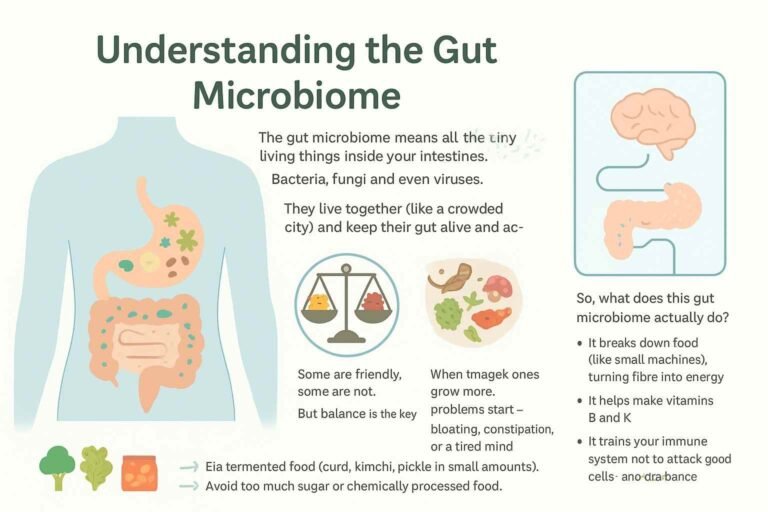
Table of Contents
ToggleWhat Is Personalised Nutrition?
Eat what your body really needs, not what the trend says. That’s what personalised nutrition means.
Personalised nutrition is about understanding your body like your own fingerprint. It’s not the same for everyone. One food that helps you may hurt someone else (like milk, good for one, but causes bloating for others). It focuses on your body reaction, your genes, age, habit, weight, and even gut health.
Think of it like personal diet tuning. Instead of the general rule “eat more protein,” this plan checks what type of protein your body digests well. It uses data from blood tests, DNA, or lifestyle tracking (even your sleep pattern can matter). Then a diet plan made just for you.
It helps people with weight loss, diabetes, food sensitivity, and skin problems. But mostly, it’s to balance energy and digestion day by day. Personalised nutrition sees food like medicine — right dose, right time, right person.
So, don’t copy a diet from the internet blindly. Listen to your body signal (fatigue, bloating, cravings). That’s where personalised nutrition starts, and that’s where real health stays.
Understanding the Gut Microbiome
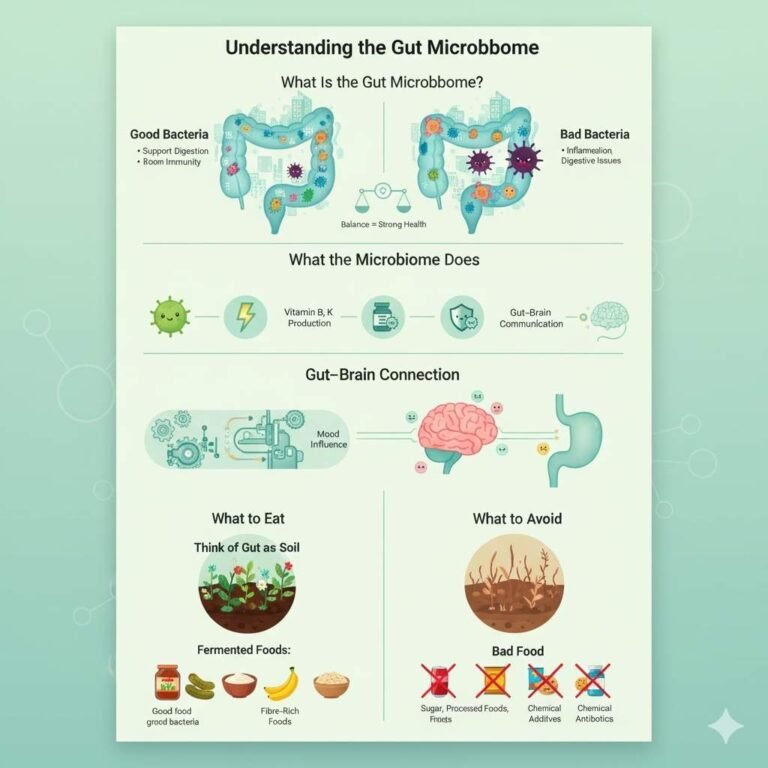
The gut microbiome means all the tiny living things inside your intestines. Bacteria, fungi, and even viruses. They live together (like a crowded city) and keep their gut alive and active. Some are friendly, some are not. But balance is the key. When the good ones grow more, your digestion, mood, and immunity stay strong. When bad bacteria overgrow, problems start — bloating, constipation, or a tired mind.
So, what does this gut microbiome actually do? It breaks down food (like small machines), turning fibre into energy. It helps make vitamins B and K. It trains your immune system not to attack good cells. It talks to your brain through the vagus nerve (the long cable from gut to head).
Sometimes you feel sad or happy because of this talk — that’s the gut-brain link.
Now, imagine your gut like soil. Feed it good things, and it grows good plants. Feed junk, itrotst.
So eat fermented food (curd, kimchi, pickle in small amounts). Avoid too much sugar or chemically processed food. And keep your gut friends alive.
How Gut Bacteria Affect Your Health and Metabolism
When the balance breaks, the whole city slows. Digestion, mood, energy—all start to stumble. Many people ignore it till they feel tired, bloated, or gain weight even after small meals. Gut bacteria are not just for digestion; they also run metabolism (like engine tuning).
- Energy and Fat Burn
Good bacteria help break down fibres into fuel. They make short-chain fatty acids. That fuel keeps your cells active and helps burn fat. When bad bacteria grow more, the body stores extra fat even if you eat little.
- Blood Sugar Control
They talk to your liver and pancreas through signals. When they are in balance, sugar moves smoothly in your blood. If not, you get glucose spikes and feel hungry soon after food (like an engine missing spark).
- Mental and Mood Link
Some bacteria make serotonin—your happy chemical. Low gut health means low mood, poor sleep, and irritation. (That’s why the gut is called the second brain.)
- Immunity and Inflammation
Balanced microbes train immune cells. If the crowd changes, the body attacks itself or stays inflamed. You feel aches or skin rashes often.
The Science Behind Personalised Nutrition Plans
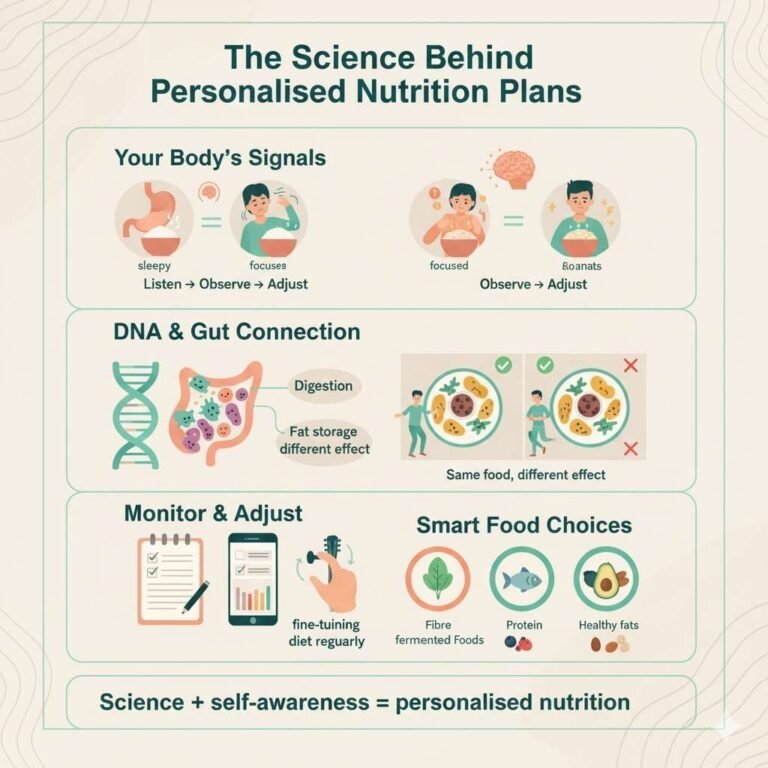
Food is like fuel, but not the same for everyone. What works for your friend may slow you down. That’s where personalised nutrition comes in—it listens to your body before feeding it.
The Science Behind Personalised Nutrition Plans
- Understand your body’s signal
Start noticing. When do you feel light or heavy after food? (Example: rice makes some sleepy, oats keep others sharp). Personalised plan: read these signals. Then match them with real data, like blood sugar or gut test.
- DNA and gut talk
Science now can see how genes and bacteria in your gut handle food. Some people burn fat faster, some store it. That’s why a one-size diet fails. A nutrition plan built on your DNA and gut type balances energy better.
- Monitor and adjust
No plan is fixed. The body changes with stress, sleep, and age. Use small tracking—write what you eat, note how you feel after. Then adjust the plate again. (Think like tuning a musical instrument every few days.)
- Smart food choice
Focus on active ingredients—fibre for gut, protein for repair, good fats for brain. But take them in your way. That’s personalised nutrition—science plus daily awareness.
How Gut Testing Works
When your belly keeps troubling you, the answer may hide inside the gut itself. Gut testing is like opening a secret logbook of your digestion—telling what really happens inside.
How Gut Testing Works
- Collect the sample (your stool mostly)
Use the given kit at home. Follow the steps. Take the stool sample (yes, it’s that simple, but keep it clean). Store it in the container that comes with the kit.
- Send it to the lab
Pack and courier it as instructed. The lab machine will check for bacteria types, yeast level, parasites, and even inflammation markers.
- DNA or Microbiome analysis
Now, this part is more high-tech. The lab extracts DNA from gut microbes and matches with known species (like detective work). It shows which bacteria support digestion and which ones may cause bloating or skin issues.
- Get your report
You will see names of microbes, sugar digestion ability, fibre breakdown level, and gut inflammation index (like a health score).
- Plan your fix
Based on results, adjust diet, add fibre, or take probiotics. Test again after a few months to check improvement.
Key Benefits of Gut-Based Nutrition
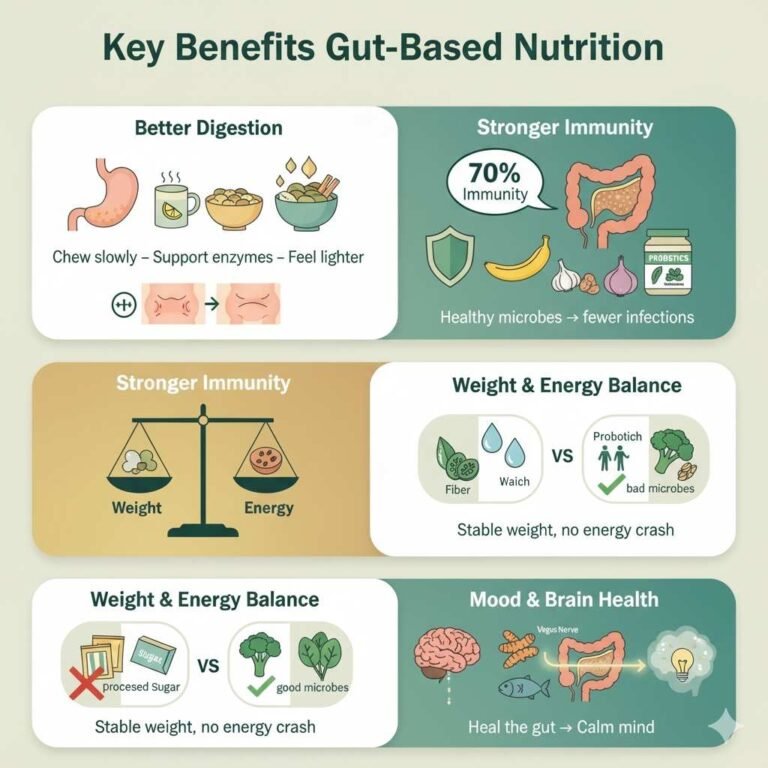
Gut is your second brain — treat it right, and the whole body starts to glow. Most people eat for taste only, forgetting that digestion starts with what we put on the plate. Gut-based nutrition focuses on feeding good bacteria with natural foods — fibres, fermented things, and herbs. Do not chase diet fads. Just clean eating, mindful chewing, and listening to gut signals (yes, your body speaks too).
Better Digestion
Eat slowly, chew more. Start the morning with warm water and a small lemon pinch (wake up the gut). Add fermented food like curd, kefir, and sauerkraut. This kind of food helps enzymes work better. Belly feels light, not bloated. Stool becomes easy too.
Stronger Immunity
70% of your immunity sits in your gut wall. Feed it well. Take prebiotics from bananas, onions, garlic. Add probiotics daily. When gut bacteria live happily, cold and flu come rare.
Weight and Energy Balance
When the gut balance breaks, fat sticks and energy drop. So reset system with fiber-based meals and water intake. Avoid processed sugar (it kills good microbes). You will notice steady weight and no afternoon crash.
Mood and Brain Health
The gut talk to the brain all day through vagus nerve. So, heal gut to calm mind. Eat omega-3 food, turmeric, and green leafy. You will feel less anxious, more focused (like brain fog went away).
Foods That Support a Healthy Gut
When your gut feels noisy, heavy, or tired — it’s a sign. The belly is talking. Feed it right and it will calm down, make your mood bright, and your body strong from the inside.
Foods That Support a Healthy Gut
- Yoghurt (the live one)
Take yoghurt daily. Not the sugary one. Choose plain yoghurt with live cultures. It has good bacteria that settle in your belly and help digestion. Eat in the morning or after lunch. If milk bothers you, try curd water (lassi style).
- Banana (the gentle fruit)
Banana soothes the stomach. It gives fibre and easy energy. Eat ripe one. It helps with loose motion and also when the tummy feels acidic. Keep 1 banana a day—it’s safe and simple.
- Fermented foods (the natural healer)
Include pickles, idlis, dosa batter, or kefir. Fermentation grows friendly microbes. They clean up your intestinal path like small sweepers. Don’t overdo spicy ones (they irritate the lining).
- Garlic and ginger
Use raw or cooked. Both fight harmful bacteria. They also increase stomach fire (agni). Mix with warm water or add while cooking.
- Oats and leafy greens
Fibre makes the bowel move gently. Add oats in breakfast, spinach or methi in lunch. This feeds the good gut bacteria (their favourite food).
Future of Nutrition: AI, DNA & Microbiome Integration
The future of nutrition is not far. It’s already walking to your kitchen with data and DNA.
AI Knows What You Need
- Start watching how AI apps track your meals and moods.
- It not only counts calories but also predicts cravings (yes, that late-night sugar call).
- Use it daily, and you see a pattern—AI tell when your body needs more protein or rest.
DNA Tell Your Nutrition Story
- Send a cheek swab, get a whole diet map.
- Some DNA show slow digestion or needs more.
- Follow this map; it balances your food in a natural way (no guessing game).
Microbiome Acts Like a Garden in the Belly
- Feed it right. Think of gut like soil—it grows good bacteria when you eat fibre and fermented food.
- Avoid too much junk; it spoils the inner garden.
- One day, your nutrition app may adjust meals from gut data in real time (amazing, right?).
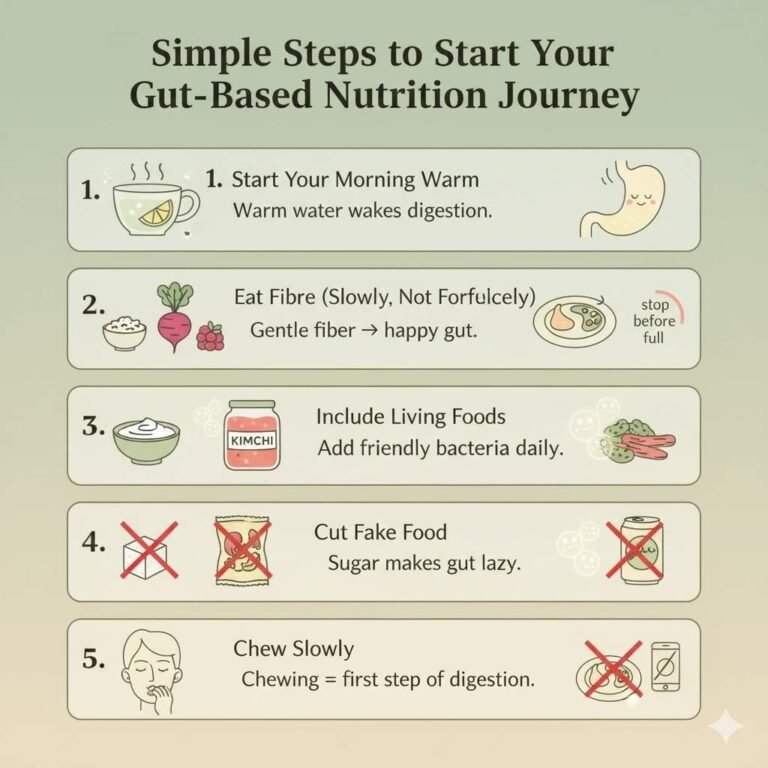
Simple Steps to Start Your Gut-Based Nutrition Journey
Listen to your gut first before you listen to the scale. Good digestion is not a diet trend; it’s your body whispering how healthy you really are. When the gut is balanced, the mind feels lighter, skin looks clear, and food gives energy instead of gas or bloating. So start slow and simple. (Don’t rush this part, your gut hates sudden shock.)
Simple Steps to Start Your Gut-Based Nutrition Journey
- Start your morning warm
Drink warm water with lemon or a little salt. Wake up stomach gently. This prepares it for real food.
- Eat fibre but not forcefully
Choose fruits, beetroot, oats, or a tiny portion of fermented rice (if you eat local). Stop before full.
- Include living food
Add yoghurt, pickle, or fermented veggies (like homemade curd). These add friendly gut bacteria.
- Cut the fake food
Avoid too much sugar and fried snacks. Gut becomes lazy with that.
- Chew slowly
This small act helps digestion more than any supplement. Don’t scroll while eating.
Frequently Asked Questions
- It means diet made for you, not everyone.
- Experts study your gut microbes (the small living things in digestive tract).
- Then they say what foods support good bacteria and stop bad one.
- Do stool test (simple kit you send to lab).
- Report show which bacteria strong, which weak.
- You also mark daily mood, sleep, and food habit.
- They digest fiber, make vitamins, and control inflammation.
- Poor gut means bloating, low energy, sugar crave.
- Good gut mean calm mind and shiny skin (yes, that too).
- Start with fermented foods like curd and kimchi.
- Eat more prebiotic fiber like banana, garlic.
- Avoid too sweet, too oily things (they kill good bacteria).
- People with IBS, constant tiredness, or mood swing.
- Also if usual diets not work for you.
- Science moving from “one-size diet” to “your bacteria’s diet.”
- So your gut become the real nutrition coach inside you.
Check out these related articles to expand your knowledge:
Build better routines with 10 Daily Habits to Extend Your Healthspan in 2025.
Strengthen your aging process through Science-Based Longevity Protocols for Optimal Aging.
Discover smart nutrition support in Best Longevity Supplements.
Dive into holistic rejuvenation with Anti-Aging Wellness.
Improve your body from the inside out with Cellular Health Optimization.
Manage daily tension using 5 Natural Stress-Busting Techniques.
Learn effective coping methods in Stress Management Solutions.
Reclaim focus and balance with Digital Detox Guide.
Calm your mind naturally through Natural Anxiety Relief.
Start mindful living with Mindfulness for Stress Relief.
Fuel your body with Functional Nutrition.
Transform your well-being from the gut up with Gut Health Revolution.
References
Afzaal, M., Saeed, F., Shah, Y. A., Hussain, M., Rabail, R., Socol, C. T., Hassoun, A., Pateiro, M., Lorenzo, J. M., Rusu, A. V., & Aadil, R. M. (2022). Human gut microbiota in health and disease: Unveiling the relationship. Frontiers in Microbiology, 13, 999001.
Fan, Y., & Pedersen, O. (2021). Gut microbiota in human metabolic health and disease. Nature Reviews Microbiology, 19(1), 55-71. https://doi.org/10.1038/s41579-020-0433-9
Iacomino, G., Aiello, A., & Testa, F. (2024). Editorial: Personalized nutrition and gut microbiota. Frontiers in Nutrition, 11, 1375157. https://doi.org/10.3389/fnut.2024.1375157
Kolodziejczyk, A. A., Zheng, D., & Elinav, E. (2019). Diet–microbiota interactions and personalized nutrition. Nature Reviews Microbiology, 17(12), 742-753. https://doi.org/10.1038/s41579-019-0256-8
Kviatcovsky, D., Elinav, E., & Kolodziejczyk, A. A. (2021). Gut microbiome and its potential link to personalized nutrition. Current Opinion in Biotechnology, 70, 52-58. https://doi.org/10.1016/j.copbio.2021.03.003
Martin, A. M., Sun, E. W., Rogers, G. B., & Keating, D. J. (2019). The influence of the gut microbiome on host metabolism through the regulation of gut hormone release. Frontiers in Physiology, 10, 428. https://doi.org/10.3389/fphys.2019.00428
Rowland, I., Gibson, G., Heinken, A., Scott, K., Swann, J., Thiele, I., & Tuohy, K. (2018). Gut microbiota functions: metabolism of nutrients and other food components. European Journal of Nutrition, 57(1), 1-24. https://doi.org/10.1007/s00394-017-1445-8
Sarfraz, M. H., Barker, T., Nadeem, M., Ashraf, M., Rashid, A., & Ahmad, N. (2022). Personalized nutrition, microbiota, and metabolism: A triad for eudaimonia. Frontiers in Molecular Biosciences, 9, 1038830. https://doi.org/10.3389/fmolb.2022.1038830
Simon, M. C., Palmnäs, M., Khalil, H., Venkatesh, S., Seethaler, B., Haller, D., & Daniel, H. (2023). Gut microbiome analysis for personalized nutrition: The state of science. Molecular Nutrition & Food Research, 67(1), 2200476. https://doi.org/10.1002/mnfr.202200476
Song, E. J., & Shin, J. H. (2022). Personalized diets based on the gut microbiome as a target for health maintenance: From current evidence to future possibilities. Journal of Microbiology and Biotechnology, 32(12), 1497-1505. https://doi.org/10.4014/jmb.2209.09025
Vandeputte, D., Falony, G., Vieira-Silva, S., Wang, J., Sailer, M., Theis, S., Verbeke, K., & Raes, J. (2017). Prebiotic inulin-type fructans induce specific changes in the human gut microbiota. Gut, 66(11), 1968-1974. https://doi.org/10.1136/gutjnl-2016-313271
Xie, H., Guo, R., Zhong, H., Feng, Q., Lan, Z., Qin, B., Ward, K. J., Jackson, M. A., Xia, Y., Chen, X., Chen, B., Xia, H., Xu, C., Li, F., Xu, X., Al-Aama, J. Y., Yang, H., Wang, J., Kristiansen, K., Wang, J., & Jia, H. (2016). Shotgun metagenomics of 250 adult twins reveals genetic and environmental impacts on the gut microbiome. Cell Systems, 3(6), 572-584. https://doi.org/10.1016/j.cels.2016.10.004
Zeevi, D., Korem, T., Zmora, N., Israeli, D., Rothschild, D., Weinberger, A., Ben-Yacov, O., Lador, D., Avnit-Sagi, T., Lotan-Pompan, M., Suez, J., Mahdi, J. A., Matot, E., Malka, G., Kosower, N., Rein, M., Zilberman-Schapira, G., Dohnalová, L., Pevsner-Fischer, M., Bikovsky, R., … & Segal, E. (2015). Personalized nutrition by prediction of glycemic responses. Cell, 163(5), 1079-1094. https://doi.org/10.1016/j.cell.2015.11.001
Zhou, W., Chow, K. H. M., Fleming, E., & Oh, J. (2023). The influence of an AI-driven personalized nutrition program on the gut microbiome of healthy individuals: A randomized controlled trial. Nutrients, 15(8), 1867. https://doi.org/10.3390/nu15081867
Zmora, N., Suez, J., & Elinav, E. (2019). You are what you eat: Diet, health and the gut microbiota. Nature Reviews Gastroenterology & Hepatology, 16(1), 35-56. https://doi.org/10.1038/s41575-018-0061-2