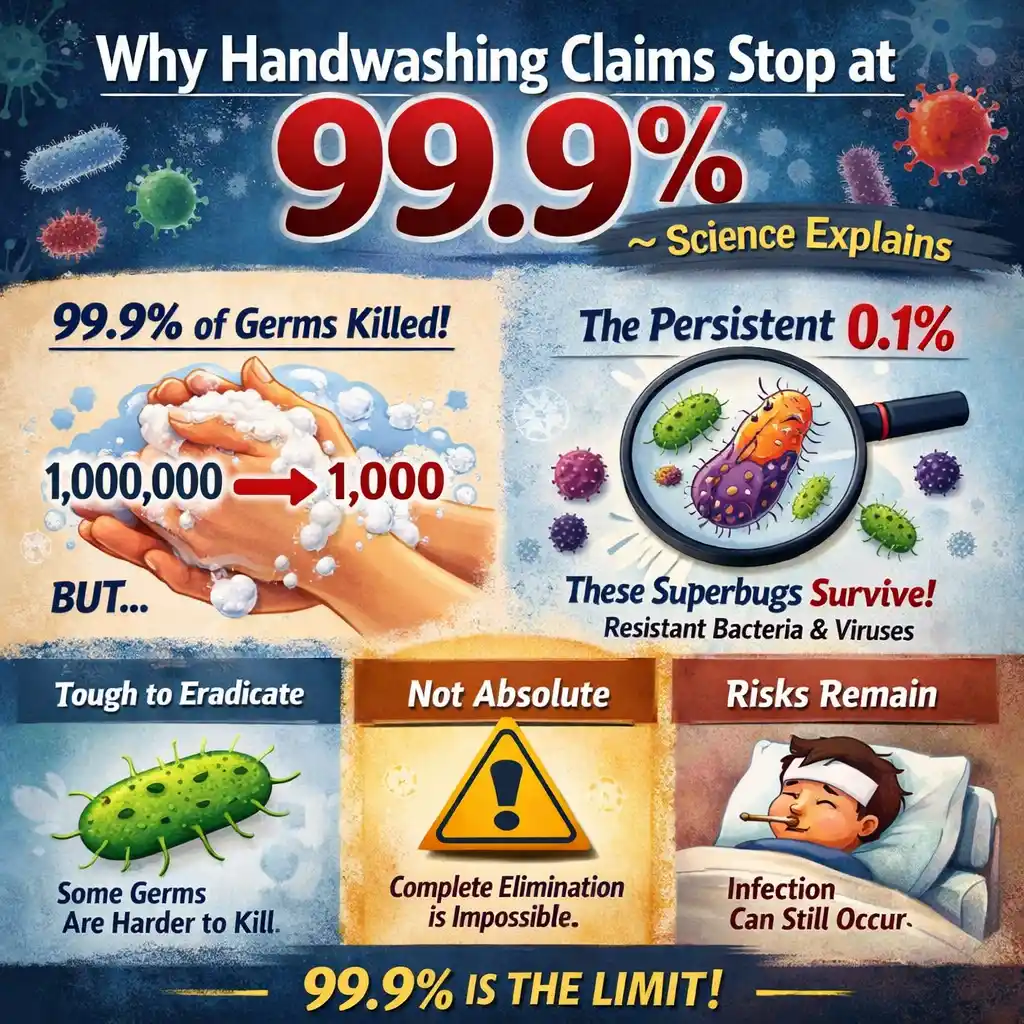
Ever noticed that soaps promise to kill 99.9% of germs, but never 100%? That small gap often makes people curious. The reason is simple: removing every single germ is almost impossible in real life.
Handwashing science shows that skin has tiny lines and pores where some germs can stay hidden. Even strong soap germ removal cannot reach every spot. Also, testing methods cannot measure every last germ with perfect accuracy.
Another reason behind the 99.9% germs meaning is safety. Products must stay gentle on the skin, and some helpful bacteria naturally live on it. Health experts and microbiology research agree that reducing 99.9% is more than enough for daily protection.
Table of Contents
ToggleTL;DR:
Soap labels say “99.9% germ removal” because eliminating every single microbe in real-life conditions is nearly impossible. Tiny skin folds, oils, and under-nail areas can shelter small numbers of germs, and testing methods measure reduction rather than absolute zero. Importantly, complete sterilisation isn’t necessary—removing 99.9% of germs dramatically lowers infection risk, especially when hands are washed thoroughly for about 20 seconds with proper technique.
- Geography: Your hands have “valleys” (pores/lines) that soap can’t always reach.
- Law: “100%” is a legal nightmare if someone gets sick.
- Biology: You actually need some of those “resident” germs to stay healthy.
What “99.9% Germ Removal” Actually Means?
Numbers like “99.9% germ removal” often sound absolute, but they describe results seen in controlled testing. The germ reduction meaning reflects a statistical drop under set conditions, based on public-health testing standards used by organisations like the World Health Organisation.
Laboratory Testing vs Real-World Hands
Testing begins on clean, smooth surfaces where scientists control the type and amount of bacteria. Real hands have oils, folds, and dirt, so the real-world handwashing effectiveness may vary from the lab-measured handwash effectiveness rate.
Understanding Percentage Reduction in Simple Terms
Imagine one million germs before washing and about one thousand after washing. That drop represents the bacteria reduction percentage, showing strong soap effectiveness science even though some germs remain.
Why Measuring Absolute Zero Germs Is Nearly Impossible
Detection tools cannot always measure extremely tiny amounts, making zero bacteria claims unrealistic.
Takeaway: “99.9%” signals a major reduction, not a complete removal.
The Hidden “Hiding Spots” on Human Skin
Human skin may look smooth, but it is full of tiny folds and pockets where germs can stay. Even careful washing can miss some of these spots, which is why cleaning habits need extra attention.
Fingerprints and Skin Lines as Micro-Valleys
Close inspection of fingerprints shows narrow ridges that act like small valleys. These skin lines hold moisture and germs in skin creases, creating common bacteria hiding places hands often overlook during quick washes or rushed rinsing each day, easily too.
Dirt and Oils That Shield Germs
Natural hand oils mix with dust from daily tasks, forming a thin coating that protects microbes. This layer can limit how well soap touches the skin microbiome surface, explaining some handwashing limitations when hands are not rubbed long enough properly.
Under Nails — The Most Missed Area
Nails quietly collect dirt after cooking, typing, or travelling, making bacteria under fingernails harder to remove. Without gentle scrubbing around nail edges and beds, soap flows past these pockets, leaving hidden germs that return to the fingers soon again daily.
Careful washing that includes knuckles, nail tips, and longer rubbing time helps reduce germs, even though completely removing every microbe is rarely possible at home.
Why Companies Rarely Claim 100% Germ Elimination?
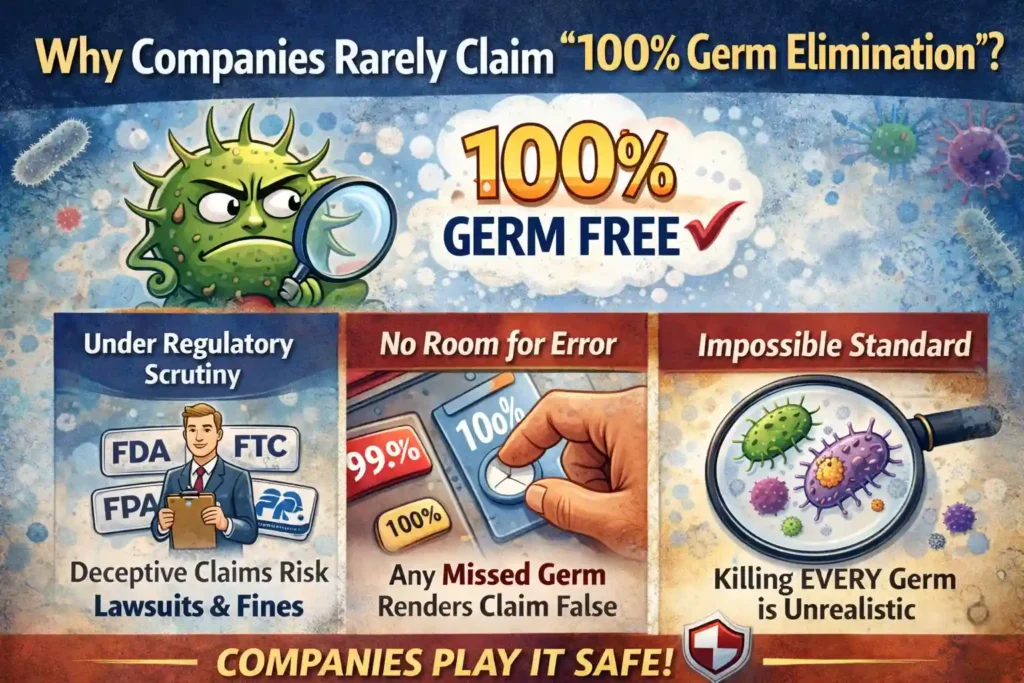
Companies often choose the familiar “99.9%” statement because real-world use, safety rules, and testing limits make absolute promises risky. Understanding the 99.9% marketing claim reason helps consumers see how product safety regulations germ claims are carefully controlled.
Scientific Variability in Real-Life Conditions
Daily handwashing rarely happens under identical conditions. Washing time, water temperature, and rubbing style differ from person to person, and these human washing differences affect results. Because washing variability effectiveness changes, claiming complete elimination would not remain accurate for everyone.
Legal and Regulatory Safety Margins
Government guidelines require clear and measurable promises in advertising germ-kill claims. Under product claim regulations, germ kill rules, companies must ensure statements remain true in many situations. Promising reduction rather than perfection helps meet advertising compliance hygiene product standards.
Manufacturing Consistency and Testing Limits
Even carefully produced batches may show tiny differences. Product testing tolerance limits and soap efficacy consistency checks encourage careful wording, so brands avoid absolute numbers.
Takeaway: The “99.9%” message reflects scientific reality, careful testing, and consumer safety, making claims more reliable and trustworthy.
The Role of the Natural Skin Microbiome
Human skin is home to a tiny living world that quietly supports health every day. Understanding the skin microbiome’s importance helps explain why gentle care, not total germ removal, keeps skin balanced and strong.
The “Resident” vs “Temporary” Germ Difference
Some microbes stay on the skin for long periods, while others arrive only after touching surfaces. These resident skin bacteria vs transient bacteria form different skin microbiome categories. Resident microbes live deeper in pores and return quickly even after washing, while temporary germs are easier to remove.
How Helpful Bacteria Protect the Skin
The beneficial bacteria on the skin act like friendly guards. They take up space, limiting the growth of harmful microbes, and support natural immune reactions. Research highlighted by the American Academy of Dermatology shows that natural skin defence microbes help maintain calm, healthy skin.
Why Complete Sterilisation Would Not Be Healthy
Trying to remove every microbe creates over-sanitisation risks. Without these helpful organisms, the skin’s natural protection weakens, increasing irritation and imbalance.
Myth: All microbes are harmful.
Fact: Many microbes are essential partners in healthy skin.
The “Last 0.1%” — Why Removing the Final Germs Is Hardest
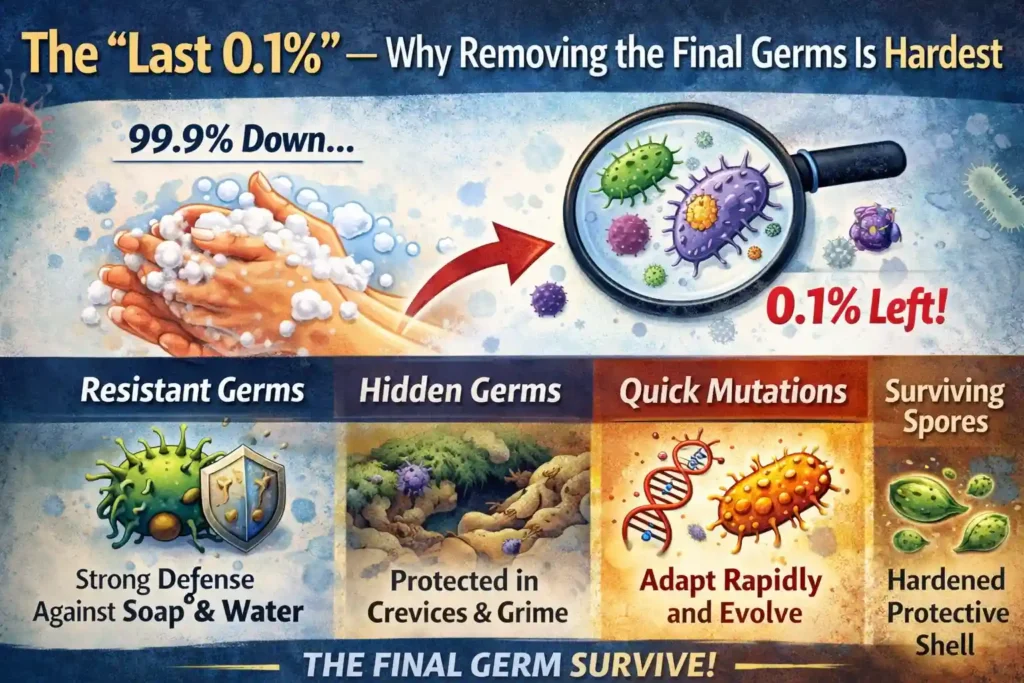
Even after careful scrubbing, a tiny fraction of microbes can remain on the skin. Understanding why germs survive washing helps explain why repeated, thorough cleaning matters for lowering everyday infection risks around homes and public places.
Probability and the “Crowded Room” Effect
Imagine trying to find the last few people in a huge crowd; that is how germ survival probability works. Most microbes sit on open surfaces and wash away quickly, but hidden ones stay in skin lines or under nails. Microbiology reduction models show that removing each remaining microbe becomes harder as numbers shrink.
Washing Technique Often Determines the Remaining Percentage
Small gaps in routine often explain resistant bacteria survival and handwashing results. Short rinsing time, skipped thumbs, or weak soap coverage leave protected spots. Extending proper handwashing duration to about twenty seconds, rubbing between fingers and around nails, greatly reduces the final percentage. The takeaway: careful technique, not just soap, clears the stubborn leftovers.
Why 99.9% Germ Reduction Is Still Highly Effective for Health?
Even when soap removes 99.9% of germs, the remaining tiny fraction rarely causes harm because the body handles small exposures well. Health experts, including the World Health Organisation, strongly encourage regular handwashing.
Infection Risk Drops Dramatically After Washing
After washing, the number of germs on the skin falls sharply, leading to a strong hygiene infection. With fewer microbes moving between surfaces and people, the chance of catching stomach bugs, colds, and flu drops significantly.
Proper Technique Can Close Most of the Remaining Gap
Following effective handwashing steps helps close the small remaining gap. Washing hands correctly for about 20 seconds, cleaning nails, thumbs, and between fingers, strengthens the effectiveness of soap hygiene and supports disease prevention through handwashing.
Keeping this simple habit before meals, after travel, and after using shared items delivers clear handwashing health benefits and protects families daily. Consistent practice builds long-term protection for communities over time and supports safer everyday living.
Conclusion: The Science Behind the 99.9% Claim
Soap labels showing “99.9% protection” often raise questions about what they truly mean. This brief hand hygiene science summary explains why soap claims 99.9%, how testing works, and why regular washing still matters daily.
Lab tests measure germs on smooth surfaces, but human skin has folds, oils, and helpful microbes, so results vary. This soap effectiveness explanation shows the claim reflects testing limits, microbiome balance, and safety rules set by health bodies such as the World Health Organisation. Following trusted guidance and washing hands properly remains one of the simplest ways to prevent illness. Regular practice protects families and communities.
Read More: Tai Chi and Qigong
Frequently Asked Questions About the 99.9% Germ Claim
Surviving germs are usually hiding in spots like under nails or skin folds, not becoming stronger. Careful scrubbing and longer washing usually remove most of these missed areas.
True 100% removal needs medical-level sterilisation tools and controlled spaces. Every day, hand washing focuses on making hands clean enough for normal daily safety.
Many sanitisers show the same 99.9% figure because they are tested under similar conditions, where real-life use always includes small variations.
After proper washing, the tiny amount left is usually too small to cause illness, especially for healthy people with normal immune protection.
Washing for 20 seconds, cleaning thumbs and nails, and drying hands well can remove even more germs, even if product labels still state 99.9%.
References
Centers for Disease Control and Prevention. (2023). Handwashing: Clean hands save lives.
World Health Organization. (2020). WHO guidelines on hand hygiene in health care.
Grice, E. A., & Segre, J. A. (2011). The skin microbiome. Nature Reviews Microbiology, 9(4), 244–253.
Larson, E. L., Lin, S. X., & Gomez-Duarte, C. (2004). Effectiveness of alcohol-based gels versus hand soap in reducing transient flora on hands. Infection Control & Hospital Epidemiology, 25(5), 400–402.