
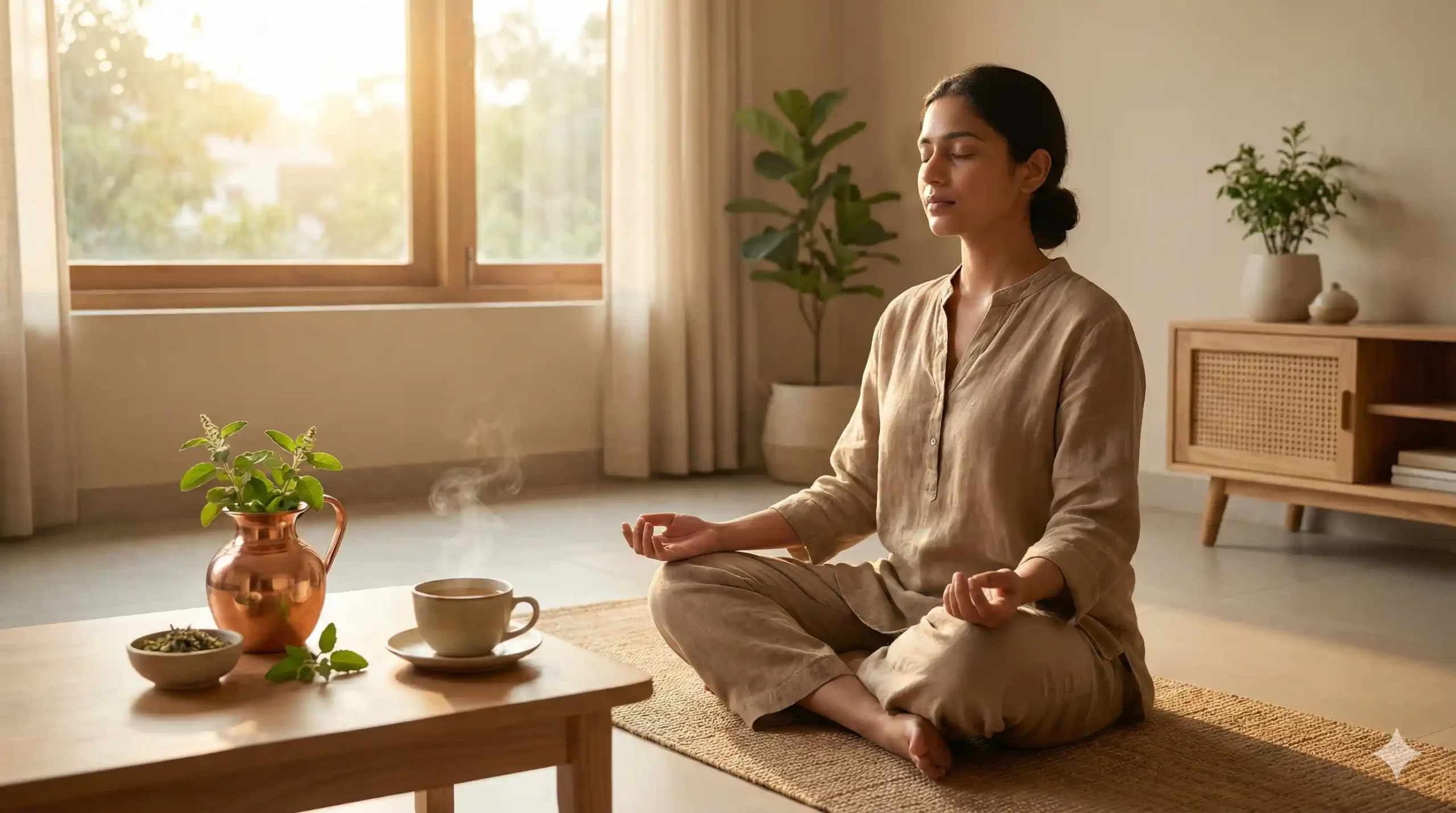
Many people search daily for a perfect Ayurvedic morning routine for energy. And still, they wake up tired, like sleep was not enough. You know that feeling when the alarm rings and the body feels heavy, the mind foggy, no spark to start the day. It happened because the body clock lost its natural rhythm.
Morning should feel fresh, like early rain touching dry land. But most people jump straight to phone, strong tea, or scroll through the news. The prana drops, digestion becomes slow, and even the heart burns come later. Some say they eat well yet still feel dull before noon. That’s the body telling it lost balance.
Ayurvedic morning is not about fancy rituals or many oils. It is about connecting with the simple flow of nature — light movement, silent breathing, warm sunlight. When this is missing, the day starts with a rush, not with energy, and you feel that emptiness growing through time.
Table of Contents
ToggleWhy Ayurveda Emphasises Early Rising for a Balanced Life
In an Ayurvedic lifestyle, you wake up before sunrise to feel Brahma muhurta benefits.
Align with nature
Rise in brahma muhurta (about 90 minutes before sunrise). Match the sun. Set your inner clock. The wind is quiet, like a calm lake. Think clearly, then plan your day.
Sharpen digestion
Drink warm water. Move bowels. Light walk. Kindle agni. If you wake late, digestion slows, and cravings grow.
Stabilize mood
Sit for pranayama and a simple mantra. Breathe like pulling a bowstring. Calm vata. Anxiety drops. Decisions feel easy.
Build discipline
Do the same steps daily. Small wins stack. You train willpower like a muscle.
Improve sleep
Sleep early. Wake light. Evening hunger stays soft, not wild. The body resets, and dreams settle.
Practical start
Tonight, set the alarm 20 minutes earlier. Prepare water and a mat. Open the window a little, then stand tall, as if to support the sky. You should try for seven days.
Cleansing Rituals to Begin Your Day the Ayurvedic Way
Start your morning detox the Ayurvedic way. Wake, sit, stay quiet for one minute. Feel breath like waves. Then begin simple cleansing. Respect the body, and it respects you. You should be gentle.
Remove night toxins
Use tongue scraping. Stand tall, scrape from back to front, 7 times. See the coating go, like wiping fog from glass. Brush after. Spit and rinse.
Protect the mouth and gums.
Do oil pulling with 1 tsp of sesame or coconut oil. Swish gently 5 to 10 minutes, as if oil hugs gums like a coat. Do not swallow (do it before breakfast).
Clear nose and head
Apply 2 drops of nasya oil in each nostril. Sniff in. Massage around the sinuses. Breathe easy. Head feels light, focus sharper.
Wake digestion fire
Drink warm water with a squeeze of lemon. Sit for bowel movement. Then move joints, like oiling a rusty door. Now you are ready for the day.

The Power of Pranayama and Deep Breathing in the Morning
Use pranayama for energy, support kapha balance, and practice morning breathing exercises to start clean. Breathe before screens. Sit tall, chin soft. Place hands on the belly and chest. Feel breath like a tide coming and going.
Wake the Mind
Do 10 slow belly breaths. Inhale like filling a balloon. Exhale longer, as if fogging a mirror. This switch on focus and steadies nerves.
Build Heat, Clear Kapha
Practice Kapalabhati. Sit steady. Snap belly in on exhale, let inhale come. Start 30 pumps, then rest. Do 2 rounds. It dries the heaviness and lifts the mood.
Raise Energy, Not Panic
Try box breathing. Inhale 4, hold 4, exhale 4, hold 4. Repeat 5 cycles. Feel like holding a cup of warm tea, not spilling.
Open Chest, Aid Digestion
Do 5 deep breaths with arms wide, then hug your ribs. Walk for 2 minutes (gentle pace). Heartburn reduces, and the gut wakes up.
Simple Yoga Asanas to Activate the Body and Mind
Use yoga for energy with gentle sun salutations in an ayurvedic yoga routine.
Start simple and steady, and it wakes the body and mind. Breathe nasal and move slowly.
Warm the engine
Stand tall. Inhale and sweep arms up as if to support the sky. Exhale and fold like a rag doll. Step back, hold plank, then knees-chest-chin. Cobra small, then down dog. Flow 3 suns.
Switch on breath
Sit easy. Close eyes and lengthen exhale to a count of 6, then inhale 4. Keep ribs soft as if holding onto an egg. Do 6 rounds (do 4–6 rounds). Feel chest wide and calm.
Stabilise the mind
Stand, feet apart. Sink into the Chair, hips back, spine long. Press heels and lift arms. Stare at one point, and count ten slow breaths. Finish in Tree for balance, then rest in simple Shavasana. Feel clear and ready for the day. Drink warm water after practice.
Start with Herbal Teas Instead of Caffeine
Start today with ayurvedic herbal tea, tulsi tea, or ginger tea for caffeine-free energy. Swap your morning coffee. Feel steady and kind, not jittery. Brew simply. Add hot water, wait, then sip slowly.
Gentle energy, fewer crashes
Choose Tulsi in the morning. It lifts mood and focus, and keeps the heart steady. Work like a soft sunrise, not a spotlight. Take one cup, then notice your breath.
Soothe digestion and throat.
Use ginger tea after meals. It warms the belly and cuts bloating. Think of it like a small inner heater. Add lemon or honey if you like.
Calm stress, support sleep.
Drink tulsi or chamomile in the late evening. Put the phone away, then hold the mug like an egg (no tight grip). Let shoulders drop, like a rag doll.
Hydrate and build a habit.
Keep a thermos on the desk. Refill. Small sips all day. Two cups replace one coffee, so you win.

Nourishing Breakfast According to Ayurvedic Doshas
For vata pitta kapha breakfast ideas, choose warm foods in your ayurvedic diet plan to wake, ground, and balance. Eat early and sit straight. Chew slowly like you polish a spoon. Build plates that feel gentle, then adjust according to your morning state.
Vata: Warm and Oily
Take soft porridge with ghee, stewed apple, and cinnamon. Sip ginger tea and then breathe deep. Avoid crunchy and cold (skip iced smoothies). Add nut butter as if holding an egg—firm but soft.
Pitta: Cool and Sweet
Choose soaked rice flakes with coconut, ripe mango, and cardamom. Drink warm water, not hot. Add chia or milk to soothe like a shade tree. Keep spices mild and avoid sour, fried, and overly salty.
Kapha: Light and Spicy
Lift heaviness. Toast millet or ragi upma with mustard seeds, black pepper, and greens. Take lemon-ginger tea, and move after—walk 10 minutes. Keep portions small, and prefer dry, warm, lively crunch.
Sunlight Exposure and Its Role in Vitality
Use morning sunlight for vitamin D and a natural energy boost. Step outside early, breathe, and let the light touch your skin. The sun does more than light. It sets your rhythm and wakes your cells.
Build vitamin D
Expose face, arms, and legs for 10–20 minutes. Darker skin needs longer. Example: a short walk after sunrise.
Reset body clock
Look to the horizon, not your phone. Keep morning light same time daily. Like charging a battery.
Lift mood and focus
Light hits the eyes, brain makes serotonin. You feel calmer and think faster. Many people report less heartburn.
Support sleep hormones
Morning rays raise cortisol early, then melatonin comes on time at night. Sleep gets deeper.
Morning Mindfulness – Calm Focus Before the Day Begins
Your morning meditation routine builds mindfulness for clarity and supports ayurvedic mental health. Sit before screens. Spine tall, chin soft. Breathe slowly, like sipping warm tea. Count 4 in, 6 out.
Calm the nervous system.
Close eyes. Drop shoulders like a rag doll. Exhale longer than inhale. Feel the heartbeat settle, then the mind follows.
Prime focus and energy
Scan the body from top to toes. Name two tasks for today, no more. See them done. Hold attention as if holding onto an egg.
Reduce stress reactivity
Notice a worry. Label it “thought,” not truth. Let it float away like a leaf on water. Return to breath.
Align body and breath.
Rub palms. Warm eyelids. Stretch arms as if to support the sky. Stand, ground feet, and smile (set a 3-minute timer).
Support ayurvedic balance
Drink warm water. Sit east-facing if possible. Keep breath nasal. Wake at sunrise, then practice daily. Mind grows steady.

Avoiding Common Morning Mistakes That Drain Energy
Morning habits to avoid include late waking and unhealthy routines that steal your spark. Start clean and simple. Set a small plan, then follow it. Breathe slow, like you plug into a charger.
Hit snooze
Stop snoozing. Sit up on the first alarm. Put feet down, then stand. Drink water and let light hit your eyes.
Scroll in bed
Do not scroll. Phone pulls energy like a leaky tap. Move the body first, then check it.
Skip protein
Eat protein early. Add eggs, dal, or curd. Keep caffeine after food.
No movement
Move joints, as if oiling a door. Do ten slow squats and arm circles.
Heavy mental load
Avoid big decisions now. Use a tiny checklist (set two alarms). Save deep work for later.
Dark room
Open curtains. Step to the sun like a plant. If dark, use bright, white light. Then drink water again and breathe deep, like a calm wave. Now.
Herbal Supplements That Support Morning Vitality
Ashwagandha, triphala, and ayurvedic herbs for energy help build calm, steady mornings. Use them with simple habits. Drink water, open curtains, breathe slowly. Each day.
Reduce Stress Load
Take ashwagandha at night for deeper sleep, and in the morning if the mind runs fast. It steadies cortisol and mood. Feel grounded, like a rock in a soft river. Start with 300 mg.
Support Gut, Clear Waste
Use triphala before bed. It moves bowels, eases bloating, and lightens the belly by dawn. You wake clear, not heavy. Brew as tea or take 1–2 tablets.
Spark Clean Energy
Choose tulsi, shatavari, or ginger. They warm the core and open the breath. Sip ginger-tulsi tea, then walk 10 minutes. Rise slowly, like a sunrise.
Dose, Safety, Timing
Start low, then adjust. Take with warm water (avoid on an empty stomach if it upsets you). Check meds, and avoid in pregnancy without a doctor. Stop if palpitations or loose stool occur.

How to Personalise Your Ayurvedic Morning Routine
Start a dosha-based routine at dawn with a simple vata pitta kapha guide for lifestyle customisation. Notice your body, then act. Keep it steady.
Read your signs
Check tongue, skin, and energy. Dry, crackly, anxious = vata high. Oily, hot, sharp = pitta. Heavy, sleepy, sticky = kapha. Then pick tools to balance, not match.
Match the season
Cold morning? Add warmth and oil. Hot day? Cool water splashes and shade. Humid or cloudy? Go light, dry, brisk. Think opposite, like placing a cool cloth on a hot pan.
Move and breathe
For vata, sway like a rag doll. Slow sun salutations. For pitta, glide as if holding onto an egg. Cooling breath. For kapha, pick pace, sweat, and nasal breathe.
Eat and hydrate
After elimination, sip water (use warm water). Vata: porridge with ghee. Pitta: soaked almonds, sweet fruit. Kapha: ginger tea, lean protein. Stop before heavy. Leave three fingers of space.
Long-Term Benefits of Following an Ayurvedic Morning Routine
Improved immunity, stable energy, and holistic wellness grow when you follow an Ayurvedic morning routine. You should do it daily, in small steps. I have been doing it for years, and the results stay.
Cleanse and Hydrate
Wake early. Rinse mouth, scrape tongue, then drink warm water with a squeeze of lemon (avoid if mouth ulcers). Flush the night waste, so the gut starts clean.
Wake Digestive Fire
Sip ginger or cumin tea. Breathe deep into the belly, 10 times. Feel the heat like a small stove. Then eat a simple breakfast, not heavy.
Oil and Move
Massage a little oil on the joints. Roll shoulders. Stretch spine, like a cat. Walk 10 minutes in light.
Calm Mind and Nerves
Sit. Close eyes. Inhale 4, hold 2, exhale 6. Chant. Keep the phone away. Let thoughts drop like sand.
Build Daily Resilience
Set intention. Keep the same wake time. Take sunlight on the face. Your energy stays even, and sickness visits less now.
Frequently Asked Questions
Wake before sunrise. Scrape tongue, brush, and rinse. Sip warm water, add a squeeze of lemon or plain. Move bowels. Stand, breathe deep, and stretch arms as if to support the sky. Feel light and awake.
Do 6–12 Surya Namaskar. Then practice slow Nadi Shodhana. Sit tall and breathe like waves. Finish with 1 minute of Bhastrika if you are strong.
Yes, 5–10 minutes. Swish sesame or coconut oil gently, like holding onto an egg. Spit and rinse. Avoid if throat is irritated (one day skip).
Warm water. Add ginger or tulsi for Kapha. For Vata, add a few fennel seeds. Avoid iced drinks.
Eat simply. Soft khichdi, upma, or soaked almonds. Add ghee. Stop before full.
Check out latest articles
Learn how this adaptogenic root supports stress relief and vitality in Ashwagandha Benefits.
Discover the anti-inflammatory power of the golden spice in Turmeric Curcumin.
Explore the sacred herb known for its immunity and respiratory benefits in Tulsi (Holy Basil).