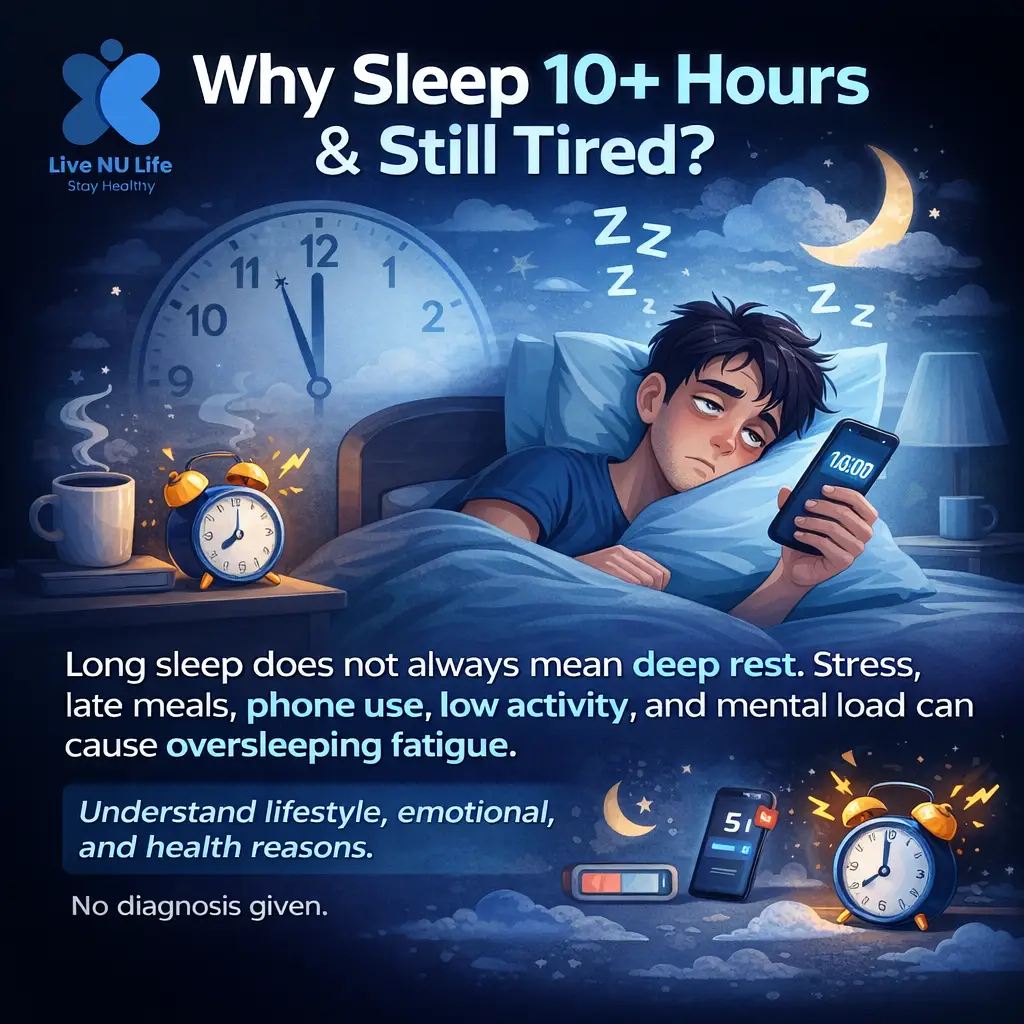
Sleeping too much and feeling tired can feel scary, especially after ten hours in bed with no energy the next morning. Long sleep does not always mean deep rest, because sleep quality and sleep stages matter more than hours overall. Stress, late meals, phone use, low activity, and mental load can cause oversleeping fatigue and make people always tired after sleep for days. This article shares common lifestyle, emotional, and health reasons, including hypersomnia symptoms, to give clarity, not a diagnosis today.
The 8-Hour Myth — Why Sleep Quantity Can’t Fix Poor Sleep Quality?
Many people feel tired even after spending hours in bed because their sleep stages are disturbed. It is not always about sleeping less; disrupted cycles of REM sleep and deep sleep stages leave the body unrefreshed. Understanding sleep quality vs quantity helps explain why a full night in bed doesn’t always mean feeling rested. Focusing on how sleep works is more important than just counting hours.
Quantity vs Quality — The Difference Most People Miss
Sleeping for eight hours does not guarantee full REM and deep sleep cycles. Waking up often or tossing and turning fragments of sleep, leaving fatigue behind. Many ignore how interruptions prevent the brain and body from completing restorative stages. True rest comes from uninterrupted cycles, not total time in bed.
Sleep Architecture Explained (Without the Jargon)
Sleep has light, deep (N3), and REM stages. Deep sleep helps clear “sleep pressure,” the chemical buildup that makes the body feel tired. REM sleep strengthens memory and mood. Missing these stages makes sleep unrefreshing, no matter how long someone stays in bed.
The Sleep Inertia Paradox
Oversleeping can increase grogginess instead of reducing it. The brain struggles to adjust when cycles are cut off or extended unnaturally. Many mistake this prolonged grogginess for low energy, while the problem is poor sleep quality. Paying attention to cycles is key to feeling truly rested.
Lifestyle Triggers That Quietly Drain Your Energy Overnight
Lifestyle fatigue often comes from simple daily habits that slowly reduce energy. Poor sleep, screen exposure, and irregular routines quietly wear the body down. Many of these issues are reversible once you know what to adjust.
Alcohol — The Silent REM Disruptor
Alcohol can make falling asleep easier, but it suppresses REM cycles even if total sleep seems long. This leads to early-morning awakenings and grogginess. Limiting alcohol before bed improves deep sleep and reduces morning fatigue.
Blue Light & Digital Fatigue
Even short screen use late at night spikes cortisol, keeping the brain alert. Constant notifications interrupt deep sleep stages, making mornings feel heavy. Using night mode or reducing screen time an hour before bed helps restore natural rhythms.
Inconsistent Sleep Schedules & Social Jetlag
Sleeping in on weekends to “catch up” can confuse the circadian rhythm. The brain and body get misaligned, making weekdays feel more tiring. Keeping consistent bed and wake times supports natural energy cycles.
Temperature, Light & the 2026 Sleep Environment Audit
A slightly cool room helps maintain uninterrupted sleep. Even small light leaks can block melatonin, slowing restorative sleep. Blackout curtains and moderate bedroom temperatures improve overall sleep quality.
Psychological Fatigue — When Your Brain Never Fully Powers Down
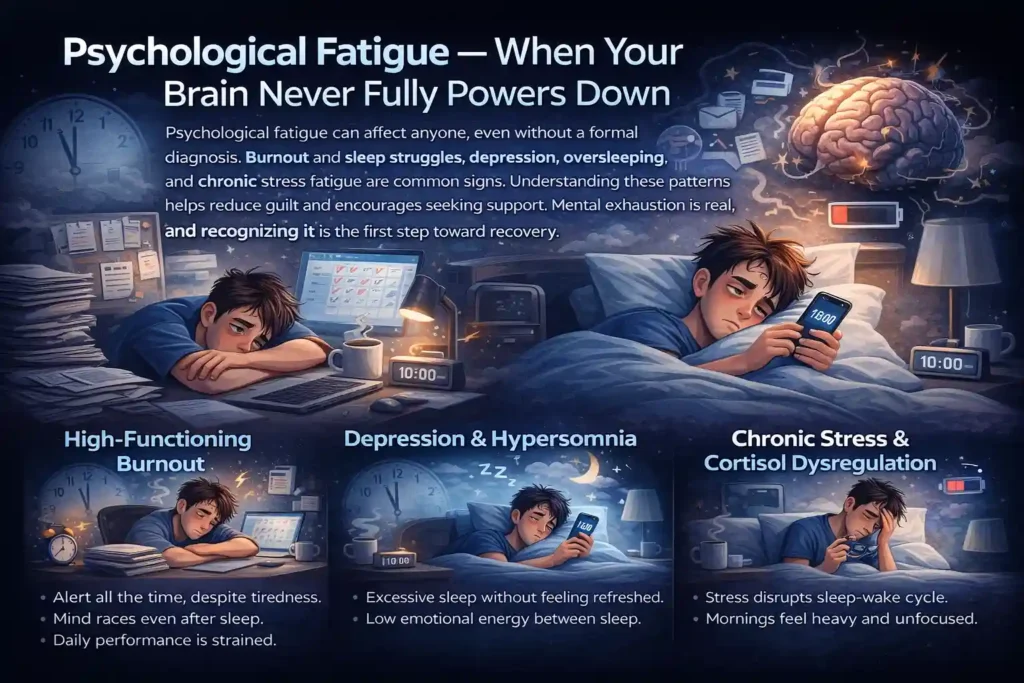
Psychological fatigue can affect anyone, even without a formal diagnosis. Burnout and sleep struggles, depression, oversleeping, and chronic stress fatigue are common signs. Understanding these patterns helps reduce guilt and encourages seeking support. Mental exhaustion is real, and recognising it is the first step toward recovery.
High-Functioning Burnout
People with high-responsibility roles often stay alert all the time. Even after a long sleep, the mind keeps racing with tasks and worries. Burnout and sleep do not always align, leaving the body tired but the brain active. Daily performance may continue, but emotional reserves slowly drain.
Depression & Hypersomnia
Excessive sleep can signal depression, oversleeping rather than restfulness. Nights and days merge, but emotional energy remains low. Sleep does not feel refreshing, leaving concentration and motivation weak. Simple daily tasks may feel overwhelming despite hours in bed.
Chronic Stress & Cortisol Dysregulation
Chronic stress fatigue can disrupt the natural wake-sleep rhythm. Cortisol levels fail to rise properly, causing mornings that feel heavy. Waking tired despite long rest is common, making focus and energy unpredictable. Managing stress and seeking guidance can gradually restore balance.
The “Hidden Trio” — Medical Conditions Linked to Excessive Sleepiness
Excessive sleepiness can be more than just a busy lifestyle problem. In some cases, it signals deeper health issues that affect energy levels throughout the day. Understanding the medical causes of fatigue can help identify why rest doesn’t always feel refreshing. Recognising the patterns early encourages timely professional advice.
Anaemia vs. Low Ferritin
Normal haemoglobin levels don’t always mean iron stores are sufficient. Low ferritin can cause deep, ongoing tiredness even when blood tests appear normal. People often feel drained after simple tasks, which is easy to mistake for laziness. Identifying low ferritin early can prevent long-term fatigue and improve overall energy.
Thyroid Dysfunction & Metabolic Slowdown
Hypothyroidism can slow metabolism, leaving the body craving extra sleep. The condition often mimics burnout or hypersomnia causes, making it hard to spot. A full thyroid panel is necessary to confirm the issue rather than relying on symptoms alone. Proper detection can restore normal energy levels gradually.
Silent Sleep Apnea (Even in Non-Snorers)
Sleep apnea doesn’t always involve loud snoring. Frequent micro-awakenings prevent deep restorative sleep, leaving mornings foggy and sluggish. Persistent morning headaches may be an early clue to this hidden condition. Treating sleep apnea improves alertness and reduces long-term health risks.
Post-Viral & Latent Infection Fatigue
Some infections trigger lingering tiredness even after recovery. The body’s “sickness behaviour response” can slow energy levels for weeks or months. This fatigue is common after viral illnesses and can be confusing without medical guidance. Proper evaluation ensures the root cause is addressed safely.
Fatigue vs Sleepiness — Why Naming Your Symptom Matters
Understanding fatigue vs sleepiness is important because most websites just use the words interchangeably. People often ignore the difference, which can delay proper care. Knowing exactly what your body is experiencing helps in finding the right solution.
Fatigue (Low Energy)
Fatigue feels like the body is heavy and weak. Simple rest or sleep often doesn’t make the energy return. Daily tasks may feel harder even if you slept well. It usually relates to lifestyle, stress, or underlying health conditions.
Sleepiness (Urge to Sleep)
Sleepiness is a strong need to fall asleep during the day. It can make focusing difficult and increase the risk of accidents. This symptom often links to sleep disorders or neurological issues.
Hypersomnia Defined
Hypersomnia is the medical term for excessive daytime sleepiness. Even long sleep may leave you unrefreshed. Recognising it helps doctors choose the right treatment and prevent complications.
The “Stealth” Fatigue Panel — What to Ask Your Doctor
Fatigue blood tests can help uncover hidden reasons for constant tiredness, even when lifestyle seems fine. Bringing clear questions to your doctor ensures you cover important markers without relying on online guesses. Understanding which tests matter can guide better treatment and faster relief. This approach keeps the focus on evidence and collaboration with your clinician.
Blood Tests to Discuss
A ferritin test checks iron storage and can reveal deficiencies, causing low energy. Vitamin B12 and D levels are often low in adults and may contribute to fatigue. A full thyroid panel examines hormone balance, which strongly affects energy and mood. hs-CRP measures inflammation, which sometimes shows up when fatigue has no obvious cause.
Sleep Evaluation Options
An at-home sleep study can uncover issues like sleep apnea that drain energy daily. Keeping a sleep diary helps identify patterns or habits affecting rest quality. Reviewing results with a doctor ensures findings are interpreted correctly and leads to practical next steps.
Quick Diagnostic Snapshot (Self-Awareness, Not Self-Diagnosis)
Noticing how your body and mind feel after sleep can reveal patterns linked to energy, mood, and focus. This is not a tool for diagnosis but a way to observe connections between sleep quality and daily well-being. Tracking these signs can help you spot patterns and discuss them with a healthcare professional if needed.
|
If you feel… |
And your sleep is… |
It may be associated with… |
|
Heavy limbs |
Long (9+ hrs) |
Low ferritin/thyroid |
|
Mental fog |
Fragmented |
Sleep apnea/stress |
|
Deep sadness |
Excessive |
Depression/burnout |
|
Groggy 2+ hrs |
Consistent |
Sleep inertia |
This table shows common patterns. Observing them over time helps identify potential issues, but does not replace medical advice.
When Sleeping More Is a Red Flag — Don’t Ignore These Signs
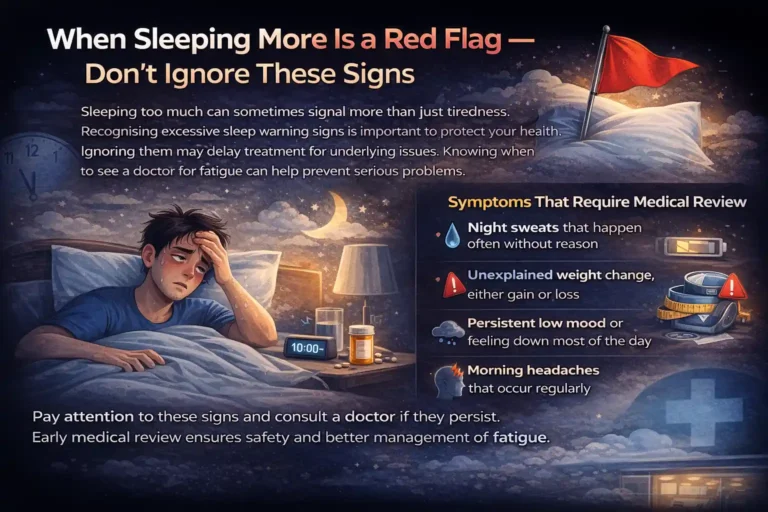
Sleeping too much can sometimes signal more than just tiredness. Recognising excessive sleep warning signs is important to protect your health. Ignoring them may delay treatment for underlying issues. Knowing when to see a doctor for fatigue can help prevent serious problems.
Symptoms That Require Medical Review
- Night sweats that happen often without reason
- Unexplained weight change, either gain or loss
- Persistent low mood or feeling down most of the day
- Morning headaches that occur regularly
Pay attention to these signs and consult a doctor if they persist. Early medical review ensures safety and better management of fatigue.
What You Can Do This Week (Without Self-Treating)
Improving sleep quality starts with simple tracking and small habits. A sleep hygiene checklist and a sleep diary can help spot patterns that affect rest. These steps give clear, practical information without trying to fix sleep with medications or supplements. Focusing on habits first makes it easier to have consistent, restful nights.
7-Day Sleep & Energy Tracker
Track your sleep time each night to notice patterns in rest and wake cycles. Note your mood each morning to see how sleep affects energy and focus. Record caffeine intake and screen use in the evenings, as these can interfere with falling asleep. Keeping a daily log helps understand what habits help or hurt sleep quality.
Circadian Anchoring Basics
Wake up at the same time every day to train your body clock for better sleep. Spend a few minutes in morning sunlight to anchor your circadian rhythm. Small changes like these make falling asleep at night easier and improve overall energy. Combining tracking with consistent routines creates a clearer picture for discussions with a doctor if needed.
Key Takeaways — Sleeping Longer Isn’t the Same as Sleeping Better
Sleeping longer hours does not always mean feeling rested. Persistent fatigue is common and often linked to poor sleep quality rather than just sleep duration. Small habits, like consistent bedtimes and limiting screen time, can make a real difference.
If tiredness continues despite enough sleep, it is worth checking with a healthcare professional. Underlying issues like stress, diet, or sleep disorders can affect rest. Simple lifestyle changes combined with guidance from experts can improve energy and overall well-being.
FAQs
1. Why do I sleep 10+ hours and still feel exhausted?
Could be linked to poor sleep quality, disrupted sleep cycles, or underlying health issues that stop your body from restoring energy.
2. Can poor sleep quality make me more tired than sleeping less?
Yes, even long sleep is not helpful if it isn’t deep or uninterrupted, affecting mental clarity and physical energy.
3. Could my fatigue be caused by a hidden medical condition?
Thyroid problems, anaemia, diabetes, or sleep apnea can cause persistent tiredness despite enough sleep.
4. Is hypersomnia the reason I can’t feel rested?
Hypersomnia symptoms include excessive daytime sleepiness and prolonged nighttime sleep without feeling refreshed.
5. How do stress and burnout affect how tired I feel after sleeping?
High stress or burnout can reduce restorative sleep, leaving the body drained regardless of hours slept.
6. When should I see a doctor for persistent tiredness despite enough sleep?
Seek medical advice if fatigue is constant, affecting daily life, or comes with headaches, snoring, or mood changes.
Understanding Sleep Cycles & Key Terms
Sleep stages explained show why you can feel tired even after a full night’s rest. Every part of sleep has a purpose, from light relaxation to deep restoration. Missing certain stages or disrupting cycles can leave you groggy and unfocused the next day. Understanding common sleep terms helps make sense of these effects.
Key Sleep Stages
- Light Sleep (Stage 1 & 2): This is where the body starts slowing down. It’s easy to wake from, so frequent interruptions here can stop you from feeling rested.
- Deep Sleep (Stage 3 / N3): The most restorative stage, where muscles and the brain repair themselves. Missing deep sleep often leads to ongoing fatigue.
- REM Sleep (Rapid Eye Movement): Crucial for memory and mood. Interruptions in REM sleep can make it hard to feel mentally refreshed.
Sleep-Related Terms
- Sleep Quality vs Quantity: Spending long hours in bed does not guarantee rest; completing full cycles matters more.
- Sleep Inertia: The heavy, groggy feeling after oversleeping or waking mid-cycle. Your brain is still “booting up.”
- Hypersomnia: Excessive sleepiness during the day, even after enough nighttime sleep.
- Circadian Rhythm: Your internal clock that guides sleep-wake patterns. Disruption can make you tired despite proper sleep.
- Sleep Fragmentation: Waking or tossing and turning prevents restorative sleep.
- Cortisol Dysregulation: When morning wakefulness signals are off, leaving energy low.
Quick Tip for Readers
Knowing these stages and terms can reveal why more sleep isn’t always better. Tracking patterns helps explain fatigue and supports discussions with doctors about sleep health.
🌿 Balance Vata, Reduce Anxiety & Optimize Your Sleep Cycle
-
Learn practical lifestyle and diet tips in How to Balance Vata Dosha Naturally.
-
Understand the mind–body link behind restlessness and stress in Vata Dosha and Anxiety.
-
Discover how your natural sleep pattern affects focus and mental performance in Impact of Sleep Chronotypes on Productivity.
References
Kanai, R. Y., et al. (2021). Which is more important for health: Sleep quantity or sleep quality? Chronobiology International, 38(9), 1237–1250.
Sleep Foundation. (2024). Hypersomnia: Symptoms, causes, and treatments.
Thakkar, M. M., et al. (2019). Alcohol use disorder and sleep disturbances. Alcoholism: Clinical and Experimental Research, 43(12), 2483–2497.
EBSCO Research Starters. (2019). Effects of blue light technology.
Ochsner Health. (2023). 14 top signs of sleep apnea you need to know.
Clujsen, M. C. J., et al. (2017). Iron deficiency without anaemia is a potential cause of fatigue: Meta-analyses of randomised controlled trials and cross-sectional studies. British Journal of Nutrition, 118(5), 322–334.
Salmela-Aro, K., et al. (2022). Associations between burnout symptoms and sleep among workers maintaining critical societal functions during the COVID-19 pandemic. Scandinavian Journal of Work, Environment & Health, 48(2), 154–162.
Chattu, V. K., et al. (2024). Physiology, sleep stages. In StatPearls. StatPearls Publishing.
Trotti, L. M. (2019). Sleep inertia: Current insights. Nature and Science of Sleep, 11, 221–233.
Blume, C., et al. (2021). Sleep timing, chronotype and social jetlag: Impact on cognitive abilities and psychiatric disorders. Biochemical Pharmacology, 191, 114615.
Rupa Health. (2025). Cortisol dysregulation: Causes, symptoms & management.