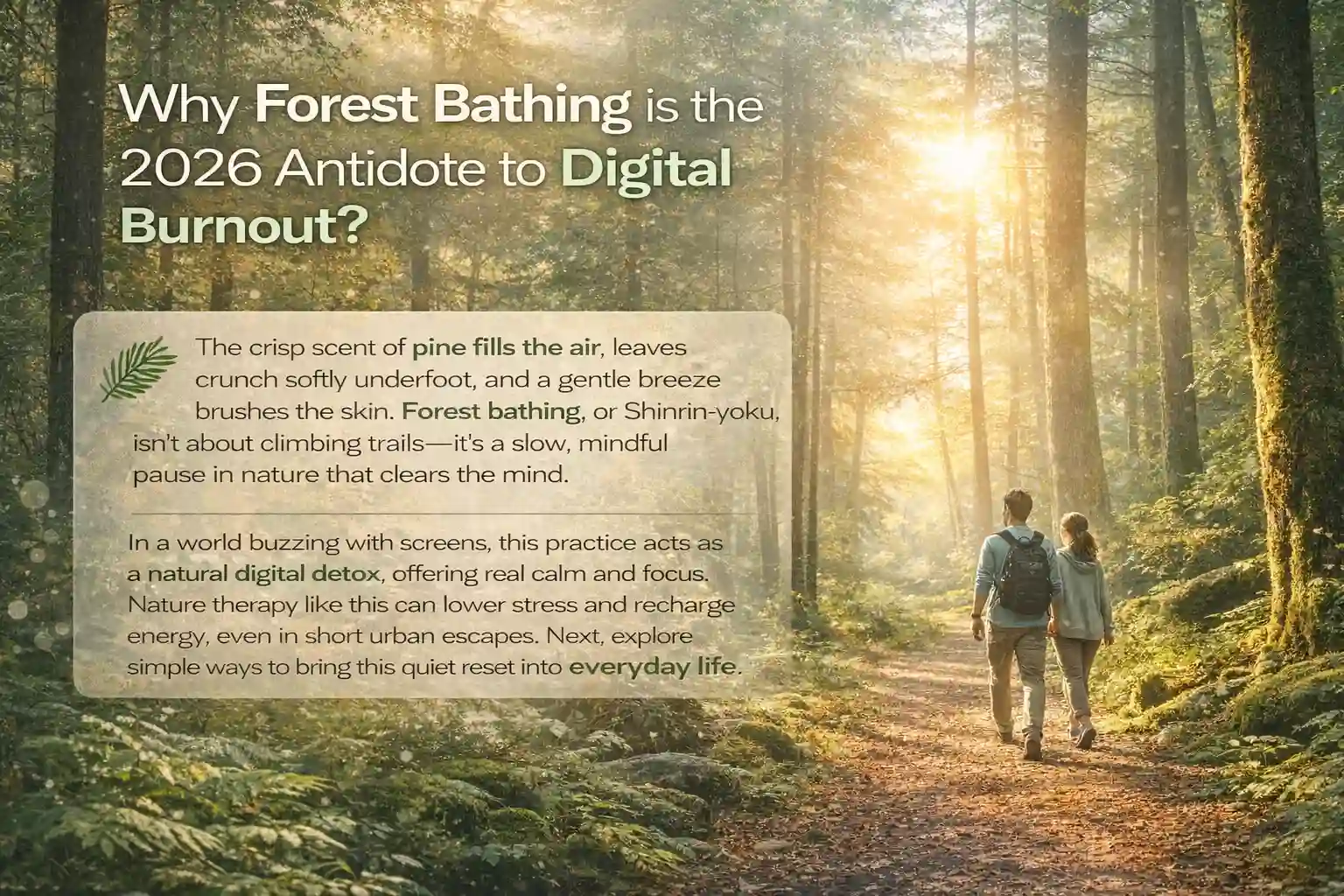
The crisp scent of pine fills the air, leaves crunch softly underfoot, and a gentle breeze brushes the skin. Forest bathing, or Shinrin-yoku, isn’t about climbing trails—it’s a slow, mindful pause in nature that clears the mind.
In a world buzzing with screens, this practice acts as a natural digital detox, offering real calm and focus. Nature therapy like this can lower stress and recharge energy, even in short urban escapes. Next, explore simple ways to bring this quiet reset into everyday life.
Table of Contents
ToggleThe "Phytoncide" Factor: Inhaling the Forest’s Invisible Immune System
Spending time in a forest does more than feel refreshing—it sends invisible signals that strengthen the body. Phytoncides, natural oils released by trees, trigger measurable changes in immunity and stress levels.
Studies show that just 120 minutes a week among trees can reduce stress by 12%, and boost natural killer (NK) cells, key players in the body’s defence system. These effects are biological, observable, and backed by research from Japanese universities and 2025–2026 meta-analyses.
How Trees Release Nature’s Medicine
Phytoncides are chemicals that trees release into the air. The pine-scented air is more than fragrance; it’s a physiological signal to the body, quietly telling it to relax and repair.
Cortisol and the Parasympathetic Shift
Forest time lowers cortisol, the stress hormone, nudging the nervous system into “rest and digest.” Sitting quietly among trees, many notice racing thoughts slowing within 15 minutes.
The 30-Day Immune Boost
NK cell levels rise and can stay elevated for up to a month. Benefits include:
- Stronger immunity
- Faster recovery from illness
- Better, deeper sleep
Even short, regular forest visits bring visible improvements to both body and mind.
3 Mistakes that Turn "Forest Bathing" into Just a Walk
Forest bathing is more than a stroll among trees—it’s about slowing down, noticing, and letting nature sink in. But small habits can turn this mindful practice into just another walk.
Rushing vs. Slowing Down
Walking fast keeps the mind busy and blocks the senses. Moving slowly—under half a mile per hour—or even sitting quietly allows sounds, smells, and textures to surface. It’s in these moments that the forest truly speaks.
Phone and Mind Distractions
Phones pull attention back to the outside world. Leaving them behind or switching to aeroplane mode can feel strange at first. That initial restlessness often fades, replaced by a deeper connection to the surroundings.
Expecting Immediate Zen
Not every session feels magical. Some moments might feel awkward or even boring. The calm and clarity of forest bathing build gradually. Over weeks, small moments of noticing accumulate into real peace.
Only Seeking Remote Forests
You don’t need a wilderness to benefit. City parks, gardens, or even tree-lined streets can offer “micro-forest bathing” moments when approached with attention and care.
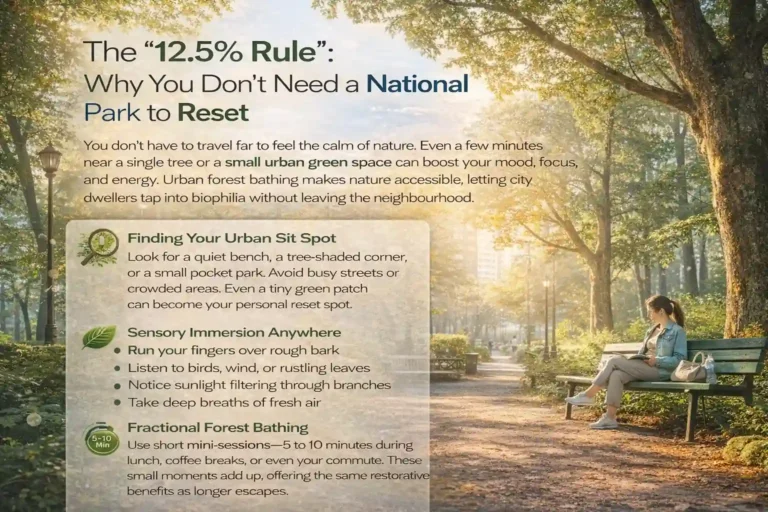
The "12.5% Rule": Why You Don’t Need a National Park to Reset
You don’t have to travel far to feel the calm of nature. Even a few minutes near a single tree or a small urban green space can boost your mood, focus, and energy. Urban forest bathing makes nature accessible, letting city dwellers tap into biophilia without leaving the neighbourhood.
Finding Your Urban Sit Spot
Look for a quiet bench, a tree-shaded corner, or a small pocket park. Avoid busy streets or crowded areas. Even a tiny green patch can become your personal reset spot.
Sensory Immersion Anywhere
- Run your fingers over rough bark
- Listen to birds, wind, or rustling leaves
- Notice sunlight filtering through branches
- Take deep breaths of fresh air
Fractional Forest Bathing
Use short mini-sessions—5 to 10 minutes during lunch, coffee breaks, or even your commute. These small moments add up, offering the same restorative benefits as longer escapes.
A Sensory Menu: 5 "Invitations" for Your Next Visit
A slow forest walk becomes richer when attention gently shifts to the senses. These small invitations support Mindfulness, Sensory Immersion, and the calming traditions of Shinrin-yoku and Forest Therapy, helping visitors feel more present outdoors.
Touch – Bark and Leaves
Hands resting on a tree can reveal quiet details often missed. Visitors may explore the roughness of bark, the cool shade beneath it, and the softness of leaves, quietly noting, “I feel strength and calm.”
Sight – Dappled Sunlight
Light filtering through branches creates moving patterns across the ground. Observers may watch shifting shapes and colours, softly reminding themselves, “I see change happening slowly,” allowing eyes to relax and wander naturally.
Sound – Forest Orchestra
A forest rarely stays silent. Walkers may pause to notice layers of sound—wind passing through branches, distant bird calls, rustling foliage, and faint flowing water—silently counting each sound to deepen awareness.
Smell – Phytoncide Awareness
A gentle breath often carries the forest’s natural scent. Visitors may close their eyes, inhale slowly, and notice the fresh, woody aroma, quietly thinking, “I am breathing in the forest.”
Mind – Presence Check
Thoughts often drift during walks, yet they can return to the moment. Visitors may notice wandering thoughts without judging them, then softly guide attention back to touch, sight, sound, and breath.
Myth vs. Reality: Forest Bathing Misconceptions
Many people hesitate to try forest bathing because of confusing ideas floating online. Looking at common Forest Bathing Myths through simple Wellness Science helps people see how Mindful Nature time offers real, everyday Nature Benefits.
Myth – Only National Parks Count
Reality: Small green corners, neighbourhood parks, or tree-lined streets can calm the mind. Regular visits, even close to home, provide steady nature benefits and support mindful nature habits.
Myth – You Must Be Alone
Reality: A quiet company does not reduce the effect. Families, friends, or guided groups can share slow walks and gentle attention to sounds, smells, and surroundings while still following wellness science ideas.
Myth – Immediate Transformation Happens
Reality: Changes grow over time. Short, regular sessions help lower stress, improve mood, and build lasting calm, showing that mindful nature practice works gradually rather than overnight.
Real-Life Case Study: How a Weekly Forest Bathing Habit Reduced Urban Stress
Real-world stories demonstrate how small habits can significantly impact daily life. This Forest Bathing Case Study highlights an office professional who attempted weekly nature walks, providing a clear Example of Stress Reduction backed by simple self-tracked results.
Participant Background and Lifestyle
Rahul, a 35-year-old marketing manager, worked long hours and slept poorly. His wearable device often showed high stress scores, and he reported constant mental fatigue before starting therapy.
The 8-Week Forest Bathing Routine
He committed to an 8-week routine, spending 90 minutes every Sunday in a nearby forest park, walking slowly, sitting quietly, and limiting phone use each visit, intentionally focused.
Measurable Changes Observed
Sleep tracker data showed longer deep sleep, while weekly mood notes recorded calmer evenings. His wearable stress scores dropped steadily, and coworkers noticed better focus and overall improvement.
Lessons Readers Can Apply
This Stress Reduction Example suggests consistency matters more than distance. Short visits to local green spaces, practised mindfully, can support Nature Therapy Results as an Urban Wellness Habit.

The Post-Forest Glow: Keeping the Calm in the City
The calm felt after a walk among trees often fades once city noise returns. Holding onto Forest Bathing Benefits at home is possible with small habits that support stress reduction and mindfulness.
Carrying that peaceful mood into busy streets takes simple reminders of Nature Therapy. Writing a few lines in a journal helps the mind hold quiet thoughts. Slow breathing during short breaks brings steady stress reduction. Light stretches after work release body tension and refresh focus.
These small acts turn daily travel into moments of Daily Mindfulness. Regular practice keeps the forest bathing benefits alive even far from trees. Before sleep, a quiet minute of gratitude helps the heart stay calm. Choose two habits to repeat each day, and let them become gentle anchors. Over time, the city feels softer, and calm returns more easily.
Learn more about Digital Burnout.
Build Healthier Habits for a Cleaner, Stronger You
Discover whether rinsing with water alone is effective in Are Germs Still on Your Hands After Washing With Only Water?.
Learn how indoor air quality affects respiratory health in Can an Air Purifier Prevent Allergies and Asthma?.
Turn daily walking into a powerful wellness habit with the 30-Day Steps Challenge.
Frequently Asked Questions About Forest Bathing
Many Shinrin-yoku Questions focus on time. Research suggests about 120 minutes weekly in nature, but even short 20-minute visits bring benefits when done regularly.
Tree-lined parks, gardens, or quiet green corners work well. The goal is mindful presence, not remote wilderness.
Comfortable shoes, water, and simple clothing are enough. Many Forest Bathing Tips recommend limiting phone use to reduce distractions.
Hiking focuses on distance and speed, while forest bathing encourages slow walking, noticing sounds, smells, and surroundings.
Starting once a week helps build the habit, then increasing frequency gradually improves consistency and relaxation benefits.