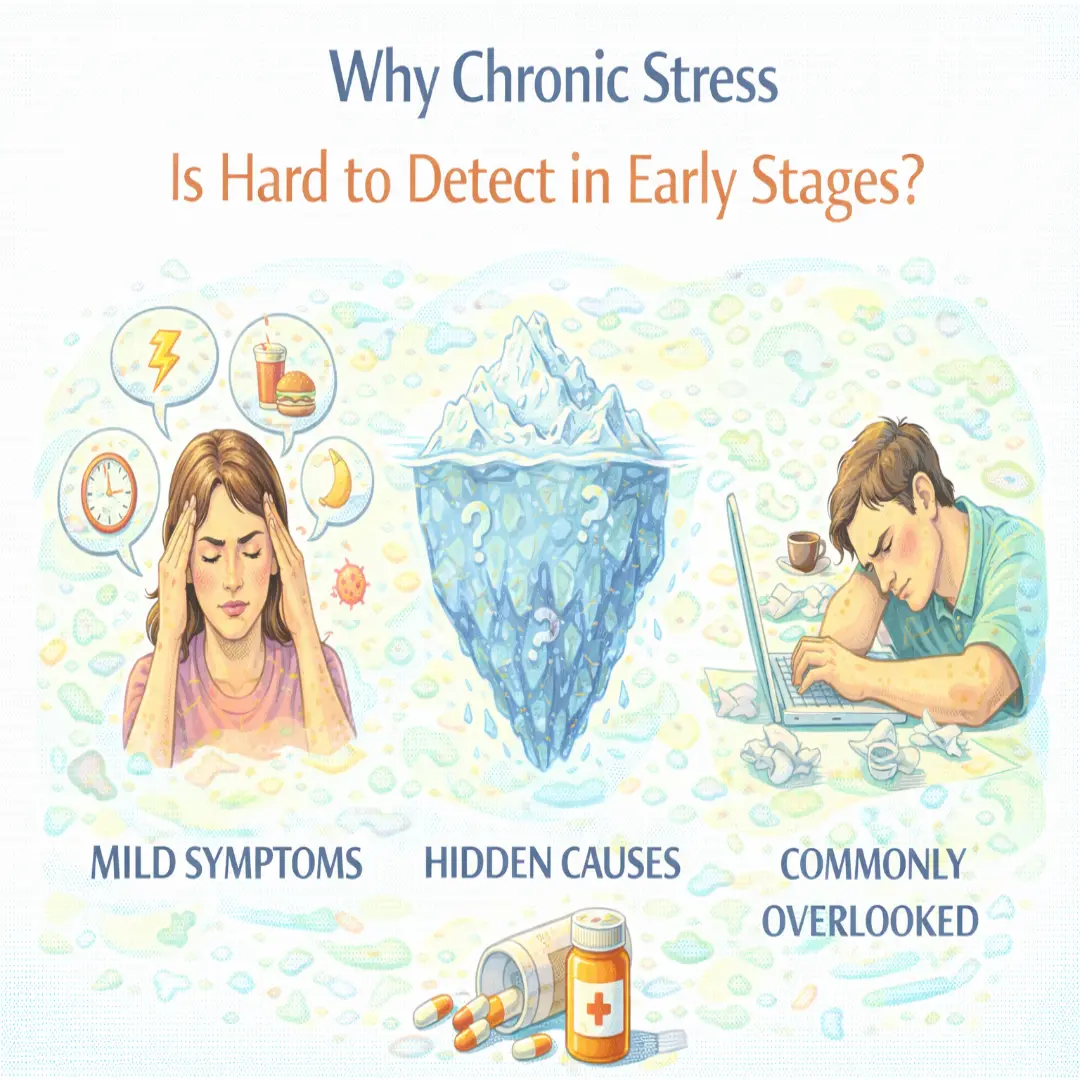
Chronic stress detection is often tricky because its signs are subtle and easily mistaken for everyday fatigue. Early-stage stress quietly affects the body, mind, and behaviour before obvious symptoms appear. Many people don’t realise they’re under constant pressure until it starts impacting their health in small ways. Understanding these hidden stress signs can help spot trouble before it grows.
TL;DR:
- Biological masking: Stress hormones hide obvious symptoms.
- Symptom overlap: Fatigue, irritability, and headaches seem normal.
- Subtle micro-signals: Changes in sleep, focus, or appetite hint at hidden stress.
Chronic stress can quietly affect energy, mood, and decision-making. Sleep disturbances, small digestive issues, or sudden forgetfulness often go unnoticed. Psychological strain builds slowly, making it easy to dismiss as “just a rough patch.” Recognising these early signs is key to acting before stress becomes overwhelming.
Table of Contents
ToggleThe Biological Camouflage: How the Body Masks Stress?
Our body has clever ways to hide stress, making us feel more capable than we actually are. Cortisol and the HPA axis play a big role in this, helping us push through challenges while masking warning signs. Over time, this can trick us into thinking everything is fine, even when our internal systems are strained.
The Cortisol Ceiling
Our body has clever ways to hide stress, making us feel more capable than we actually are. Cortisol and the HPA axis play a big role in this, helping us push through challenges while masking warning signs. Over time, this can trick us into thinking everything is fine, even when our internal systems are strained.
Habituation and Baseline Shift
- Chronic stress can make the brain reset its normal stress level, so what used to feel intense becomes routine.
- The HPA axis slowly adjusts, reducing obvious stress signals over time.
- This shift can delay early detection, making it hard to realise when stress is harmful.
The Hidden Energy Illusion
High-functioning people often mistake stress for motivation because the body provides a temporary energy boost. Tasks feel achievable, deadlines manageable, and focus sharp, even though the system is quietly overworked. Functional exhaustion sets in, leaving the body strained while performance seems normal. Recognising this illusion is the first step toward preventing long-term burnout.
The Chameleon Effect: When Symptoms Mimic Everyday Issues
High-functioning people often mistake stress for motivation because the body provides a temporary energy boost. Tasks feel achievable, deadlines manageable, and focus sharp, even though the system is quietly overworked. Functional exhaustion sets in, leaving the body strained while performance seems normal. Recognising this illusion is the first step toward preventing long-term burnout.
Symptom Overlap
Stress Symptom | Common Misattributed Cause |
Mild headaches | Dehydration or eye strain |
Bloating or stomach upset | Eating too quickly or spicy food |
Muscle tension | Poor posture or sleeping incorrectly |
Trouble sleeping | Late-night screen time or caffeine |
These examples show why stress is often overlooked. When the body signals discomfort, we usually search for simple explanations instead of considering stress.
Emotional Masking
Stress can quietly affect mood, creating irritability, short temper, or emotional dullness. Many people think they are just “having a bad day,” not realising that ongoing tension triggers these changes. Recognising emotional shifts as possible stress signals is key to early intervention.
Cognitive Fog Signals
- Afternoon brain fog that makes simple tasks feel heavy
- Forgetting small things more than usual
- Difficulty concentrating on work or conversations
Noticing these signs early can help differentiate stress vs daily fatigue. Paying attention to these subtle stress symptoms prevents them from growing into bigger problems.
The Psychological Threshold: When High-Functioning Hides Strain
High-functioning stress often goes unnoticed because people who handle demanding jobs or busy lives appear calm and capable. Mental adaptation lets them push through long hours, tight deadlines, and constant responsibilities without showing outward signs of struggle. Over time, this unnoticed stress becomes part of daily life, making it hard to recognise the toll it takes on mind and body. Many confuse this pressure with normal ambition or dedication, not realising it is quietly building inside.
The High-Functioner’s Blindspot
People who are always “on” risk ignoring internal fatigue. They may celebrate completing tasks while dismissing feelings of exhaustion, tension, or irritability. Overlooking these signs can make stress stronger, eventually affecting focus, relationships, and health.
Cognitive Numbing
- Reduced emotional sensitivity, feeling less joy or frustration.
- Delayed stress recognition, noticing strain only when it becomes severe.
- Difficulty connecting mental effort with physical tension, ignoring warning signs.
- Habitual overwork becomes normalised, masking burnout signals.
Recognising these patterns early helps manage stress before it becomes overwhelming. Mental adaptation is useful, but it should not hide the need for rest and reflection.
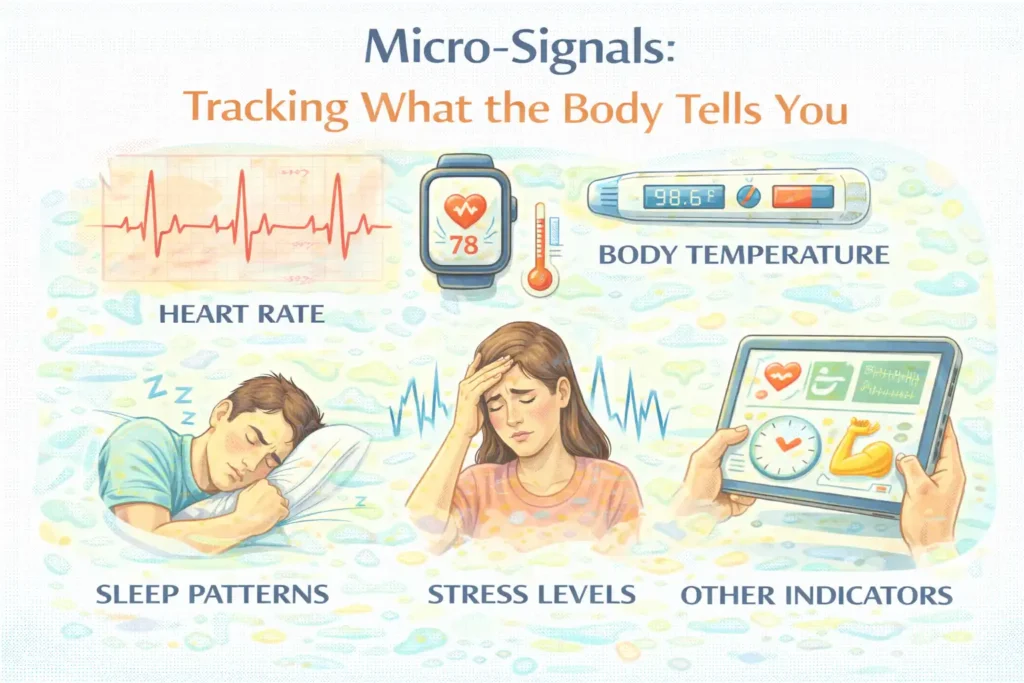
Micro-Signals: Tracking What the Body Tells You
High-functioning stress often goes unnoticed because people who handle demanding jobs or busy lives appear calm and capable. Mental adaptation lets them push through long hours, tight deadlines, and constant responsibilities without showing outward signs of struggle. Over time, this unnoticed stress becomes part of daily life, making it hard to recognise the toll it takes on mind and body. Many confuse this pressure with normal ambition or dedication, not realising it is quietly building inside.
Jaw-Gut-Gait Scan
One of the first places stress shows up is in your body. Jaw clenching or teeth grinding, even while asleep, is a classic micro-signal of stress. Digestive changes, like irregular stomach upset or sudden bloating, are another early warning sign. You may also notice changes in your walk or posture, like stiffness or dragging your feet, showing tension you might not feel consciously.
Sleep and Energy Patterns
- Minor sleep disturbances, like waking up for no reason or having restless nights.
- Afternoon energy crashes that don’t relate to what you ate.
- Feeling unusually tired even after a full night’s sleep.
- Short bursts of drowsiness or difficulty focusing mid-day.
These small shifts in sleep and energy often appear long before bigger health issues develop.
Emotional Micro-Signs
Stress quietly affects mood, too. Unexpected irritability, low frustration tolerance, or snapping at small things are subtle stress indicators. You may also withdraw from friends or lose interest in your usual hobbies. Noticing these emotional micro-signs early gives you a chance to address stress before it escalates.
Cognitive Costs: How Chronic Stress Alters the Mind
Living under constant pressure changes the way your mind works. Stress brain patterns make it hard to relax, even when the danger is gone. Over time, your brain adapts to tension, which can leave you feeling drained or emotionally numb. These changes don’t just affect feelings—they also impact how you think and remember.
Neural Adaptation
When your brain gets used to stress, calm can feel uncomfortable. Neural adaptation tricks the mind into expecting worry, so moments of rest may trigger anxiety instead. This makes it difficult to enjoy quiet time without feeling restless or uneasy. Over time, your reactions become automatic, and emotional numbness can set in.
Subtle Executive Impairment
- Missed deadlines because focus slips easily.
- Forgetfulness, even for simple tasks.
- Poor prioritisation when juggling multiple responsibilities.
- Difficulty processing information quickly, slowing down decisions.
Chronic stress reshapes both thought and feeling. Understanding these changes helps you notice patterns and take steps to regain control over your mind and memory.
Detection Protocols: Early Awareness Without Medical Intervention
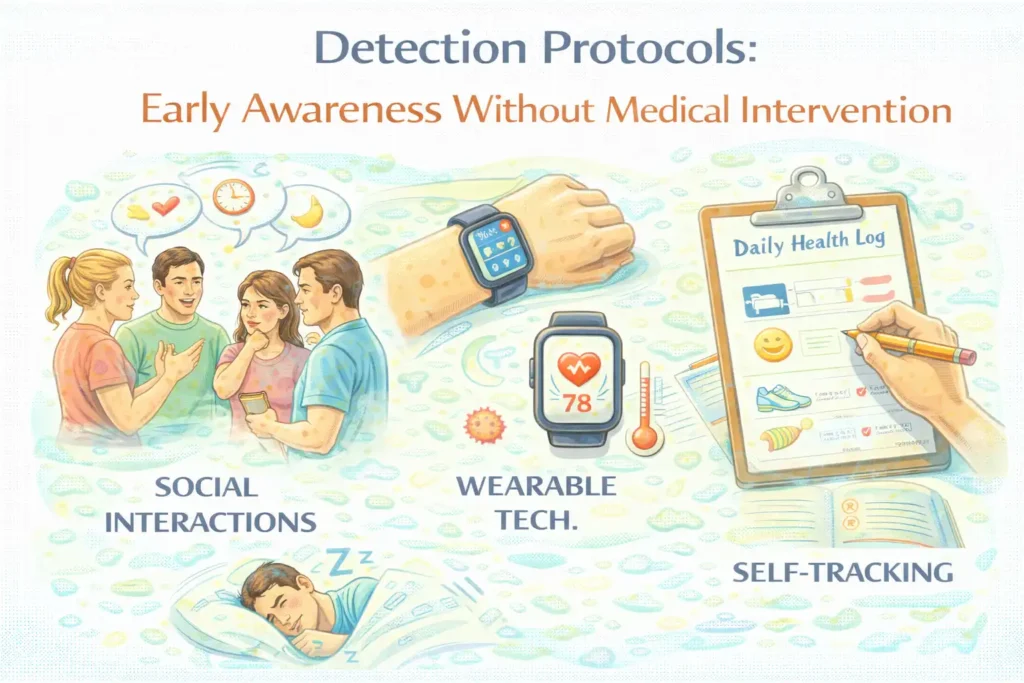
Early stress detection is possible without any medical tests, just by paying attention to your body and daily habits. Small, consistent checks can help you notice tension before it grows. Simple routines like brief body scans or tracking subtle changes in your heart rate can make a real difference. You don’t need fancy tools—just awareness and a little discipline.
Self-Audits for Micro-Symptoms
Try a 60-second body scan each morning. Notice tight shoulders, jaw, or back areas where tension collects. Next, do a quick check-in during the day: are your hands cold, your breath shallow, or your mind restless? Finally, record your evening alertness after reducing screen time to see if your body feels calmer. These small steps help you spot stress patterns before they escalate.
Biometric Awareness
- HRV Tracking: Heart rate variability shows stress even when your resting heart rate seems normal.
- Resting Heart Check: Note how easily your heart slows during calm moments.
- Sleep Observation: Shorter or interrupted sleep can indicate hidden stress.
Using these non-invasive methods, you can stay aware of your stress and act early. Over time, you’ll notice patterns and know when to take small breaks or adjust routines.
Why Early Detection Matters: Preventing Allostatic Overload
Allostatic load builds quietly when chronic stress impacts your body and mind over time. Recognising these signs early helps prevent serious long-term problems. Even small changes in sleep, mood, or energy can signal that stress is starting to take a toll. Early stress intervention gives you the chance to manage pressure before it causes lasting damage.
Long-Term Consequences
- Heart and blood pressure issues from prolonged stress
- Weight and blood sugar problems linked to metabolic changes
- Memory, focus, and emotional health can decline under constant stress
Empowered Monitoring
Paying attention to your body and emotions daily can make a big difference. Simple practices like mindfulness, journaling, or checking in with a professional help catch patterns before they worsen. Acting early reduces allostatic load and keeps both your body and mind healthier for the long run.
Read More : 5 High-Protein Snacks Under 150 Calories
Frequently Asked Questions About Early-Stage Chronic Stress
Yes. Research indicates that many high-functioning individuals stay productive while their bodies are under prolonged stress. Cortisol and the HPA axis can mask fatigue, giving a false sense of energy. You might feel “fine” on the outside while your body is quietly working harder.
Early signs are often subtle, like mild headaches, jaw tension, small digestive changes, or slight sleep disturbances. These micro-signals often appear before obvious fatigue or anxiety. Paying attention to small, repeated changes can help detect stress early.
The brain adjusts its baseline in response to ongoing cortisol, a process called stress habituation. This makes high stress feel “normal” and delays conscious awareness. You might not notice the pressure until it starts affecting your health or mood.
Wearables can track Heart Rate Variability (HRV), which reflects balance in the autonomic nervous system. While HRV alone doesn’t diagnose stress, trends over time can signal chronic strain. It’s a helpful tool to notice subtle changes early.
Studies suggest early awareness, along with lifestyle changes like proper sleep, mindfulness, and regular breaks, can reduce stress load. Small adjustments now can prevent long-term consequences. Early action makes recovery much easier.
Chronic stress triggers the “chameleon effect,” making symptoms resemble normal issues like dehydration, a busy schedule, or a poor diet. This overlap makes self-recognition tricky. Observing patterns over time is key to spotting stress early.
References
Mayo Clinic. (n.d.). Stress symptoms: Effects on your body and behaviour.
Harvard Health Publishing. (2020, April 9). Understanding the stress response. Harvard Medical School.
McEwen, B. S. (2012). Brain on stress: How the social environment gets under the skin. Proceedings of the National Academy of Sciences, 109(Suppl 2), 17180–17185.
Seeman, T. E., Singer, B. H., Rowe, J. W., Horwitz, R. I., & McEwen, B. S. (2001). Allostatic load as a marker of cumulative biological risk: MacArthur studies of successful ageing. Proceedings of the National Academy of Sciences, 98(8), 4770–4775.
Patel, H. (2025). Assessment of hypothalamic–pituitary–adrenal (HPA) axis function in chronic stress. Healthcare Bulletin.
Lobato, I. G., et al. (2013). Neural control of chronic stress adaptation. Frontiers in Behavioural Neuroscience, 7, 61.
van Peer, J. M., et al. (2010). Psychophysiological evidence for cortisol-induced reduction in early bias for implicit social threat in social anxiety disorder. Psychoneuroendocrinology, 35(1), 21–32.
Mayo Clinic Health System. (2023, July 10). Behind the mask: Managing high-functioning anxiety.
Manfredini, D., & Lobbezoo, F. (2009). Role of psychosocial factors in the aetiology of bruxism. Journal of Oral Rehabilitation, 36(7), 523–527.
Kim, H.-G., Cheon, E.-J., Bai, D.-S., Lee, Y. H., & Koo, B.-H. (2021). Stress and heart rate variability: A meta-analysis and review of the literature. Psychiatry Investigation, 18(9), 857–868.