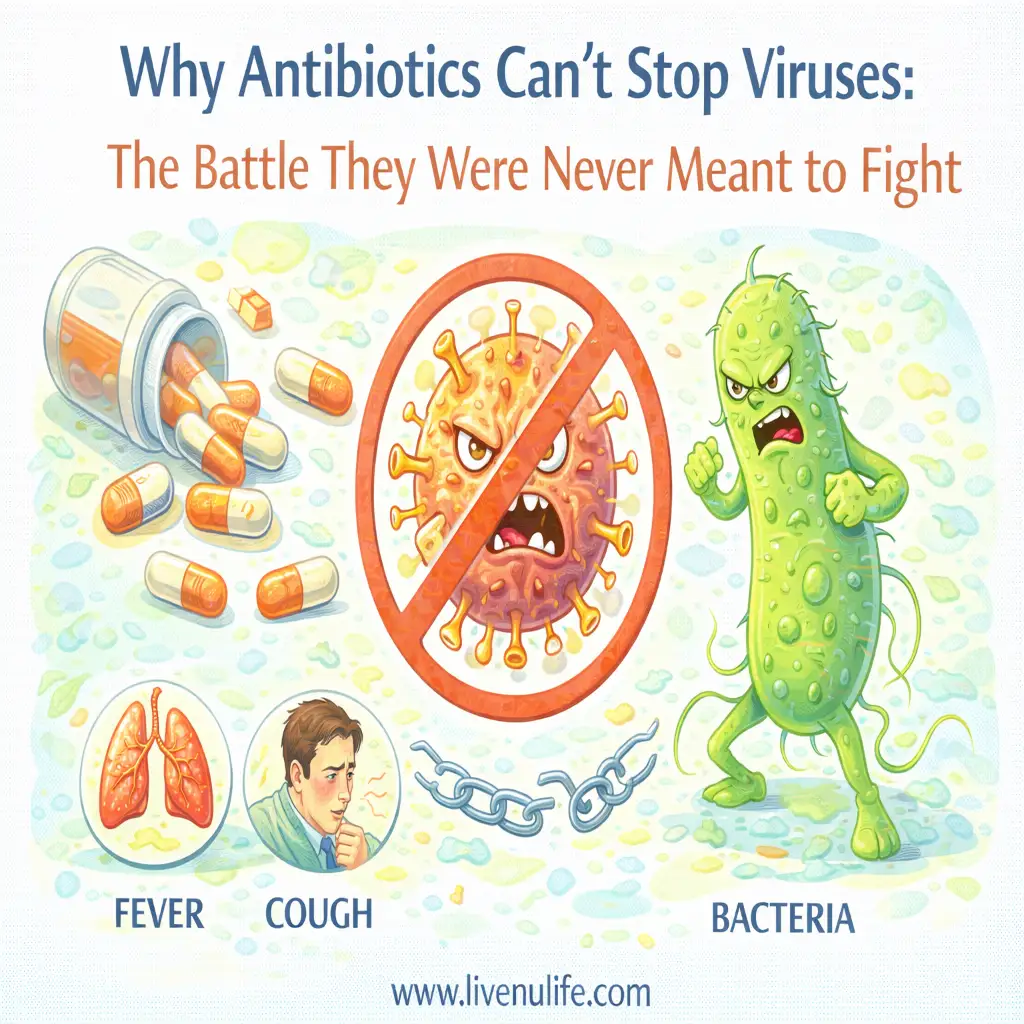
Many people feel miserable with a sore throat or fever and expect quick pills to help. This common confusion drives the debate around antibiotics vs viruses and explains why antibiotics don’t work for most viral colds.
Antibiotics are designed to destroy the physical walls and internal machinery of bacteria. Because viruses are built differently and hide inside your own cells, antibiotics are “blind” to them. Taking an antibiotic for a virus doesn’t just fail to cure you—it can damage your gut health and help create drug-resistant “superbugs.” Taking them without need can disturb helpful gut germs and speed up antibiotic resistance. Guidance from the Centres for Disease Control and Prevention and the World Health Organisation clearly warns against using antibiotics for viral illnesses.
Table of Contents
ToggleThe 60-Second Answer: Why Antibiotics Fail Against Viruses
Many people wonder whether antibiotics work on viruses. The short answer is no. Antibiotics, explained simply, are designed for bacterial infection treatment, while viral infection treatment needs different methods that target how viruses multiply inside cells.
The Biological Mismatch Explained
Antibiotics and viruses do not match at all. It is like the wrong key for a lock; antibiotics cannot find the parts they attack. Viruses reproduce inside human cells, leaving nothing to hit.
Bacteria Are Living Cells—Viruses Are Genetic Hijackers
Bacteria
- Live alone and grow on their own
- Having cell parts, antibiotics can damage
Viruses
- Need a cell to copy themselves
- Lack those cell parts
This difference explains why antibiotics for bacteria fail against viruses.
What Actually Works for Viruses
Viral infection treatment often means rest, fluids, and antiviral medicines that slow growth.
- Rest and fluids
- Fever relief
- Antivirals for flu
Care depends on diagnosis.
Bacteria vs. Viruses: Different Enemies, Different Weapons
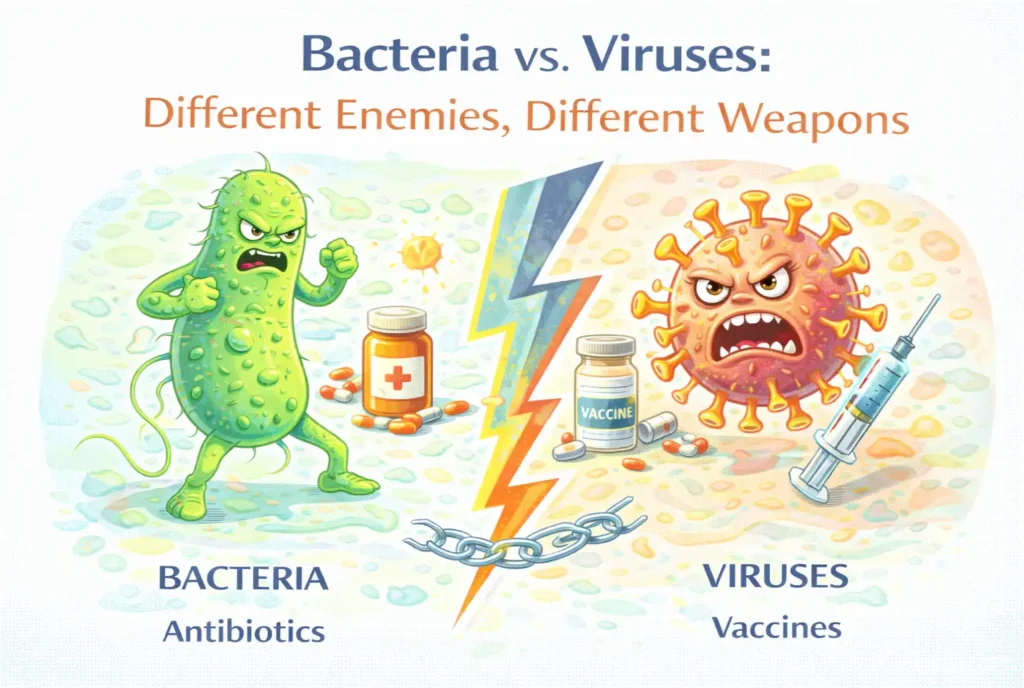
To understand the difference between a bacterial and a viral infection, it helps to look at how these tiny invaders live and grow. Their basic design decides how medicines work and why the same treatment cannot fight both.
Inside a Bacterial Cell
Bacteria are small living cells that can survive on their own. Each cell has a protective wall, ribosomes that make proteins, and a simple system that keeps it alive.
Many antimicrobial drugs target these parts. Some break the cell wall, while others stop protein production. This shows how antibiotics work—they damage the systems bacteria need, like knocking down the walls of a building so it cannot stand.
How Viruses Operate Inside Your Body
Viruses act very differently and depend on human cells to survive.
- They enter a body cell.
- They release their genetic material.
- The cell is forced to copy the virus (viral replication).
- New viruses leave the cell and spread.
Because viruses hide inside human cells, antibiotics cannot reach or damage them.
Why the Immune System Does the Heavy Lifting
During most viral illnesses, the body’s immune system slowly clears the infection. Antibiotics do not shorten recovery time, so symptoms usually last the same whether they are taken or not.
What Happens If You Take Antibiotics When You Don’t Need Them?
Taking antibiotics without a real need may seem harmless, yet it can quietly create health and community problems. Antibiotic misuse can weaken future treatments, disturb the body’s natural balance, and make infections harder to control later.
The Rise of Antibiotic Resistance
When antibiotics are used unnecessarily, bacteria begin to learn how to survive them. This is called antibiotic resistance, and it happens step by step.
First, antibiotics kill the weak bacteria.
Next, stronger bacteria survive and multiply.
Finally, these stronger strains spread, making common infections harder to treat.
Health groups like the World Health Organisation warn that frequent antibiotic misuse speeds up this process worldwide. Over time, medicines that once worked easily may stop working, creating serious public health risks and highlighting the need for careful antimicrobial stewardship.
The 2026 Reality Check: New data in The Lancet (2025/2026) warns antimicrobial resistance (AMR) could contribute to 8.22 million deaths annually by 2050. Misusing antibiotics—like for viral colds—helps bacteria evolve resistance. In 2026, experts see antimicrobial stewardship as a global safety imperative to protect modern surgery and cancer treatment for future generations.
Collateral Damage to Your Gut Microbiome
Inside the digestive system lives a large group of helpful bacteria that support digestion and immunity. Unnecessary antibiotics can harm these good bacteria, leading to microbiome damage.
Possible effects include:
- Upset stomach or digestive problems
- Lower natural defence against infections
- Slower recovery of healthy gut balance
These changes are often temporary, but repeated misuse can make recovery harder.
The “Leftover Pills” Problem
Many people keep leftover antibiotics and take them later without advice, thinking it saves time. This habit can leave infections partly treated, allowing stronger bacteria to survive and spread.
Doctors recommend never reusing old prescriptions and always completing the full course only when antibiotics are truly needed. Careful use protects both personal health and future treatments.
When Are Antibiotics Necessary After a Viral Illness?
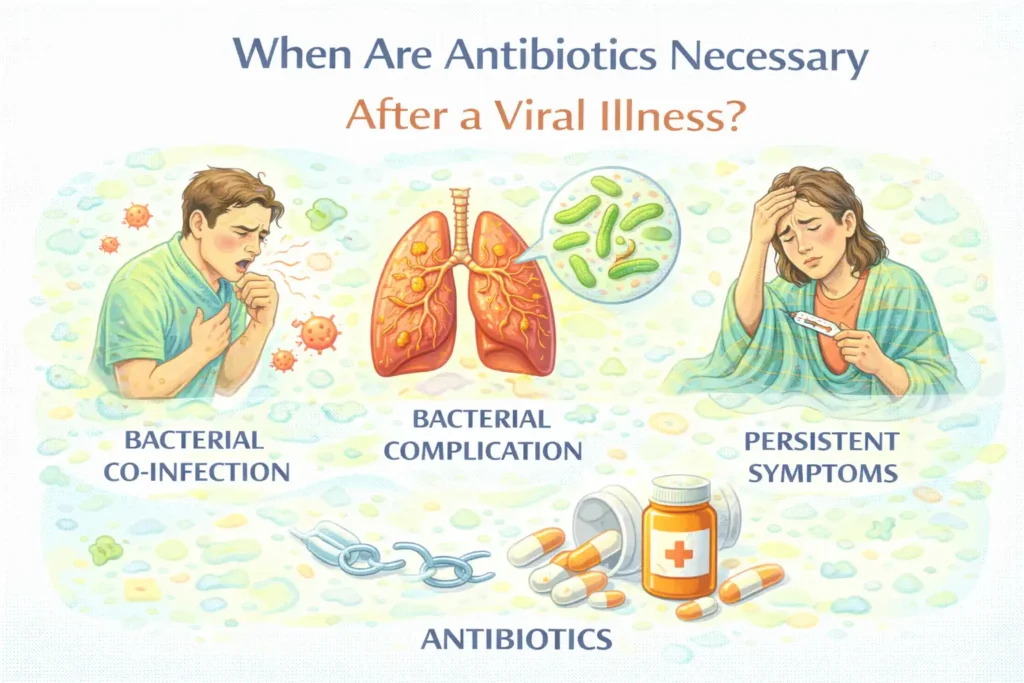
Sometimes antibiotics are given after someone has a virus, but not because of the virus itself. They are used when a new problem appears. This usually means a secondary bacterial infection has developed.
Understanding Secondary Bacterial Infections
A bad cold or the flu can leave the body tired and weak for a while. During that time, bacteria can take the chance to grow and cause trouble.
This is called a secondary bacterial infection. The first illness is caused by a virus, but the new illness is caused by bacteria.
For example, someone may recover from the flu and then develop chest pain, thick mucus, and fever again. This could be pneumonia after flu, which is one of the common bacterial complications doctors watch for.
The key point is simple: the virus starts it, but bacteria cause the second round of sickness.
The Watchful Waiting Strategy
Doctors do not rush to give antibiotics at the first sign of illness. Many times, they use something called watchful waiting.
This means they monitor symptoms for a few days to see if the body improves on its own.
If you have a viral illness, use this checklist before asking for a prescription:
- The ‘Double-Sick’ Pattern: Did you start to feel better, then suddenly get a high fever and a new, deep cough? (This is the #1 sign of a secondary bacterial infection).
- The 10-Day Rule: Have your symptoms stayed at peak intensity for more than 10 days without a single day of improvement?
- Localised Pain: Is the pain trapped in one specific spot (like one ear or one sinus) rather than a general ‘all-over’ head cold?
If you check any of these boxes, a bacterial invader may have moved in, and it’s time for a medical re-evaluation.
Red Flags That Require Medical Review
Certain warning signs should not be ignored.
- Trouble breathing
- High fever that returns
- Symptoms lasting more than 10 days
If any of these happen, it is important to speak with a healthcare provider for proper advice.
Common Myths That Keep the Confusion Alive
Confusion around colds often leads people to believe that antibiotics are always needed. Many everyday beliefs sound logical but are not correct, and these misunderstandings keep unnecessary use of medicines for many minor illnesses today.
“Green Mucus Means I Need Antibiotics”
Seeing green or yellow mucus can worry people, but the colour usually changes because the body is fighting germs. The colour comes from myeloperoxidase, a green, iron-rich enzyme produced by your white blood cells (neutrophils) as they neutralise germs. Immune cells make the mucus darker during viral symptoms, not only bacterial illness. Doctors often advise rest and fluids unless clear infection signs appear after testing confirms bacteria clearly.
“Antibiotics Will Help Me Recover Faster”
Antibiotics do not make viral colds end sooner. The body still needs time to heal, whether medicines are taken or not. Warm drinks, sleep, and simple care usually help people feel better while the illness runs its normal course without shortening recovery days at all for most cases.
“They Can’t Hurt, So Why Not Try?”
Antibiotics do not make viral colds end sooner. The body still needs time to heal, whether medicines are taken or not. Warm drinks, sleep, and simple care usually help people feel better while the illness runs its normal course without shortening recovery days at all for most cases.
“Green Mucus Means I Need Antibiotics”
Antibiotics once made many infections easy to treat, but growing misuse is creating an antimicrobial resistance crisis. This global health threat affects everyday healthcare, making simple treatments harder and putting future medical care at risk.
Why Health Authorities Are Concerned
Rising drug-resistant infections worry health leaders because they can turn routine medical care into risky situations. Even common surgeries, childbirth procedures, and cancer treatments depend on antibiotics that still work.
Global agencies like the World Health Organisation warn that unchecked resistance could weaken modern medicine. In many countries, monitoring systems run by groups such as the Centres for Disease Control and Prevention track resistant infections and guide prevention efforts.
These actions aim to protect people today while safeguarding treatments for future generations.
What Responsible Use Looks Like
Simple daily habits support antibiotic stewardship and responsible antibiotic use:
- Take antibiotics only when prescribed by a doctor
- Finish the full course, even if symptoms improve
- Avoid sharing leftover medicines with others
- Do not pressure doctors for antibiotics when they are not needed
Small choices today help slow the spread of resistance and protect effective treatments for the future.
Key Takeaways: The Right Tool for the Right Enemy
Choosing the right medicine starts with knowing what kind of illness the body is fighting. This quick antibiotics summary makes it simple and clear.
Antibiotics treat bacteria, not viruses. They help with bacterial treatment like strep throat, but they do not cure colds or flu.
Viral infection facts matter. Most viral illnesses go away on their own with rest, fluids, and time.
Misuse can cause harm. Taking antibiotics when not needed can lead to side effects and weaker results later.
Responsible medication use protects everyone. Following a doctor’s advice helps the body heal safely and keeps treatments working for the future.
Read More About: Health and Fitness
Frequently Asked Questions About Antibiotics and Viruses
No, antibiotics do not cure colds or flu because these illnesses come from viruses. Rest, fluids, fever relief, and sometimes antiviral medicine help. See a doctor if symptoms worsen.
Many patients feel disappointed when antibiotics are not prescribed. Doctors often avoid them when infections appear viral, protecting patients from unnecessary drugs and supporting responsible prescribing decisions today, globally.
Taking antibiotics without need can cause:
- stomach upset or allergy
- helpful bacteria loss
- antibiotic resistance concerns
These problems make future infections harder to treat sometimes and increase medical costs.
Symptoms alone rarely confirm whether an illness is bacterial or viral. Doctors review history, examine the patient, and may order tests for accurate diagnosis when needed only.
Return to the doctor if the fever stays high beyond three days, breathing worsens, pain increases, or the illness lasts over ten days. Personal medical history also matters greatly. Early advice helps.
References
Centres for Disease Control and Prevention. (2023). Antibiotic resistance threats in the United States, 2023.
World Health Organisation. (2023). Antibiotic resistance.
Cleveland Clinic. (2024). Antibiotics: When you need them and what to expect.
Mayo Clinic. (2024). Antibiotics: Are you misusing them?.
Harvard Health Publishing. (2023). Why do you really need to finish your antibiotics? Harvard Medical School.
National Institute of Allergy and Infectious Diseases. (2022). Antibiotics.
Ventola, C. L. (2015). The antibiotic resistance crisis: Part 1: Causes and threats. P & T: A Peer-Reviewed Journal for Formulary Management, 40(4), 277–283.
Sharara, F., Swetschinski, L., Robles Aguilar, G., Gray, A., Han, C., Bisignano, C., Rao, P., Wool, E., Johnson, S. C., Browne, A. J., Chipeta, M. G., Fell, F., Hackett, S., Haines-Woodhouse, G., Kashef Hamadani, B. H., Kumaran, E. A. P., McManigal, B., … Naghavi, M. (2022). Global burden of bacterial antimicrobial resistance in 2019: A systematic analysis. The Lancet, 399(10325), 629–655.
Suez, J., Zmora, N., Zilberman-Schapira, G., Mor, U., Dori-Bachash, M., Bashiardes, S., Ira, E., & Elinav, E. (2018). Post-antibiotic gut mucosal microbiome reconstitution is impaired by probiotics and improved by autologous FMT. Cell, 174(6), 1406–1423.e16.
McDonnell Norms Group. (2017). Antibiotic resistance: The need for global solutions. The Lancet Infectious Diseases, 17(12), e286–e287.