When choosing a zinc supplement, the form of zinc matters more than many people realise. Your body does not absorb zinc equally from every compound.
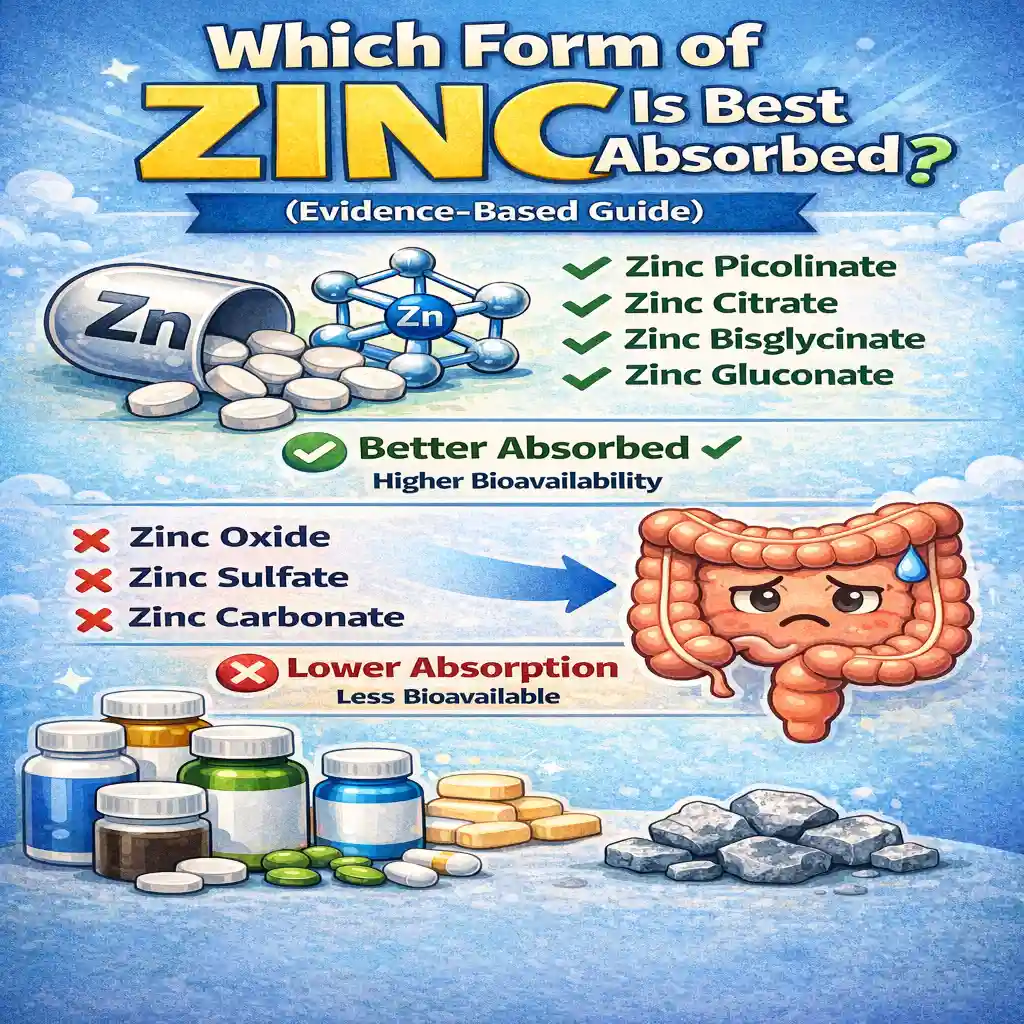
Research consistently shows that chelated forms of zinc—especially zinc bisglycinate (glycinate) and zinc picolinate—are among the most bioavailable, meaning they are absorbed efficiently and raise zinc levels more effectively than many other forms.
For most adults looking to correct a deficiency or support immunity, zinc bisglycinate or zinc picolinate is considered the best-absorbed option. However, other forms, such as zinc citrate and zinc gluconate, are also well absorbed and widely used.
This guide explains Which Form of Zinc Is Best Absorbed, why absorption differs, and how to take zinc correctly to maximise effectiveness.
Table of Contents
ToggleQuick Comparison: Zinc Forms Ranked by Absorption
Zinc Form | Absorption Level | Stomach Friendliness (1–5)* | Best For | Potential Drawback |
Zinc Bisglycinate (Glycinate) | Very High | 1 – Very gentle | Daily supplementation, sensitive stomachs | Usually more expensive |
Zinc Picolinate | Very High | 2 – Mild nausea risk | Correcting the deficiency quickly | Slightly higher cost |
Zinc Citrate | High | 2–3 – Generally well tolerated | Balanced option for general supplementation | Slightly lower absorption than chelates |
Zinc Gluconate | Moderate–High | 3 – Some stomach irritation is possible | Lozenges and immune support | Metallic taste in some supplements |
Zinc Acetate | High (lozenges) | 3 | Reducing cold duration | Mostly used in lozenges |
Zinc Oxide | Low | 4 – More likely to cause nausea | Topical use (sunscreens, creams) | Poor oral absorption |
*Stomach Friendliness Scale
1 = easiest on stomach, 5 = highest nausea risk
Bottom line:
If your goal is maximum absorption with minimal stomach irritation, choose zinc bisglycinate or zinc picolinate.
Why Some Forms of Zinc Are Absorbed Better
The key factor behind zinc absorption is how the mineral is chemically bound.
Your digestive system does not absorb free zinc efficiently. Instead, zinc must be transported across the intestinal wall through specialised proteins such as the ZIP4 transporter.
Certain molecules help zinc pass through these transport systems more easily.
Chelated Zinc: The “Trojan Horse” Effect
Chelated zinc forms attach zinc to organic molecules like amino acids or organic acids. These molecules act as carriers that help zinc bypass common absorption barriers.
Examples:
- Zinc bisglycinate binds zinc to the amino acid glycine
- Zinc picolinate binds zinc to picolinic acid, a compound involved in mineral transport
These bonds allow zinc to move through the digestive tract with less competition from other minerals, improving bioavailability.
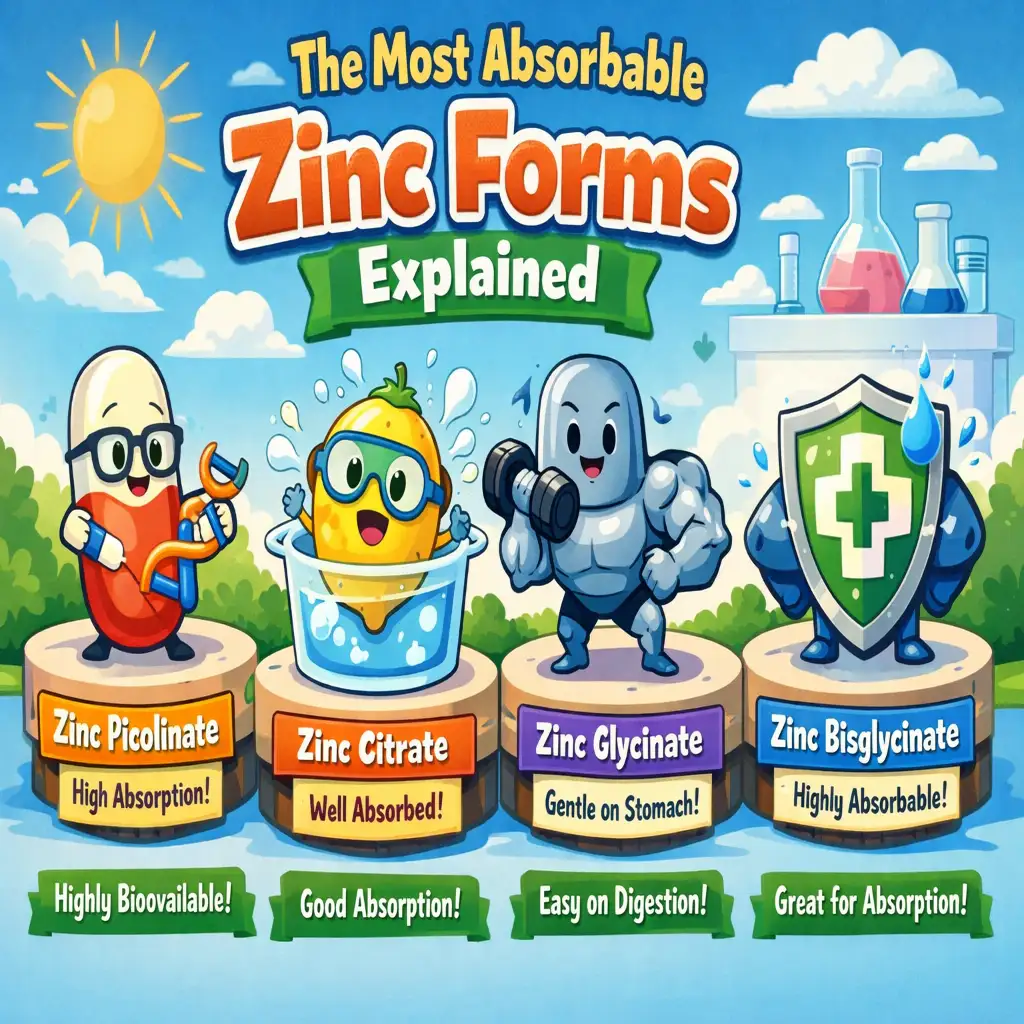
The Most Absorbable Zinc Forms Explained
1. Zinc Bisglycinate (Often the Best Overall)
Zinc bisglycinate is widely considered one of the most bioavailable forms of zinc available in supplements.
Why does it absorb well
- Zinc is bound to two glycine molecules
- The complex resembles small peptides that the body absorbs efficiently
- Less competition with minerals like calcium or iron
Additional advantage
Many people report less nausea with bisglycinate compared with other forms. This matters because zinc supplements—especially on an empty stomach—can cause stomach irritation.
Best for
- Daily supplementation
- People who experience nausea from zinc
- Long-term immune and metabolic support
2. Zinc Picolinate (Excellent for Rapid Absorption)
Zinc picolinate is another highly bioavailable form.
Why does it absorb well?
Picolinic acid helps transport zinc across the intestinal wall, improving uptake into the bloodstream.
Some comparative studies suggest zinc picolinate may raise circulating zinc levels more efficiently than several other forms.
Best for
- Correcting zinc deficiency
- Situations requiring strong absorption
Pro Tip From Clinical Experience
People with sensitive stomachs often tolerate zinc bisglycinate better than picolinate.
A common mistake I see is taking zinc picolinate on an empty stomach at night, which can cause nausea or a metallic sensation. If this happens, try:
- Switching to bisglycinate
- Taking zinc with your largest meal
This simple adjustment often eliminates stomach discomfort.
3. Zinc Citrate (High Bioavailability and Widely Available)
Zinc citrate is a popular middle-ground option that balances absorption and affordability.
Advantages
- Good absorption
- Widely used in multivitamins
- Easier to find than chelated forms
While not quite as absorbable as bisglycinate or picolinate, zinc citrate still performs well compared with many other forms.
Best for
- Everyday supplementation
- Budget-friendly options
4. Zinc Gluconate (Common in Immune Supplements)
Zinc gluconate is one of the most common forms used in cold remedies and immune formulas.
Why is it used
- Reasonable bioavailability
- Stable formulation
- Often used in lozenges
Limitation
Some people notice a metallic aftertaste, particularly with lozenges.
5. Zinc Acetate (Best for Lozenges)
Clinical research on cold treatments suggests zinc acetate lozenges may help shorten the duration of common colds when used early.
The benefit appears linked to the release of ionic zinc in the throat, which may inhibit viral activity locally.
Best for
- Cold-relief lozenges
- Short-term immune support
6. Zinc Oxide (Poorly Absorbed)
Zinc oxide is widely used in inexpensive supplements, but it has low oral bioavailability.
Why is absorption poor?
Zinc oxide is relatively insoluble in water, making it harder for the digestive system to break down and absorb.
Better use
Zinc oxide is excellent for topical products such as:
- Sunscreens
- Diaper rash creams
- Skin barrier products
However, it is not the best choice for oral supplementation.
Factors That Affect Zinc Absorption
Even the best zinc form can lose effectiveness if taken incorrectly.
Several dietary and physiological factors influence how much zinc your body absorbs.
1. Dose Size Matters
Taking very large doses reduces absorption efficiency.
When zinc intake exceeds about 20 mg in a single dose, absorption efficiency begins to decline as transport proteins become saturated.
Practical tip:
Split larger doses into two smaller servings.
2. Phytates Can Block Zinc
Certain plant compounds called phytates bind to zinc and prevent absorption. Foods high in phytates include:
- Whole grains
- Legumes
- Nuts
- Seeds
These foods are healthy overall, but can reduce zinc absorption when consumed at the same time as supplements
3. Coffee and Tea Can Reduce Zinc Absorption
Another commonly overlooked factor is coffee and tea consumption. Both beverages contain compounds such as:
- Tannins
- Chlorogenic acid
These compounds can bind to minerals and reduce zinc absorption significantly.
Some studies suggest that taking zinc within 60 minutes of coffee or tea may reduce absorption by over 50%.
Practical tip:
Take zinc supplements at least 1 hour before or after coffee or tea.
4. Mineral Competition
Zinc competes with other minerals for the same absorption pathways. High doses of the following may reduce zinc absorption:
- Iron
- Calcium
- Copper
Practical tip:
Take zinc supplements at least 2 hours away from high-dose mineral supplements.
5. Vitamin B6 May Improve Utilisation
Some research suggests vitamin B6 may enhance zinc metabolism, which is why the two nutrients are sometimes combined in supplements.
Common Side Effects and How to Avoid Them
Zinc supplements can sometimes cause digestive discomfort.
Common symptoms include:
- Nausea
- Stomach irritation
- Metallic taste
How to reduce side effects
- Choose zinc bisglycinate
- Take zinc with a light meal
- Avoid high doses on an empty stomach
Important Safety Consideration: The Zinc–Copper Balance
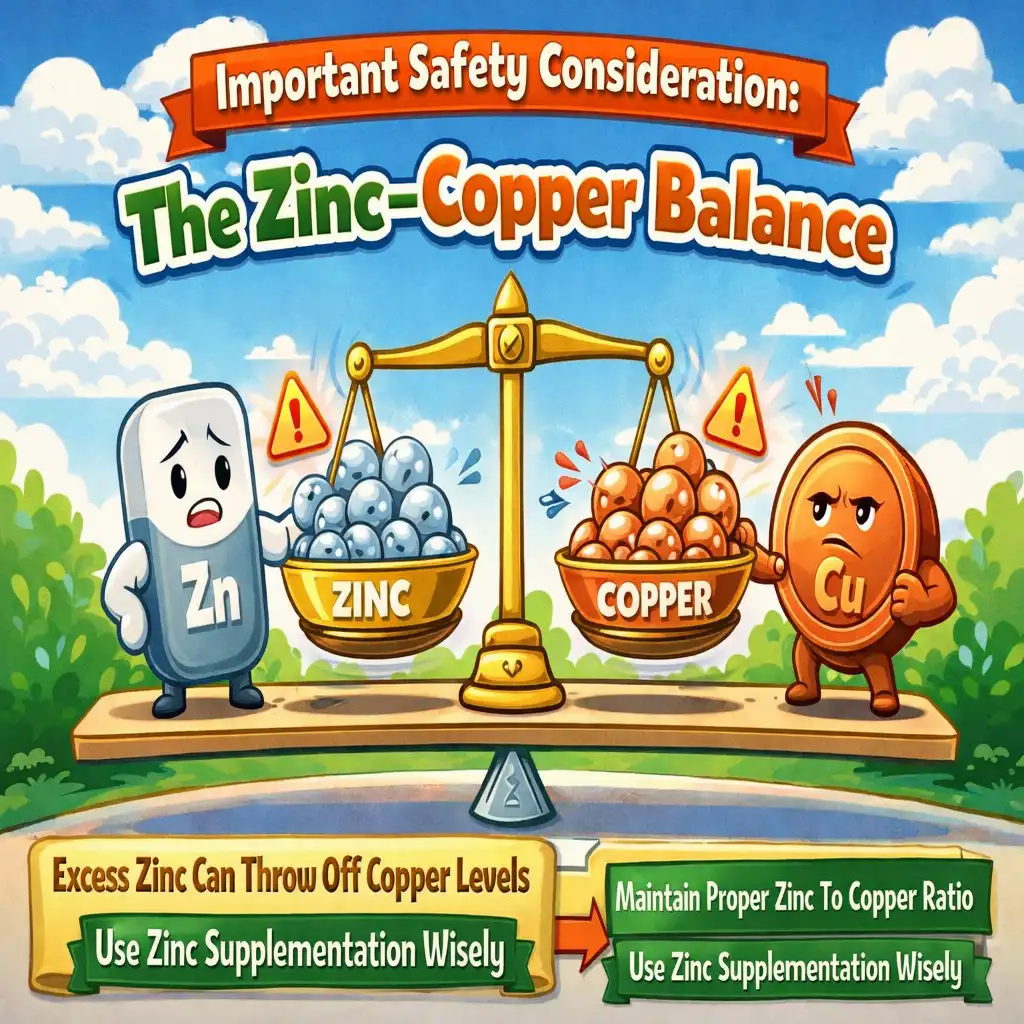
Long-term high-dose zinc supplementation can interfere with copper absorption.
Excess zinc increases production of metallothionein, a protein that binds copper and prevents it from entering the bloodstream.
Over time, this may lead to copper deficiency.
Recommended Zinc–Copper Ratio
Many nutrition experts recommend maintaining roughly a 15:1 zinc-to-copper ratio.
Example:
- 15 mg zinc → about 1 mg copper
This balance helps prevent long-term copper depletion.
Safe intake guideline
For adults, the tolerable upper intake level is generally around:
40 mg of zinc per day
Higher amounts should only be used under medical supervision.
For further reference, see the official zinc intake guidelines from the National Institutes of Health (NIH) Office of Dietary Supplements.
Final Verdict: Which Zinc Form Is Best?
Based on current research and clinical nutrition guidance:
Best absorbed zinc forms
- Zinc Bisglycinate (Glycinate)
- Zinc Picolinate
Strong alternatives
- Zinc Citrate
- Zinc Gluconate
Best for cold lozenges
- Zinc Acetate
Forms to avoid for oral supplementation
- Zinc Oxide (low absorption)
For most people seeking maximum absorption with minimal stomach irritation, zinc bisglycinate is often the best overall choice.
Key Takeaway
Your body absorbs zinc largely based on the compound it’s attached to.
Choosing a high-bioavailability form like zinc bisglycinate or zinc picolinate helps ensure that the zinc you take actually reaches your bloodstream and delivers the intended health benefits.
Read More: Health and Wellness