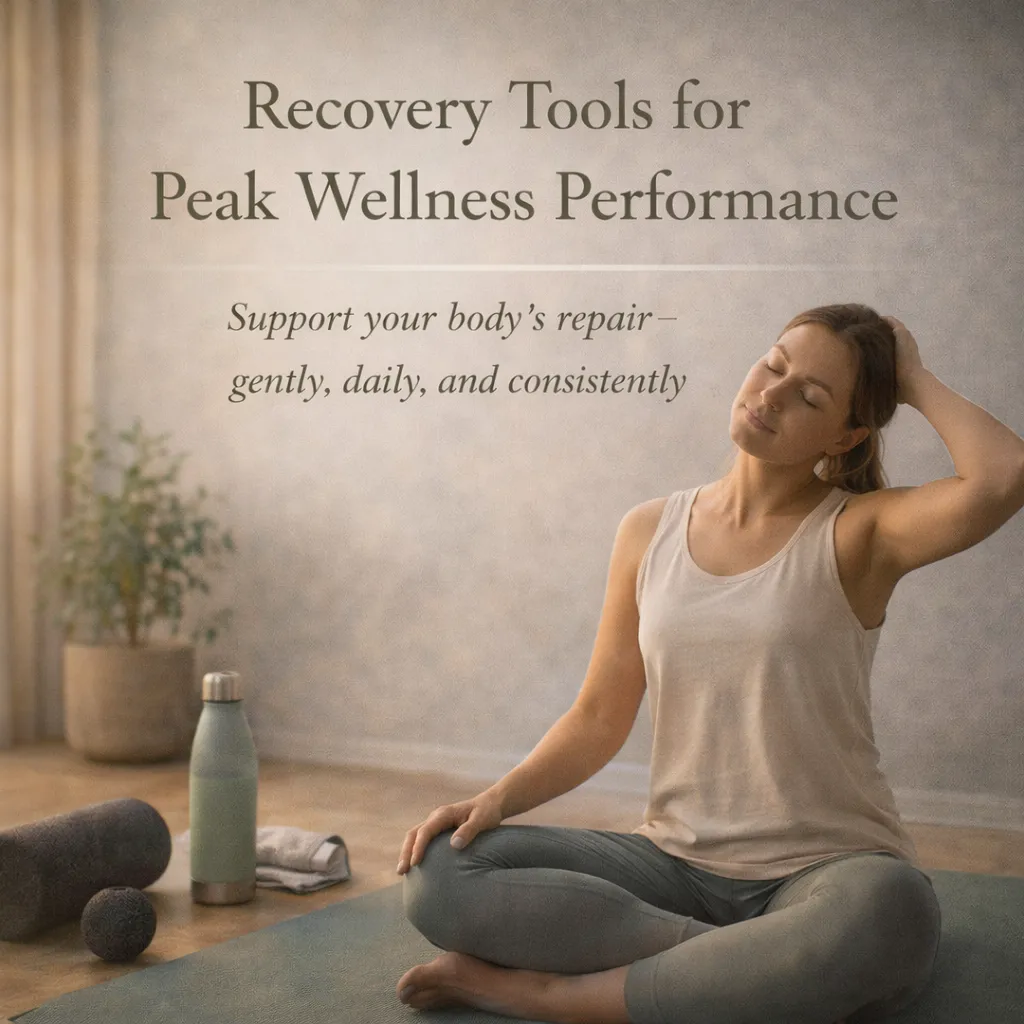
Recovery tools become important when your body starts giving small warnings. Maybe your back feels tight after long desk hours, or your mind feels drained after the daily rush. Treat recovery as a pillar for wellness performance and don’t ignore it.
Start slow and notice the signals. Modern lifestyle pushes hard, so use tools that help physical, mental, and emotional repair. Use simple things like breath work, light stretch, or a cold splash (only a few seconds). Hold your body like you hold a warm cup—steady and gentle. This approach supports peak recovery and promotes holistic recovery for athletes and the general public.
Table of Contents
ToggleUnderstanding the Role of Recovery in Human Performance
Recovery importance is always linked with how your body performs the next day, and how your mind stays clear for real tasks. Treat recovery like you treat food or air. You need it, and you must create space for it. When you rest right, your energy rises again and your system acts more stable. So keep recovery as part of your routine, not some last-minute fix.
Understand Energy and Hormones
Start by letting your body slow down. Stop screen use early and breathe slowly. This simple act calms hormones and gives them a chance to reset. Think of it like turning down a noisy machine.
Support Muscle Repair
Lie down or sit still. Feel the muscle soften, like a rag doll. Drink water and eat simple protein. Let muscles rebuild after stress.
Clear Your Mind Now
Close your eyes for two minutes. Drop your shoulders. Let thoughts settle. Do this daily (even on busy days).
Protect Long-Term Health
Sleep enough and avoid pushing too hard. Build a rhythm and keep it steady. This creates strong human performance recovery and wellness recovery benefits.
Physical Recovery Tools for Muscle Repair and Mobility
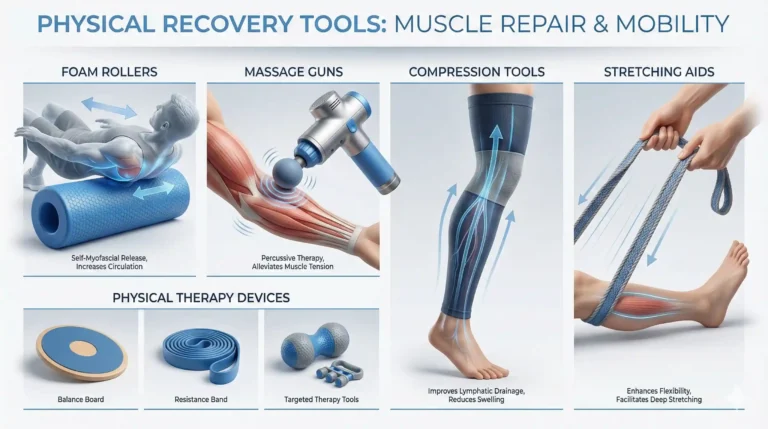
Physical recovery tools help you repair sore areas fast, and many people search for them after heavy workouts. Use these tools to open tight muscles, bring back mobility, and let your body settle. Think of it like oiling a stiff door hinge. Move slowly, and listen to the body.
Foam Rollers
Start by placing the foam roller under the tight spot. Roll forward and back, like pressing dough. Stop on painful points and breathe. Use it before exercise and after long sitting.
Massage Guns
Hold the gun as if holding a small hammer. Move it along the muscle line. Do not press too hard. Let the vibration do its work. It wakes tired fibres and supports the muscle repair process.
Compression Tools
Wrap the band or sleeve and keep it snug (not too tight). It pushes extra fluid out and brings new blood in. Good for swelling.
Stretching Aids
Use simple straps. Pull gently and hold. Think like you are lengthening a rope.
Physical Therapy Devices
Use balance boards or small resistance tools. Train slow and steady. It teaches joints to move clean again.
Sleep Optimisation Tools for Deep Rest and Healing
Sleep recovery tools today help many people find deep rest optimisation and real sleep wellness. You use them when your mind feels heavy and your body is not getting proper calm. I use these tools in my own routine, and they work like a slow hand pressing on stress. So read with patience and try step by step.
Track Your Sleep
Start with a simple sleep tracker and watch your night pattern. Check how long you stay in light sleep and deep sleep. Notice small things, like sudden wakeups. It teaches you (and reminds you) what habits disturb your night.
Block Blue Light
Wear blue-light blockers and reduce screen glare. Use them before bed. It has calm eyes and a slow mind, like dimming a room lamp.
Use Smart Alarms
Set a smart alarm and let it wake you in a gentle phase. It reduces morning shock.
Try a Weighted Blanket
Use a weighted blanket. Feel it press lightly, like a steady hug.
Fix Your Environment
Keep the room cool and quiet. Remove clutter and block noise. Create a space that holds sleep, not chase it away.
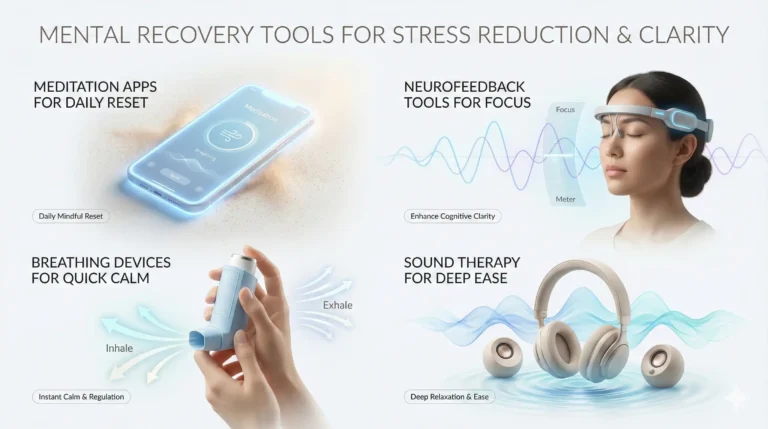
Mental Recovery Tools to Reduce Stress and Improve Clarity
Stress recovery needs the right mental recovery tools, and you feel this directly when the mind becomes heavy. Use simple steps and small devices to bring back clarity improvement in daily life. Keep the process slow and grounded, like holding a warm cup and letting the heat settle in your hands.
Meditation Apps for Daily Reset
Open a meditation app and stay still. Let the screen guide you. Start with slow breathing and listen to the voice. Imagine the mind settling like dust in water. Do this when you wake or when thoughts run too fast.
Breathing Devices for Quick Calm
Hold the device and match your breath with its rhythm. Inhale slowly and release long. Treat it like pulling a bellows that cools the fire inside.
Neurofeedback Tools for Focus
Wear the headset and sit quietly. Let the tool read your mind signals. Follow the small tasks it shows, and train your brain to stay steady.
Sound Therapy for Deep Ease
Play soft tones or binaural beats. Sit down and let the vibration move through you (like gentle waves). Use it before sleep or after heavy work.
Nutrition-Based Recovery Tools for Faster Healing
Nutrition recovery starts with simple choices and steady habits. Many people look for healing supplements and hydration tools when their body feels slow or tired. Use them in a practical way and let the body rebuild like a small workshop repairing broken parts.
Use Supplements for Basic Repair
Start with essential support. Take protein powder after activity and add omega oils for joints. Imagine you fill cracks in a wall. Choose clean labels and avoid heavy sugar. Check how your body responds each week.
Keep Hydration Systems Ready
Carry a large bottle and sip often. Use hydration packs when you move outside. Treat water like a fuel line in a machine.
Add Electrolyte Enhancers
Mix light electrolyte tablets in water. It balances salts and stops sudden fatigue. Do it before long work or training.
Use Protein Tools Daily
Eat eggs, pulses, and simple shakes. Keep one small pack in the bag (for quick recovery).
Track Vitamins with Apps
Install vitamin monitoring apps and check levels. Adjust doses when the app shows low zones.
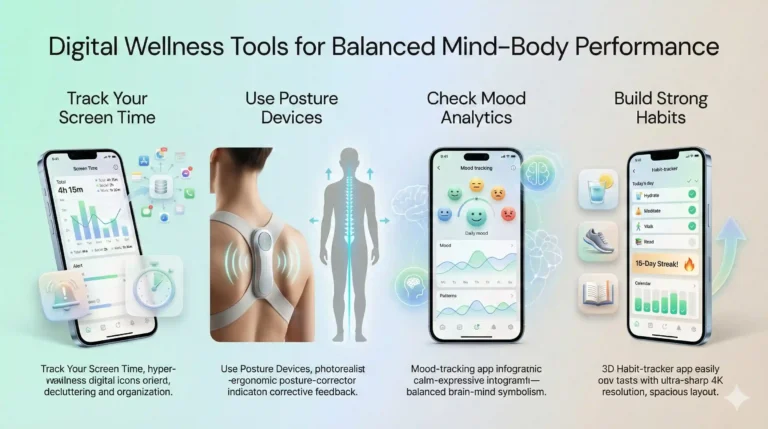
Digital Wellness Tools for Balanced Mind–Body Performance
Digital wellness tools help you control daily habits and keep mind-body balance in simple ways. Many people now search for digital wellness tools and wellness tech because routine feels heavy. So use these tools like small helpers that sit in your pocket. They guide screen time, posture, mood, and even your small habits that slip out of hand.
Track Your Screen Time
Start with a screen tracker. Let it show how many hours you stare at your phone. Then cut it down slowly. Treat it like cleaning a cluttered drawer. Remove extra minutes. Use the alert when it beeps (helpful reminder).
Use Posture Devices
Wear a posture device on the back. It vibrates when you bend too much. Stand tall like holding a light bag on your head. Train your spine daily.
Check Mood Analytics
Open mood tracking app. Tap feeling. Watch patterns. Now adjust sleep and food when mood drops.
Build Strong Habits
Use habit-building apps. Create one small task. Do it every morning. Let the streak push you forward.
Recovery Tools for Athletes and High-Performance Individuals
Athlete recovery tools are now a big part of peak performance tools, and many sports recovery routines depend on them. When you train hard, the body acts like a loaded spring. It stores tension and then shouts for relief. So give it the right tools and let it come back stronger.
Cryotherapy Use
Stand inside the chamber and let the cold hit you. Breathe slowly. Let muscles tighten for a moment, then relax like a rag doll. Use it after heavy sessions to calm inflammation and clear that deep fatigue.
Recovery Boots
Wear the boots and start the compression cycle. Let it squeeze and release, like someone pressing air through tired legs. Use it for long-running days or heavy leg work. It helps flush out waste and bring fresh blood.
HRV Trackers
Check your heart-rate variability each morning. Watch if the number drops. If it drops, rest more. Treat it like a dashboard light (small warning).
Performance Tools
Use massage guns, stretch bands, and simple floor mobility. Move slowly and steadily. Let joints open and breathe again.
Workplace Recovery Tools for Stress-Free Productivity
Workplace recovery is not a fancy idea; it is simply small tools that keep your body calm and your mind steady. Many people search for workplace recovery and productivity tools when stress starts blocking their daily work. Use the right stress relief tools, and your focus returns like water finding its flow again.
Ergonomic Tools
Start with your chair and table. Keep them at a height that lets your arms rest easily. Use an ergonomic mouse and keyboard so fingers don’t get stiff. Sit like you hold a soft balloon between your shoulder blades. It opens the chest and reduces pressure.
Anti-Fatigue Mats
Stand on the mat when you work long hours. It softens the load on feet and legs. It feels like standing on packed sand.
Desk Recovery Kit
Keep simple items near you. Eye drops, a small massage ball, and a warm pack (use it for a tight neck). Use them in short gaps.
Micro-Break Apps
Install an app that tells you to stop for 30 seconds. Follow it. Blink, stretch, breathe. Then return.
Posture Correctors
Wear a light posture band. It guides your shoulders back and reminds you when you slump. It works quietly while you type.
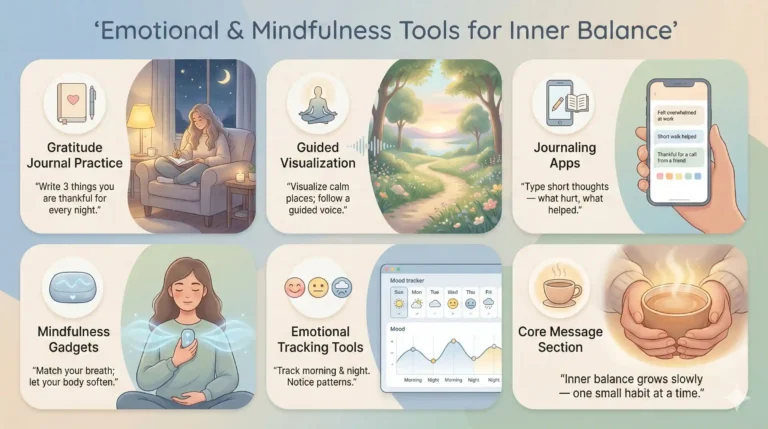
Emotional and Mindfulness Tools for Inner Balance
Emotional recovery tools and simple mindfulness recovery methods help you hold inner balance in daily stress. Start with one small habit and let it grow. Think like you are holding a warm cup. You feel the weight, and you focus on this moment. This is how inner balance is built slowly.
Gratitude Journal Practice
Take one notebook and write three things you feel thankful for. Do it every night. Keep it short. Use simple words. This calms your chest and settles racing thoughts (very helpful on busy days).
Guided Visualization
Sit straight. Close eyes. Imagine walking on a quiet road. Picture soft light. Follow the guide voice from any app. Let each step slow down your mind.
Journaling Apps
Use a basic journaling app. Type small notes. Write what hurt you and what helped you. Treat it like cleaning a messy drawer.
Mindfulness Gadgets
Use a breathing gadget. Hold it steady and match your breath. Let your shoulders drop like a rag doll.
Emotional Tracking Tools
Track mood morning and night. Tap the emoji. Notice patterns. Then adjust your routine.
Evaluating and Choosing the Right Recovery Tools for Your Needs
Choosing recovery tools feels confusing sometimes, and many people search for how to choose recovery tools or find the best recovery tools that match their lifestyle. So slow down first and look at your own routine. Notice your stress level and how your body reacts after a long day. Personalised recovery starts from here, not from buying random gadgets.
Understand Your Daily Pattern
Check your day from morning to night. See where tension sits in the body. If you sit long, pick tools that open joints. If you stand long, pick tools that calm legs. Do this like checking small leaks in a pipe.
Match With Your Fitness Level
Begin slowly. Use light-pressure tools and gentle stretching bands. Then an increase occurs when the body adjusts. Think of lifting a small box first before a heavier one.
Respect Your Stress Load
High stress means choosing soft tools that slow breathing. Low stress means choosing active ones like rollers.
Align With Your Personal Goal
Pick one goal. Pain relief, better sleep, or fast muscle recovery. Then choose a tool that fits that one path (keep it simple).
Final Thoughts – Building a Sustainable Recovery Routine
Start your recovery routine with a clear mind and simple steps. Keep it steady and do not rush. So you build sustainable wellness slowly, like lifting a small weight every day instead of a heavy one in one go.
Focus on tools that bring peak performance recovery. Stretch the body. Calm the breath. Release the mind. Do all three because they support each other.
Stay consistent. Do it daily and not only when tired. Think of recovery like watering a plant. Give small water often. And let yourself rest with respect. This is how long-term healing grows.
Check out our latest articles
Start each day with ancient wisdom in Ayurvedic Morning Routine for Energy.
Upgrade your nights with science-backed tools in Sleep Optimization Technology.
Frequently Asked Questions
Start simple. Keep your recovery routine short and repeatable. Begin with slow breathing and gentle stretching. Hold each stretch like you hold a warm cup—steady and easy. Then rest your shoulders and loosen your jaw. This kind of routine calms your system and supports peak performance recovery through the day.
Make habits that don’t feel heavy. Drink water early. Move your body often. Sleep on time. Treat these like you treat brushing teeth—small but daily. When habits stay light, they stay longer.
Muscles need repair after long use. Think of them like rubber bands. Pull too much without rest, and they lose strength. Give them food, fluids, and a little gentle movement after a heavy day. It keeps your body ready for the next load.
Use a foam roller, heat pad, and slow breathing. Roll slowly, like smoothing wrinkles from cloth. Apply heat to tight areas (not too hot). These tools activate blood flow and ease soreness.
Sit in a quiet space and breathe slowly. Place your hand on your chest and feel it rise. Let your body drop like a rag doll for a few minutes. This calms the nervous system and helps sustainable wellness.
Adjust when the body feels heavy or performance drops. Listen daily. If energy falls, add more rest. If stiffness comes, add gentle movement. Keep it flexible, like tuning a musical string.
References
American Psychological Association. (2019, October 29). Mindfulness meditation: A research-proven way to reduce stress.
Bleakley, C., McDonough, S., Gardner, E., Baxter, G. D., Hopkins, J. T., & Davison, G. W. (2012). Cold-water immersion (cryotherapy) for preventing and treating muscle soreness after exercise. Cochrane Database of Systematic Reviews, 2(2), CD008262.
Chen, Q., Zhao, X., Zhao, C., Li, H., & Zhang, Y. (2024). Effect of mindfulness-based interventions on people with hypertension: A meta-analysis and systematic review. Frontiers in Psychology, 15, 1345312.
Cheng, A. J., & Jude, S. (2018). Cooling down the use of cryotherapy for post-exercise recovery. Temperature, 5(2), 117-119.
Fernández-Lázaro, D., Mielgo-Ayuso, J., Adams, D. P., Fernandez-Lazaro, C. I., Garrosa, E., & Ramos-Campo, D. J. (2024). Omega-3 fatty acid supplementation on post-exercise inflammation, muscle damage, oxidative response, and sports performance in physically healthy adults: A systematic review and meta-analysis. Nutrients, 16(13), 2028.
Galante, J., Friedrich, C., Dawson, A. F., Modrego-Alarcón, M., Gebbing, P., Delgado-Suárez, I., Gupta, R., Dean, L., Dalgleish, T., White, I. R., & Jones, P. B. (2023). Mindfulness-based programmes for mental health promotion in adults in nonclinical settings: A systematic review and meta-analysis of randomised controlled trials. PLoS Medicine, 18(1), e1003481.
Grossman, P., Niemann, L., Schmidt, S., & Walach, H. (2004). Mindfulness-based stress reduction and health benefits: A meta-analysis. Journal of Psychosomatic Research, 57(1), 35-43.
Khoury, B., Sharma, M., Rush, S. E., & Fournier, C. (2015). Mindfulness-based stress reduction for healthy individuals: A meta-analysis. Journal of Psychosomatic Research, 78(6), 519-528.