Natural sleep hygiene becomes important when you lie in bed and still can’t rest. Many people try to get better sleep naturally, but they forget how small habits control the night. Healthy sleep habits look simple, but they guide your body like a routine signal.
Start by fixing the environment. Keep lights low and reduce noise. Make the room cool. Then break late-night screen time. Your mind stays active like a running fan.
Now create a routine. Sleep and wake at the same time. Slow your breath before bed (helps calm nerves). Treat this like brushing teeth every night—simple, daily, and steady.
Table of Contents
ToggleUnderstanding How Your Body’s Internal Clock Works
Understanding your circadian rhythm is like checking the timing belt of your body. It runs your sleep cycle and even your natural melatonin release. When it goes off track, your whole day feels slow and confused. So learn how this clock works and reset it with simple steps.
Know Your Internal Clock
See this clock like a home inverter. It charges and discharges. Your brain follows light and dark signals. When morning light hits your eyes, the clock says, “Wake now.” When night comes, it releases natural melatonin and pushes you toward sleep.
Use Daylight Properly
Step outside early. Let sunlight hit your face and arms. This tells your body that the day has started (even 10 minutes helps). It also stops the leftover sleep chemical.
Reset With Routine
Sleep and wake at the same time. Avoid long afternoon naps. Keep your meal timing steady. Small habits like dim lights at night guide the clock, same as we guide a child to sleep with a calm voice.
Creating a Sleep-Friendly Bedroom Environment
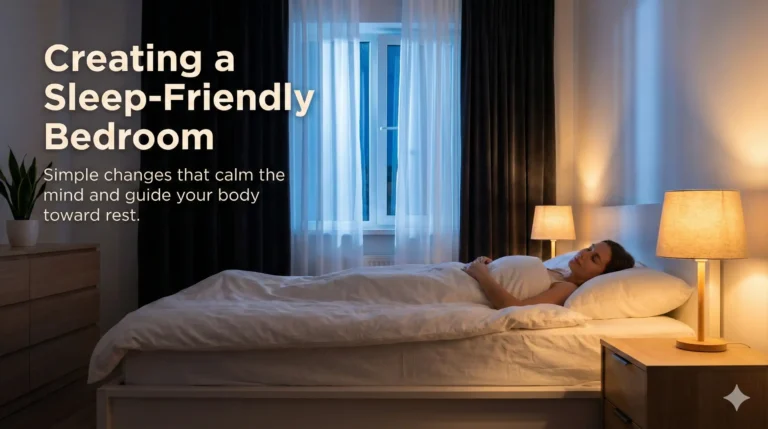
A good sleep environment makes your mind settle fast. Many people don’t realise how a calming bedroom works like a reset button. So create a bedroom setup for sleep that supports your body, not fights it. Think simple changes, like dim light or cool air, that shift your brain toward rest.
Set the Temperature
Keep the room cool. Around 18–20°C works for most. Feel the air on your skin and check if it feels heavy. If yes, open a window (small gap only).
Control the Lighting
Dim the lights. Turn off bright screens. Use warm lamps. Make the room feel like early evening.
Reduce Sound
Cut the loud noise. Use earplugs or white noise. Block street sound with curtains. Imagine your room becoming a quiet cave.
Pick the Right Mattress
Use a mattress that supports your back. Lie down and check if your hips sink too much.
Clear the Clutter
Remove extra items. Keep the floor open. A messy room makes the mind busy.
Improve Air Quality
Let fresh air come in and clean the dust often. Breathe slow and steady.
The Role of Evening Routines in Preparing the Mind for Rest
Start your sleep routine with small signals that tell the body, “Now it is time to slow down.” These wind-down habits work like simple switches. You do them daily, and the mind starts to prepare for rest without big effort. This is sleep preparation, naturally.
Dim the Lights
Make the room softer. Reduce bright screens and harsh bulbs. Let the eyes adjust slowly, like when you enter a quiet movie hall. Do it 20–30 minutes before bed.
Take a Warm Shower
Use warm water to loosen tight muscles. Stand under the stream and breathe slowly. This kind of routine helps the body temperature drop later (good for deep sleep).
Read Something Light
Hold a simple book. Avoid heavy stories. Read slowly, as if you were talking to yourself. Stop when the eyes feel heavy.
Practice Mindfulness
Sit still and follow the breath. Count to four on inhale and exhale. Imagine dust settling in a room.
Create Relaxation Cues
Use one fixed cue—maybe soft music or mild lavender. Repeat it daily so the mind connects it with rest.
Natural Ways to Reduce Stress Before Bedtime
Stress relief for sleep starts when you slow down your body and mind. Many people search for simple bedtime relaxation techniques because stress comes fast. So use natural ways to settle yourself before going to bed. Keep it simple and do it daily like you brush your teeth.
Deep Breathing
Sit straight and place your hand on your belly. Now breathe in slowly and let the belly rise. Then breathe out like you push air through a small hole. Do 5 rounds. This calms the nerves and reduces a tight chest (a common sign of stress).
Gentle Yoga
Do easy moves. Touch toes, lift arms, and twist lightly. Keep it slow. Think like you stretch a tired rope after long work. It opens the body.
Journaling
Write down 3 thoughts. Put on paper whatever trouble you have. This removes mental load.
Progressive Relaxation
Lie down. Tighten legs, then release. Now do the same with arms. Notice the warm feeling, like switching off small stress switches in the body.
Nutrition Habits That Support Healthy Sleep
Sleep nutrition matters a lot when you try to get steady, calm nights. Use simple foods for better sleep and plan your bedtime diet with care. Think about how your body acts in a day. It follows what you feed it.
Watch Your Caffeine Timing
Stop caffeine after mid-afternoon. Let your system cool down. Even one cup late evening pushes your mind awake like a bright shop light. Switch to warm herbal teas that relax the chest and slow the breath.
Use Magnesium-Rich Foods
Add bananas, nuts, and leafy greens. These calm muscles and reduce small night cramps. Eat them in small portions so your stomach stays light.
Balance Hydration
Drink water steadily throughout the day. Then slow down before bed. Avoid going to bed thirsty or overloaded (this creates midnight bathroom trips).
Avoid Heavy Meals
Keep dinner light. Choose easy-to-digest food. Heavy curries or fried items keep the stomach busy and sleep shallow. Imagine carrying a heavy bag while trying to rest—the body feels the same.

Importance of Daytime Habits for Night-Time Sleep Quality
Daytime habits for sleep matter more than people think, and many people search for natural sleep improvement when they feel tired every night. Good sleep starts long before bedtime. It starts in the morning. Treat your day like you prepare a field before planting. Make your body ready first, then the night work happens on its own.
Get Sunlight Early
Step outside in the first light. Let the sun hit your eyes naturally. It resets your inner clock and tells your brain, “Stay awake now.” Even 10 minutes of work.
Move Your Body
Do simple movements. Walk fast, climb stairs, stretch. This physical activity burns extra energy and calms a busy mind. Think of releasing pressure from a bottle.
Take Structured Breaks
Stop after long work blocks. Stand, breathe, sip water. These tiny breaks keep stress low and stop that weird feeling at night (very common in a desk job).
Reduce Long Daytime Naps
Keep naps short. 20 minutes only. Long naps confuse your sleep drive and push your night sleep away like sliding a chair backwards.
Managing Screen Time and Blue Light Exposure
Too much screen time can hurt your sleep. Blue light from phones, laptops, and TVs can stop melatonin release. This makes falling asleep hard and waking up tired. You feel restless, and your mind keeps thinking. You need to control screen time effects, especially at night. Small changes help a lot.
Limit Nighttime Screens
Stop using the phone or computer 1 hour before bed. Read a book or listen to music instead. If work needs a screen, use night mode or a blue light filter.
Try Digital Detox at Night
Keep the phone away from the bed. Do a short meditation or stretch. Tell family or friends you avoid calls late.
Use Blue Light Filters
Install apps or device settings for a warm screen light. Reduce brightness at night. Even small changes protect melatonin and help with sleep.
Keep a Consistent Routine
Go to bed same time daily. Wake up same time. Your body learns rhythm, and sleep improves.
Natural Techniques to Fall Asleep Faster
How to fall asleep naturally – many people search for this when nights feel too long. I teach my students these simple sleep techniques that work fast, no pills.
Try 4-7-8 Breathing First.
Sit or lie down. Breathe in quietly through the nose for 4 seconds. Hold breath for 7 seconds. Breathe out slowly through the mouth for 8 seconds (make a small whoosh sound). Do 4 times only. This calm nervous system is quick.
Body Scan to Relax
Start from the toes. Tighten them hard for 5 seconds, then let go. Move up – feet, legs, belly, arms, face. You feel heavy, sink into bed.
See Peaceful Place
Close eyes. Imagine you walk slowly on a quiet beach, and the waves are soft. Or lie in a warm grass field. Keep the picture clear, the body gets sleepy.
Gentle Neck Stretch
Turn your head slowly left, hold 10 seconds, then right. This release day tension.
Do one or two. Sleep comes naturally.

Consistent Sleep Timing and Why It Matters
A consistent sleep schedule changes everything for your energy and health. Do you want to feel good every day? Fix sleep timing first.
Why are consistent sleep habits so important?
Body love rhythm. Same bedtime, same wake-up time — even weekends. This keeps the circadian clock strong. No more Monday tired like dead.
Do this every day
Go to bed same time. Wake up same time. No snooze button (this kills the rhythm). Weekend is also the same — no sleep in late. Your body says thank you.
Morning, make it stable.e
Wake up, open the curtain, let the sun hit your face. Drink water. Move a little. This tells body: day starts now. Circadian stay happy.
Keep this way for 2–3 weeks. You feel different. Energy stable, mood better, no more foggy head. Simple but powerful. Start tonight.
Understanding the Impact of Lifestyle Choices on Sleep
How lifestyle and sleep connect every day. Your habits decide if you sleep deeply or wake tired.
Main sleep disruptors you must know
- Alcohol- You drink in the evening, feel sleepy fast, but later at night it wakes you. Sleep becomes light, no repair.
- Nicotine- Smoke or vape before bed, it stimulates the brain like coffee. Heartbeat faster, hard to fall asleep.
- Late-night work- Screen light stops melatonin, the body thinks still day. You finish work at 1 AM, your brain stays active long time.
- Irregular routine- Sleep at 10 PM one day, 3 AM the next day. Body clock confused, never know when to rest.
Fix this: stop alcohol 4 hours before bed, no nicotine after dinner, work ends by 9 PM, same bedtime every night. You do this, sleep comes naturally. A healthy sleep lifestyle starts with small rules you follow strictly.
Sleep Hygiene Tips for People with Busy or High-Stress Jobs
Sleep for busy people is not easy. Stress and sleep are linked, and work life can make nights short and restless. You need good sleep hygiene for work life to stay alert and healthy. Even small changes help a lot. Start with the basics and adapt for your schedule.
Set a consistent sleep window.
Even if shifts change, try to keep the same sleep hours. Use blackout curtains and earplugs if day sleep.
Limit screens before bed.
Turn off phones and laptops 30 minutes before sleep. Light from devices keeps the brain awake.
Create a pre-sleep routine.
Take a warm shower, stretch, or meditate. Signal brain that it’s time to rest.
Nap smart
A short 20-minute nap works for remote workers or high-pressure professionals. Don’t sleep too long.
Avoid caffeine late
Coffee in the morning is okay. After 2 PM, it blocks deep sleep.
Move your body
Exercise daily, but not right before bed. This helps burn stress and relax muscles.

Natural Sleep Aids and When to Use Them
Natural sleep aids help many people fall asleep without strong drugs. I use them myself when my mind is racing at night.
Best Herbal Remedies for Sleep
- Drink chamomile tea 30-45 minutes before bed. It calms nerves fast (my patients love this one).
- Put a few drops of lavender oil on a pillow or use a diffuser. Smell relaxes the brain like a soft hug.
- Valerian root tea or capsule – strong, works well for deep insomnia, but smells bad, like old socks. Start small dose.
- Melatonin supplement 1-3 mg – good when the body clock is broken from travel or night shift. Take only a short time, not every day.
When to Use Them
Use natural sleep aids when you sometimes have a hard to sleeping. If you cannot sleep for more than 3 weeks, go see a doctor – maybe a bigger problem. Start one remedy at a time. Listen to your body.
Final Thoughts
You want natural sleep improvement that lasts. Start simple.
Fix your routine first. Same bedtime every night, same wake time, even weekends. The body loves this regularity.
Make the bedroom only for sleep. Dark, cool, quiet. No phone in bed – blue light kills melatonin.
Before sleep, do the same thing: brush teeth, dim the light, maybe a 5-minute slow breath. This tells the brain: now sleep time.
Mindset matters. Stop worrying about “I must sleep”. This makes it worse. Think: bed is a safe place, rest is good enough.
Balance day. Move body during the day, eat early, no coffee after noon. All help.
Change slowly. Add one habit this week, another next week. You build a healthy sleep routine step by step. Be patient. It works.
Frequently Asked Questions
Start same time every night. Go to bed when the sun goes down if you can, or latest 10-11 pm. Wake up same time, even at weekends. Body loves this rhythm, like a clock inside you.
Stop screen 1 hour before bed. Blue light kills melatonin. Read a paper book or listen to soft music. Then lie down, put your hand on your belly, breathe slow – 4 seconds in, 6 seconds out. Do this 10 times. You feel heavy, and sleep comes.
This usually liver time in Chinese medicine. You eat too late or too spicy. Stop eating food after 7 pm. Drink warm water with a little lemon before bed. Liver, calm down, you sleep through.
Warm milk with a little honey and a pinch of turmeric. Or chamomile tea 30 minutes before bed. No caffeine after 2 pm – not even tea or chocolate. This rule changes everything.
Room dark, really dark (use a curtain or an eye mask). Cool, 18-20°C best. No phone in the room. A bed only for sleep and sex. Brain understands – bed mean sleep time.
Get up. Do 5 minutes of slow walking in the house. Then sit, breathe deep. Go back to bed only when your eyes are heavy. Never stay in bed awake long time. This train brain good.
Optimize Your Daily Energy, Sleep & Recovery
Energize your mornings naturally with Ayurvedic Morning Routine for Energy.
Improve sleep quality using science-driven solutions in Sleep Optimization Technology.
Support muscle repair and overall wellness with Recovery Tools.
References
Alanazi, E. M., Aljuaydi, K. A., Alotaibi, B. A., Alhenaki, M. S., Alshehri, A. K., Alhuthil, A. A., Alotaibi, R. F., Alqahtani, A. S., Alotaibi, S. F., Alsubaie, M. M., & Alqahtani, N. A. (2023). Sleep hygiene practices and their impact on mental health and functional performance among adults in Tabuk City: A cross-sectional study. Brain Sciences, 13(3), 493.
Ali, R. M., Zolezzi, M., & Awaisu, A. (2023). Sleep quality and hygiene behaviours among students in Qatar: A cross-sectional study. Nature and Science of Sleep, 15, 49-62.
Baranwal, N., Yu, P. K., & Siegel, N. S. (2023). Sleep physiology, pathophysiology, and sleep hygiene. Progress in Cardiovascular Diseases, 77, 59-69.
De Pasquale, C., Ferlazzo, F., Aricò, P., Sciaraffa, N., Babiloni, F., & Di Flumeri, G. (2024). Sleep hygiene – What do we mean? A bibliographic review. Sleep Medicine Reviews, 73, 101870.
Farhud, D., & Aryan, Z. (2018). Circadian rhythm, lifestyle and health: A narrative review. Iranian Journal of Public Health, 47(8), 1068-1076.
Ferracioli-Oda, E., Qawasmi, A., & Bloch, M. H. (2013). Meta-analysis: Melatonin for the treatment of primary sleep disorders. PLOS ONE, 8(5), e63773.
Harvard Health Publishing. (2024). Blue light has a dark side. Harvard Health.
Harvard Health Publishing. (2025). Sleep hygiene: Simple practices for better rest. Harvard Health.