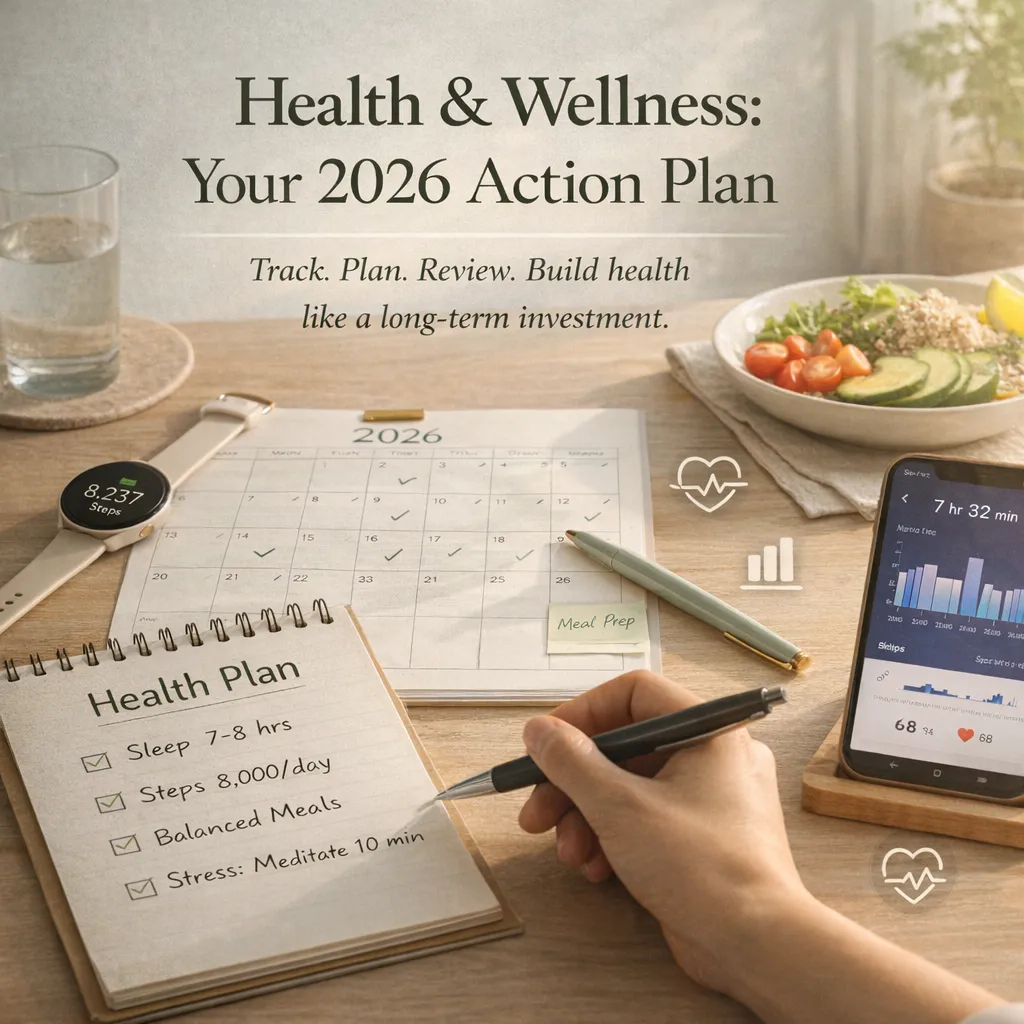
The 2026 health and wellness action plan starts with clear control, not motivational talks. You build this plan like a calendar, not a dream list. Write your health resolutions for 2026 on paper and set rules. Track weight, sleep hours, blood pressure, and steps. This baseline matters and shows real direction, like checking a map before travel.
Now, create a personalised wellness plan using your data and doctor records. Follow prevention first. Schedule tests, daily walking, and simple meals. Treat health like a bank savings account, make small deposits daily.
Future health planning needs to be reviewed monthly and adjusted slowly, so progress stays steady (not rushed) for your life.
Table of Contents
ToggleConduct a Personalised Health Baseline Assessment
Conduct a personalised wellness assessment to shape your 2026 health and wellness action plan from day one.
Start with a simple self-audit
Check five areas. Do it honestly and write.
- Sleep hours and wake time
- Metabolic health 2026 markers, like waist and energy
- Stress signs during work days
- Mobility when bending or walking
- Nutrition patterns, not diets
Use tools for awareness.
Use AI wearables, free health apps, and a notebook. Track steps, heart rate, and sleep. Then check basic blood markers like glucose, lipids, and vitamin D once yearly. Follow the NHS and WHO ranges. Tools guide you; they do not decide.
Build preventive health tracking.
Measure now → Record weekly → Review monthly → Adjust habits.
This personalised wellness assessment builds trust in yourself. You see patterns. You stop guessing. Start 2026 calm, informed, and ready. Use personal data daily so experience grows and confidence follows steadily over time.
Align Fitness Goals with Adaptive, AI-Guided Movement

AI fitness trends 2026 are changing how people move. Rigid workouts are fading. Now, adaptive, AI-guided movement leads the 2026 health and wellness action plan.
You should stop chasing perfect routines. Start following the data. Wearables track sleep, stress, and recovery, then adjust your personalised fitness routine daily.
How adaptive fitness works
- Mix strength, mobility, and cardio. Same week. Same plan.
- Reduce injury risk by auto-deload days.
- Train for movement-based wellness, not just calories.
Global fitness bodies like WHO and ACSM highlight consistency over intensity. This matters.
Simple hybrid flow
Warm-up → Strength → Mobility → Light cardio → Recovery
Do this. Short sessions. Often. AI tools change load when joints feel stressed. So you avoid overuse injuries.
Now focus on habits. Miss a day, continue the next day. Adaptive systems support life, work, and fatigue. This is fitness guidance.
Build Nutrition Around Metabolic and Longevity Health
Build nutrition around metabolic health and longevity, not crash dieting. This is the base of any 2026 health and wellness action plan.
Start with metabolic stability.
Control blood sugar and insulin first. Eat protein at every meal. Eggs, dal, fish, curd. This supports metabolic health, nutrition and muscle.
- Protein target: one palm per meal
- Fibre daily: vegetables, fruits, whole grains
- Healthy fats: nuts, seeds, mustard oil
Focus on micronutrients
Deficiency slows longevity. Iron, B12, magnesium, zinc. Use home foods. Leafy sabzi, sprouts, fermented foods. Simple and cultural.
Anti-inflammatory eating
Reduce ultra-processed food. Sugar spikes inflammation. Use spices like turmeric, ginger. This supports preventive nutrition strategies.
Build habits, not rules.
Eat at the same time daily. Chew slowly. Sleep affects metabolism. Follow longevity diet habits seen in Blue Zones and WHO-backed patterns. Harvard nutrition also confirms this works long-term. Evidence keeps repeating the same basics.
Develop Mental Fitness as a Daily Skill
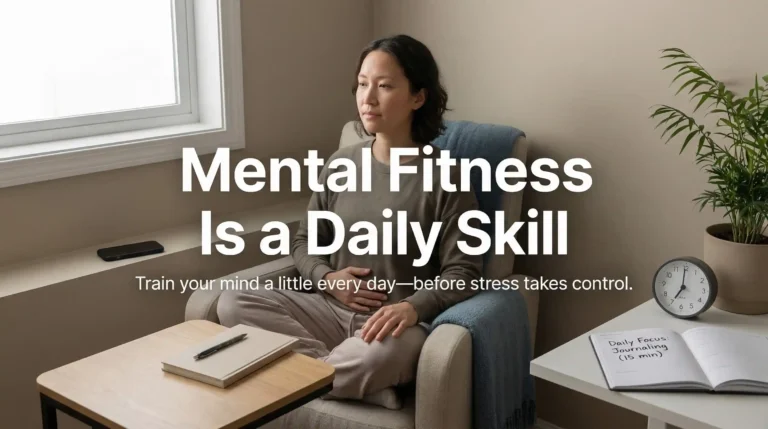
Mental fitness is what people search for today, not only mental health crisis help. This fits a 2026 health and wellness action plan mindset.
Mental fitness goals mean training the mind daily, like muscles. Do it before stress wins.
Core Daily Practices
- Breathwork: Slow inhale 4 count, hold, exhale 6. Do it now.
- Journaling: Write one page. Dump thoughts. Then stop.
- Attention training: Focus on one task for 10 minutes. No phone.
- Emotional regulation: Name the feeling. Calm it. Then act.
Public health frameworks like WHO life skills and CDC stress models say daily habits build resilience. Stress management 2026 is about routine, not emergency.
Simple Flow
Wake → breathe → focus → reflect → sleep
Stress management 2026 table
Habit | Time |
Breath | 5 min |
Write | 10 min |
Focus | 25 min |
Holistic wellness practices include mind, body, and routine. You should train in mental fitness daily. Not perfect days. Just consistent ones. Everywhere. Everywhere.
Optimise Sleep as a Core Health Investment
Sleep optimisation 2026 starts here. You fix sleep, then many health problems slow down. This fits the 2026 health and wellness action plan idea. Sleep builds immunity, sharpens thinking, and protects longevity. CDC and NIH explain this clearly.
Why sleep matters
- Immunity resets during deep sleep. Miss it, you get sick more.
- The brain clears waste. Memory improves. Focus stays longer.
- Hormone balance. Ageing slows a bit.
Do this every night
- Sleep at the same time. Wake at the same time. Align circadian rhythm.
- Dark room. Cool air. Quiet space.
- No phone one hour before bed. Tech breaks sleep.
Track recovery-based wellness
Use free tools. Phone sleep timer. Google Fit. Write sleep hours on paper. Check trends weekly. Fix habits now, not later. Healthy sleep habits pay daily.
Poor sleep costs energy, mood, immunity, work, relationships, and years.
Strengthen Prevention Against Lifestyle Diseases
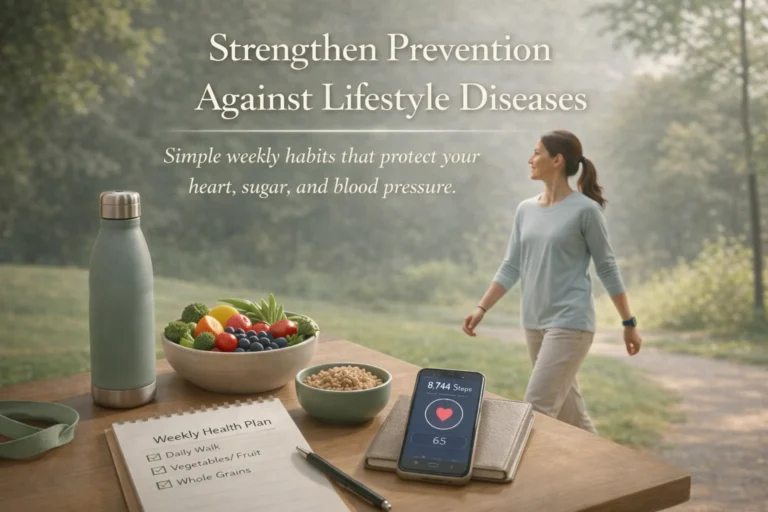
You want preventive health strategies you can do now. This real, simple plan helps fight lifestyle diseases like diabetes, heart disease, and high blood pressure. These diseases are called non‑communicable diseases, and most come from habits. They kill many people every year.
Weekly Action Plan for Long‑Term Health Planning
1) Move Your Body
- Walk 30 min most days.
- Try cycling, dancing, yoga, and housework too.
- This cuts the risk of heart disease and diabetes.
2) Control Salt and Sugar
- Use less than 5 g salt/day (about one teaspoon).
- Stop sugary drinks. Eat fruit instead.
- Read labels. Lower-sodium foods help lower blood pressure.
3) Watch Glucose
- Check blood sugar if you’re at risk.
- Eat whole grains + veggies.
- Avoid sweets and processed food.
4) Reduce Stress
- Do slow breathing every day.
- Sleep 7–8 hours.
- Talk with family or friends. Stress affects your heart.
Quick Checklist
- ✔ Movement 30 min+
- ✔ Low salt
- ✔ Less sugar
- ✔ Stress breaks
Do these weekly. Make small steps. This is real prevention, not medicine. Healthy habits = fewer diseases later.
Incorporate Nature-Based Wellness for Resilience
The 2026 health and wellness action plan starts with nature-based wellness. You walk outside and notice sunlight. You feel tension drop. These are outdoor health habits that build resilience.
Why Nature Matters
Your brain changes when you get green-space time. Science shows sunlight exposure helps mood. You feel calm and less stressed. You do better in cities.
Simple Practices
- Walk outside daily for 20 minutes. Do these parks or tree paths?
- Sit in the grass or under a tree’s shade. Let the air touch your face.
- Breathe slowly. In through my nose. Out through the mouth.
- Watch the sky or plants. Notice colour and shape.
How It Builds Resilience
You expose your body to light and fresh air. That supports circadian rhythm and energy. You reduce stress and balance emotion.
Do these outdoor health habits. Start simple, then increase. You make resilience-building practices part of life.
Use Technology Ethically for Preventive Health Monitoring

Use the 2026 health and wellness action plan and tech to stay well. Learn preventive health technology and AI wellness tools in 2026 for your daily life.
What to track
Track steps, sleep patterns, mood trends, and water intake. Use simple apps and low-cost trackers. Do not obsess over numbers. Watch trends, not spikes.
How to use tech ethically
Protect privacy. Read app terms. Turn off data sharing you do not need. Do not give extra personal data. Use free dashboards and open tools that respect you.
Tools
- Basic step counter app
- Heart rate monitor
- Sleep tracker
- Mood log
How to think
See the pattern over days and weeks. Do not check every minute. Notice the trend up or down. Then act. If sleep drops for three nights, rest more.
Use preventive health technology to help you, not stress you. Stay calm and enjoy small wins.
Create Sustainable Habit Systems That Actually Stick
You want sustainable wellness habits that really last. Start with habit stacking. This means attaching new small habits to things you already do. For example, after brushing teeth, do 5 push-ups. These micro-actions feel small but build consistency.
Next, track habits daily. Use a notebook or app. Seeing progress keeps motivation alive. Don’t chase perfection. Missing a day is okay. Focus on long-term behaviour change, not instant results.
Do quarterly reviews. Every three months, check what worked, what failed. Adjust. Maybe morning walks suit you better than evening. Behaviour science shows small, consistent wins beat big, random efforts.
Here is a simple habit stack example:
Existing Habit | New Habit | Notes |
Morning coffee | 2-min stretch | Do while waiting for coffee |
Brushing teeth PM | Floss | Make it automatic |
Lunch break | 5-min walk | Step outside |
Start today. Stack habits, track daily, review quarterly. This is your 2026 health and wellness action plan. Consistency beats perfection.
Strengthen Social and Community Wellness Connections
Social wellness 2026 is part of your 2026 health and wellness action plan. You must build strong ties. Social health is a big wellness pillar. Connect with people. Do this now.
Why social and community matters
Accountability boosts results. You join a group, then keep going. Shared goals make you act. Example: group walk in the park. Example: online challenge with friends.
Do these steps
- Find a group you like.
- Set a shared goal you all agree on.
- Meet offline or online.
- Check progress weekly.
Use digital and local communities.
Online forums help you stay connected. Use an app or chat group. Real-life meet-ups ground you. You build habits that stick.
Accountability keeps you honest. When people watch, you act. Shared goals create routine. These community health habits make you consistent. Holistic well-being grows from connection. Do not isolate. Reach out and join a group today, and feel happier too.
Final Thoughts: Turning Your 2026 Wellness Plan into Lifelong Results
Creating your 2026 health and wellness action plan is just starting. You need a framework to follow for the real health transformation in 2026. Use a simple method: assess → act → track → adapt.
- Assess: Look at your current habits. Check what works and what stops you. Be honest.
- Act: Start small. Choose one habit. Drink water, move daily, eat balanced. Don’t wait for the perfect day.
- Track: Write progress. Use a journal, an app, or notes. See patterns and improvements.
- Adapt: Every 3 months, review plan. Adjust what is hard, keep what works. This builds a long-term wellness strategy.
Remember, authority comes from consistency, not perfection. Even small daily steps add up. Start today. Track quarterly. Then repeat. Over time, your 2026 plan becomes a lifestyle. Your health compounds. You grow stronger, fitter, and more energetic.
Small efforts now = lifelong results later. This is how you turn a plan into reality.
Checkout our latest articles
Build better bedtime habits with Natural Sleep Hygiene.
Align your sleep–wake cycle using Circadian Rhythm Healing.
Discover gentle, effective solutions in Natural Sleep Remedies.
Frequently Asked Questions
Wearable tech stays number one. Says ACSM survey. Track steps, sleep, and heart rate. Buy a watch or ring. Check the data every day. Adjust habits. It makes the plan personal.
Move 150 minutes a week. Walk fast or do strength training for two days. Start small. Add walks after dinner. Then try weights at home. No gym needed first.
Eat whole foods. Fruits, veggies, grains, lean protein. Drink water, not soda. Cut ultra-processed stuff. High sugar, salt are bad. Plan meals. You feel energy up quickly.
Need 7-9 hours at night. Boosts immunity, mood. AMA doctors. Make a routine. Dark room, no screens before bed. Sleep better, day better.
Do mindfulness or walk in nature. Trends show mental fitness is big. Breathe deeply 5 minutes daily. Or journal thanks. Reduces worry. You stay calm.
Yes. Update vaccines, see doctor. Track health data. Preventive good. Start the year strong.
References
World Health Organisation. (2025, September 24). Noncommunicable diseases.
World Health Organisation. (2020, April 28). Healthy diet.
World Health Organisation. (2025, February 6). Sodium reduction.
Centres for Disease Control and Prevention. (2025, July 27). Preventing chronic diseases: What you can do now.
American College of Sports Medicine. (2025, October 21). The future of fitness: ACSM announces top trends for 2026.
McKinsey & Company. (2025, May 28). Future of wellness trends.
National Institutes of Health. (n.d.). Sleep and health. In the CDC sleep guidelines.
Harvard T.H. Chan School of Public Health. (2025). The nutrition source: Longevity and healthy eating.