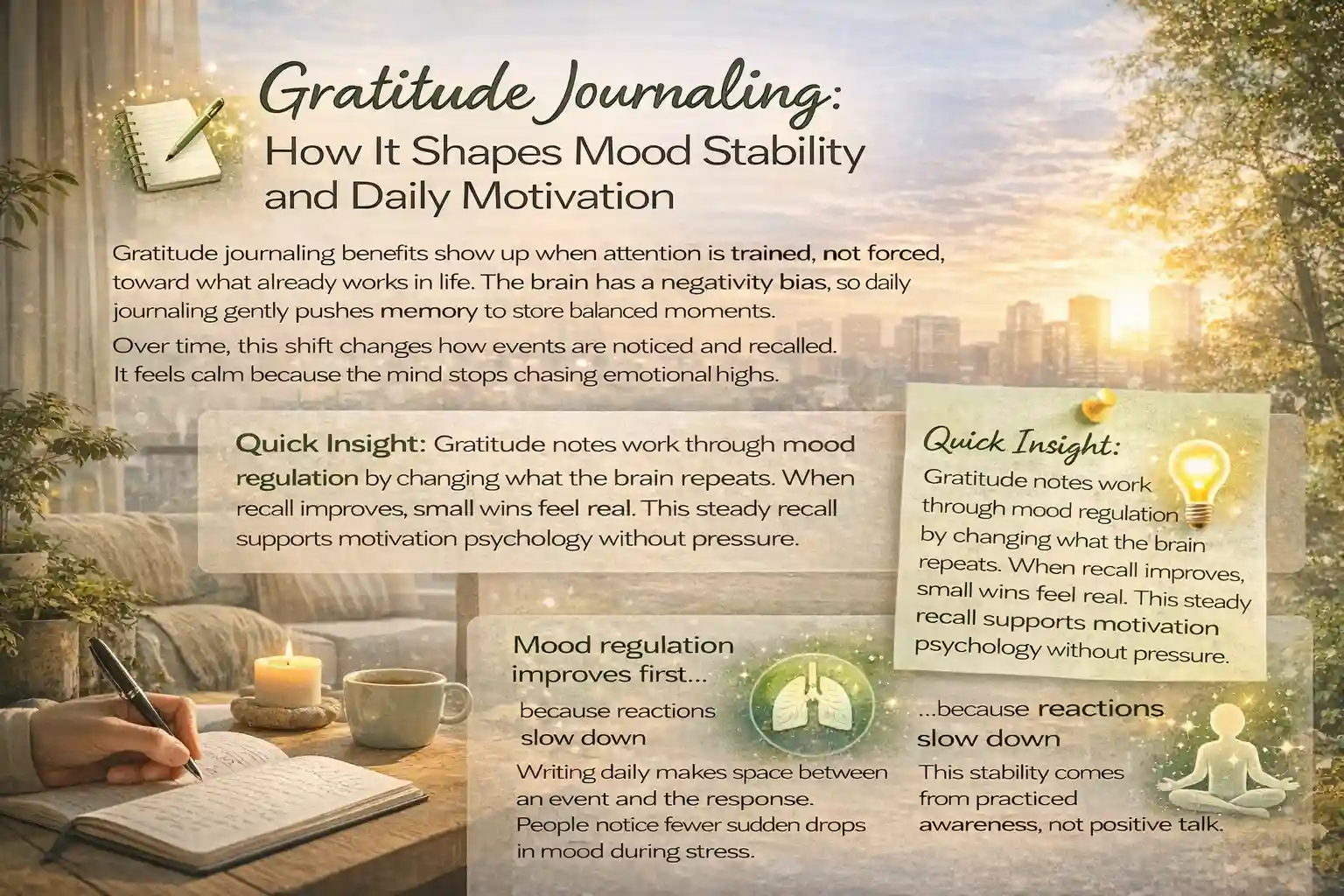
Gratitude journaling benefits show up when attention is trained, not forced, toward what already works in life. The brain has a negativity bias, so daily journaling gently pushes memory to store balanced moments. Over time, this shift changes how events are noticed and recalled. It feels calm because the mind stops chasing emotional highs.
Quick Insight: Gratitude notes work through mood regulation by changing what the brain repeats. When recall improves, small wins feel real. This steady recall supports motivation psychology without pressure.
Mood regulation improves first because reactions slow down. Writing daily makes space between an event and the response. People notice fewer sudden drops in mood during stress. This stability comes from practised awareness, not positive talk.
Table of Contents
ToggleHow Gratitude Journaling Stabilises Mood (Beyond “Feeling Happy”)
Gratitude journaling helps emotional regulation by lowering emotional ups and downs, not by chasing happiness. Mood becomes steady when the mind stops jumping between stress and relief. This practice builds stress awareness and calmer reactions over time.
The Brain’s Negativity Bias — And Why It Skews Daily Mood
The brain runs on negativity bias because it is built for threat detection and problem fixing. It keeps scanning for what went wrong, what is pending, and what feels unsafe. At night, many people replay mistakes and tense talks, while good moments get filtered out. Gratitude journaling works as a counterweight by gently training mental filtering toward balance.
Gratitude as Cognitive Reframing, Not Forced Positivity
Cognitive reframing means looking at the same day with a wider lens, not denying pain. Fake gratitude says everything is fine, but realistic gratitude notices small supports inside hard days. This builds emotional awareness without guilt or pressure. For example, a tough workday can still include one helpful call or a calm tea break.
Emotional Regulation Through “Micro-Wins”
- Finished a delayed task without rushing
- Spoke calmly during a tense moment
- Took a short walk
Specific micro wins support regulation.
Mood Shift Timeline — What Most People Actually Notice
Changes come quietly through habit psychology, not sudden joy. Emotional patterns soften first, then clarity appears. Consistency matters more than writing style.
- Days 1–3: lighter mental load
- Week 2: fewer emotional swings
- Week 3+: stable mood baseline
Why Gratitude Journaling Improves Motivation (Without Relying on Willpower)
Motivational psychology shows that action grows from clarity and calm, not force. When a person feels sure about their progress, energy comes on its own. This is why evidence-based habits matter more than discipline. Gratitude journaling works quietly by building goal clarity and inner confidence over time.
The “Cortisol Fog” That Blocks Motivation
Daily stress raises cortisol stress levels, which slowly drains focus and future thinking. When this happens, the mind stays busy with survival thoughts instead of planning next steps. After a long workday, many people feel mental fatigue and delay even small tasks. This fog becomes one of the strongest motivation blocks, not laziness.
Turning a Journal Into a Psychological Evidence Bank
On low-energy days, people forget what they have already done well, which is temporary motivation amnesia. A gratitude journal acts like an evidence bank that stores proof of effort, learning, and small wins. Reading past entries reminds the mind that progress is real and earned. This boosts self-efficacy and supports motivational habits without pushing hard.
How Gratitude Reduces Avoidance and Procrastination
Procrastination psychology shows that people avoid tasks because they fear stress or failure. When progress is acknowledged, the task feels less dangerous to start. Gratitude shifts attention from what is missing to what is already handled. This lowers avoidance behaviour and helps with simple task initiation.
Mood → Motivation Transfer Effect
A steady mood creates behavioural momentum that makes follow-through easier. When emotions are balanced, the mind wastes less energy on resistance. This mood motivation link explains why calm days often feel more productive. Gratitude journaling builds this steadiness naturally, leading to action without pressure.
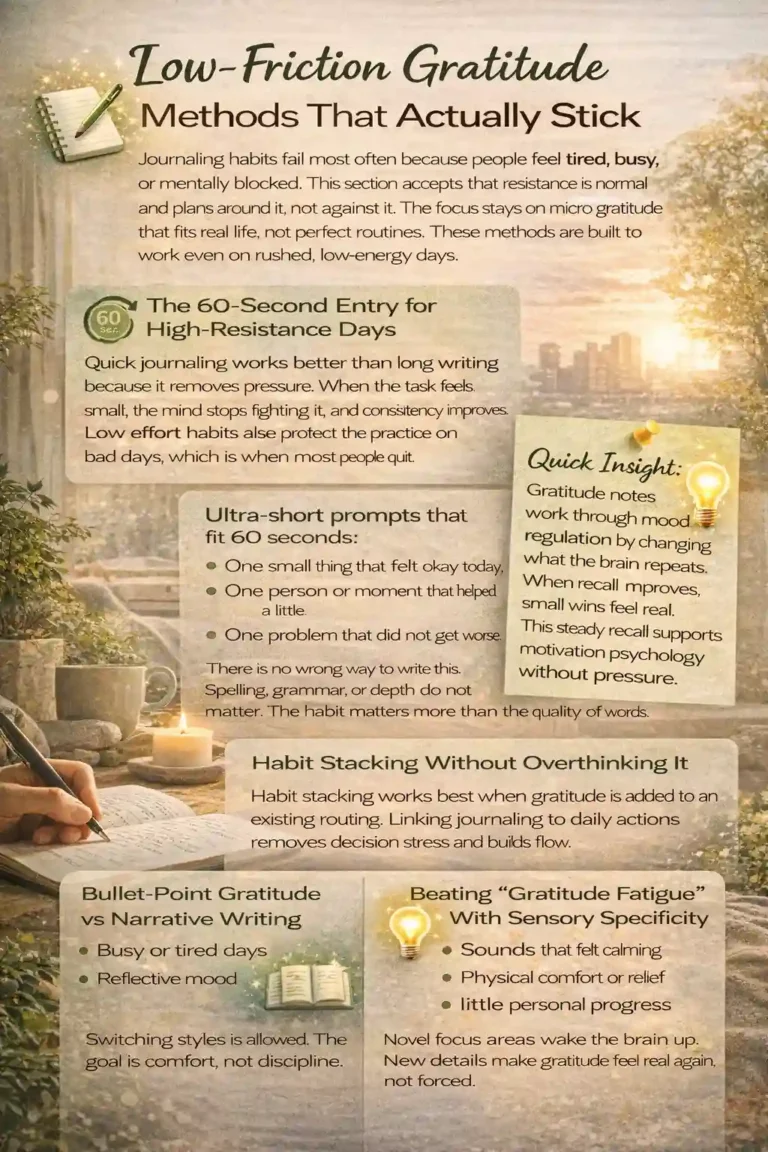
Low-Friction Gratitude Methods That Actually Stick
Journaling habits fail most often because people feel tired, busy, or mentally blocked. This section accepts that resistance is normal and plans around it, not against it. The focus stays on micro gratitude that fits real life, not perfect routines. These methods are built to work even on rushed, low-energy days.
The 60-Second Entry for High-Resistance Days
Quick journaling works better than long writing because it removes pressure. When the task feels small, the mind stops fighting it, and consistency improves. Low effort habits also protect the practice on bad days, which is when most people quit.
Ultra-short prompts that fit 60 seconds:
- One small thing that felt okay today
- One person or moment that helped a little
- One problem that did not get worse
There is no wrong way to write this. Spelling, grammar, or depth do not matter. The habit matters more than the quality of words.
Bullet-Point Gratitude vs Narrative Writing
Different journaling styles suit different people and moods. Bullet points reduce writing resistance, while narrative writing suits those who enjoy storytelling. Choosing the easier format keeps the habit alive.
Style | Best For | Why It Works |
Bullet points | Busy or tired days | Fast, clear, no pressure |
Short paragraphs | Reflective mood | Helps process emotions |
Switching styles is allowed. The goal is comfort, not discipline.
Habit Stacking Without Overthinking It
Habit stacking works best when gratitude is added to an existing routine. Linking journaling to daily actions removes decision stress and builds flow.
Simple pairing ideas:
- Write after brushing teeth
- Note gratitude while morning tea cools
One caution matters here. Over-planning tools, apps, or timings often kills momentum instead of helping it.
Beating “Gratitude Fatigue” With Sensory Specificity
Gratitude fatigue happens when entries sound the same every day. Sensory awareness refreshes attention by changing what the mind looks for.
Rotation ideas to keep it fresh:
- Sounds that felt calming
- Physical comfort or relief
- little personal progress
Novel focus areas wake the brain up. New details make gratitude feel real again, not forced.
When Gratitude Journaling Helps — And When It Doesn’t
Realistic gratitude works best when it supports real life, not when it hides pain. From lived experience, gratitude journaling can feel calming on some days and heavy on others. It is not a magic fix, and it should never replace mental health support when someone is struggling. Knowing its limits helps people use it more healthily.
Why Forced Gratitude Can Backfire
- Feeling pressure to “be thankful” even on bad days can lead to toxic positivity.
- When hard emotions are ignored, emotional suppression slowly builds and causes stress.
- Warning signs include guilt for feeling sad, anger that stays inside, or avoiding real problems.
- A better approach is to write honestly, even if the page holds frustration or silence that day.
Using Gratitude as a Supportive Tool, Not a Cure
- Gratitude journaling works best as one of many complementary practices, not the only one.
- It can sit alongside therapy, rest, prayer, or open talks with trusted people.
- Used gently, it offers emotional support without forcing happiness.
- This framing respects personal limits and keeps expectations realistic and safe.
Who Benefits Most From This Practice
- People with steady self-reflection habits who like quiet writing time.
- Those going through normal stress, not a deep emotional crisis.
- Anyone exploring journaling suitability to balance thoughts, not erase feelings.
How to Start a 3-Day Experiment?
Starting a 3-day experiment is a simple way to explore new habits without feeling stressed. People can start journaling for just a few minutes each day and see how it feels. Framing it as a short trial makes it easier to stay consistent. It removes the pressure of “doing it perfectly” or committing for weeks.
Day-by-Day Simple Prompts
- Day 1: Write about your morning. Note how you feel and one small thing you are grateful for.
- Day 2: Record a micro habit you did today, even if it was tiny. Describe what helped you do it.
- Day 3: Reflect on your mood and energy. Mention one small win from the day.
What to Observe Instead of “Results”
- Notice if your mind feels clearer or calmer.
- Observe any small changes in focus or energy.
- Pay attention to habits that felt easier or harder than expected.
- Look for simple patterns without judging yourself.
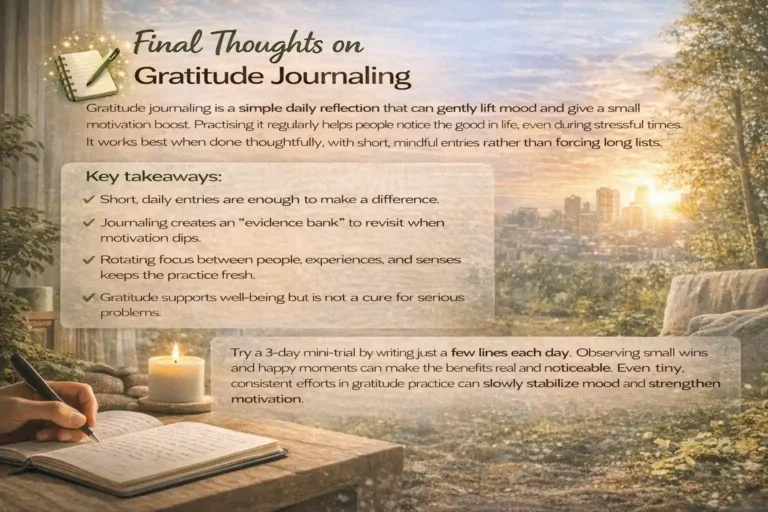
Final Thoughts on Gratitude Journaling
Gratitude journaling is a simple daily reflection that can gently lift mood and give a small motivation boost. Practising it regularly helps people notice the good in life, even during stressful times. It works best when done thoughtfully, with short, mindful entries rather than forcing long lists.
Key takeaways:
- Short, daily entries are enough to make a difference.
- Journaling creates an “evidence bank” to revisit when motivation dips.
- Rotating focus between people, experiences, and senses keeps the practice fresh.
- Gratitude supports well-being but is not a cure for serious problems.
Try a 3-day mini-trial by writing just a few lines each day. Observing small wins and happy moments can make the benefits real and noticeable. Even tiny, consistent efforts in gratitude practice can slowly stabilise mood and strengthen motivation.
FAQs About Gratitude Journaling
There’s no strict rule for journaling frequency. What matters most is staying consistent rather than writing a lot at once. Even a few minutes a day or a few times a week can make a noticeable difference in mindset.
- 1-minute morning reflection
- 5-minute evening recap
- 3–4 entries per week when busy
Feeling fake gratitude is normal, especially when starting. The key is to focus on small, real observations instead of big, forced statements. This makes journaling feel more natural and authentic.
- “I noticed the sunlight on my desk today.”
- “My tea tasted really good this morning.”
- “I smiled at someone who held the door.”
Gratitude journaling is a helpful self-care practice, but not a replacement for therapy or medication. Many people find it complements other mental health practices, helping improve daily mood and motivation without replacing professional guidance.
Gratitude fatigue happens when writing feels repetitive or dull. Using sensory rotation or categorising entries can refresh the habit and keep it enjoyable.
- Monday – people in life
- Tuesday – nature around me
- Wednesday – personal growth
- Thursday – small comforts
- Friday – achievements
Both paper and digital formats work well; it depends on personal habit and convenience. Choosing the right format helps sustain journaling over time.
- Paper – enhances focus and mindfulness
- Digital app – easier tracking and reminders
Results vary, but subtle improvements often appear within a few days. Mood clarity can show in 3–7 days, while motivation and positive perspective may take 2–3 weeks. Consistency, even in small doses, makes the biggest difference.
- 3–7 days – small mood lift
- 2–3 weeks – clearer motivation and focus
References
Emmons, R. A., & McCullough, M. E. (2003). Counting blessings versus burdens: An experimental investigation of gratitude and subjective well-being in daily life. Journal of Personality and Social Psychology, 84(2), 377–389.
Fredrickson, B. L. (2001). The role of positive emotions in positive psychology: The broaden-and-build theory of positive emotions. American Psychologist, 56(3), 218–226.
Kahneman, D., & Tversky, A. (1979). Prospect theory: An analysis of decision under risk. Econometrica, 47(2), 263–291.
Seligman, M. E. P., Steen, T. A., Park, N., & Peterson, C. (2005). Positive psychology progress: Empirical validation of interventions. American Psychologist, 60(5), 410–421.
Wood, A. M., Joseph, S., Lloyd, J., & Atkins, S. (2009). Gratitude influences sleep through the mechanism of pre-sleep cognitions. Journal of Psychosomatic Research, 66(1), 43–48.
Lyubomirsky, S., Dickerhoof, R., Boehm, J. K., & Sheldon, K. M. (2011). Becoming happier takes both a will and a proper way: An experimental longitudinal intervention to boost well-being. Emotion, 11(2), 391–402.
McCullough, M. E., Tsang, J., & Emmons, R. A. (2004). Gratitude in intermediate affective terrain: Links of grateful moods to bidirectionally responsive affect and cognition. Journal of Personality and Social Psychology, 86(2), 295–309.