
Many people want to heal their circadian rhythm because their sleep feels broken. You wake tired, feel low energy, and even simple work drains you. This happens when the body clock slips out of balance.
Understand that this clock controls sleep, metabolism, hormones, and mood. Late-night screens and indoor life confuse it. So your natural rhythm balance goes weak.
Start to reset your body clock with simple steps. Wake at the same time and get sunlight on your face. Cut the screen light before bed. Keep meals in a fixed window. Use calm breathing. This guide focuses on small science-based habits (easy to follow). Reset slowly and with respect for your body.
Table of Contents
ToggleWhat Your Circadian Rhythm Does and Why It Needs Repair
Your circadian rhythm function runs like a quiet engine inside you. This biological clock controls your internal rhythm all day. It tells you when to sleep, wake, digest food, and feel alert. When it breaks, you feel tired even after sleep, and your work focus drops like a loose tool slipping from your hand.
Understand What Your Rhythm Does
See how the body follows day and night. Watch how melatonin rises in the dark and how cortisol lifts you in the morning. Notice the temperature goes slightly up and down. Treat it like traffic lights inside you. Green for wake. Red for sleep.
Repair the Broken Rhythm
Wake at the same time and step into the sunlight. Then reduce screen glow before bed. Eat heavy meals early and keep the room cool. Imagine you push a stuck wheel back on track. Do it daily (even on weekends). Reset disrupted rhythms and bring back stable energy.
The Science Behind Light Exposure and Your Internal Clock
Light exposure for sleep plays a big role in how your internal clock behaves. Your body follows the light–dark cycle, and it responds fast to even small changes. When you understand this, you start fixing your routine with more confidence.
How Morning Light Sets Your Clock
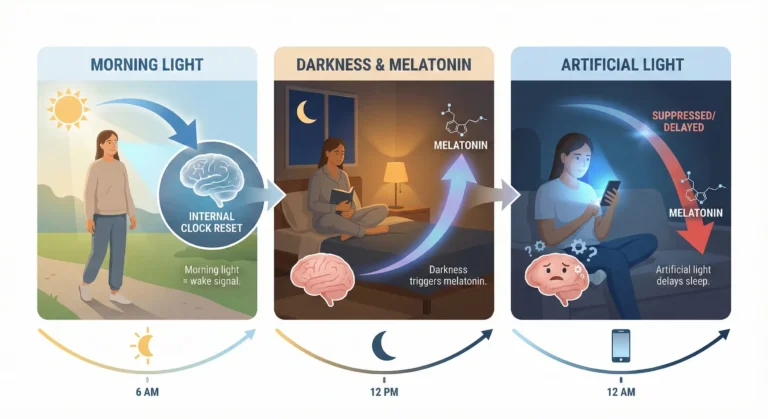
Stand outside early and let the sunlight hit your eyes. Do not stare directly, just face the daylight. Morning light tells your brain “wake now,” and it pushes your melatonin rhythm forward. Think of it like switching on a factory line. It starts everything. Spend 10 minutes outside after waking (even on a cloudy day). Walk near the window if you cannot go out.
How Darkness Create Melatonin
Dim lights after sunset. Darkness tells your body to release melatonin and slow your mind. Imagine lowering the volume on a speaker. Do the same with brightness at home.
How Artificial Light Delays Sleep
Reduce screen glare at night. Keep the phone away from your face and use warm, warm-toned light. Take small daylight breaks so your body stays aligned.
Building a Reset Routine to Stabilise Your Daily Rhythm
Start your circadian routine plan with one clear goal—bring back daily rhythm stability so your body clock alignment feels natural again. Think of it like fixing a wall clock that runs slowly. You reset once, and then you keep it steady.
Fix Your Wake Time
Wake at the same time daily. Do it even on Sunday. Sit up, open curtains, and let light hit your face. Light acts like a switch. Drink water and breathe slowly for one minute.
Set Meal Timing
Eat breakfast within one hour. Keep lunch in the middle of your work hours. Eat dinner early, like when the sky turns orange. Your gut follows time signals.
Plan Day Activities
Move your body in the morning. Walk or stretch. Work in clear blocks and take small breaks. Keep heavy tasks before the afternoon so energy stays balanced.
Build an Evening Routine
Slow down after sunset. Dim lights and stop screens one hour before bed (your mind cools faster). Read or do light chores and then sleep at a fixed time.
Morning Habits That Kick-Start a Healthy Body Clock
Morning rhythm habits help your body clock activation and set a healthy morning routine from the first few minutes of your day. I follow this same method with many people, and it works because the body likes simple patterns and clear signals.
Start With Hydration
Drink water as soon as you wake. Slow sip and wake your organs. Think like you pour a little water in a dry plant. It reacts fast.
Step Into Sunlight
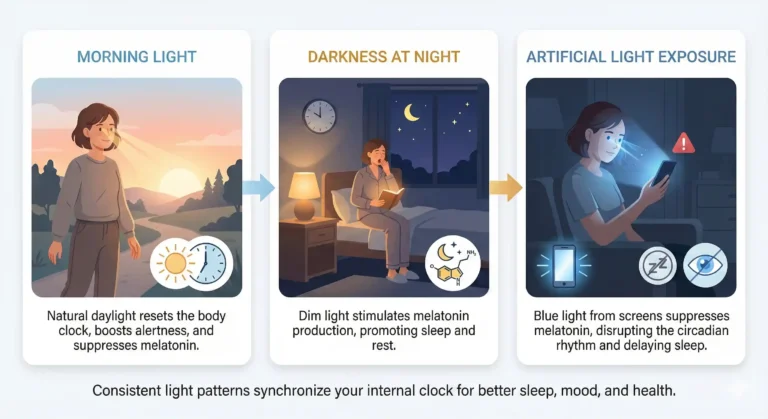
Go near the window and take the sunlight on your face. Sun tells your internal clock, “Start now.” Even on a cloudy day, there is enough light.
Move Your Body
Do light stretching or walk inside the room. Use simple moves. Lift your arms and roll your shoulders. Movement sends a signal that the day has begun (like switching on a motor).
Eat a Regular Breakfast
Eat something small but steady. Keep the timing fixed. The body likes rhythm, same as the daily shop opening time.
Avoid the Snooze
Do not hit snooze. Wake on first ring. Snooze confuses your brain and breaks the natural rhythm.
Evening Behaviours That Help Your Clock Wind Down
Evening rhythm support starts when you slow down your surroundings. This is the time your body begins circadian wind-down, and simple nighttime habits help a lot. Think of it like cooling an engine after a long drive. It needs steady steps, not sudden stops.
Dim the Lights
Reduce bright lights and close screens early. Let the room stay soft. Your eyes send quick signals to the brain, and melatonin starts to rise. Treat light like volume—turn it down slowly.
Take a Warm Shower
Use warm water and let muscles loosen. After you step out, your body cools down, and this cooling tells the clock “time to rest.”
Do Relaxing Activities
Sit with a calm book or slow music. Avoid thrilling movies. Keep your hands busy with simple tasks (like folding clothes).
Add a Mindful Break
Sit still for one minute and breathe. Count slowly. It settles thoughts and removes day noise.
Hormone-Friendly Habits
Avoid heavy food and strong coffee now. Keep the room cool and clean. Let the body feel safe to release melatonin.
How Your Sleep Environment Influences Your Body Clock
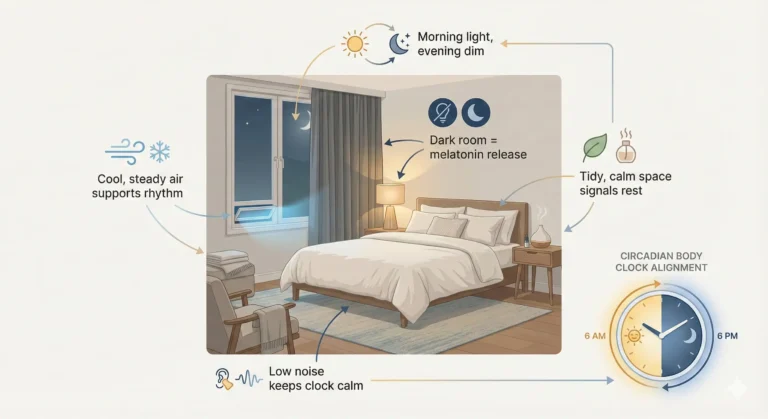
A circadian-friendly bedroom starts with simple things you control. Your sleep environment design pushes your body clock in one direction or the other, and sometimes we don’t notice until we feel slow in the morning. Keep the space calm, dark, and steady, like how you close curtains in a cinema hall.
Control Temperature
Keep the room cool. Aim for steady airflow. Avoid excessive heat because it confuses your inner clock. Use a light blanket and open a small window if safe.
Create a Dark Sleep Setting
Remove sharp lights and switch off glowing screens. Make the room dark so your brain reads it as night. Even a small lamp disturbs melatonin.
Reduce Noise
Stop loud sounds. Use earplugs if needed. Keep the fan on low for a soft hum (helpful for many).
Manage Light Timing
Expose eyes to morning light. Then reduce bright light after sunset. Follow this daily so your body learns rhythm.
Set a Calm Atmosphere
Keep the room tidy and soft-smelling. Make the bed feel welcoming, like a simple hotel room.
Nutrition Timing and Meal Patterns That Reset the Clock
Start with understanding how the metabolism rhythm and your daily meals move together. Meal timing for sleep also changes how your body rests. So keep a simple pattern that supports circadian nutrition and keep your energy steady through the day.
Time Your Breakfast
Eat breakfast within one hour after waking. Give your body a clear signal. Start with warm food and simple carbs plus protein. It wakes your internal clock and reduces daytime slump.
Keep Meals Balanced
Take three steady meals. Add protein, fibre, and some healthy fat. Then keep portions the same each day (this helps your clock learn).
Limit Caffeine Smartly
Stop caffeine after the afternoon. It slows your natural sleep timing and disturbs your rhythm like a noisy alarm.
Avoid Late-Night Eating
Finish dinner early. Leave at least two hours before sleep. Your body needs quiet time to cool down, same like switching off a machine.
Movement, Exercise, and Their Effect on the Biological Clock
Movement and exercise timing play a big role in keeping an active circadian rhythm. When you move at the right time, your body understands the day better. And it rests better at night. So treat movement like simple signals you send to your inner clock.
Morning Exercise for Day Alertness
Start your day with light movement. Walk fast for 10 minutes and let the sunlight hit your eyes. This wakes the brain and sets the clock. Do simple stretches also. Imagine your body like a small machine that warms up slowly. When you move early, you stay sharp in the office, and you don’t feel a heavy slump.
Evening Movement for Calm
Do gentle yoga or slow walking. Keep the pace soft. This kind of movement brings the body down. You sleep faster (helps a restless mind).
Avoid Late-Night Intense Workouts
Stop heavy gym after 9 PM. Hard exercise at night confuses the biological clock and pushes alertness high. Then your sleep breaks.
Digital Habits and Blue Light That Disrupt Your Rhythm
Digital habits shape your sleep more than you notice, and blue light rhythm disruption happens fast. When a phone or laptop light hits your eyes at night, your melatonin slows down. So your digital timing shift, and your body thinks it is still daytime. Many people face this when they scroll late or keep screens close to their faces.
Control Your Night Screens
Set a digital cutoff one hour before bed. Stop checking notifications and put the device on the table. Use this time to let your body calm down.
Use Blue-Light Filters
Switch on night mode, lower brightness and add a simple filter app if needed (it helps a lot).
Build Healthier Screen Habits
Keep the screen away from your eyes. Avoid watching intense videos. Choose soft music or simple reading. And keep the same routine daily, so your screen habits for sleep improve naturally.
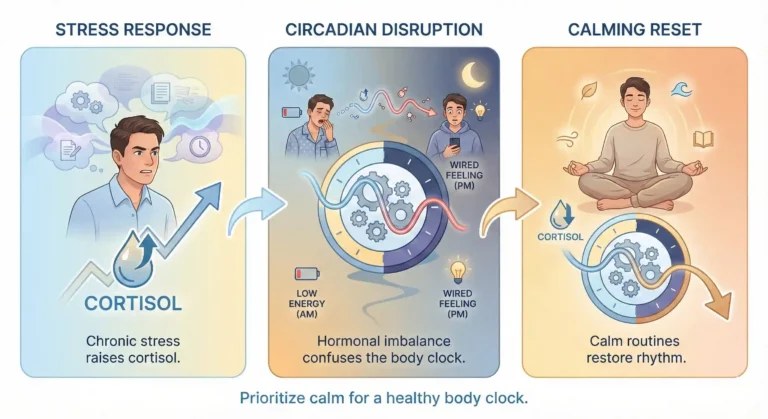
Stress, Hormones, and Their Connection to Circadian Health
Stress and circadian rhythm always move together, and sometimes they move in the wrong direction. When stress stays high, the hormonal rhythm breaks. You feel tired in the morning and wired at night. It happens because cortisol balance shifts, and emotional rhythm goes up and down like an unstable pattern.
How Stress Breaks the Body Clock
See how your day goes. If cortisol spikes early and stays long, the body clock is confused. Emotional stress pushes the mind to run fast, and irregular thinking makes sleep light. Even small arguments at home disturb this inner timing (it happens to many people).
Start Simple Calming Routines
Breathe slowly and relax the shoulders. Sit down and plan downtime. Then do one short meditation. Imagine stress going out like air from a balloon. Use small breaks and warm light in the evening, so your clock settles.
Shift Workers and Jet-Lagged Travellers: Special Rhythm Reset Strategies
Shift work, circadian reset, and jet lag rhythm repair need simple steps, not fancy tricks. Many people move between time zones and rotating duties, so their body clock becomes confused. Start with small changes and give your rhythm a clear signal again. This helps you feel steady and safe in your long days.
Use Light in a Direct Way
Sit under bright light in the morning of the target schedule and block strong light at night. Treat light like a steering wheel for your inner clock. Imagine turning your face to the sunrise even when you land in a new city.
Time Meals to the New Zone
Eat your main meal at noon. Keep dinner light. It tells the body where it is (like a simple map).
Plan Naps and Sleep
Take short naps before night duty and then sleep in one long block after the shift. Set alarms and keep the room cool and dark.
Create a Travel Rhythm
Before flying, shift sleep by 1 hour each day. Drink water, move legs, and rest when the new time zone adjustment starts to feel natural.
Natural Tools That Support Circadian Rhythm Repair
Natural circadian support starts with simple tools you use every day. And these small habits repair your internal clock slowly, like fixing a wall by placing one brick each morning. I share these steps from real practice, so follow them with respect and a steady pace.
Use Morning Light Therapy
Stand in soft sunlight for 10–15 minutes. Face the light and keep your eyes open naturally. Do it early. It tells your brain, “Wake now.” Like flipping a light switch after a long night.
Keep Evenings Dim
Lower lights after sunset. Use warm lamps. Avoid bright screens because they push the body into wrong timing.
Try Grounding
Place your feet on natural ground for a few minutes. It calms the system.
Drink Calming Teas
Sip warm chamomile or lemongrass. Helps settle the mind (good on stressful days).
Add Mindful Movement
Do slow stretching and easy walks. Move like you are unwinding a tight rope inside.
Final Thoughts
Sustainable circadian health begins when you follow your natural body clock healing simply. Keep your timing steady. Wake and sleep around the same hour. It looks small, but it shifts your whole energy.
Keep your light exposure clean. Step in morning light and reduce harsh screen glow at night. Do it slowly, not in one day.
Build mindful routines. Eat at fixed times and move your body in short rounds (even a small walk after dinner).
When you balance these habits, your sleep grows deeper, your mood stays stable, and your digestion works smoothly. This rhythm supports long-term energy.
Checkout our latest articles.
Discover smart, science-backed solutions in Sleep Optimization Technology.
Enhance physical and mental restoration with Recovery Tools.
Build healthier nighttime habits using Natural Sleep Hygiene.
Frequently Asked Questions
Start with understanding your natural body clock healing because your sleep and energy follow this rhythm. Think of it like a home appliance. If the timing breaks, the whole flow is disturbed. Keep fixed sleep and wake timing, and your body responds better.
Begin with simple steps. Sleep at the same time and wake at the same time. Avoid bright screens at night and get morning sunlight. Walk outside for 10 minutes. It signals your brain and pushes the rhythm back in place.
Sunlight acts like a natural alarm. When light hits your eyes, your brain says, “Wake now.” Use morning sun and then dim light in the evening. It feels small, but it works like adjusting a wall clock at home.
Yes. Eat breakfast early and stop late-night snacking. Your digestion runs like a kitchen schedule (only one meal after midnight breaks the whole flow). Keep meal times steady.
Most people feel changes in 3–7 days. Some take two weeks. Continue the routine and don’t break it suddenly. It heals slowly but strongly.
Do light movement in the morning and avoid heavy workouts late at night. It guides your system and keeps your energy aligned.
References
BaHammam, A. S., & Almeneessier, A. S. (2023). The interplay between early mealtime, circadian rhythms, and metabolic health: An overview. Nutrients, 15(18), 4070.
Boege, H. L., Bhatti, M. Z., & St-Onge, M.-P. (2021). Circadian rhythms and meal timing: Impact on energy balance and body weight. Current Opinion in Biotechnology, 70, 1-6.
Chang, A.-M., Scheer, F. A. J. L., & Czeisler, C. A. (2017). Circadian phase resetting by a single short-duration light exposure. JCI Insight, 2(7), e89494.
Gooley, J. J., Chamberlain, K., Smith, K. A., Khalsa, S. B. S., Rajaratnam, S. M. W., Van Reen, E., Zeitzer, J. M., Czeisler, C. A., & Lockley, S. W. (2011). Exposure to room light before bedtime suppresses melatonin onset and shortens melatonin duration in humans. The Journal of Clinical Endocrinology & Metabolism, 96(3), E463–E472.
Kalsbeek, A., & Buijs, R. M. (2002). Output pathways of the mammalian suprachiasmatic nucleus: Coding circadian time by transmitter selection and specific targeting. Cell and Tissue Research, 309(1), 109-118.
Morin, R., Brisson, D., Roy, M. A., Thibaudeau, S., & Maziade, M. (2025). Circadian rhythms revealed: Unravelling the genetic foundations of sleep-wake regulation. Frontiers in Sleep, 4, 1544945.
Palomar-Cros, A., Straif, K., Sassano, M., Espinosa, A., Aragonés, N., Pérez-Gómez, B., Moreno, V., Castaño-Vinyals, G., Pollán, M., & Kogevinas, M. (2023). Dietary circadian rhythms and cardiovascular disease risk in the prospective NutriNet-Santé cohort. Nature Communications, 14, 7899.
Potter, G. D. M., Skene, D. J., Arendt, J., Cade, J. E., Grant, P. J., & Hardie, L. J. (2016). Circadian rhythm and sleep disruption: Causes, metabolic consequences, and countermeasures. Endocrine Reviews, 37(6), 584-608.
Prayag, A. S., Najjar, R. P., & Gronfier, C. (2019). Melatonin suppression is exquisitely sensitive to light and primarily driven by melanopsin in humans. Journal of Pineal Research, 66(4), e12562.