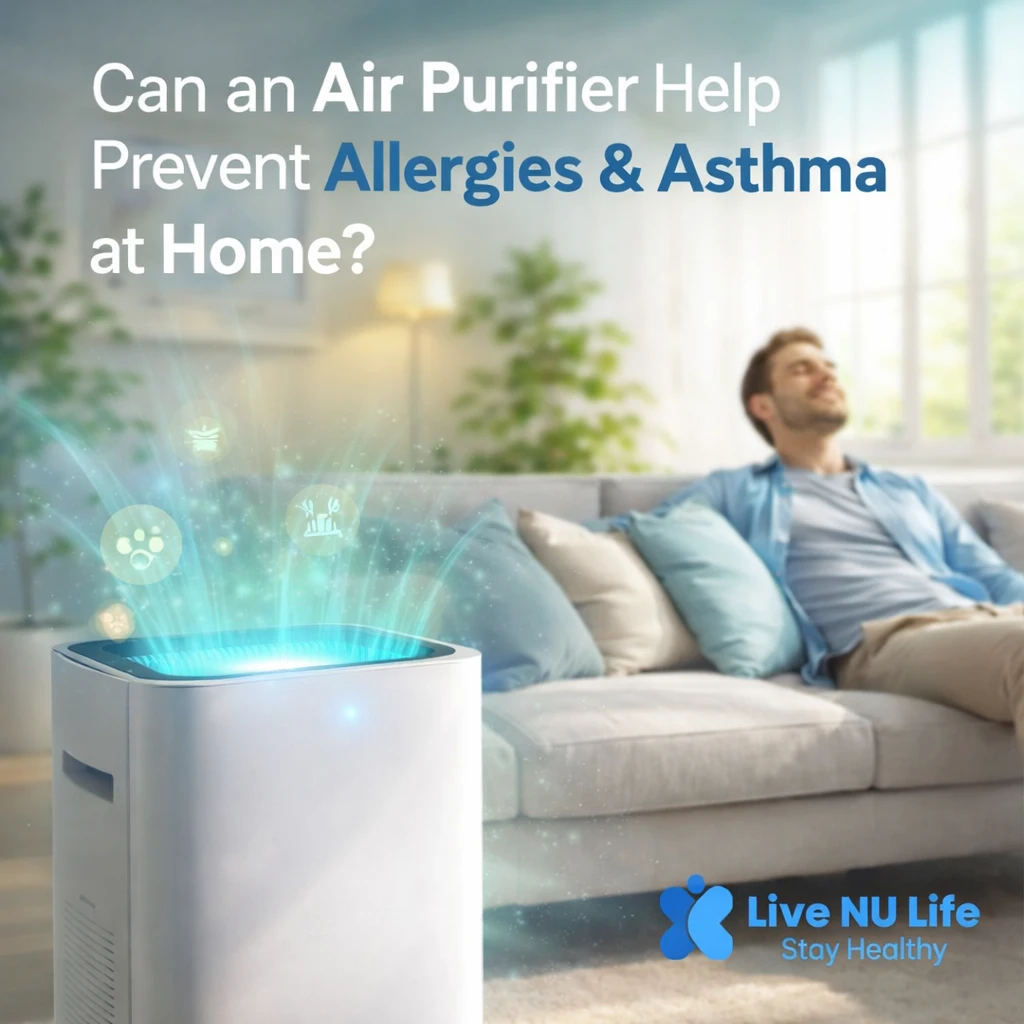
Many households notice morning congestion or nighttime coughing even when windows stay closed. Indoor air often carries pollen, dust, and pet dander, so using solutions for air purifier allergies and air purifier asthma can help lower everyday exposure.
Table of Contents
ToggleDo Air Purifiers Really Help?
Air purifiers are not a cure, yet they can support indoor allergen control by trapping tiny airborne particles. Organisations such as the EPA and AAFA note that cleaner indoor air may help some people manage symptoms better.
Models with strong filters highlight key HEPA air purifier benefits, capturing fine dust and pollen before they circulate. When combined with regular cleaning and ventilation, they become a helpful step toward healthier indoor breathing.
Why Indoor Air Often Triggers Allergies More Than Outdoor Air?
Many people assume outdoor air causes most allergies, yet indoor spaces often hold higher levels of irritants. Sealed homes allow indoor air allergens to build up, and the U.S. EPA reports pollution indoors can be several times higher.
The “Closed Room Effect” That Traps Allergens
Closed rooms quietly recycle the same air again and again, creating a loop where airborne irritants indoors stay suspended for hours. Without fresh ventilation, dust, dander, and fine particles settle on bedding and furniture, leading to morning congestion, sneezing, and itchy eyes, causing daily discomfort for many people.
Common Household Allergy Triggers You Might Overlook
Every day activities inside the home release hidden allergy triggers. Pet dander, dust mite waste, cooking smoke, and strong cleaning sprays float in the air. Seasonal pollen also enters through open windows or clothing, bringing outdoor allergens indoors without notice, often irritating sensitive individuals later.
Why Nighttime Exposure Feels Worse
Bedrooms become overnight storage zones for allergens because fabrics, carpets, and mattresses collect particles while airflow remains low. Breathing this air for hours can worsen asthma discomfort, disturb sleep, and leave people waking up tired and congested by morning, frequently too often, also frequently reported globally.
How Air Purifiers Reduce Allergy and Asthma Triggers?
Cleaner indoor air can make everyday breathing more comfortable for people with allergies or asthma. Air purifiers work quietly in the background, trapping harmful particles over time and lowering the number of triggers present inside homes.
HEPA Filters Explained in Simple Terms
At the heart of most purifiers lies a HEPA filter, designed to catch extremely tiny particles floating in the air. One of the main HEPA filter benefits is capturing up to 99.97% of particles as small as 0.3 microns, including pollen, dust mite fragments, and smoke. Through steady airborne particle filtration, an allergen removal air purifier gradually lowers the amount of irritants people breathe each day, helping reduce asthma triggers.
Activated Carbon’s Role in Removing Odours and Gases
Unpleasant smells and invisible gases from cooking, paints, or cleaning sprays can also irritate the lungs. Activated carbon filters absorb these fumes, including common household chemicals. When paired with HEPA layers, combined filters clean both particles and odours more effectively.
What Research Says About Symptom Improvement
Health organisations note that lowering indoor allergen levels may ease breathing discomfort for some individuals. Continuous purifier use can support symptom control, though it works best alongside medical advice and prescribed treatments rather than replacing them.
Can Air Purifiers Prevent Asthma Attacks or Allergy Flare-Ups?
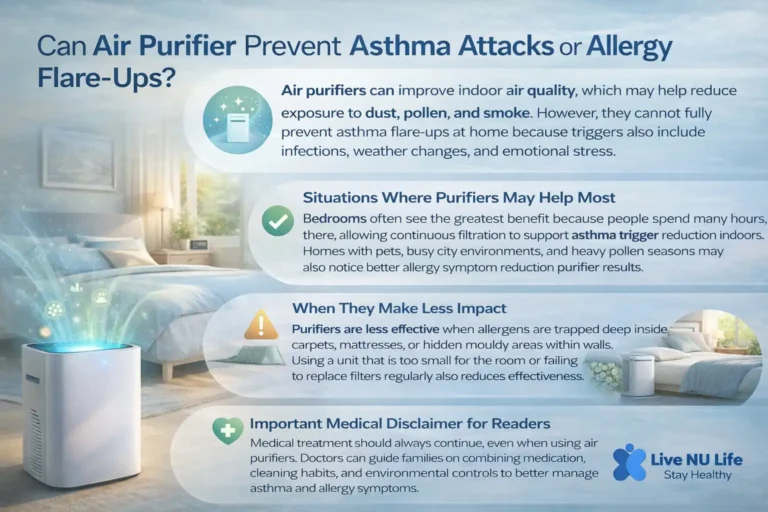
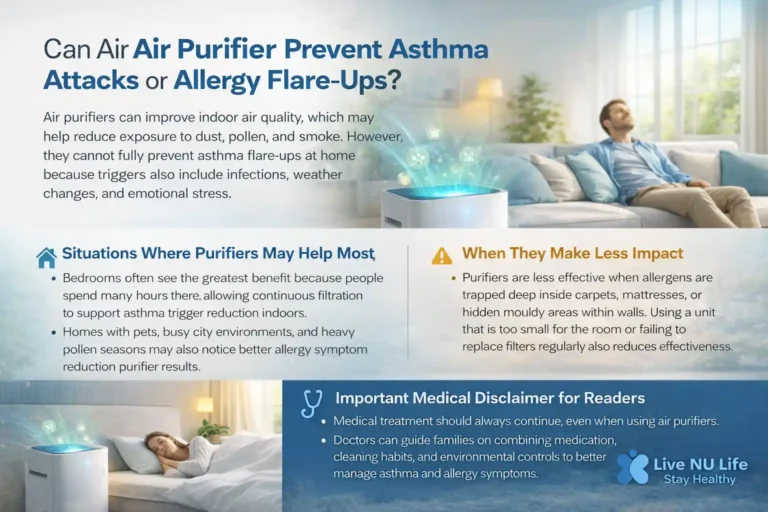
Air purifiers can improve indoor air quality, which may help reduce exposure to dust, pollen, and smoke. However, they cannot fully prevent asthma flare-ups at home because triggers also include infections, weather changes, and emotional stress.
Situations Where Purifiers May Help Most
Bedrooms often see the greatest benefit because people spend many hours there, allowing continuous filtration to support asthma trigger reduction indoors. Homes with pets, busy city environments, and heavy pollen seasons may also notice better allergy symptom reduction purifier results.
When They Make Less Impact
Purifiers are less effective when allergens are trapped deep inside carpets, mattresses, or hidden mouldy areas within walls. Using a unit that is too small for the room or failing to replace filters regularly also reduces effectiveness.
Important Medical Disclaimer for Readers
Medical treatment should always continue, even when using air purifiers. Doctors can guide families on combining medication, cleaning habits, and environmental controls to better manage asthma and allergy symptoms.
Choosing an Air Purifier That Actually Supports Respiratory Health
Cleaner indoor air is easier to maintain when the purifier is selected with attention to proven performance and verified safety standards, helping households choose models that genuinely support breathing comfort, especially for people sensitive to allergies or asthma.
The Importance of True HEPA Certification
Certified True HEPA filters capture very fine dust, pollen, and pet particles that frequently trigger allergic reactions. Products labelled “HEPA-type” may not meet the same testing requirements, so checking for certification from recognised agencies remains essential.
The “Shopping Red Flag” List
Although many products claim to be allergy-friendly, recent testing standards highlight features that may reduce effectiveness:
- “HEPA-like” or “Washable HEPA” filters: Washable filters are usually too porous to capture 0.3-micron particles linked to asthma triggers.
- Ionisers that cannot be switched off: Ion technology can release small amounts of ozone, which may irritate sensitive lungs.
- Low smoke CADR ratings: In polluted or wildfire-prone areas, ensure the smoke CADR is the strongest rating since smoke particles are harder to remove than dust.
Understanding CADR and Room Size Matching
Purifiers perform best when the device’s CADR matches the room size. Higher CADR values indicate faster circulation, allowing the entire room’s air to be refreshed rather than only the area near the unit.
Avoiding Ozone-Producing Purifiers
Some purification systems emit ozone, which can aggravate respiratory conditions. Selecting models labelled “ozone-free” or certified by trusted safety organisations supports safer everyday use for families.
Setup and Maintenance Tips That Make the Biggest Difference
Small adjustments in setup and routine care can dramatically improve purifier performance. Many households overlook simple steps that extend filter life, reduce running costs, and noticeably improve purifier efficiency at home.
Best Placement for Maximum Air Circulation
Positioning the purifier correctly can significantly affect performance, and placing it in a corner often creates a “dead air zone” where the device repeatedly cycles the same cleaned air while pollutants remain elsewhere in the room.
- The 3-Foot Rule: Keep the purifier at least 3 feet from your bed and about 1 foot away from walls, curtains, or large furniture to allow proper airflow.
- Elevation Matters: If symptoms are strongest in the morning, placing the unit on a nightstand or raised surface can help, since dust and dander frequently hover around breathing height rather than staying near the floor.
How Often Filters Should Really Be Replaced
Filter replacement depends on daily conditions rather than fixed dates. Homes with pets, heavy traffic pollution, or long-running hours should maintain the HEPA filter schedule more frequently than the manufacturer’s averages.
Daily Habits That Boost Purifier Effectiveness
Creating a controlled environment helps the purifier work more efficiently by preventing “cross-pollination” of airborne particles between rooms.
- The “Closed Door” Logic: A purifier functions best when it forms a small “clean air bubble.” Keeping the bedroom door open forces the device to handle air from adjoining spaces, reducing its effectiveness.
- The 20-Minute Pre-Sleep Habit: Close the bedroom door and windows, then run the purifier on high for about 20 minutes before sleeping to clear particles that accumulated during the day and start the night with freshly filtered air.
The Reality Check — What Air Purifiers Cannot Do Alone
Creating cleaner indoor air takes more than plugging in a machine. While helpful, purifiers work best as part of broader allergy control home strategies that combine cleaning, moisture balance, and fresh airflow to support an asthma-friendly home environment.
Surfaces Still Need Cleaning
Even the best purifier cannot remove dust that has already settled on floors, curtains, and furniture. Regular vacuuming, wiping surfaces, and washing bedding remain essential, highlighting the real limitations of air purifiers in everyday homes.
Mould and Moisture Require Separate Solutions
Air purifiers do not fix leaks or reduce dampness on their own. Controlling humidity, repairing water damage, and using dehumidifiers are often necessary steps to prevent mould growth and maintain healthier indoor conditions.
Combining Environmental Controls for Best Results
The most effective approach blends purification with ventilation, cleaning routines, and protective bedding covers, creating layered protection that improves overall indoor comfort and long-term respiratory health.
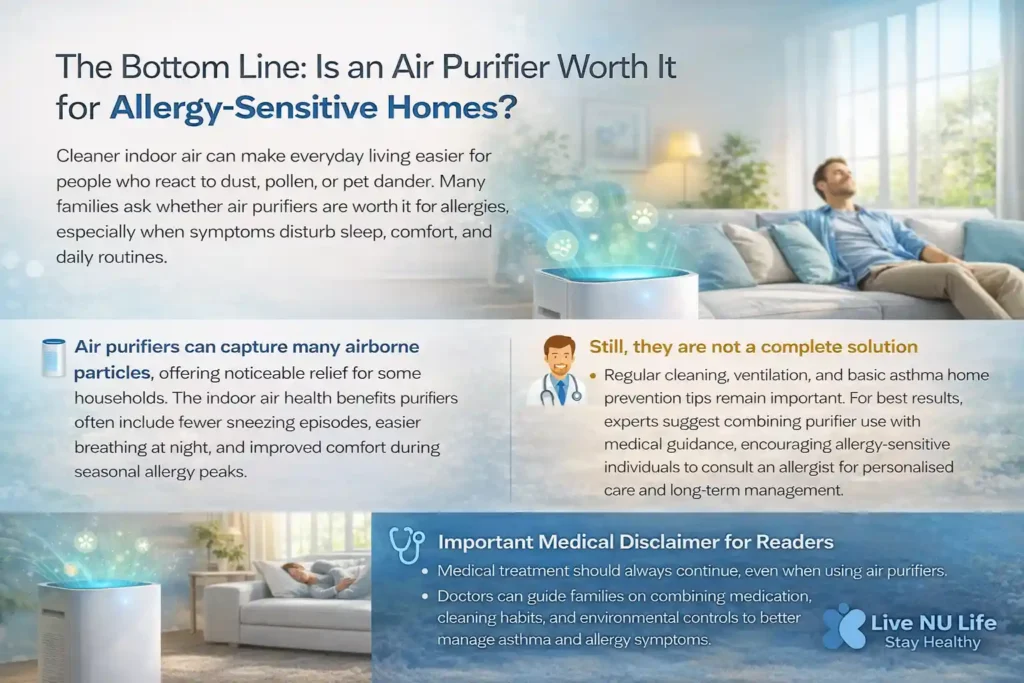
The Bottom Line: Is an Air Purifier Worth It for Allergy-Sensitive Homes?
Cleaner indoor air can make everyday living easier for people who react to dust, pollen, or pet dander. Many families ask whether air purifiers are worth it for allergies, especially when symptoms disturb sleep, comfort, and daily routines.
Air purifiers can capture many airborne particles, offering noticeable relief for some households. The indoor air health benefits purifier often includes fewer sneezing episodes, easier breathing at night, and improved comfort during seasonal allergy peaks.
Still, they are not a complete solution. Regular cleaning, ventilation, and basic asthma home prevention tips remain important. For best results, experts suggest combining purifier use with medical guidance, encouraging allergy-sensitive individuals to consult an allergist for personalised care and long-term management.
🌿 Boost Energy, Mood & Everyday Health
Understand the causes of persistent fatigue in Why Am I Sleeping So Much and Still Tired?.
Improve emotional well-being with simple movement in Walking Challenges That Actually Improve Your Mood.
Learn the truth about hygiene and bacteria in Are Germs Still on Your Hands After Washing With Only Water?.
Frequently Asked Questions About Air Purifiers, Allergies, and Asthma
Yes, HEPA-based units trap airborne pet dander and lower exposure. However, regular vacuuming, washing bedding, and grooming pets remain important for better results.
Cleaner air often becomes noticeable within several hours, though full improvement may take a day or more. Room size, purifier strength, and continuous use affect speed.
Running a purifier continuously helps keep allergen levels stable, especially overnight. Energy-saving or auto modes can maintain protection while reducing electricity use.
HEPA filters capture fine smoke particles, while carbon layers reduce odours. Very heavy smoke may still require ventilation and temporary source removal.
A higher price does not always mean better performance. Correct room-size rating, true HEPA filtration, and timely filter replacement usually matter more than brand cost.
References
American Academy of Allergy, Asthma & Immunology. (2023). Indoor air pollution and asthma.
Environmental Protection Agency. (2022). Care for your air: A guide to indoor air quality.
Subramanian, A., & Pong, J. (2020). Efficacy of air purifiers in reducing allergen exposure: A systematic review. Journal of Asthma and Allergy, 13, 425–435.
Nunes, C., Pereira, A. M., & Morais-Almeida, M. (2019). Asthma treatment and comorbidities in Brazil: A systematic review. Allergy and Asthma Proceedings, 40(2), 87–94.
Pappas, G. P., Herbert, R. J., & Henderson, W. (2019). Air cleaners for improving indoor air quality in homes with pets: A review. Indoor Air, 29(4), 515–528.
Consumer Reports. (2024). Best air purifiers of 2024.
Annesi-Maesano, I., Baiz, N., Banerjee, S., Rudnai, P., & Rive, S. (2013). Indoor air quality and sources in schools and related health effects. Journal of Toxicology and Environmental
Health, Part B, 16(8), 491–550.
Elliott, L., & Kattan, M. (2021). HEPA air cleaners and indoor allergens: A meta-analysis. Pediatric Allergy and Immunology, 32(5), 1023–1032.