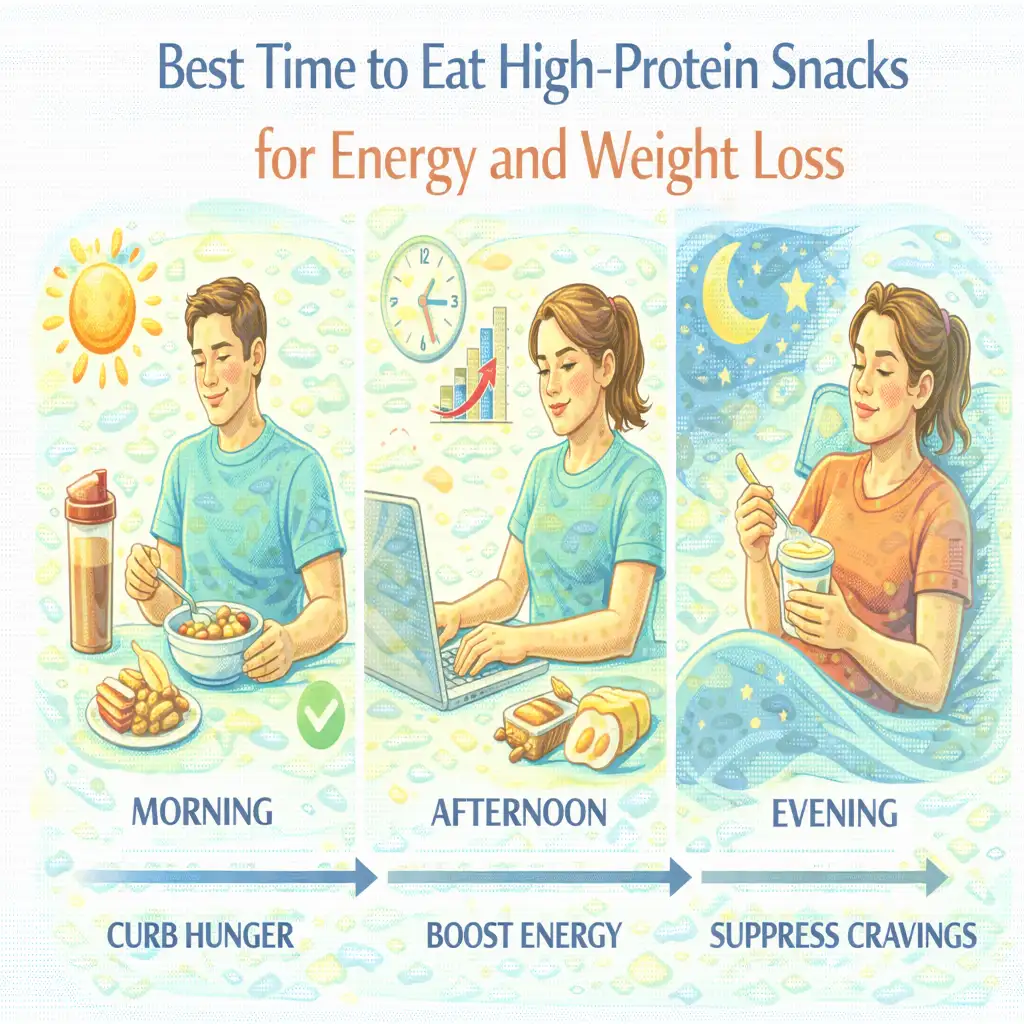
Eating high-protein snacks at the right moments can give a steady energy boost and help control hunger. Choosing the right time also supports weight loss and keeps the body feeling satisfied throughout the day.
Snack Timing | Benefits | Real-Life Example |
Morning | Kickstarts energy, keeps cravings low | Greek yoghurt with berries |
Mid-Afternoon | Prevents energy slump, curbs snacking | Handful of nuts or boiled eggs |
After Activity | Aids recovery, maintains muscle | Protein shake after a workout |
Pre-Sleep | Supports overnight muscle repair | Cottage cheese or peanut butter toast |
Simple timing makes snacking smarter. Picking a protein-rich bite when it fits daily life—like a mid-afternoon pick-me-up or after exercise—can boost energy, keep hunger at bay, and support weight loss naturally.
Table of Contents
ToggleWhy Protein Timing Matters for Energy and Weight Loss?
Protein isn’t just for building muscles—it plays a big role in keeping energy steady and controlling hunger. Eating the right amount of protein at the right times can help prevent energy crashes, reduce late-night snacking, and support healthy metabolism.
Protein and Satiety Signals
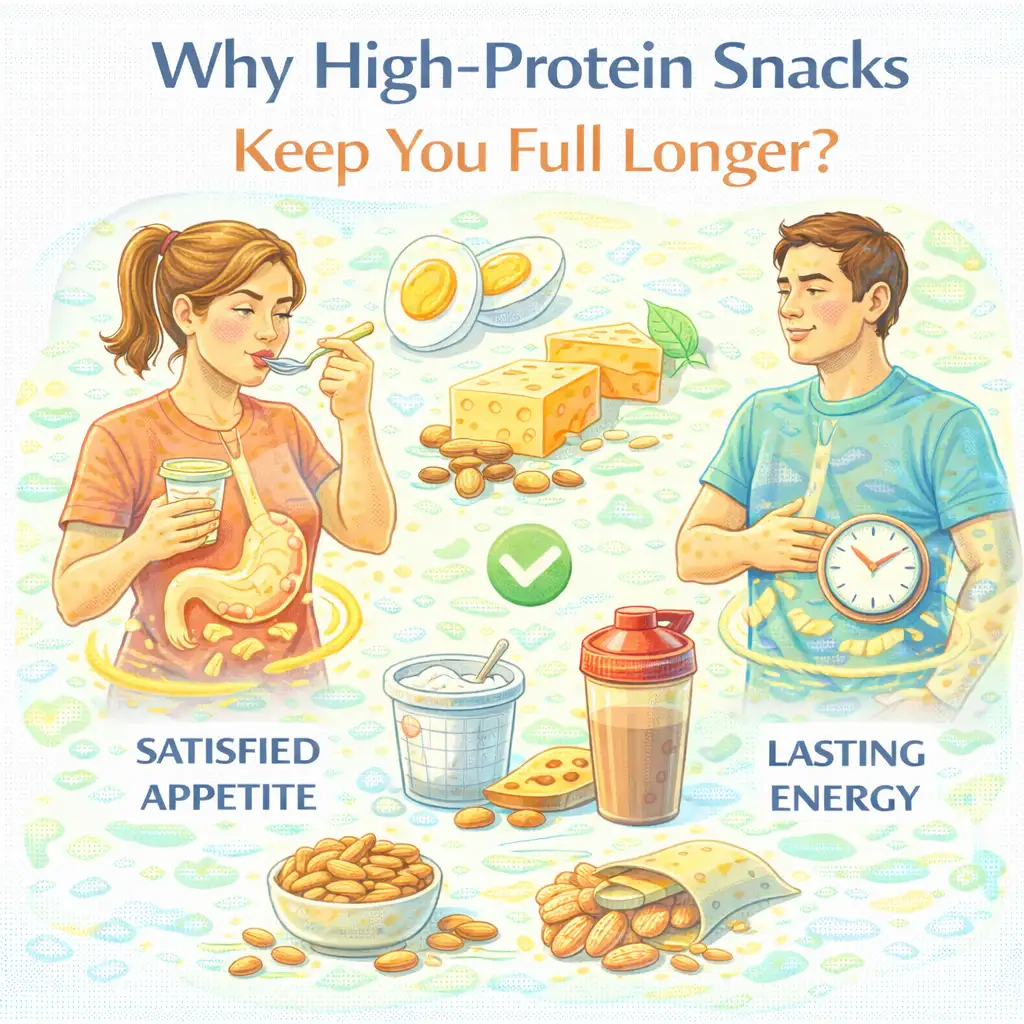
Protein helps the body feel full by triggering hormones like GLP-1 and PYY. These signals tell the brain you’re satisfied, making it easier to avoid random cravings and overeating throughout the day.
Stabilising hunger can make healthy eating feel effortless:
- Reduces mid-morning cravings
- Prevents overeating at lunch
- Stabilises blood sugar for sustained energy
Thermic Effect and Fat Loss
Digesting protein uses more energy than carbs or fats, which means the body burns extra calories naturally. Eating protein at different times across the day helps maximise this effect, supporting steady fat loss.
Nutrient | Thermic Effect |
Protein | 20–30% |
Carbs | 5–10% |
Fat | 0–3% |
Muscle Preservation During Weight Loss
Losing weight without enough protein can lead to muscle loss instead of fat. Timing protein around workouts and snacks helps protect lean muscle and keep metabolism strong.
- Post-activity protein: repair and maintain muscles
- Pre-bed protein: prevents overnight muscle breakdown
Morning Metabolism Spark – The First Essential Window
Starting the day with protein can make a big difference in energy and hunger. Eating a protein-rich snack within an hour of waking helps kickstart metabolism, keep blood sugar steady, and prevent mid-morning crashes that lead to overeating at lunch.
Quick Protein Options for Busy Mornings
Even on rushed mornings, getting protein is simple and practical:
- 1 cup Greek yoghurt – ~20g protein, ready to eat in seconds.
- 2 boiled eggs – ~12g protein, can be prepared ahead of time.
- Protein smoothie – 15–25g protein, depending on ingredients, blended in 5 minutes.
For some people, liquids like smoothies may be easier to digest and can help curb appetite more quickly in the morning when cortisol levels are high, compared with solid foods like eggs.
These choices are easy, quick, and portable, making it possible to fuel your morning without stress.
How Morning Protein Stabilises Energy
Protein slows down the rise of blood sugar, keeping energy steady. Instead of a spike and crash, the body receives a slow, lasting fuel source.
Before: Skipping protein → 10 AM fatigue → cravings for sugary snacks.
After: Morning protein → energy steady → focused until lunch without reaching for chips or candy.
Common Morning Mistakes to Avoid
- Sugary breakfasts – doughnuts, pastries, and sweet cereals spike insulin and cause crashes.
- Skipping protein – thinking “I’m not hungry yet” can lead to overeating later.
- Relying only on carbs – toast or cereal alone won’t keep energy balanced.
A simple protein habit in the first hour of the day can transform mornings.
The 3 PM Energy Bridge – Afternoon Snacking Window
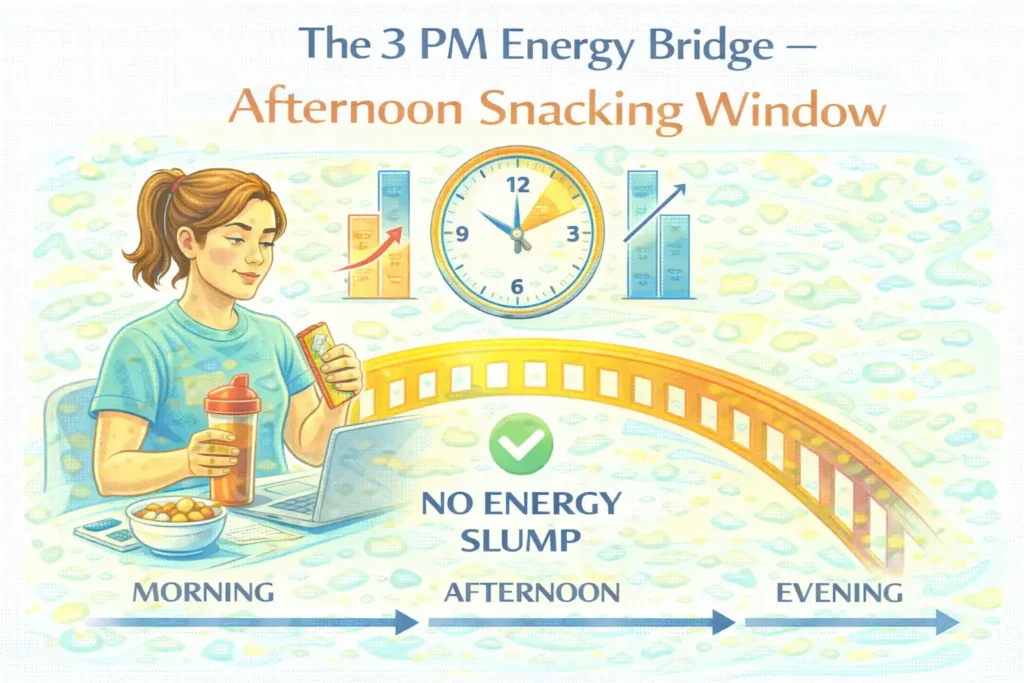
Most people hit a wall around 3–4 PM, feeling tired and reaching for anything sugary. This moment is called the afternoon energy slump, and it’s a key time where diets often fail. A small protein snack here can curb cravings, boost focus, and prevent overeating at dinner.
Ideal Snacks for the Afternoon
Choosing snacks that are both high in protein and easy to carry makes it simpler to stay on track. Here are some good options:
Snack | Protein Content | Portability |
Roasted chickpeas | ~10g | Easy to pack |
Small cottage cheese bowl | ~15g | Needs a fridge, but portable with a cooler |
Protein bar (low sugar) | 10–20g | Very portable, no prep |
How Protein Prevents Impulsive Eating
Protein helps keep blood sugar steady, which stops sudden hunger and cravings. When paired with fibre, it can prevent the classic afternoon binges. Benefits include:
- Reduces chocolate or caffeine binges
- Supports calm, steady energy
- Keeps hunger hormones in check
When to Pair with Fibre or Healthy Fats
Combining protein with fibre or healthy fats stretches fullness and slows digestion. Simple pairings work well in daily life:
- Apple slices + peanut butter
- Greek yoghurt + berries
- Handful of almonds + small cheese portion
These combos make snacks more satisfying and help carry energy through the rest of the afternoon.
Post-Activity Repair – The Movement Window
After moving your body, whether it’s a brisk walk or a short home workout, your muscles are ready to absorb nutrients. Eating protein soon after activity helps protect muscles, supports recovery, and can even assist with fat loss when paired with consistent activity.
Snacks for Quick Recovery
You don’t need fancy foods to help your muscles bounce back. Simple, everyday snacks provide the protein your body uses best right after activity. Options like chocolate milk, protein shakes, or boiled eggs are easy and realistic, fitting into a busy schedule without stress.
Snack | Protein | Calories |
Chocolate milk | 8g | 150 |
Protein shake | 20g | 200 |
Boiled eggs (2) | 12g | 140 |
Timing Matters Less Than Consistency
While protein is most effective within 30–120 minutes after activity, it’s more important to make it a regular habit than to stress about exact minutes. Eating protein consistently helps muscles recover and supports ongoing fat loss.
Practical rule of thumb: Aim for a protein snack after most workouts, even if it’s an hour or two later.
Combining Protein with Hydration and Electrolytes
Protein works best when paired with fluids. Drinking water or replenishing electrolytes helps your body absorb nutrients and recover faster.
Interestingly, thirst often acts as a protein craving—staying hydrated can prevent overeating by ensuring your body signals hunger accurately.
Simple hydration tips:
- Drink a full glass of water with your snack.
- Add a pinch of salt or an electrolyte tablet if sweating heavily.
- Keep sipping water steadily over the next hour.
Night time “Safety Net” Snack
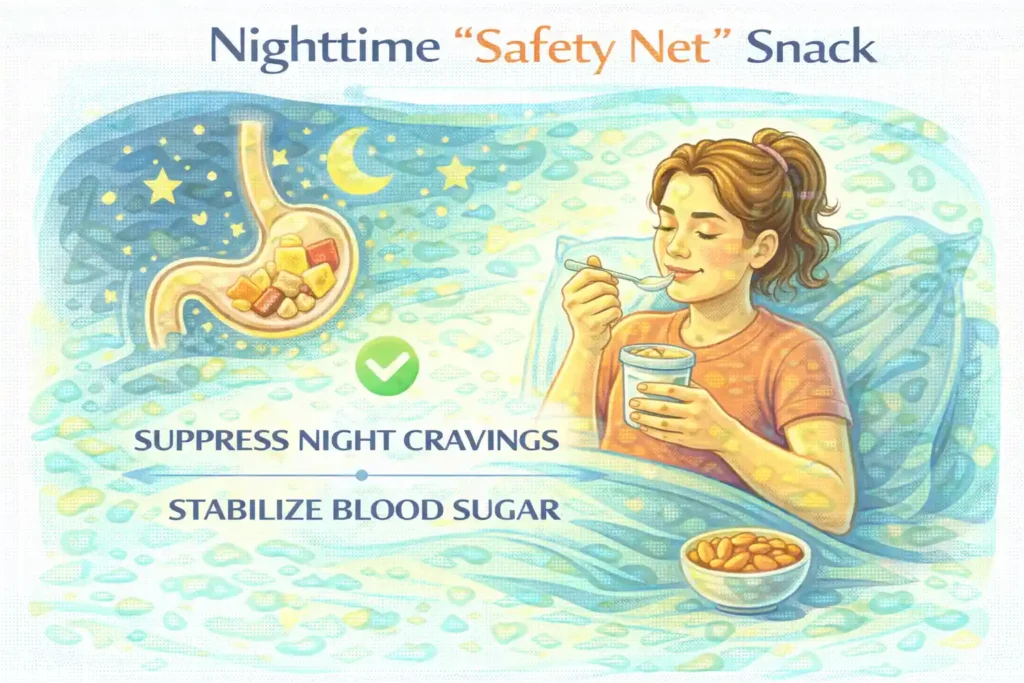
Having a small snack before bed can actually help the body stay fueled and protect muscles overnight. Choosing the right type of protein, especially one that digests slowly, keeps metabolism steady and stops the body from breaking down muscle while sleeping. This doesn’t make people gain weight—it just helps the body recover and stay strong.
Best Slow-Digesting Options
- Cottage Cheese (1 cup, ~28g protein) – Eat plain or add berries. It’s casein protein releases slowly through the night.
- Greek Yogurt (1 cup, ~20g protein) – Thick and creamy, easy to pair with nuts or cinnamon for flavour.
- Casein Protein Powder (1 scoop, ~24g protein) – Mix with water or milk for a smooth, slow-release option.
Tip: Prepare snacks ahead of time to make them easy to grab before bed.
Why Pre-Sleep Protein Supports Fat Loss
Muscle burns more calories than fat, even when resting. A pre-sleep protein snack helps the body hold onto muscle while sleeping.
Before: No protein, overnight muscle breakdown.
After: Slow-digesting protein, muscle preserved, metabolism steady.
Common Pitfalls to Avoid at Night
- Avoid sugary snacks that spike insulin.
- Skip liquid shakes with lots of added sugar.
- Stick to whole-food proteins like yoghurt or cottage cheese.
Quick Reference Table: Timing, Snack, and Benefit
Timing | Snack Ideas | Benefit |
Morning | Greek yoghurt, eggs, smoothie | Energy & fullness until lunch |
3 PM | Roasted chickpeas, nuts, cottage cheese | Stop cravings, maintain steady energy |
Post-Workout | Protein shake, eggs, and chocolate milk | Muscle preservation, support fat loss |
Pre-Sleep | Cottage cheese, casein, Greek yoghurt | Overnight muscle support, metabolism upkeep |
Common Mistakes and How to Avoid Them
Protein snacks can be helpful, but small mistakes can undo their benefits. Knowing what to watch out for makes it easier to get the most from each snack without feeling guilty or frustrated.
Mistaking Protein Bars for Healthy Snacks
Not all protein bars are as healthy as they seem. Many are loaded with hidden sugar or sugar alcohols like maltitol or sorbitol, which can spike energy, cause bloating, and leave someone hungry soon after. Look for bars with at least 10 g of protein and less than 5 g of sugar to get real benefits.
Tip: Check labels carefully and keep a few trusted low-sugar bars on hand for busy days.
Eating Protein Only When Hungry
Waiting until hunger hits hard can lead to overeating. Eating a protein snack earlier keeps cravings in check and balances energy.
Scenario:
- Mid-morning before lunch
- Late afternoon to avoid sugary snacks
- Post-workout for recovery
Ignoring Balanced Macros
Protein works best when paired with fibre and healthy fats. Skipping these can leave one feeling hungry soon after snacking.
Example combos:
- Greek yogurt + berries + almonds
- Hummus + veggie sticks + whole-grain crackers
- Cottage cheese + sliced apple + peanut butter
Ranking the Best Times to Eat Protein Snacks
Not all protein snacks work the same way at every time of day. Eating them strategically can help keep energy steady, reduce cravings, and support weight loss. Here’s a practical ranking from most effective to least, plus times to avoid.
1. Morning – Kickstart Metabolism
Starting the day with protein gives the body a solid boost. It helps control hunger, stabilises blood sugar, and sets the stage for fat burning.
- Boosts energy for the morning
- Keeps hunger in check until lunch
- Supports metabolism from the start
2. Mid-Afternoon – The Energy Bridge
A protein snack around 3–4 PM prevents the late-day slump and keeps energy balanced.
- Stops cravings before dinner
- Maintains focus at work
- Keeps blood sugar steady
3. Post-Workout – Muscle Maintenance
Protein after exercise helps repair muscles and encourages fat loss. If the workout was light, it’s less urgent than morning or afternoon.
Snack | Protein (g) | Benefit |
Protein shake | 20 | Muscle repair |
Hard-boiled eggs | 12 | Sustained energy |
Peanut butter on toast | 8 | Satiety |
4. Pre-Sleep – Slow-Digesting Safety Net
Optional for casual dieters, this helps preserve muscle overnight.
- Greek yogurt
- Cottage cheese
- Casein protein
Times to Avoid Eating Protein
Certain moments make protein less effective or uncomfortable:
- Right before intense cardio, may upset digestion
- Immediately after a heavy meal, excess protein isn’t absorbed well
- Late-night sugary protein snacks – can spike insulin and slow fat loss
Final Thoughts – Smart Protein Timing for Energy and Weight Loss
Knowing when to eat protein can make a real difference in daily energy and weight control. Spreading it across morning, mid-afternoon, after activity, and before sleep helps manage hunger and supports fat loss.
Following a clear protein timing plan keeps energy steady and avoids the pitfalls of random eating. Applying this snack strategy and simple weight loss tips makes healthy habits easy to stick to.
Even after a brisk 20-minute walk, your body uses protein to preserve the muscle that keeps your metabolism running,
Quick tip: Start your day with protein, snack smart at 3 PM, and protect your muscles overnight.
Read More: Best Ayurvedic Herbs for Immune System Boost
Frequently Asked Questions About Protein Snack Timing
Missing breakfast doesn’t mean skipping protein for the day. A mid-morning or afternoon protein snack can help balance intake and keep energy steady. What matters most is total daily protein, not just when it’s eaten.
Having protein before bed is usually fine, especially slow-digesting types like casein. Avoid high-sugar or liquid protein snacks, as they can spike blood sugar. A small protein snack at night can even support muscle repair while sleeping.
Aiming for 15–30 grams of protein per snack is usually enough. The amount can change based on activity and timing. Overloading in one sitting isn’t necessary and won’t speed up weight loss.
Shakes are quick and convenient, but whole foods keep you fuller longer and often have less sugar. Both work, but real-food snacks are better for long-term satiety and balanced nutrition.
Combining protein with fibre or healthy fats can slow digestion and keep hunger away longer. But sometimes protein alone is enough, especially if the snack is small or right after a workout.
References
American Diabetes Association. (2020). Nutrition therapy for adults with diabetes or prediabetes: A consensus report. Diabetes Care, 43(7), 1630–1642.
Leidy, H. J., Ortinau, L. C., Douglas, S. M., & Konopelski, K. E. (2013). A high-protein breakfast prevents body fat gain and reduces daily ghrelin in children. Obesity, 21(4), 742–749.
Moon, J., & Koh, G. (2020). High protein diet and meal timing. Journal of Obesity & Metabolic Syndrome, 29(2), 83–90.
Pasiakos, S. M., McLellan, T. M., & Lieberman, H. R. (2015). The effects of protein supplements on muscle mass, strength, and aerobic and anaerobic power in healthy adults: A systematic review. Sports Medicine, 45(1), 111–131.
Snijders, T., Res, P. T., Smeets, J. S., van Vliet, S., van Kranenburg, J., Maase, K., Kies, A. K., Kuipers, H., & van Loon, L. J. (2015). Protein ingestion before sleep increases muscle mass and strength gains during prolonged resistance-type exercise training in healthy young men. The Journal of Nutrition, 145(6), 1178–1185.
Trommelen, J., van Loon, L. J., & Senden, J. M. (2020). Pre-sleep protein supplementation does not alter plasma ghrelin and GLP-1 concentrations, appetite or sleep in normal weight adults. Nutrients, 12(10), 2997.
Westerterp-Plantenga, M. S., Nieuwenhuizen, A., Tomé, D., Soenen, S., & Westerterp, K. R. (2009). Dietary protein, weight loss, and weight maintenance. Annual Review of Nutrition, 29, 21–39.
Leidy, H. J., & Campbell, W. W. (2010). The effect of eating frequency on appetite control and food intake: Brief synopsis of a recent pre-feeding review. Physiology & Behaviour, 99(2), 160–166.
Mamerow, M. M., Moshfegh, A. J., Baer, D. J., & Baer, D. J. (2014). Protein distribution affects muscle mass and strength in older persons. The Journal of Nutrition, 144(7), 1122–1129.
Areta, J. L., Burke, L. M., Ross, M. L., Camera, D. M., West, D. W., Broad, E. M., Jeacocke, N. A., Moore, D. R., Stellingwerff, T., Mitchell, W. K., Hawley, J. A., & Coffey, V. G. (2013). Timing and distribution of protein ingestion during prolonged recovery from resistance exercise alter myofibrillar protein synthesis. The Journal of Physiology, 591(9), 2319–2331.
Harvard T.H. Chan School of Public Health. (2023). Protein. The Nutrition Source.
National Institutes of Health, Office of Dietary Supplements. (2022). Protein.
Bonnema, A. L., Alissa, K. K., Thomas, W., & Slavin, J. L. (2015). High-protein yoghurt snack reduces subsequent energy intake compared to a control snack in healthy women. Appetite, 87, 154–160.
Oikawa, S. Y., Shoemaker, M. J., & Holloway, T. M. (2020). Co-ingestion of carbohydrate and whey protein increases muscle protein synthesis rates following resistance exercise in older adults. The Journal of Nutrition, 150(11), 2896–2903.
Kirby, S., & Greenway, F. L. (2024). The thermic effect of food: A review. Obesity Reviews, 25(2), e13667.