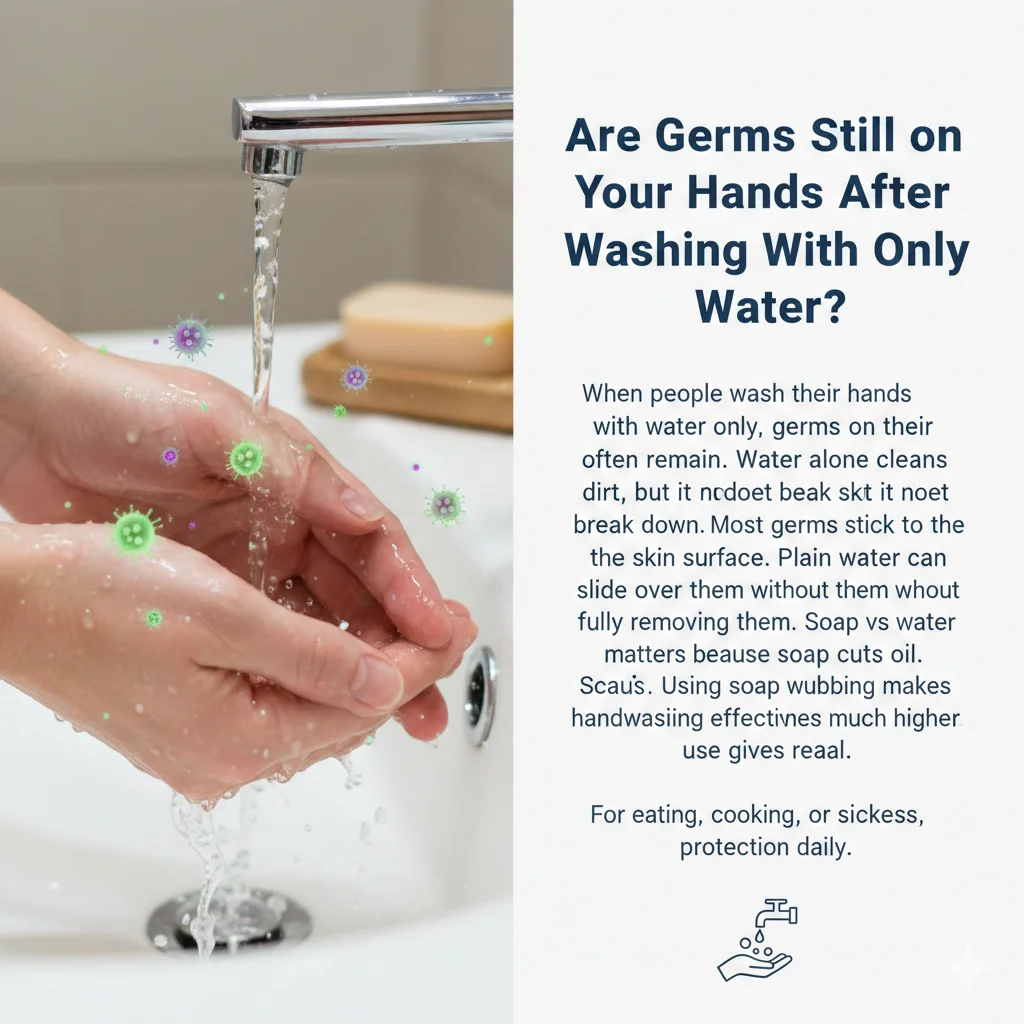
When people wash their hands with water only, germs on their hands often remain. Water alone cleans dirt, but it does not break down skin oil. This makes handwashing effectiveness low in daily life.
Most germs stick to natural oil on the skin surface. Plain water can slide over them without fully removing them. This is why germs on hands stay after quick rinsing. Soap vs water matters because soap cuts oil.
Using soap with rubbing makes handwashing effectiveness much higher. It helps even when hands look clean. Washing with water only may be okay after light, clean work. For eating, cooking, or sickness, soap use gives real protection daily.
Table of Contents
ToggleThe Short Answer Most People Need
Does water remove germs the way most people expect? Hands can look clean after a quick rinse, but still carry risk. Water moves dirt, but does not fully clean skin.
The “Rinse and Go” Reality Check
Plain water removes dust, soil, and food seen on hands. These are loose and wash away easily. Germs stuck in oil often stay behind.
Why Hands Can Feel Clean but Still Carry Germs
Hands feel clean because sweat and smell are gone. This feeling creates a false sense of safety. Skin oils quietly hold bacteria and viruses.
Where This Question Usually Comes From
This doubt comes up during travel, work, or long days out. Soap is not always available in public places. People rinse fast and move on.
Why This Matters More Than People Think
Are hands clean with water matters in daily life? Leftover germs spread to food, phones, and faces. Soap use lowers illness risk in simple ways. Small habits prevent problems without daily fear.
Why Water Alone Struggles to Remove Germs?
Water looks clean, but on the skin, it often fails to do real cleaning. Anyone who has tried washing a greasy pan with only water has seen this problem. Skin also has natural oils, and germs stick to them easily. This is the basic reason why soap removes germs better than water.
The Oil-and-Water Problem on Human Skin
- Human skin makes natural oils every day.
- Germs attach to these oils, not to plain water.
- Water slides over oil instead of lifting it away.
Germs and Their “Fatty Armour” (Lipid Envelopes)
- Many germs have a soft outer fat layer called a lipid layer that they use for protection.
- This fatty cover holds the germ together.
- Water cannot break fat, but soap can.
What Soap Does That Water Cannot
- Soap has surfactants, explained simply as helpers that join oil and water.
- One side grabs oil and germs, the other likes water.
- This pulls germs off the skin so water can wash them away.
Why Water Alone Is More Like a Bath Than a Removal
- Water moves germs around instead of removing them fully.
- Some germs stay on skin after rinsing.
- Soap lifts and clears them away.
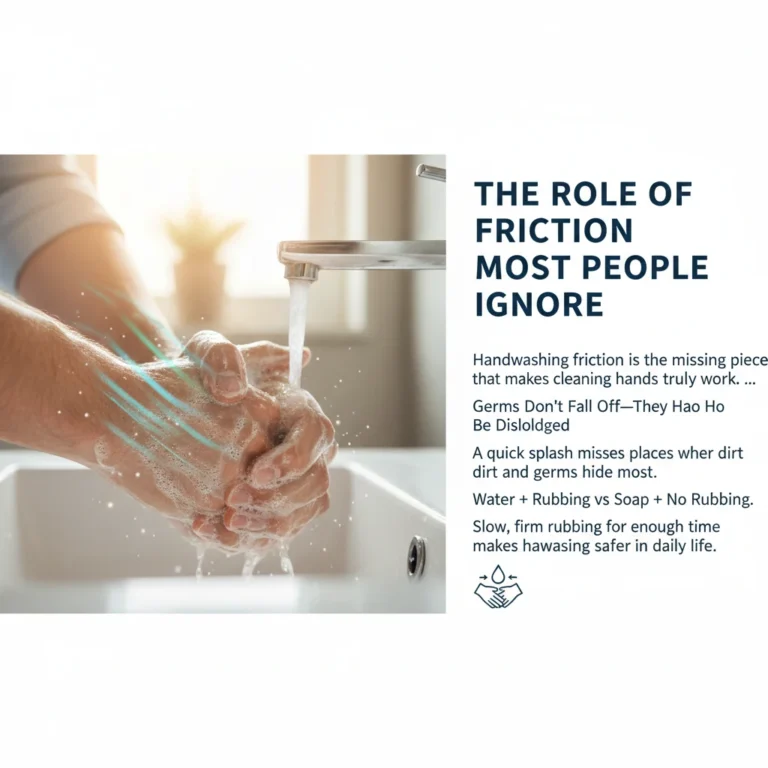
The Role of Friction Most People Ignore
Handwashing friction is the missing piece that makes cleaning hands truly work. Many people focus only on water or soap, but the real action comes from rubbing. Friction is a physical force, not a small tip, and it decides whether germs leave skin. Without steady rubbing, washing becomes more like a rinse than a clean.
Germs Don’t Fall Off—They Have to Be Dislodged
Germs do not sit loosely on hands; they stick to skin oils and tiny folds. This stickiness helps them survive normal splashing with water. When rubbing hands removes germs, it happens because friction breaks that grip. This is a simple mechanical removal of germs, not magic or strong products.
Why a 5-Second Splash Misses High-Risk Areas
A quick splash misses places where dirt and germs hide the most. The fingers need rubbing because skin touches skin and traps sweat. Under nails, around cuticles, and near rings stay dirty without pressure and movement.
Water + Rubbing vs Soap + No Rubbing
Water with proper rubbing often cleans better than soap used without effort. Soap helps loosen dirt, but hands must move to push germs away. Experience shows technique matters as much. Slow, firm rubbing for enough time makes handwashing safer in daily life.
The “Clean-Looking” Illusion and Invisible Hitchhikers
Invisible germs on hands often remain even when skin looks clean, which feeds the clean hands myth. Many judges hand safety by visible dirt vs bacteria, trusting eyes more than science. Hands without mud feel safe, but this feeling is often false. Germs do not need dirt to survive or spread.
Visible Dirt Is the Smallest Part of the Problem
Mud, dust, and stains are easy to see and wash away with water and soap. Because dirt is visible, people feel relief once it is gone. Bacteria and viruses are much smaller and cannot be seen by the eye.
Why Microbes Thrive on “Normal-Looking” Skin
Human skin stays warm most of the day, which helps microbes stay active. Sweat and natural oils give them food and shelter. Even clean-looking hands offer these conditions.
Everyday Objects That Re-Contaminate Clean-Looking Hands
Mobile phones are touched many times a day and rarely cleaned properly. Door handles in homes and offices carry germs from many people. Shared or damp towels pass microbes back to hands.
When Is Washing With Only Water Actually Acceptable?
When soap is necessary depends on the situation, not habits or shortcuts. This hygiene reality check helps people see risk clearly without fear. In daily life, hands meet many surfaces, but not all contact is dangerous. Context matters more than routine, and balance builds trust.
Low-Risk Situations Where Water May Be Enough
- Touching clean paper at home or the office with no spills or stains.
- Being at home with no contamination exposure, like after folding laundry or reading.
High-Risk Situations Where Soap Is Non-Negotiable
- After restroom use, even if hands look clean.
- Before eating or cooking, and after public contact like buses or lifts.
What to Do If Soap Isn’t Available
In water-only handwashing scenarios, use running water and rub hands well for twenty seconds. Clean between fingers, thumbs, and under nails with a firm motion. Dry hands using a towel or air, because wet skin spreads germs faster.
Common Handwashing Myths That Reduce Effectiveness
Handwashing myths often make people feel safe when they are not. Many habits look clean but do little to stop germs from spreading. Small mistakes during washing can undo the whole effort. Knowing the truth helps people protect their health every day.
The Hot Water Myth
The myth that hot water kills germs is very common. In reality, soap and rubbing hands well remove dirt and germs better than heat. Very hot water can harm skin and cause cracks, which let germs enter easily.
Antibacterial Soap vs Regular Soap
Antibacterial soap myths make regular soap seem weak, but that is not true. Regular soap lifts germs off the skin and washes them away with water. Using any soap for enough time matters more than special labels.
Air Drying vs Towel Drying
Drying hands is often ignored, yet it is very important. Wet hands spread germs more easily than dry ones, especially on shared surfaces. A clean towel or air drying fully helps finish handwashing the right way. This step reduces risk at home and outside.
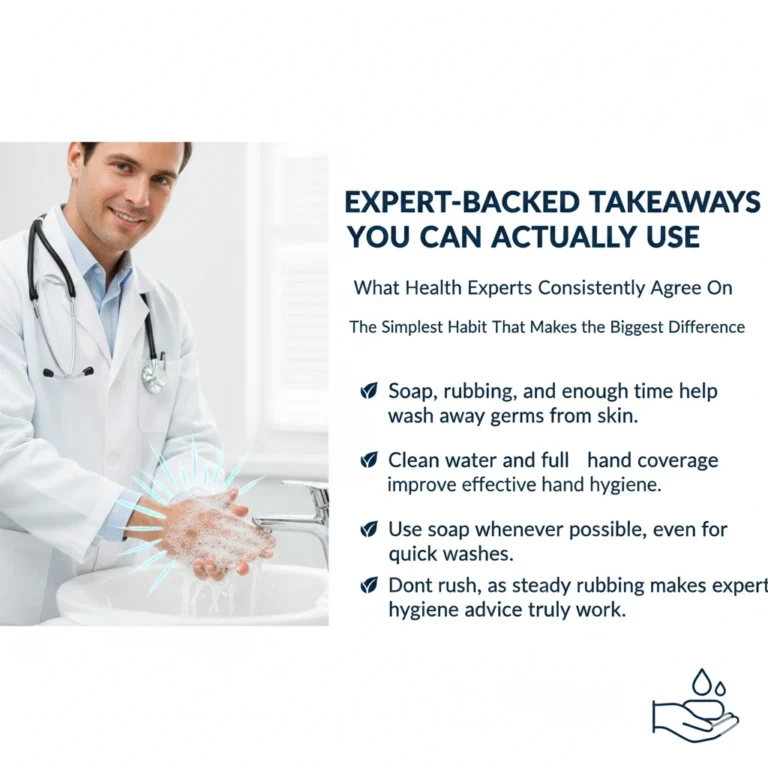
Expert-Backed Takeaways You Can Actually Use
Proper handwashing tips work best when they are simple and done daily. Health experts agree that small habits, done the right way, protect families from common illnesses. This advice comes from years of public health practice and real-world results.
What Health Experts Consistently Agree On
- Soap, rubbing, and enough time help wash away germs from skin.
- Clean water and full hand coverage improve effective hand hygiene.
The Simplest Habit That Makes the Biggest Difference
- Use soap whenever possible, even for quick washes.
- Do not rush, as steady rubbing makes expert hygiene advice truly work.
Following these steps daily builds strong, lasting protection for everyone at home and in public places.
🌙 Improve Energy, Sleep Patterns & Mood
Understand how your natural sleep timing affects focus and performance in Impact of Sleep Chronotypes on Productivity.
Discover why long sleep doesn’t always equal rest in Why Am I Sleeping So Much and Still Tired?.
Lift your mood and mental clarity with simple movement in Walking Challenges That Actually Improve Your Mood.
Frequently Asked Questions About Washing Hands With Only Water
Washing hands with only water can remove some dirt and loose particles, but it does not remove all bacteria. Microbes stuck in oils or under nails may stay behind. Soap is what helps lift and wash away these hidden germs more effectively.
Yes, many germs can stay on hands even after rinsing. Water alone moves some microbes around, but it does not kill them. Using soap and rubbing hands together makes a big difference in removing or killing germs.
The water temperature does not matter much for cleaning if soap is used. Cold or warm water can remove dirt, but soap and friction do the real work. Warm water may feel nicer, but it’s not essential for hygiene.
Running water can wash away some viruses, but it cannot remove all of them. Viruses in oils or stuck to the skin may survive. Soap or sanitiser is needed to reduce the risk of spreading infections.
Water removes visible dirt through rubbing, but sanitiser can inactivate many germs quickly. Hands with grease or sticky dirt need water and soap for proper cleaning. Context matters—sometimes sanitiser is convenient, but washing is stronger for dirty hands.
If soap isn’t available, rubbing hands under running water for at least 20–30 seconds is helpful. Focus on fingernails, between fingers, and palms. Drying completely also reduces leftover germs.
References
Amin, N., Pickering, A. J., Ram, P. K., Unicomb, L., Najnin, N., Homaira, N., Ashraf, S., Abedin, J., Islam, M. S., & Luby, S. P. (2014). Microbiological evaluation of the efficacy of soapy water to clean hands: A randomised, non-inferiority field trial. The American Journal of Tropical Medicine and Hygiene, 91(2), 415–423.
Burton, M., Cobb, E., Donachie, P., Judah, G., Curtis, V., & Schmidt, W.-P. (2011). The effect of handwashing with water or soap on bacterial contamination of hands. International Journal of Environmental Research and Public Health, 8(1), 97–104.
Centres for Disease Control and Prevention. (2024, June 12). Handwashing facts | Clean hands.
Centres for Disease Control and Prevention. (2024, April 29). About handwashing | Clean hands.
Food and Drug Administration. (2024, December 11). Skip the antibacterial soap; Use plain soap and water
Rutgers University. (2024, November 13). Handwashing: Cool water is as effective as hot water for removing germs.
UCHealth. (2025, October 15). Why soap and water beat hand sanitiser against viruses and germs.