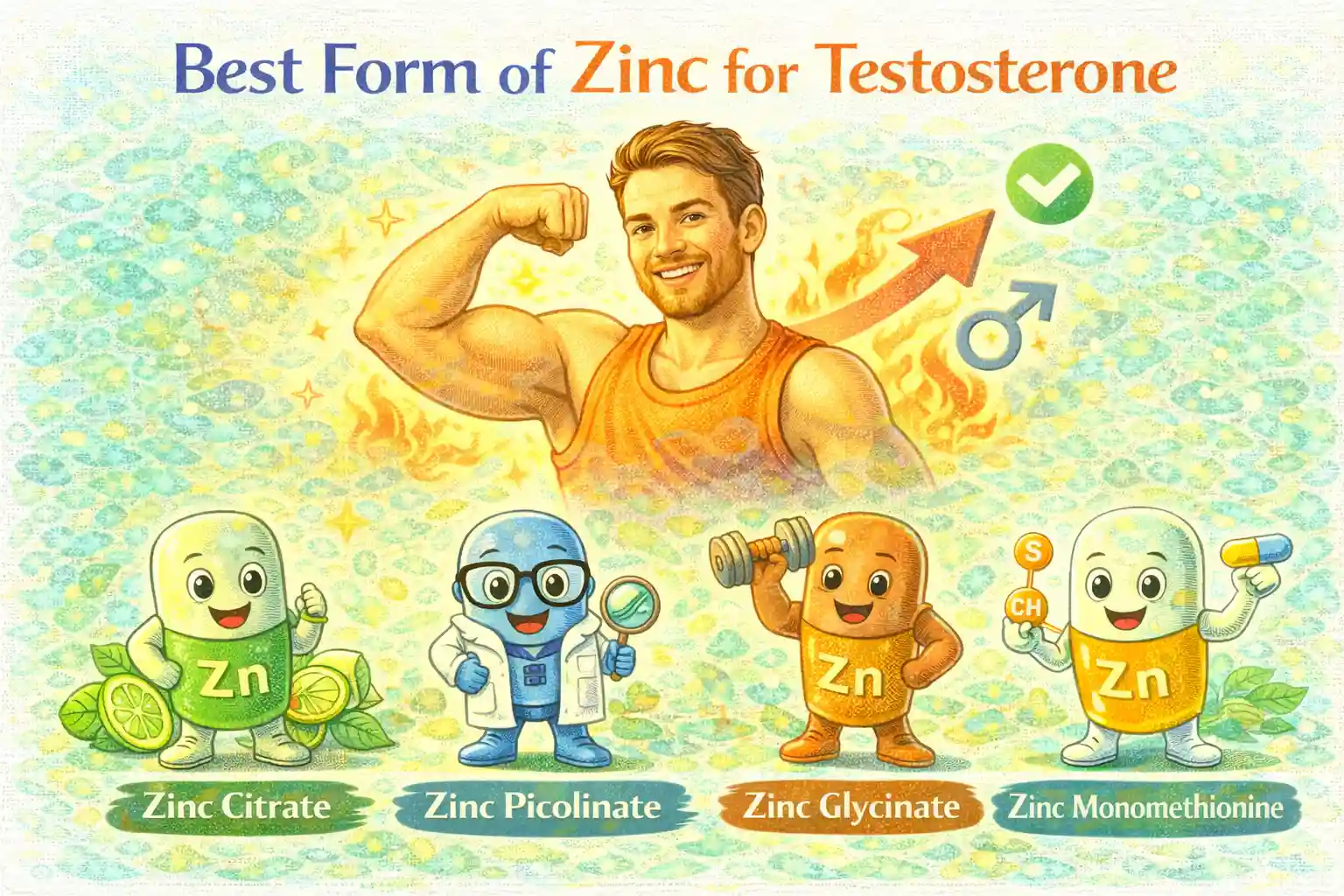
The best form of zinc for testosterone is zinc picolinate because it has superior absorption and bioavailability compared with most other zinc types. This means your body can raise zinc levels more efficiently, which supports testosterone production if you are deficient. Other highly effective options include zinc glycinate (bisglycinate) and zinc citrate, which are also well absorbed and easier on digestion.
However, choosing the right form matters because different zinc compounds absorb at different rates and affect how efficiently your body can use the mineral for hormone production.
Why Zinc Matters for Testosterone
Zinc plays a direct role in several biological pathways involved in testosterone production. It is required for enzyme activity, hormone signalling, and the function of the cells in the testes that produce testosterone.
When zinc levels drop, testosterone production can decline as well. Research has shown that zinc deficiency can significantly reduce testosterone levels within months, especially in older men or those with poor dietary intake.
Zinc supports testosterone through several mechanisms:
- Supports Leydig cells in the testes that produce testosterone
- Stimulates luteinizing hormone (LH), which signals the testes to produce testosterone
- Reduces aromatase activity, limiting the conversion of testosterone to estrogen
- Helps regulate SHBG, allowing more free testosterone to circulate
- Supports recovery and sleep, both important for hormone balance
Because of these roles, correcting a zinc deficiency can help restore testosterone to normal physiological levels.
Best Forms of Zinc for Testosterone
Different zinc supplements contain zinc bound to other molecules. This affects how well the mineral dissolves, gets absorbed in the intestine, and becomes available for hormone production.
The forms below are considered the most effective for testosterone support.
Zinc Picolinate
Zinc picolinate is widely regarded as the most absorbable form of zinc. It is created by binding zinc with picolinic acid, which helps the body transport minerals through the intestinal wall.
This form is often recommended when the goal is to quickly correct a zinc deficiency.
Benefits include:
- Very high bioavailability
- Efficient increase in serum zinc levels
- Strong evidence for improving zinc status
Because of its absorption efficiency, zinc picolinate is often the first choice for people specifically targeting testosterone support.
Zinc Glycinate (Zinc Bisglycinate)
Zinc glycinate is a chelated form where zinc is bound to the amino acid glycine. This structure allows the mineral to pass through the digestive system using amino-acid transport pathways.
Many premium supplements use this form because it combines good absorption with excellent digestive tolerance.
Key advantages:
- High absorption efficiency
- Gentle on the stomach
- Lower risk of nausea compared with some forms
For people who experience stomach discomfort from zinc supplements, this is often the best alternative to picolinate.
Zinc Citrate
Zinc citrate is another well-absorbed form and is commonly used in high-quality multivitamins. It dissolves well in the digestive tract and provides good mineral availability.
Although it may not absorb quite as efficiently as picolinate, it still performs significantly better than lower-quality forms like zinc oxide.
Reasons people choose zinc citrate:
- Reliable bioavailability
- Widely available and affordable
- Generally well tolerated
Zinc Monomethionine
Zinc monomethionine is a specialised chelated form where zinc is bound to the amino acid methionine. It is often used in sports nutrition supplements because it supports mineral retention and muscle recovery.
While research on testosterone specifically is more limited than picolinate, it is still considered a high-quality form.
Benefits include:
- Stable mineral complex
- Good absorption
- Often included in athletic formulations
Zinc Forms Compared
Zinc Form | Absorption Level | Key Advantage | Best For |
Zinc Picolinate | Very High | Highest bioavailability | Correcting deficiency |
Zinc Glycinate | High | Gentle on digestion | Sensitive stomach |
Zinc Citrate | Moderate–High | Good balance of cost and absorption | General supplementation |
Zinc Monomethionine | High | Stable amino-acid complex | Athletic recovery |
Lower-quality forms, such as zinc oxide or zinc sulfate, are cheaper but generally absorb less efficiently, which is why they are rarely recommended for hormone support.
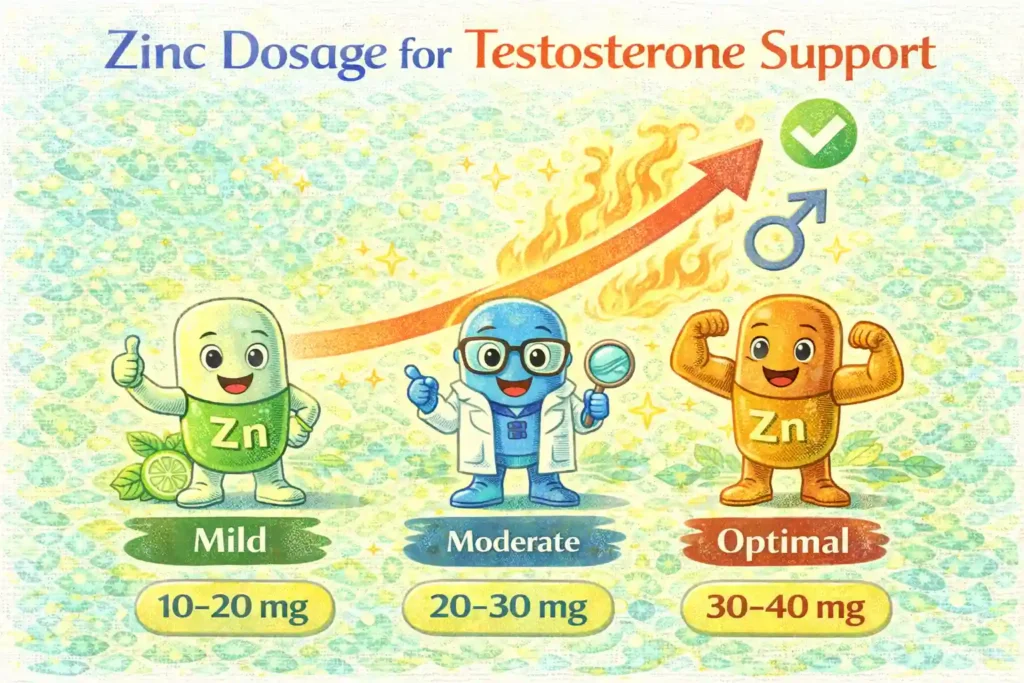
Zinc Dosage for Testosterone Support
Adult men require about 11 mg of zinc per day to maintain normal physiological function. However, supplementation doses are often higher when correcting a deficiency or supporting hormone health.
Typical ranges used in studies include:
- 15–30 mg elemental zinc per day for general support
- Up to 40 mg daily is the tolerable upper intake level for adults
Some research has used zinc sulfate providing around 50 mg elemental zinc, but long-term use of such doses should only occur under medical supervision.
Important note about elemental zinc: The number printed on the front of a supplement bottle can sometimes be misleading. For example, 50 mg of zinc picolinate does not mean you are getting 50 mg of pure zinc. In many cases, that amount may only provide roughly 8–10 mg of actual elemental zinc, depending on the compound used. Always check the nutrition label where the “elemental zinc” value is listed, as this represents the amount your body can actually use.
Zinc Dosage for Testosterone Support
Zinc does not increase testosterone instantly. Instead, it works by restoring normal mineral status and supporting hormone production pathways.
Most studies and clinical observations suggest measurable changes may appear after 4 to 8 weeks of consistent supplementation, particularly in individuals who were previously deficient.
The effect is usually more noticeable in:
- Men with low dietary zinc intake
- Older adults with reduced absorption
- Athletes who lose minerals through sweat
- Individuals with digestive disorders affecting nutrient uptake
If zinc levels are already adequate, additional supplementation may not significantly increase testosterone.
How to Take Zinc for Better Absorption
Absorption depends not only on the supplement form but also on how you take it.
Practical strategies include:
- Take zinc with food to reduce nausea
- Avoid taking it with large amounts of calcium or iron
- Separate zinc from high-phytate foods such as whole grains or legumes when possible
- Use a chelated form like picolinate or glycinate for better absorption
Another important point is that high-calcium foods, particularly dairy products, can compete with zinc for the same transport pathways in the intestine. Taking zinc supplements alongside milk, cheese, or calcium supplements may reduce how much zinc your body absorbs.
Beverages can also influence mineral absorption. Coffee and tea contain tannins, natural compounds that may inhibit zinc absorption and, in some cases, reduce it by a significant margin. For better results, it is often recommended to take zinc supplements at least 30–60 minutes away from coffee or tea.
These small adjustments can make a noticeable difference in how effectively your body uses zinc.
Safety Considerations
Although zinc is essential for hormone health, excessive intake can cause problems.
Long-term intake above 40 mg per day may lead to:
- Copper deficiency
- Digestive discomfort
- Headaches or nausea
- Changes in immune function
Maintaining a balanced mineral intake is important, especially if zinc supplements are taken for extended periods.
Zinc From Food vs Supplements
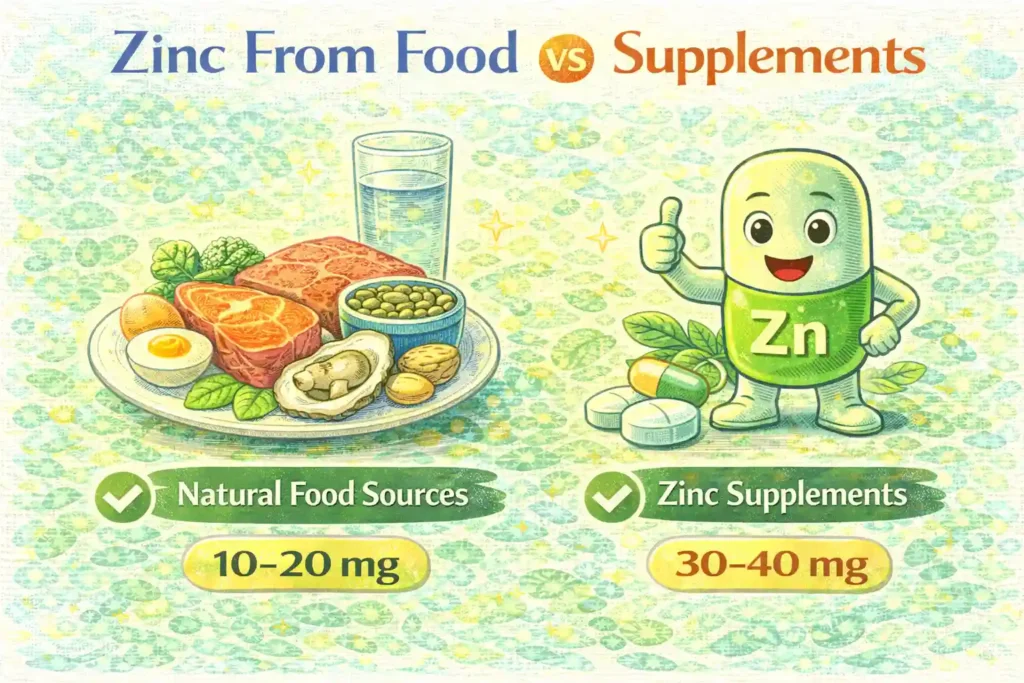
Dietary zinc remains the foundation of healthy hormone function. Supplements should primarily be used to correct a deficiency or support inadequate intake.
Some of the richest food sources include:
- Oysters and shellfish
- Red meat and poultry
- Pumpkin seeds and hemp seeds
- Eggs and dairy
- Legumes and nuts
However, plant sources contain compounds called phytates, which can reduce zinc absorption. This is one reason supplements sometimes provide more reliable intake.
A Simple Way to Check Possible Zinc Deficiency
Some people try a quick at-home method sometimes referred to as the “liquid zinc taste test” or “zinc tally test.” In this informal approach, a small amount of liquid zinc sulfate solution is placed in the mouth to observe the taste response.
People who are very low in zinc may initially report little or no taste, while those with adequate levels often notice a strong metallic taste almost immediately. Although this method is sometimes used as a rough indicator, it is not a medical diagnosis.
The most reliable way to confirm zinc deficiency remains laboratory testing through a healthcare professional, particularly if symptoms such as fatigue, reduced libido, or poor recovery are present.
Final Takeaway
Zinc plays a critical role in testosterone production because it supports hormone signalling, enzyme activity, and testicular function. If zinc levels are low, testosterone production can decline.
Among the available options, zinc picolinate is generally considered the best form for testosterone because of its superior absorption. Zinc glycinate and zinc citrate are also strong alternatives, particularly for people who prefer a gentler supplement.
Consistent intake within safe dosage ranges, combined with a balanced diet and healthy lifestyle, provides the most reliable approach to supporting normal testosterone levels.
Read More: Legionnaires Disease