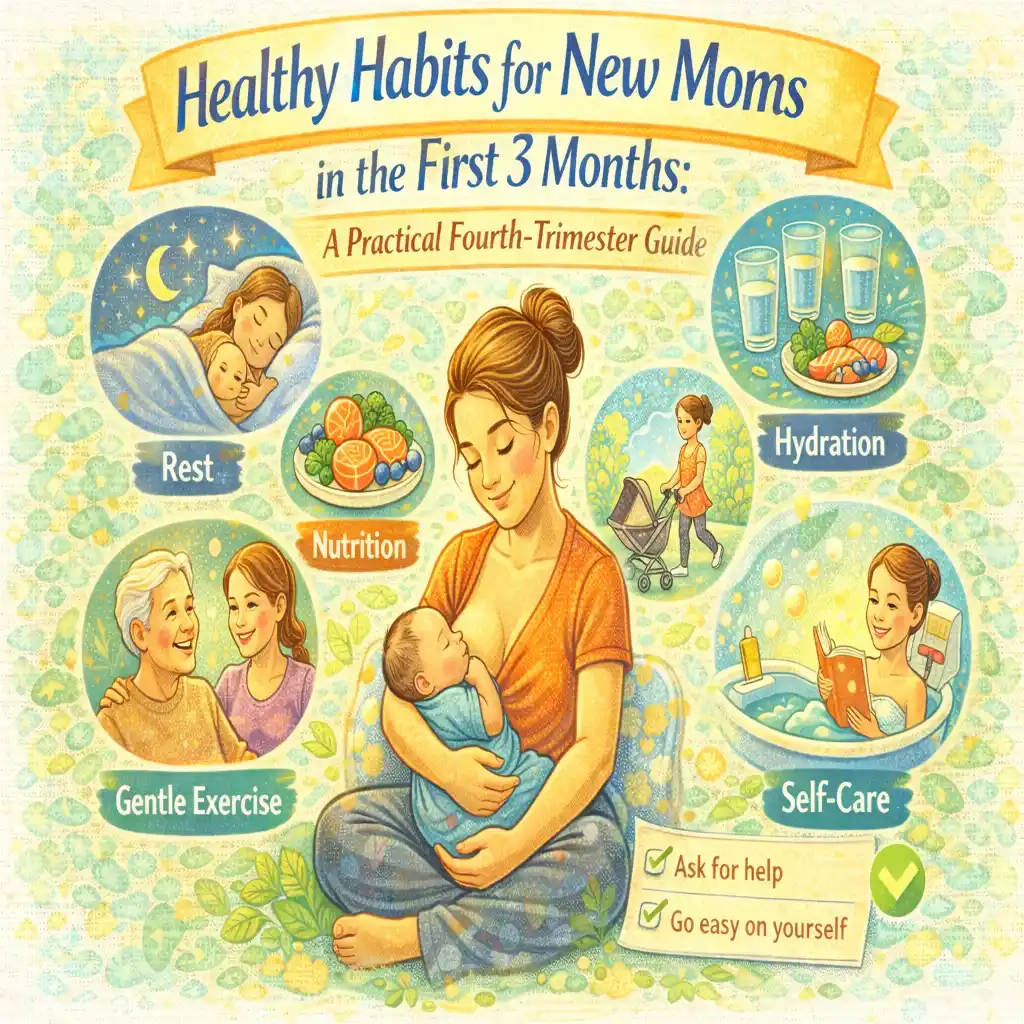
The first 12 weeks after birth are often called the fourth trimester, and this time is mostly about recovery and learning life with your baby. Your body is healing, hormones are shifting, and daily routines look very different.
In these early weeks, postpartum healthy habits matter more than doing everything perfectly. Eating simple, nourishing meals, resting when your baby sleeps, and asking for help all support fourth-trimester recovery. Small steps like drinking enough water, gentle movement, and short moments of quiet can make a big difference.
Think of this period as a slow transition into motherhood. These new mom wellness tips focus on caring for your body, protecting your energy, and building simple routines.
Every birth is different. Whether you had a vaginal birth or C-section, follow your doctor’s advice and use this postpartum self-care guide in a way that feels right for you.
Quick Takeaway
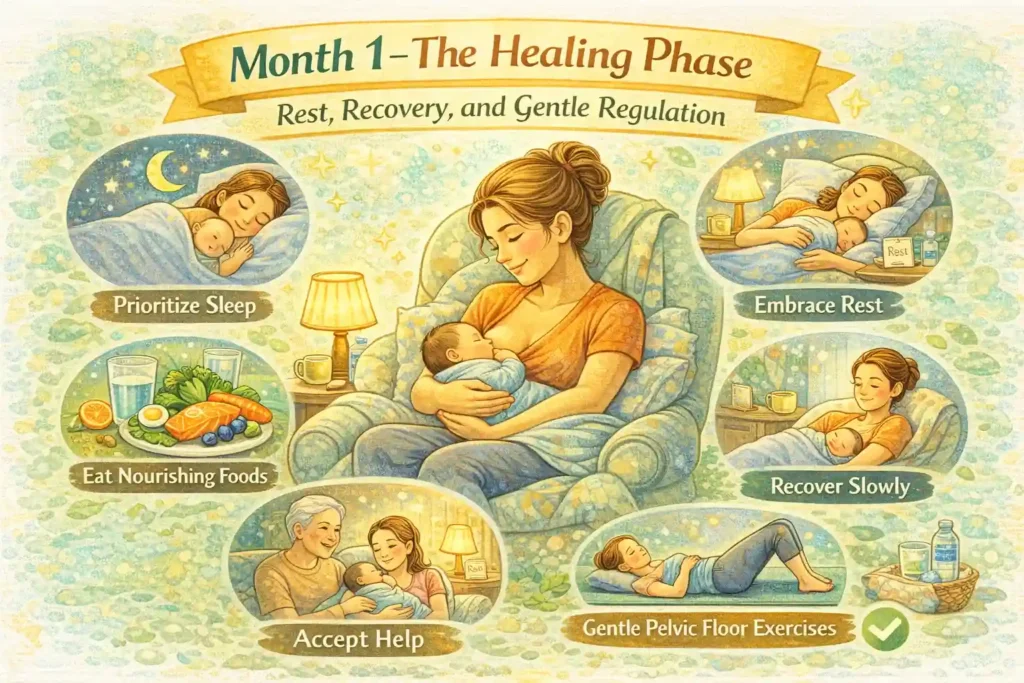
Month 1 – Healing Phase
- Focus on rest and recovery after birth.
- Eat simple, nutritious foods and stay well hydrated.
- Avoid heavy work; move slowly.
- Emotional changes or baby blues are common.
Month 2 – Rhythm Phase
- Start creating gentle daily routines.
- Maintain balanced meals and hydration for energy.
- Take short walks or fresh air breaks.
- Ask for help and protect mental health.
Month 3 – Strength Phase
- Slowly begin light movement or exercise if the doctor approves.
- Pay attention to posture and body comfort.
- Start reconnecting with personal time and hobbies.
- Build a simple self-care routine.
Key Reminder
Seek medical help for high fever, heavy bleeding, severe pain, breathing issues, or persistent sadness.
Month 1 – The Healing Phase: Rest, Recovery, and Gentle Regulation
The first few weeks after birth often feel like a blur of feeding, resting, and adjusting to life with your baby. During this time, your body is still working hard to heal from childbirth while your hormones shift quickly. The first month after childbirth, care is less about routines and more about slow, gentle support for your body and mind.
Prioritising Physical Recovery Before Productivity
Right after birth, your body begins an intense healing process that happens mostly inside. Your uterus slowly shrinks back to its normal size, tissues repair themselves, and muscles that stretched during pregnancy start regaining strength. Because of this, your energy may feel low, and that is completely normal. During the fourth trimester recovery, rest is not a luxury—it is part of healing.
Instead of rushing back into daily tasks, focus on simple postpartum recovery habits that reduce strain on your body. Small choices can make a big difference in how comfortably you heal.
Some helpful habits include:
- Avoid lifting heavy objects other than your baby
- Use stairs slowly and only when needed
- Set up a cosy resting spot where you can feed and cuddle your baby
- Keep baby supplies, water, and snacks within reach
When you allow your body to slow down during these early weeks, you give muscles and tissues time to recover properly. These healing after delivery tips may feel simple, but they can help prevent pain and support a smoother recovery in the months ahead.
Building Hydration and Nutrient-Dense Eating Habits
Food and water quietly play a huge role in how your body heals after childbirth. Your body needs extra nutrients to repair itself, restore lost energy, and support milk production if you are breastfeeding. Yet many mothers forget to eat regularly because newborn care takes most of their attention.
Keeping meals simple and nourishing can make this part easier during the first month after childbirth.
Helpful habits you can try:
- Drink a glass of water every time you feed your baby
- Keep quick snacks like nuts, fruit, or yoghurt nearby
- Choose warm, easy foods such as soups, lentils, rice, or oatmeal
- Ask family members to help prepare simple meals
Instead of worrying about dieting, focus on feeding your body well. Good nutrition is one of the most supportive postpartum recovery habits during the fourth trimester.
Understanding Emotional Shifts and the Baby Blues
Your emotions may feel different from usual during the early weeks after birth. After delivery, hormone levels drop quickly, which can affect mood, sleep, and overall feelings. During this stage of healing after delivery, emotional ups and downs are very common.
You might notice moments where you feel overwhelmed, tearful, or suddenly worried about small things. Some mothers experience crying spells without a clear reason. These feelings are often called the baby blues and usually settle within a couple of weeks.
Still, it is important to pay attention to how you feel. If sadness, hopelessness, or heavy anxiety stay for many weeks or start affecting daily life, speaking with a healthcare provider can help you get the right support during your fourth-trimester recovery.
Month 2 – The Rhythm Phase: Creating Gentle Structure in Daily Life
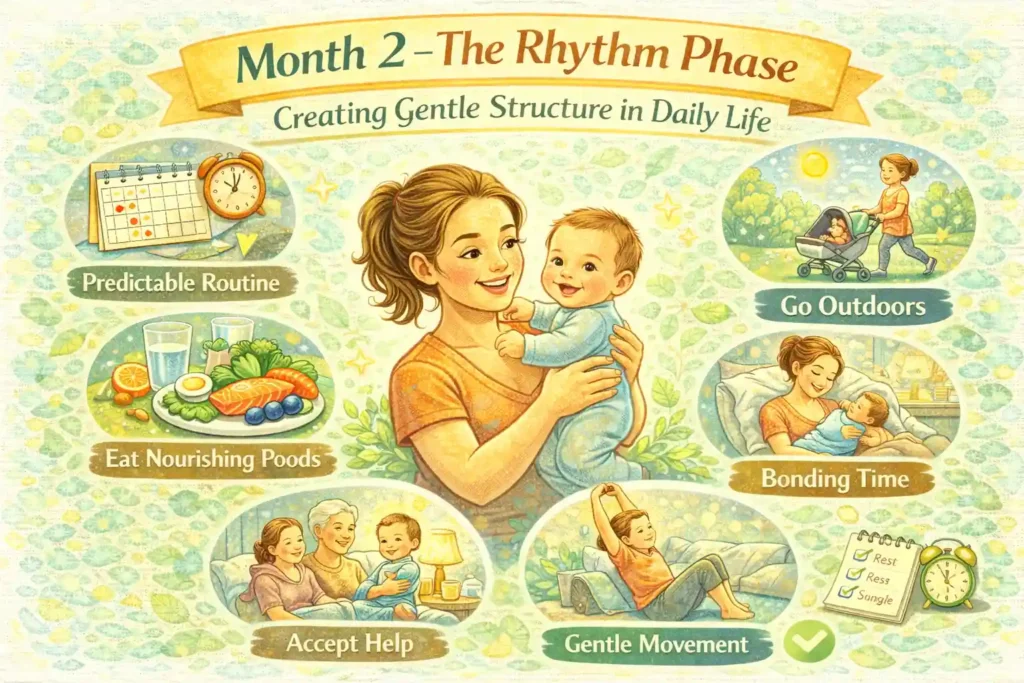
By the second month, you may start noticing small patterns in your days with the baby. Sleep can still feel random, but tiny routines slowly begin to appear. This stage is often when many mothers start building gentle postpartum wellness habits that support daily balance.
Establishing Simple Daily Anchors for Stability
Your days with a newborn can still feel messy and unpredictable, which is completely normal. When everything changes from hour to hour, your mind can feel tired from constant decision-making. Creating a few simple habits during the day can make things feel calmer and easier to manage.
Instead of trying to follow a strict schedule, focus on small anchors that repeat each day. For example, you might step outside for fresh air in the morning, take a short walk with the stroller, or try to eat lunch around the same time every day. These little actions create a gentle structure without adding pressure.
These kinds of postpartum routine tips help your day feel steadier. Over time, small daily anchors also support new mom energy recovery, helping you slowly regain strength and confidence.
Supporting Energy Through Balanced Nutrition and Hydration
Your body is still healing during the second month, and regular nourishment continues to support recovery and energy levels. The hydration and nutrition habits remain the same as mentioned in Month 1.
Protecting Mental Health During the Adjustment Period
Caring for a newborn often brings a quiet mental pressure that many people do not see. You may be thinking about feeding times, sleep patterns, household work, and many tiny details throughout the day.
Lightening that mental load can help you feel calmer. Ask for help when you need it, share responsibilities with your partner or family, and allow yourself short breaks—even a few quiet minutes can help reset your mind.
Taking care of your thoughts and emotions is just as important as physical healing. When your mind feels supported, daily life with your baby becomes easier to handle.
Month 3 – The Strength Phase: Rebuilding Energy and Personal Identity
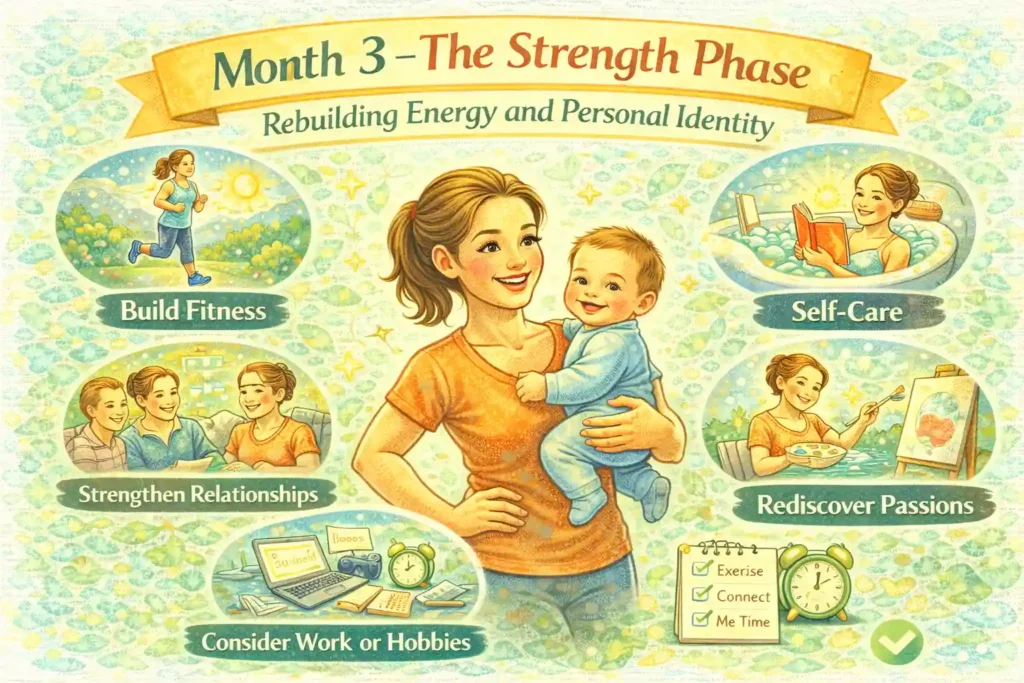
By the third month, you may notice your body and mind starting to settle into a steadier rhythm. Many mothers feel a little stronger and more confident during this stage. This period of the third month postpartum, health often allows you to slowly return to movement and simple personal routines.
Reintroducing Gentle Movement Safely
Your body may finally feel ready for light activity after weeks of rest and recovery. Gentle movement can help wake up tired muscles, improve blood flow, and lift your mood during this stage of gentle fitness after childbirth.
If your doctor has cleared you, this may be the right time for a careful postpartum exercise start. You can begin with simple activities like slow walks around your neighbourhood, light stretching in the morning, or calm breathing exercises. These small movements help reconnect your core and remind your body how to move comfortably again.
It is important to take things slowly. Your pelvic floor and abdominal muscles are still healing, so rushing into harder workouts can cause strain. A steady and gentle approach helps your body rebuild strength safely.
Addressing Common Physical Discomforts Like Posture Strain
Hours of feeding, rocking, and carrying your baby can quietly create tension in your shoulders, neck, and back. Many mothers notice posture changes during this stage of the third month postpartum.
You can ease this strain by paying attention to how you sit and hold your baby. Use supportive pillows during feeding, keep your back straight, and relax your shoulders when possible. Simple shoulder rolls and neck stretches during the day can also release tight muscles.
These small posture habits may seem simple, but they can prevent long-lasting pain as your baby grows heavier.
Reconnecting With Personal Identity Beyond Motherhood
Around this time, life may slowly shift from pure survival mode to a more balanced routine. This is often when you begin reconnecting with parts of yourself beyond daily baby care.
Small new mom self-care habits can help you feel like yourself again:
- Writing a few thoughts in a journal
- Reading a few pages of a book
- Taking a short, quiet tea break
- Listening to music you enjoy
These small moments remind you that caring for yourself is also part of caring for your family. When you protect your own energy, your third month postpartum health becomes stronger both physically and emotionally.
C-Section vs. Vaginal Birth: Small Recovery Differences
Recovery can feel slightly different depending on how your baby was born. After a vaginal birth, focus on rest, gentle movement, and pelvic floor recovery. If you had a C-section, remember that it is major abdominal surgery, and healing may take longer.
For C-section recovery, move slowly, avoid lifting anything heavier than your baby, and try the log-roll method (rolling onto your side before sitting up) to reduce pressure on your abdomen. Always follow your doctor’s guidance and listen to your body during the early weeks of recovery.
Read More: Traditional Chinese Fitness Techniques
When New Moms Should Seek Medical Support
Your body goes through many changes after childbirth, and most of them are a normal part of recovery. But some symptoms can point to postpartum health risks that need quick care. Knowing when to call a doctor after birth can help you stay safe and recover with peace of mind.
Key Warning Signs That Should Never Be Ignored
The days after delivery are a time when you should keep a close eye on how your body and mind feel. Learning the common postpartum warning signs helps you know when it’s time to seek postpartum medical help.
Watch for symptoms such as:
- High fever or chills
- Severe pain in your stomach or lower belly
- Sudden heavy bleeding or large blood clots
- Chest pain or trouble breathing
- Strong headaches or blurred vision
- Feeling deeply sad, hopeless, or unable to care for yourself or your baby
If something feels wrong, trust your instinct. Getting help early protects both you and your baby and supports a safer recovery.
Small Daily Habits That Make the Fourth Trimester Healthier
Small actions done every day slowly build strong, healthy routines for new moms and make recovery feel more manageable. When you repeat simple habits, your body gets the rest, food, and care it needs.
- Drink enough water throughout the day to stay hydrated.
- Eat simple, balanced meals with fruits, grains, and protein.
- Rest whenever your baby sleeps, even short naps help.
- Accept help from family or friends when they offer it.
- Add light movement like slow walks when your body feels ready.
Your new mom self-care routine does not need to be perfect. Healing takes time, and every mother moves through the fourth trimester at her own pace.
FAQs
Is it normal to feel extremely tired during the first few weeks after birth?
Yes, it’s very common. Your body is healing, hormones are changing, and newborn care can disrupt sleep. Try to rest whenever your baby sleeps and don’t hesitate to accept help from family or friends.
When can I start light exercise after having a baby?
Most mothers can begin gentle activities like short walks or stretching around the third month, but it’s important to wait for your doctor’s approval before starting any exercise.
What should I eat during the first three months postpartum?
Focus on simple, nourishing foods like fruits, vegetables, whole grains, lentils, soups, and protein-rich meals. Staying hydrated and eating regular meals helps support recovery and energy.
Is it normal to feel emotional or cry easily after delivery?
Yes, many mothers experience mood swings or “baby blues” due to hormonal changes and lack of sleep. These feelings usually improve within a couple of weeks.
When should I contact a doctor after childbirth?
You should seek medical help if you notice high fever, severe pain, heavy bleeding, trouble breathing, or persistent feelings of sadness or anxiety.
References
American College of Obstetricians and Gynecologists. (2023). Optimizing postpartum care. Obstetrics & Gynecology, 141(5), e117–e136.
Dennis, C.-L., & Dowswell, T. (2013). Psychosocial and psychological interventions for preventing postpartum depression. Cochrane Database of Systematic Reviews, 2, CD001134.
Gartlehner, G., Swinson Evans, T., Newton-Li, K., Smith, N. R., Morgan, L. C., Weber, R. J., Bann, C., & Viswanathan, M. (2021). Interventions for the treatment of perinatal depression: A systematic review. Agency for Healthcare Research and Quality (US).
Martin, J. A., Hamilton, B. E., & Osterman, M. J. K. (2022). Births: Provisional data for 2021. National Center for Health Statistics.
Mottola, M. F., Davenport, M. H., Ruchat, S.-M., Barros, R. P., Norton, S. M., Poitras, V. J., Gray, C. E., Jaramillo Garcia, A., Kereliuk, M., & Nagpal, T. S. (2018). 2019 Canadian guideline for physical activity throughout pregnancy. Journal of Obstetrics and Gynaecology Canada, 40(11), 1528–1537.
National Institutes of Health, Office of Dietary Supplements. (2024). Nutrition recommendations in pregnancy and lactation.
Osterman, M. J. K., Hamilton, B. E., Martin, J. A., Driscoll, A. K., & Valenzuela, C. P. (2023). Births: Final data for 2021. National Vital Statistics Reports, 72(1).
World Health Organization. (2022). WHO recommendations on maternal and newborn care for a positive postnatal experience.