Starting a daily walking challenge can feel exciting and simple. It’s not about hitting perfect numbers—it’s about building a habit that sticks.
Many people start strong but lose momentum by day 10. This 30-day steps challenge is designed to keep you moving, step by step, without pressure.
Anyone can join, whether just starting out or already active. All it takes is comfortable shoes and a small goal each day. By the end, walking becomes an easy, natural part of daily life.
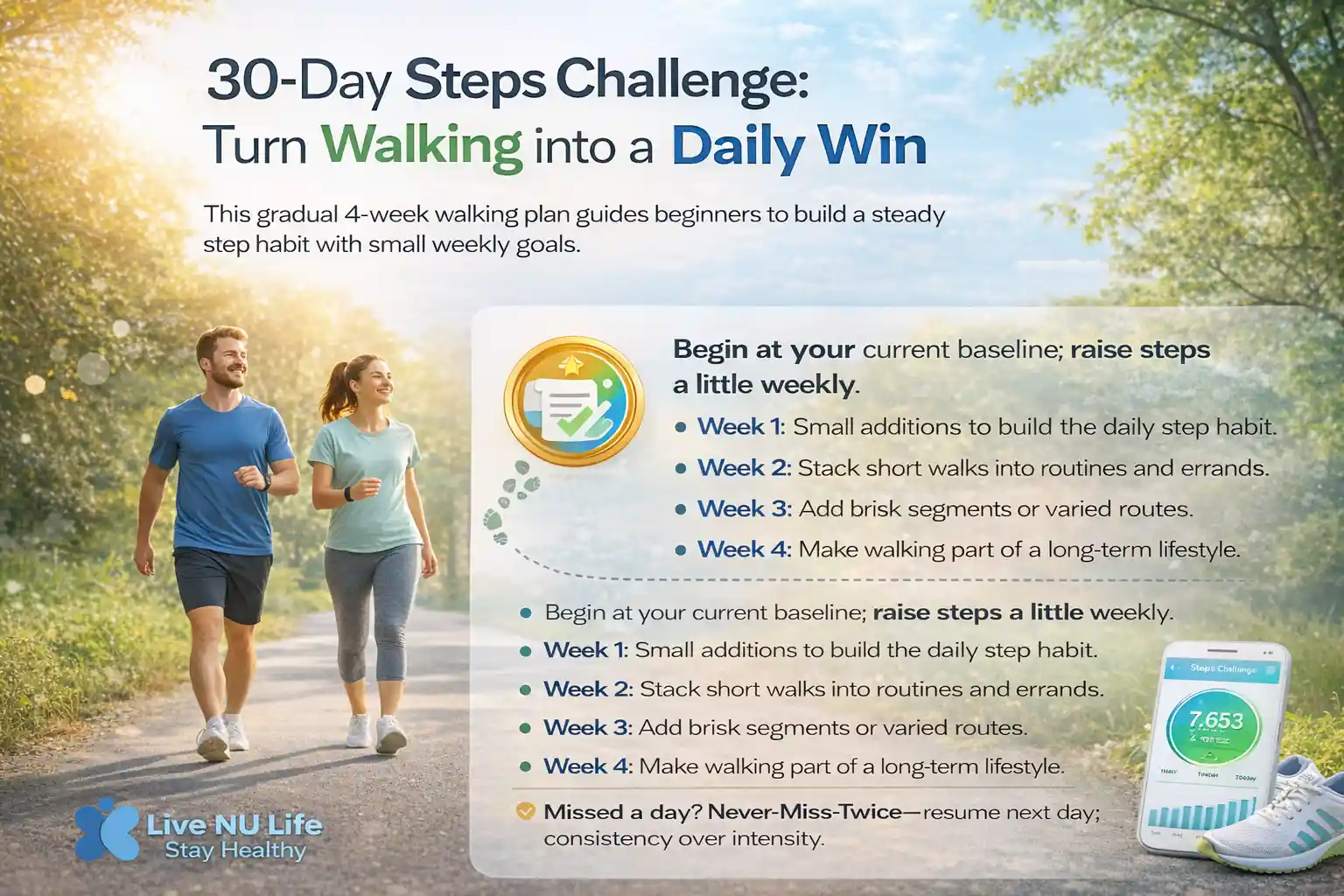
This 30-day walking challenge summary outlines a simple step challenge guide built for beginners.
The walking plan overview focuses on creating a steady daily step habit through small weekly changes that fit real routines.
Begin at the current baseline; raise steps a little weekly.
- Week 1: Small additions to build the daily step habit.
- Week 2: Stack short walks into routines and errands.
- Week 3: Add brisk segments or varied routes.
- Week 4: Make walking part of a long-term lifestyle.
Missed a day? Never-Miss-Twice—resume next day; consistency over intensity.
Table of Contents
ToggleWhy Most Walking Challenges Fail (And How to Beat Them)
Many people start walking challenges full of excitement, only to quit after a week or two. The key isn’t just willpower—it’s smart planning, small wins, and building consistency in walking gradually.
Walking challenges often fail because goals feel too big, motivation dips, life gets busy, or there’s no clear plan for habit formation. Observations from walking enthusiasts suggest that small, realistic steps can make all the difference between quitting and achieving success.
The 10K Step Trap
Chasing 10,000 steps from day one can be overwhelming and discouraging for beginners. Instead, starting with a personal baseline and gradually increasing steps makes walking feel achievable, keeping motivation high.
Motivation Dips Around Day 14
Many walkers hit the “Day 14 Slump.” Mixing up routes, adding a favourite playlist, or walking with a buddy can reignite enthusiasm and make the routine fun again.
Life Interruptions Are Normal
Missing a day doesn’t mean failure. Following the Never-Miss-Twice Rule—if you skip, make the next day non-negotiable—helps maintain habit consistency in walking over the long term.
Lack of Micro-Goals
Breaking a 30-day challenge into smaller daily or weekly goals improves focus and confidence. For example, “Week 1: add 1,000 steps daily” turns a big target into achievable milestones.
Week 1: Calibrating Your Baseline – The Sneaky Step Phase
Starting a walking routine doesn’t need to be overwhelming. Week one is all about getting a feel for your current activity and gently weaving movement into daily life. The goal isn’t huge step counts—it’s small, consistent habits.
Even tiny changes add up. Parking a little farther from the store, pacing during phone calls, or taking a short walk after meals can help set the stage for bigger progress later. Linking these walks to things you already do makes them easier to remember and stick with.
Anchor Steps to Existing Routines
Pair walking with everyday activities. For example, step outside after brushing your teeth, or take a stroll after your morning coffee. When movement becomes part of something familiar, it feels natural instead of forced.
Low-Effort Wins
Look for small opportunities throughout the day. Take the stairs instead of the elevator, walk during short work breaks, or run quick errands on foot. These tiny wins add up without feeling like exercise.
Track Without Obsession
Keep tabs on your steps with simple tools like phone apps or a basic pedometer. Focus on showing up consistently rather than hitting exact numbers. Over time, these small habits become second nature.
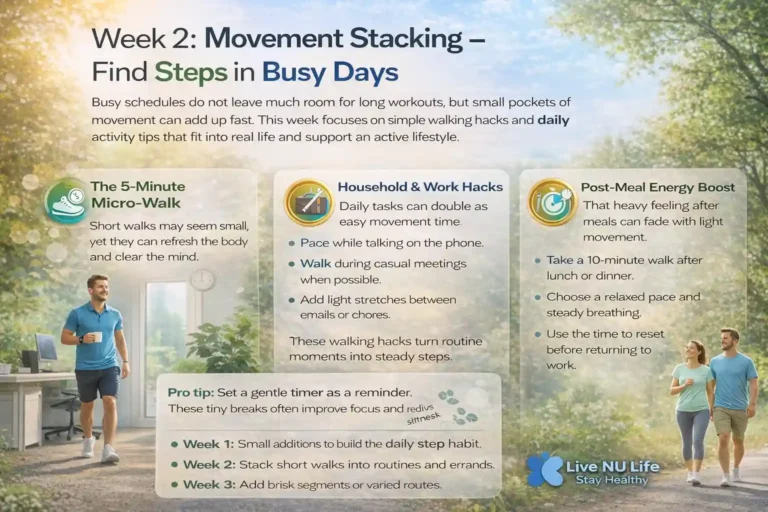
Week 2: Movement Stacking – Find Steps in Busy Days
Busy schedules do not leave much room for long workouts, but small pockets of movement can add up fast. This week focuses on simple walking hacks and daily activity tips that fit into real life and support an active lifestyle.
The 5-Minute Micro-Walk
Short walks may seem small, yet they can refresh the body and clear the mind.
- Take a 5-minute lap around the home or office every hour.
- Walk while waiting for coffee to brew or food to heat.
- Do a quick hallway stroll before starting the next task.
Pro tip: Set a gentle timer as a reminder. These tiny breaks often improve focus and reduce stiffness.
Household & Work Hacks
Daily tasks can double as easy movement time.
- Pace while talking on the phone.
- Walk during casual meetings when possible.
- Add light stretches between emails or chores.
These walking hacks turn routine moments into steady steps.
Post-Meal Energy Boost
That heavy feeling after meals can fade with light movement.
- Take a 10-minute walk after lunch or dinner.
- Choose a relaxed pace and steady breathing.
- Use the time to reset before returning to work.
This simple habit supports digestion, lifts mood, and keeps energy steady through the day.
Week 3: Levelling Up – Intensity, Terrain, and Recovery
Week three brings a gentle jump in challenge by mixing brisk walking with incline walking and smart step progression. Small changes help the body adapt while keeping the routine fresh and motivating.
Add Variety to Your Walks
Changing surroundings keeps motivation high and helps avoid the plateau many people notice after repeating the same route for weeks.
- Try a new neighbourhood route
- Walk on grass or tracks
- Alternate slow and brisk walking
Interval Walking
Short pace shifts make walking more effective without adding too much time, helping stamina improve naturally.
- Walk fast for 1–2 minutes
- Return to an easy recovery pace
Recovery Days Matter
Restful days allow muscles to rebuild, preventing soreness and keeping the habit comfortable enough to continue daily.
- Choose short, relaxed walks
- Do light stretching at home?
- Notice tiredness and slow down
Week 4: The Sustainability Switch – Make It a Lifestyle
By week four, the goal shifts from finishing a challenge to building a life that includes movement. This stage helps turn a simple walking routine into sustainable fitness and a steady active lifestyle that lasts beyond 30 days.
Build a Walking-Friendly Environment
A lasting walking routine often begins with small changes at home. Shoes placed near the door, a light jacket ready, or a set time after dinner can act as simple reminders. Planning easy routes nearby removes excuses.
Using a watch or step tracker can help, but it should support the habit, not control it. The focus stays on showing up consistently rather than chasing daily numbers.
Social & Accountability Tools
Walking feels lighter when shared with others. Joining a local group or inviting a neighbour makes it easier to stay committed. Even sharing weekly progress with a friend builds gentle accountability.
Small check-ins keep motivation alive and make sustainable fitness feel less lonely.
Reflect and Adjust
Progress becomes clearer when it is written down. A short weekly note about energy levels, mood, or distance walked can show real change over time.
Celebrating small wins and adjusting goals keeps the active lifestyle flexible and realistic for the long run.
Learn more about 30-days walking plan
🌿 Support Mood, Immunity & Cleaner Living
Boost emotional well-being through simple movement in Walking Challenges That Actually Improve Your Mood.
Understand proper hygiene practices in Are Germs Still on Your Hands After Washing With Only Water?.
Improve indoor air and respiratory health in Can an Air Purifier Prevent Allergies and Asthma?.
FAQ – No-Guilt Approach for Missed Days
Skipping one day rarely affects progress because habits grow through repetition over time. Many behaviour studies show that long-term consistency matters more than a single lapse.
Follow the “never miss twice” idea—resume the next day, even with a short walk.
Starting a walking challenge does not require expensive equipment. Comfortable shoes that support the feet are usually enough.
Devices like step trackers can help with motivation, but they are optional and not necessary for success.
Progress can be noted using a phone app, a simple pedometer, or even a small notebook. Watching weekly patterns gives a clearer picture than focusing only on daily numbers.
Steady improvement matters more than perfect daily scores.
Busy days often bring fatigue, and that is completely normal. A shorter, relaxed walk still supports habit recovery and keeps the routine alive.
If tiredness continues, lowering the step goal for a few days can help.
The 10,000-step number is popular, but it is not required for everyone. Increasing steps gradually from one’s usual level often works better.
The real goal is building a simple daily movement habit that can continue for years.