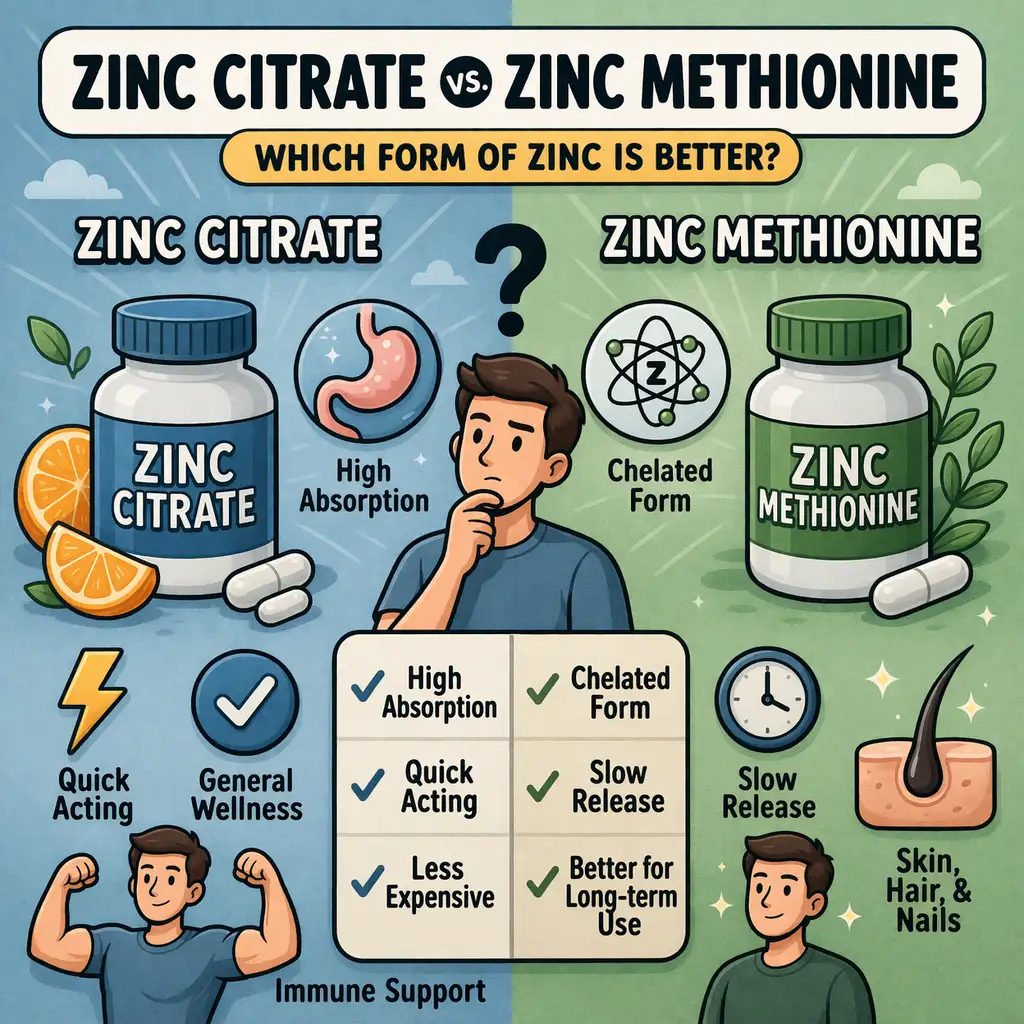
Choosing the right zinc supplement can be confusing. Walk into any pharmacy or search online, and you’ll see several different forms of zinc—each claiming better absorption, higher potency, or superior health benefits. Two of the most commonly compared options are zinc citrate vs zinc methionine.
At first glance, they may appear similar. Both provide the essential mineral zinc, and both are used to support immune health, metabolism, skin health, and many other biological processes. However, the way these two forms are structured—and how the body absorbs them—can influence which one may be better for your specific needs.
If you want the short answer:
- Zinc methionine is generally considered the better choice for absorption and bioavailability.
- Zinc citrate is often more affordable, widely available, and gentle for daily supplementation.
This guide explains the differences between zinc citrate and zinc methionine in clear, practical terms. It focuses on evidence-based information, real-world usability, and safety considerations so that readers can make an informed decision.
The best option ultimately depends on your health goals, digestion, and how your body responds to supplements.
Understanding Zinc and Why It Matters
Zinc is an essential trace mineral required for hundreds of biochemical reactions in the body. It plays a role in:
- Immune system function
- Wound healing
- Hormone regulation
- Protein synthesis
- DNA production
- Skin health
- Reproductive health
Because the body cannot store large amounts of zinc, regular intake through diet or supplementation is important.
Dietary sources include meat, seafood, seeds, nuts, and whole grains. However, many people supplement zinc to ensure adequate intake, especially during illness, periods of stress, or immune challenges.
What Is Zinc Citrate?
Zinc citrate is a form of zinc combined with citric acid, an organic acid commonly found in citrus fruits.
This form is widely used in supplements because it dissolves well in the digestive tract and is relatively easy for the body to absorb compared with older forms like zinc oxide.
Key Characteristics of Zinc Citrate
- Moderate to good absorption
- Commonly used in multivitamins
- Often more affordable than specialised forms
- Generally well tolerated when taken with food
Zinc citrate is considered a balanced, practical option for everyday supplementation. Many people use it for general immune support and to maintain healthy zinc levels.
What Is Zinc Methionine?
Zinc methionine is a chelated form of zinc, meaning the zinc molecule is bound to the amino acid methionine.
Chelation is important because it can improve mineral absorption. When zinc is attached to an amino acid, the body may absorb it using amino acid transport pathways, which can bypass some of the competition that minerals face in the digestive tract.
Key Characteristics of Zinc Methionine
- Highly bioavailable form of zinc
- Bound to the amino acid methionine
- Often used in higher-end supplements
- May be preferred when correcting a deficiency
Because of its structure, zinc methionine is frequently marketed as a high-absorption form designed for maximum uptake.
The Hidden Difference: Elemental Zinc Content
One detail that many supplement comparisons overlook is elemental zinc content.
Elemental zinc refers to the actual amount of zinc available to the body, not the total weight of the compound.
Approximate elemental percentages:
- Zinc citrate: ~30–31% elemental zinc
- Zinc methionine: ~20% elemental zinc
What this means in practical terms:
A supplement labelled 50 mg zinc citrate may deliver more actual zinc than a similar dose of zinc methionine.
However, absorption efficiency also matters. Even though citrate contains more elemental zinc per gram, methionine may allow the body to utilise a higher percentage of what is consumed.
Check your supplement label: if it says ‘Zinc (from Zinc Citrate),’ the mg listed is usually the elemental amount. If it says ‘Zinc Citrate 50mg,’ you may only be getting about 15mg of actual zinc.
Which Form Does the Body Absorb Better?
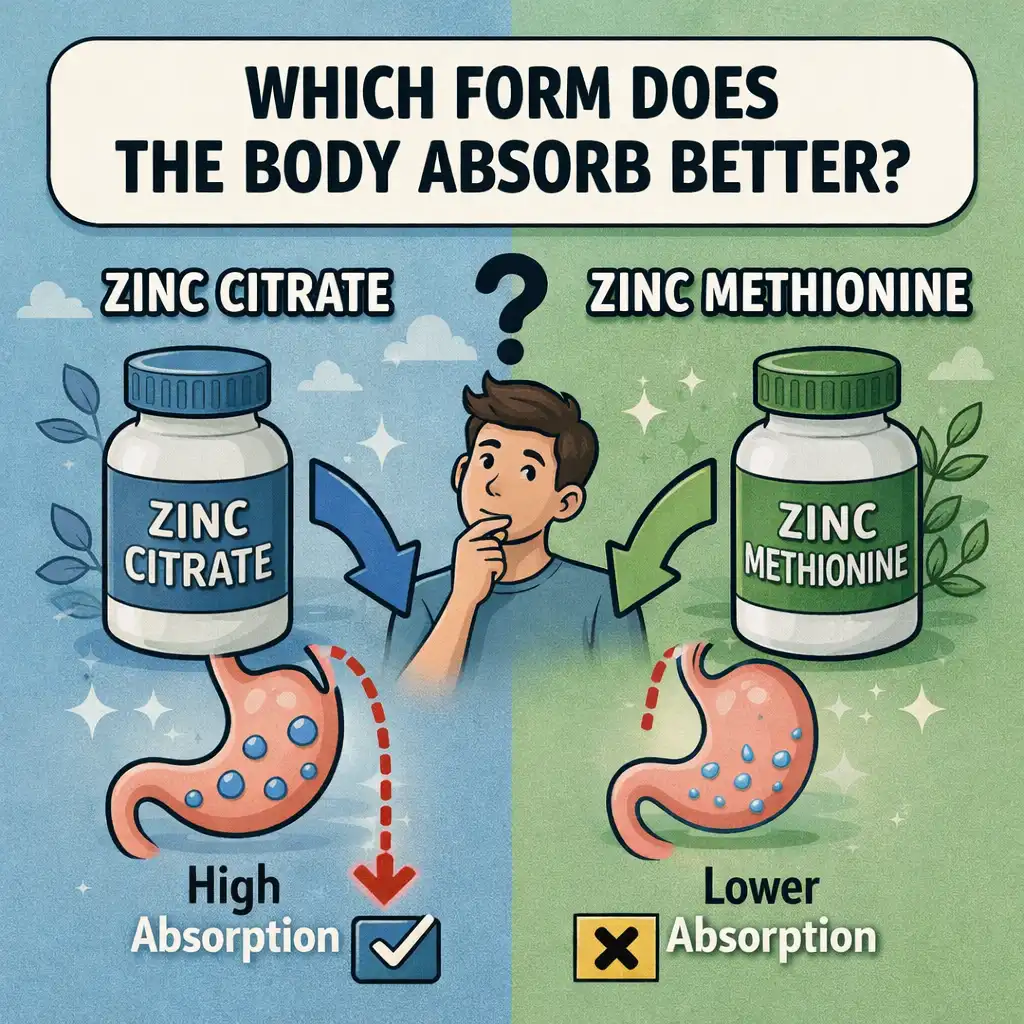
Absorption—also known as bioavailability—is the most important factor when comparing mineral supplements.
Research on chelated minerals suggests that amino acid-bound forms like zinc methionine may be absorbed more efficiently than standard mineral salts.
Why this matters:
Minerals often compete with each other during digestion. For example, zinc competes with iron, calcium, and magnesium for absorption. When zinc is attached to methionine, it can sometimes avoid this competition by using amino acid transport pathways.
In simple terms:
- Zinc methionine: designed for higher absorption efficiency
- Zinc citrate: still well absorbed but slightly more dependent on digestive conditions
For people trying to correct a deficiency or maximise absorption, zinc methionine may offer an advantage.
Which Form Is Easier on the Stomach?
Digestive tolerance is another important consideration.
Zinc supplements are known for causing nausea in some people, particularly when taken on an empty stomach.
Zinc Citrate
Many people find zinc citrate relatively gentle, especially when taken with food. Because it is widely used in multivitamins, it is often tolerated well during daily use.
Zinc Methionine
Zinc methionine generally has good tolerability as well, but individual responses can vary. Some users report fewer digestive issues with chelated minerals because they are absorbed more efficiently.
However, taking any zinc supplement on an empty stomach may increase the chance of nausea.
A practical rule:
Take zinc with a small meal or snack unless otherwise directed by a healthcare professional.
Cost and Accessibility
Cost is often a deciding factor when choosing supplements
Zinc Citrate
- Typically cheaper
- Widely available
- Common in multivitamin formulas
Zinc Methionine
- Usually more expensive
- Often marketed in premium or specialised supplements
- Sometimes labelled as “chelated zinc”
For long-term daily supplementation, many people choose zinc citrate because it provides good value and reliable performance.
Who Should Choose Zinc Citrate?
Zinc citrate may be a good option if you:
- Want a budget-friendly zinc supplement
- Need daily maintenance support
- Prefer a form commonly used in multivitamins
- Want something widely available and easy to find
For general immune support and maintaining adequate zinc intake, citrate works well for many individuals.
Expert Tip on Long-Term Use: If you choose Zinc Citrate for daily use, keep an eye on your copper levels. Taking any form of zinc consistently can “crowd out” copper absorption in your gut. A common rule of thumb for long-term safety is a 15:1 ratio (15mg of zinc for every 1mg of copper). If your daily zinc dose is high, look for a supplement that includes a tiny amount of copper to keep your mineral levels in a healthy balance.
Who Should Choose Zinc Methionine?
Zinc methionine may be worth considering if you:
- Want maximum absorption efficiency
- Are you addressing low zinc levels
- Have digestive issues that reduce mineral absorption
- Prefer chelated minerals
Athletes, individuals with increased nutrient demands, and those focusing on optimised nutrient uptake may prefer this form.
Safety Considerations When Taking Zinc
While zinc is essential for health, excessive intake can cause problems.
Potential side effects of high zinc intake include:
- Nausea
- Digestive discomfort
- Reduced copper absorption
- Headaches
- Metallic taste
Long-term high-dose zinc supplementation can also lower copper levels, which may affect immune function and red blood cell production.
Because of this interaction, some supplements include copper alongside zinc.
For most adults, the tolerable upper intake level for zinc is around 40 mg per day from supplements and diet combined, unless advised otherwise by a healthcare professional.
Practical Tips for Taking Zinc Supplements
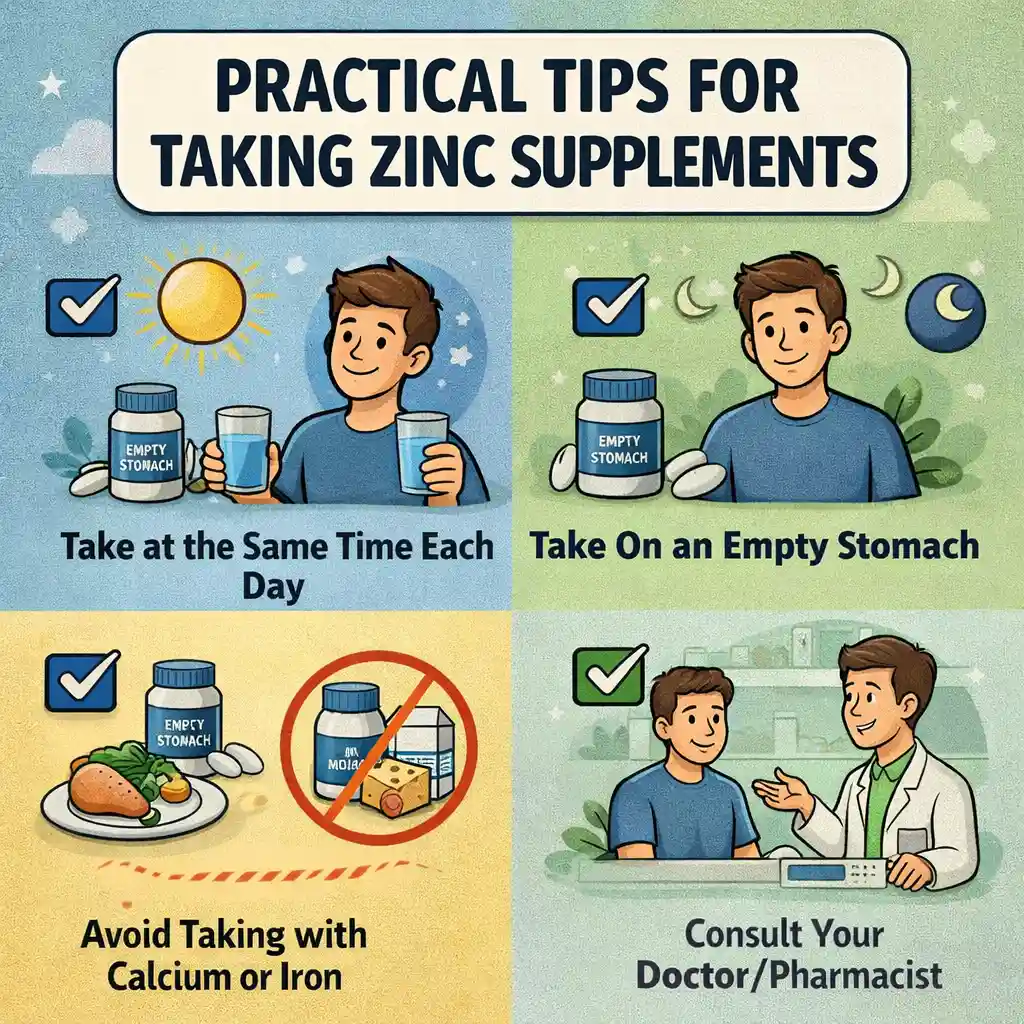
To improve tolerance and effectiveness:
- Take zinc with food
- Avoid taking zinc at the same time as large doses of calcium or iron
- Keep zinc supplements away from coffee or tea, which may interfere with absorption
- Follow recommended dosage guidelines
Consistency is generally more important than taking very high doses.
Final Selection Guide
If you need a simple decision framework:
Choose zinc citrate if you want:
- Affordable daily supplementation
- A gentle, widely used form
- A practical option for long-term use
Choose zinc methionine if you want:
- Higher absorption efficiency
- A chelated mineral form
- Maximum nutrient uptake
Both forms can be effective when used correctly. The most important factors are proper dosage, consistency, and selecting a supplement that fits your personal health goals.
Important Health Disclaimer
This article is for educational purposes only and should not replace professional medical advice. Nutrient needs vary between individuals, and supplementation decisions should ideally be made with guidance from a qualified healthcare professional, particularly for those with medical conditions, nutrient deficiencies, or those taking medications.
Read More: Natural Sleep Remedies
Common Questions & Quick Answers
1. Can I take Zinc Citrate and Zinc Methionine together?
There is generally no need to take both. Since they both provide elemental zinc, combining them could easily put you over the daily recommended upper limit of 40mg. It is more effective to choose one form that fits your goal—Citrate for daily budget-friendly support or Methionine for targeted, high-absorption needs—and stick with it.
2. Which form is better for clearing up skin or acne?
While both support skin health, Zinc Methionine is often preferred for acne. Research suggests that chelated forms (like methionine) maintain more stable levels in the bloodstream and are better at reaching skin tissues. However, Zinc Citrate is still a valid, effective option if you are looking for a more cost-effective long-term solution.
3. How long does it take to see results from these supplements?
Regardless of the form, zinc is not an “overnight” fix. If you are taking it for immune support, it may take a few days to impact a cold. For skin health or hormone regulation, it typically takes 4 to 8 weeks of consistent daily use to see a noticeable difference. Consistency is more important than the specific form you choose.
4. Does Zinc Methionine cause the same “metallic taste” as Citrate?
The “metallic taste” is a common side effect of zinc. Because Zinc Methionine is chelated (wrapped in an amino acid), it is less likely to break down in the mouth or throat, which can reduce that aftertaste. Zinc Citrate is more prone to this if the tablet begins to dissolve before you swallow it. Taking either with a full glass of water helps.
5. Is one form safer than the other for long-term use?
Both are safe when taken within the recommended dosage. The primary “safety” concern for long-term use isn’t the form, but the copper balance. As mentioned earlier, any zinc supplement taken for more than a few months should be balanced with copper (following the 15:1 ratio) to prevent a secondary deficiency, regardless of whether it is Citrate or Methionine.
References
Barrie, S. E., Wright, J. V., Pizzorno, J. E., Kutter, E., & Barron, P. C. (1984). Comparative absorption of zinc picolinate, zinc citrate and zinc oxide and the effects and causes of excessive supplementation. Acta Pharmacologica et Toxicologica, 59(Suppl 5), 45.
Gandia, P., Bourbouloux, E., De Saint, L. S., & Billaud, E. (2007). Comparison of the absorption and tolerability of three forms of zinc: Zinc citrate, zinc gluconate and zinc picolinate. Actualités Pharmaceutiques, 46(465), 37–40.
Harless, B., & DiSilvestro, R. A. (2020). Are zinc amino acid chelates better absorbed than inorganic zinc in humans? Journal of Trace Elements in Medicine and Biology, 62, 126649.
National Institutes of Health, Office of Dietary Supplements. (2022). Zinc: Fact sheet for health professionals. U.S. Department of Health and Human Services.
Pathak, R., & Kapil, U. (2017). Bioavailability of zinc supplements and impact of antinutrients on the absorption of zinc. Nutrition Reviews, 75(11), 889–897.
(Note: Comparative chelate insights applicable to zinc methionine)
Tompkins, A. C., El-Sohemy, A., & He, M. (2019). Zinc supplementation improves markers of insulin resistance in obese individuals with low zinc status. Journal of Nutrition, 149(8), 1416–1423.
(Supports chelated zinc efficacy)
Wegmüller, R., Tay, F., van, D. E. M. A., Br EMA, A., & Zimmermann, M. B. (2014). Zinc absorption by young adults from supplemental zinc citrate is comparable with that from zinc gluconate and higher than from zinc oxide. The Journal of Nutrition, 144(2), 132–136.