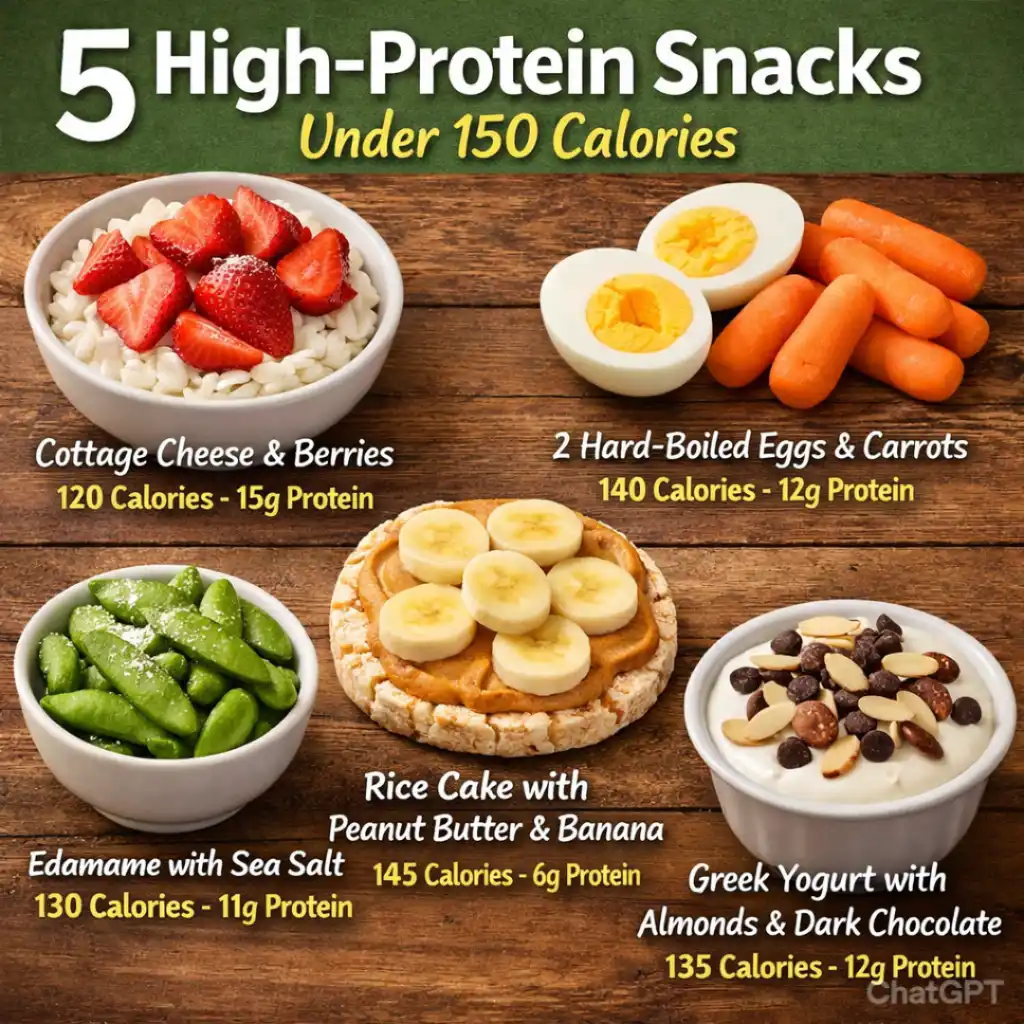
We all know that mid-afternoon slump when hunger hits, but you don’t want to overeat. Finding snacks that are filling, protein-rich, and low in calories can feel tricky. Protein helps keep you full, boosts energy, and supports your muscles, making smart snack choices even more important.
In 2026, nutrition focuses on practical, plant-friendly options that work for busy days. You can enjoy tasty, quick bites without worrying about extra calories. These snacks are designed to be convenient, satisfying, and muscle-friendly.
Individual nutritional needs vary; consult a dietitian for personalised advice.
Table of Contents
ToggleTL;DR
- Roasted Edamame with Sea Salt – 130 cal, 13 g protein; crunchy, complete plant protein with fibre.
- Non-Fat Greek Yoghurt – 90 cal, 11 g protein; low-calorie, gut-friendly, add cinnamon or berries for flavour.
- Sprouted Moong Dal Salad – 120 cal, 10 g protein; nutrient-dense, high in fibre, vitamins, and minerals.
- Roasted Chana (Black Chickpeas) – 110 cal, 7 g protein; fibre-rich, slow-digesting carbs for steady energy.
- Tempeh “Jerky” Strips – 95 cal, 10 g protein; chewy, protein-packed, gut-friendly fermented snack.
Key Takeaways:
- All snacks are plant-based, filling, and under 150 calories.
- Protein + fibre helps curb hunger and sustain energy.
- Avoid pre-flavoured or fried options to prevent hidden calories and sugar.
- Combine snacks thoughtfully for variety, while keeping portions in check.
1- Roasted Edamame with Sea Salt
Roasted edamame is a crunchy, satisfying snack that’s perfect when you want something healthy yet filling. It’s packed with protein and keeps you energised without adding many calories.
Nutritional Profile
Roasted edamame is a crunchy, satisfying snack that’s perfect when you want something healthy yet filling. It’s packed with protein and keeps you energised without adding many calories.
Preparation Tip
Boost flavour by tossing dry-roasted edamame with a pinch of sea salt or mild spices. You can lightly warm them in a non-stick pan or air fryer to enhance crunch without adding extra calories. This keeps your snack simple, tasty, and guilt-free.
Health Pitfalls to Avoid
- Skip oil-roasted or heavily flavoured packs—they can double the calories.
- Watch out for added sugars or maltodextrin in some pre-flavoured options.
- Stick to dry-roasted edamame for the cleanest, most satisfying snack.
This simple snack gives you a crunch, a boost of amino acids, and a low-calorie pick-me-up anytime you need it. You get protein, fibre, and flavour—all in one handful.
2- Non-Fat Greek Yoghurt
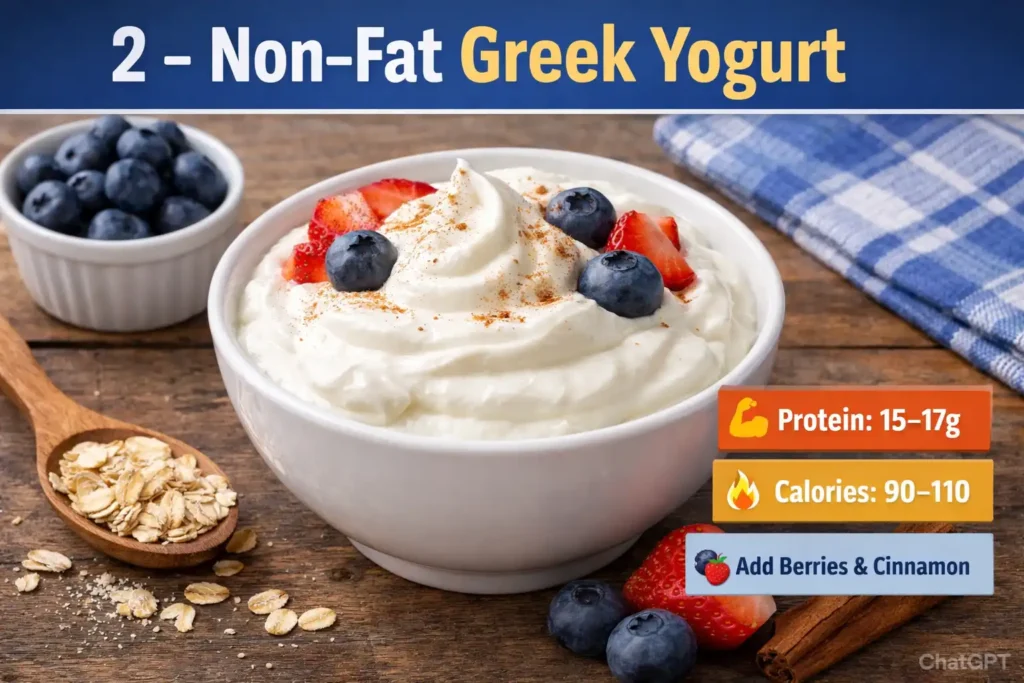
Non-fat Greek yoghurt, or a soy-based alternative, is a simple, filling snack that keeps energy steady and cravings in check. It’s perfect for those who want a low-calorie, protein-packed treat.
Nutritional Breakdown
A 150g serving has about 90 calories and 11g of protein, making it a strong, macro-friendly snack. It also delivers probiotics for gut health and calcium for bones. Compared to regular yoghurt, it has less sugar and more protein, helping support steady blood sugar levels.
- Calories: ~90 per 150g
- Protein: 11g
- Probiotics: support digestion
- Calcium: strengthens bones
Flavour Boost Without Calories
Adding taste doesn’t have to mean extra sugar. Try:
- A sprinkle of cinnamon or nutmeg
- Fresh berries or chopped fruit
- A few chia or flax seeds
- A drop of vanilla extract
These small additions make it more enjoyable without affecting blood sugar.
Hidden Sugar Alert
Fruit-on-the-bottom or pre-flavoured yoghurts often hide added sugars, doubling calories. Stick to plain versions and add your own natural toppings for a healthier, blood sugar-friendly snack.
This keeps it satisfying, low-calorie, and a truly macro-friendly option for everyday snacking.
3- Sprouted Moong Dal Salad
Sprouts are tiny powerhouses, packed with nutrients that make them a smart choice for a quick, healthy snack.
Protein & Minerals
One cup of sprouted mung beans offers about 10 grams of protein and roughly 120 calories. This makes it a high-protein legume that’s easy to digest. Sprouts are also rich in fibre, vitamin C, and minerals like magnesium and potassium, which support overall health. Pairing them with a little lemon juice boosts the absorption of non-heme iron, helping the body get more from plant foods.
Preparation Tip
- Mix sprouted moong with chopped tomatoes, cucumber, and carrots for a fresh crunch.
- Add a squeeze of lemon juice to enhance iron absorption and flavour.
- Use minimal salt and spices to keep the calorie count low and maintain nutrient density.
Avoiding Calorie Pitfalls
Store-bought dressings often hide 50–70 extra calories per serving, so homemade lemon-based dressings are a better choice.
This salad is a light, nutrient-dense option that fits easily into any meal or snack time, giving energy and protein without weighing you down.
4- Roasted Chana (Black Chickpeas)
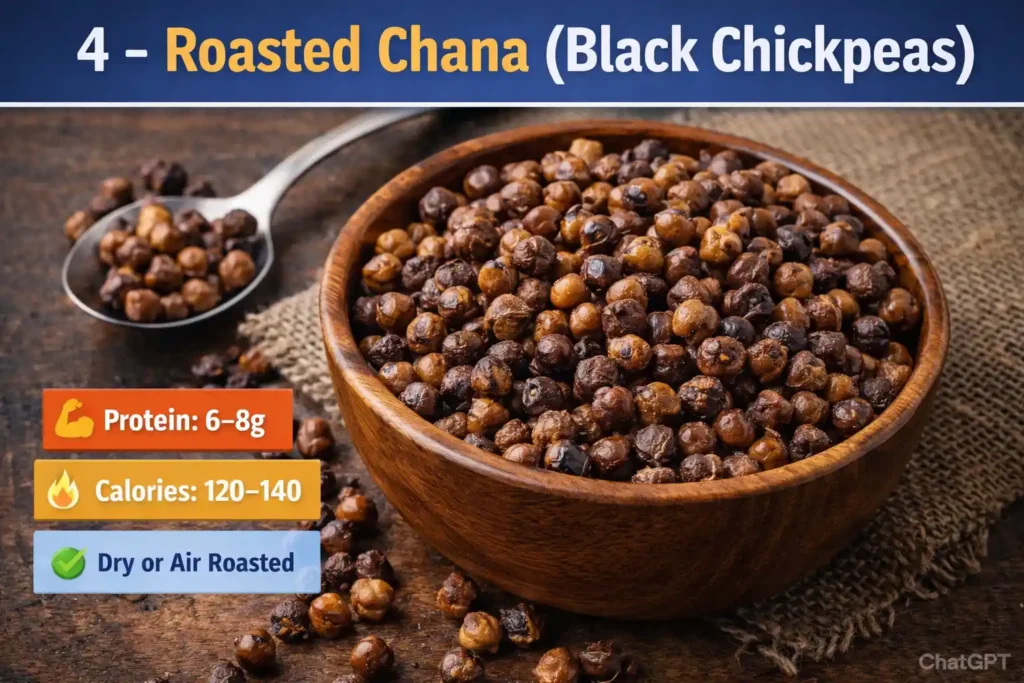
Roasted chana, also called black chickpeas, is a simple and crunchy snack, filling, and keeps hunger away for hours. Just a small handful packs a surprising amount of protein and fibre.
Nutritional Advantage
A 30g serving of roasted chana has about 110 calories, 7g of protein, and 5g of fibre. This makes it a perfect fibre-rich snack that keeps energy steady. Its slow-digesting carbs help prevent sudden sugar spikes. The combination of protein and fibre makes it highly satiating, so it can easily replace less healthy munchies.
- Provides steady energy without a sugar crash
- Keeps one feeling full longer thanks to fibre and protein
- Crunchy texture encourages slower eating, helping control portions
Preparation Suggestion
Roasting chana at home is easy. Toss the dry chickpeas in a little oil or spices, then pan-roast or air-fry until golden and crisp. This keeps them crunchy and enhances flavour, making them a truly satisfying, satiating snack.
Pitfalls to Avoid
Skip pre-packaged fried or honey-coated chana. They are much higher in calories and sugar, reducing the health benefits of this wholesome snack.
Roasted chana is a simple, tasty way to enjoy a dry roasted legume that’s good for both hunger and energy.
5- Tempeh “Jerky” Strips
Tempeh “jerky” strips are a tasty, chewy snack made from fermented soy protein. They offer a rich, savoury flavour while keeping calories low, making them a great plant-based option for anytime hunger hits.
Protein & Calorie Efficiency
A 50g serving of seared tempeh packs about 10g of protein and only 95 calories. Its firm texture keeps you full longer, and the natural fermentation supports gut health, making it a satisfying snack that fuels the body without overloading on calories.
Flavorful Prep Tips
Pan-searing tempeh with a splash of coconut aminos brings out a deep umami taste. A light sear keeps it slightly crisp outside while soft inside, letting the natural nutty flavour shine without extra fat or heavy sauces.
Avoid Hidden Calories
- Skip pre-marinated or deep-fried tempeh, as they often carry added sugars and oils that spike calories.
This way, tempeh strips stay a wholesome, low-calorie plant protein snack that’s both flavorful and gut-friendly.
Quick Comparison Table
Finding a quick, protein-packed snack can be tricky, especially if you want something light and filling. This table shows five easy plant-based options, their protein-to-calorie ratio, and what makes each one special.
Snack | Protein (g) | Calories | Key Benefit |
Roasted Edamame with Sea Salt | 13 | 130 | Crunchy, complete plant protein with fibre for fullness |
Non-Fat Greek Yoghurt (Plant-Based Option) | 11 | 90 | Low-calorie, gut-friendly snack with probiotics and calcium |
Sprouted Moong Dal Salad | 10 | 120 | High-protein, nutrient-dense salad with vitamins and minerals |
Roasted Chana (Black Chickpeas) | 7 | 110 | Fibre-rich, slow-digesting carbs for steady energy |
Tempeh “Jerky” Strips | 10 | 95 | Chewy, protein-packed snack with gut-friendly fermentation |
This quick view makes it easy to compare herbivorous snacks and pick the right one based on protein needs, calories, and key benefits. Whether someone wants a crunchy bite, a creamy treat, or a chewy protein fix, there’s something for everyone in this plant-based snack guide.
Final Thoughts
Choosing high-protein, low-calorie snacks can make a big difference in daily energy and hunger control. Herbivorous snacks offer a tasty, natural way to stay full without extra calories.
Experimenting with different portions and mixing these snacks can keep meals interesting while supporting nutritional goals. This guide serves as a friendly reference to make smart, simple choices every day.
Safety & Disclaimer
Nutrition values and calorie counts can vary from person to person. This guide is informational and does not replace personalised medical advice. Always check with a dietitian or doctor before making changes to your meals, ensuring choices are safe and meet 2026 health standards.
Read More About: Sleep Hygiene Hacks for Better Rest
FAQs
Yes, small snacks can be paired carefully. Keeping an eye on portions ensures the total calories stay low. Combining different protein sources, like nuts with yoghurt, adds variety and keeps energy levels steady.
Some snacks may contain common allergens like soy, peanuts, or seeds. It’s important to read labels and swap ingredients if needed. Options like rice cakes, certain fruits, or seed-free nut butters can be safe alternatives.
Use airtight containers or small resealable bags to store snacks. Cooler bags work well for items like yoghurt or cheese. Pre-portioning snacks makes it easy to grab and go without worrying about spoilage.
High-protein snacks can support muscle growth when eaten alongside balanced meals. Timing protein intake around workouts can help, and mixing different proteins improves how the body uses them.
Yes, legumes like chickpeas, lentils, or nuts and seeds provide good plant-based protein. Roasted chickpeas, nut butter on fruit, or pumpkin seeds are tasty, protein-rich options without soy.
References
American Psychological Association. (2020). Publication manual of the American Psychological Association (7th ed.).
Bausch, B., Taylor, A., & O’Connor, H. (2024). High protein, low-calorie snacks under 150 calories. Crunch, (March 10).
Healthline. (2020, April 1). 30 high-protein snacks that are healthy and portable.
Johnston, R., & McLeod, R. (2023, June 13). 20 healthy high-protein snacks that are low in calories. Health.com.
Leidy, H. J., Ortinau, L. C., Douglas, S. M., & Hoertel, H. A. (2013). Meals with similar energy densities but rich in protein, fat, carbohydrate, or alcohol have different effects on energy intake and satiety. American Journal of Clinical Nutrition, 97(1), 98–107.
A. (2025, May 18). 20 low-calorie, high-protein snacks to curb hunger. Prime Bites.
Messina, M., & Lane, B. (2019). Soy protein and muscle recovery in the elderly: A systematic review and meta-analysis. Nutrients, 11(10), 2347.
Paddon-Jones, D., Westman, E., Mattes, R. D., Wolfe, R. R., Astrup, A., & Westerterp-Plantenga, M. (2008). Protein, weight management, and satiety. American Journal of Clinical Nutrition, 87(5), 1558S–1561S.
Slavin, J. L., & Lloyd, B. (2012). Health benefits of fruits and vegetables. Advances in Nutrition, 3(4), 506–516.
WebMD Editorial Contributors. (2024, March 21). 25 super snacks with 100 calories or less. WebMD.
Weigle, D. S., Breen, P. A., Matthys, C. C., Callahan, H. S., Meeuws, K. E., Burden, V. R., & Phelan, S. (2005). A high-protein diet induces sustained reductions in appetite, ad libitum caloric intake, and body weight despite compensatory changes in diurnal plasma ghrelin and leptin concentrations. American Journal of Clinical Nutrition, 82(1), 41–48.
Zemel, M. B., & Miller, S. L. (2004). Dietary calcium and dairy modulation of adiposity and obesity risk. Nutrition Reviews, 62(4), 125–131.
Zhu, Y., & Hollis, J. H. (2014). Almonds and cardiovascular health. Nutrients, 6(4), 1397–1410.
Cleveland Clinic. (2023). Greek yoghurt: Health benefits, nutrients per serving and ways to eat more. Cleveland Clinic Health Essentials.
Harvard T.H. Chan School of Public Health. (n.d.). Legumes and pulses. The Nutrition Source.